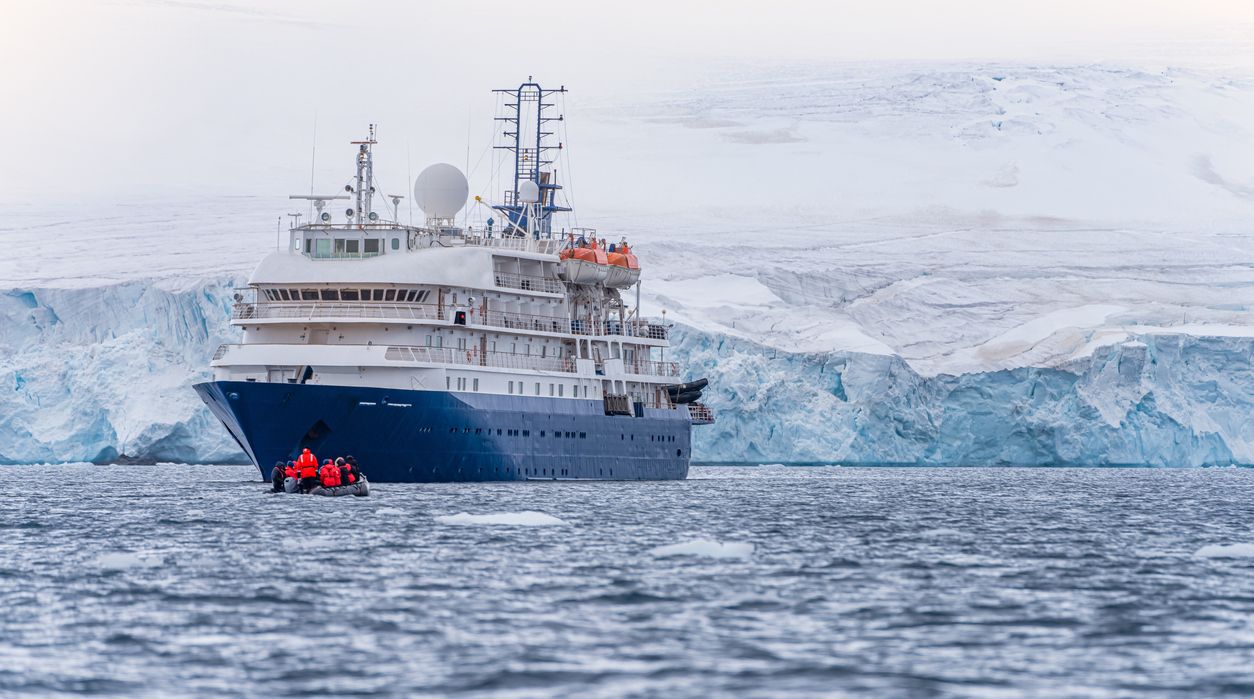
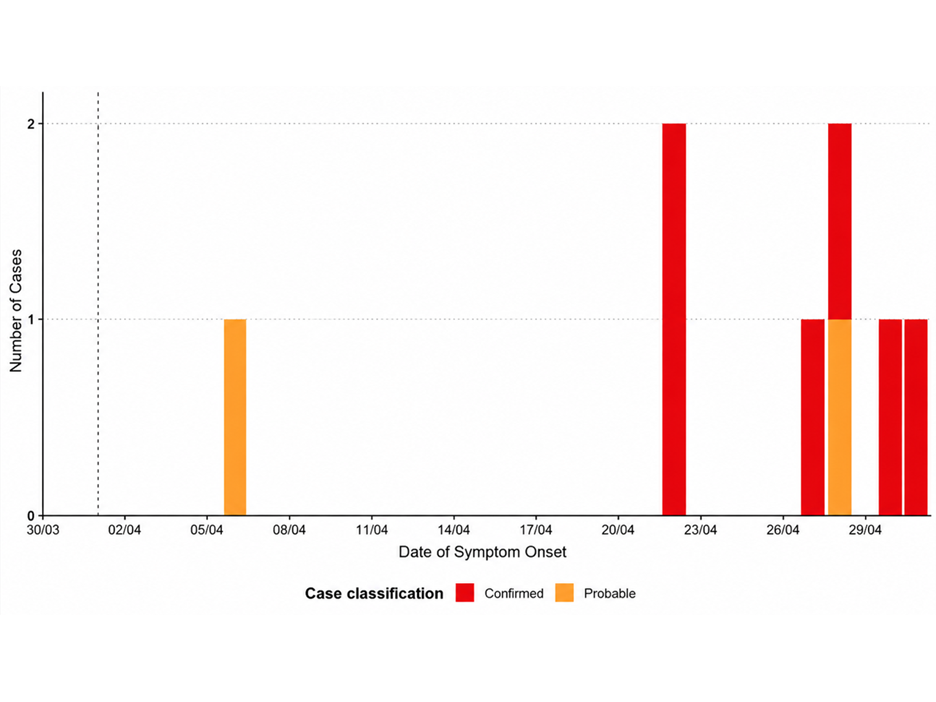
In early May, the MV Hondius - a small expedition cruise vessel carrying 147 passengers and crew from 23 nations - docked at Cabo Verde in the Atlantic, west of West Africa, and became the centre of an international public health investigation into a virus that almost no one had heard of. By mid-May, following a controlled disembarkation at Tenerife in Spain’s Canary Islands and a discreet coordination of repatriation flights to six European countries and Canada, the World Health Organization (WHO) reported 11 cases linked to the voyage and three deaths.
France and Spain have since confirmed new cases amongst passengers who returned home and were subsequently screened, and one further case tested positive in the United States of America. Investigators are monitoring contacts in over a dozen countries as they map the full extent of what is now known as a hantavirus outbreak.
What is hantavirus?
Hantaviruses are a family of viruses that live - naturally and quite contentedly - inside certain wild rodents. The deer mouse, the cotton rat, and the long-tailed pygmy rice rat serve as reservoirs rather than hosts in any clinical sense. The virus circulates amongst them without causing visible illness. These animals are carriers, not patients.
Humans become infected primarily by inhaling aerosolised particles from rodent urine, droppings, or saliva. Exposure most commonly occurs in enclosed or poorly ventilated spaces with signs of rodent activity. Most hantavirus infections worldwide are isolated, rural events: a farmer cleans an old barn, a forester opens a sealed cabin, a household contracts cases linked to a rat-infested kitchen.
Bites are possible but considerably less common. Importantly, ordinary leisure travel such as relaxing on a beach, exploring a city, or visiting a national park generally carries minimal or no risk.
Hantaviruses produce two broad disease patterns. In the Americas, they cause hantavirus cardiopulmonary syndrome (HCPS), which affects the lungs and heart. In Europe and Asia, related viruses cause haemorrhagic fever with renal syndrome (HFRS), which targets the kidneys. Both can be severe, and neither has an approved antiviral treatment or vaccine.
Management relies on early recognition, intensive supportive care, and, in serious cases, organ support such as mechanical ventilation or extracorporeal membrane oxygenation (ECMO), a form of artificial life support used in intensive care. The incubation period is notably long - typically up to 42 days, and occasionally as long as eight weeks - and it is this, in large part, that makes outbreak investigation so painstaking.
Why the MV Hondius matters
The MV Hondius case is notable for two reasons. First, the strain involved is Andes virus, endemic to parts of Argentina, Chile, and neighbouring countries. Andes virus is the only hantavirus for which limited person-to-person transmission has been clearly documented - most notably in the 2018–19 Epuyén outbreak in Argentine Patagonia, where the virus spread amongst close contacts and household members. Second, the setting was a ship - a closed, shared environment with cabins, communal dining, and sustained contact between the same individuals over several weeks.

Argentine investigators, working with the WHO, have reconstructed the likely journey of the suspected index case: a Dutch passenger who undertook a four-month overland trip through Chile, Uruguay, and Argentina between November 2025 and April 2026, returning to Argentina just four days before boarding.
Researchers at the Malbrán Institute are now trapping and testing rodents along that route. The working hypothesis is that the virus was introduced onto the ship by one or more passengers still within the incubation period, and subsequently spread through limited human-to-human transmission on board. Genomic sequences from five patients, published on virological.org, are 99% identical to a June 2018 case in Argentina and are highly similar to one another - evidence of a single zoonotic spillover event followed by onboard spread, rather than multiple independent introductions.
How dangerous is it, really?
At the population level, the scope for widespread propagation is inherently limited. Person-to-person transmission of Andes virus has consistently remained clustered, requiring close and prolonged contact, and has not, in any documented outbreak, become epidemic in the manner of influenza or a coronavirus. WHO grades the global risk as low and the cruise-ship-related risk as moderate. The Atlanta-based Centers for Disease Control and Prevention (CDC) assesses the risk to the general population as extremely low, a conclusion shared by the Dutch National Institute for Public Health and the Environment (RIVM), which is leading the response for the ship's flag state. The European Centre for Disease Prevention and Control (ECDC) is conducting its own risk assessment for the EU and EEA.
At the individual level, however, infection is serious. Among those diagnosed with HCPS caused by Andes virus, the case fatality rate has consistently been in the region of 35–40%, and clinical deterioration following the initial flu-like phase can be rapid - sometimes unfolding over hours.
The cases reported so far form a small cluster, concentrated largely amongst older passengers, with contacts followed systematically for the full incubation period.
This is precisely why the WHO has explicitly advised against travel restrictions. The impulse to close borders and restrict movement - a reflex understandably sharpened by the COVID-19 years - is, in this instance, neither evidence-based nor proportionate.
Misconceptions addressed
Firstly, hantavirus is not airborne in the way that measles or influenza are. Aerosolisation occurs from disturbed rodent excreta, not from ordinary breathing or conversation. Andes virus is the sole exception - and even then, sustained transmission requires close contact: intimate partnerships, shared utensils, handling of contaminated bedding, and prolonged time together in enclosed spaces.
Secondly, it is not new. Hantaviruses have been recognised since the Korean War, when thousands of soldiers fell ill with what we now call HFRS. The 1993 Four Corners outbreak in the United States brought HCPS to global attention.
Thirdly, it is not the next pandemic. That phrase has been worn thin by overuse. Every unfamiliar outbreak now arrives wrapped in pandemic language, and each time the word is invoked without evidence, the next genuine warning becomes harder to hear. What this outbreak is, however, is a reminder that the work of preventing the next pandemic must remain a sustained priority.
What the response has got right
Several aspects of the outbreak management deserve recognition. The United Kingdom notified the WHO under the International Health Regulations within hours of initial suspicion. Laboratories in South Africa (NICD) and Switzerland (HUG/CRIVE) confirmed the virus within days, with the Institut Pasteur Dakar supporting referral testing. Argentina promptly released the index case's travel history.
The WHO issued a technical note on safe disembarkation and onward management, which anchored a coordinated maritime response. The US CDC activated a Level 3 emergency response, deployed a team to meet the ship in Tenerife, and coordinated the transfer of sixteen American passengers to Nebraska's biocontainment unit. British military personnel were deployed to Tristan da Cunha - a remote island in the South Atlantic with a population of around 220 - to assist with a single suspected case amongst passengers who had disembarked earlier. Genomic sequences have been shared openly, contact tracing is under way in more than 20 countries, and no government is concealing the situation.
In a world where outbreak transparency is frequently a casualty of political pressure, this has been a quietly competent response. The IHR system, widely written off as broken in the aftermath of COVID-19, has worked here - not perfectly, but visibly, and across borders.
What to do now - and, whether India should worry
The temptation in moments like these is to sensationalise or to dismiss. Neither serves the public well. Health authorities, for their part, can communicate proactively rather than reactively - with the candour to say "we are still investigating" without sacrificing credibility. The public deserves to be treated as capable of hearing that honestly.
India falls outside the recognised endemic zone for the severe hantavirus disease syndromes seen in Asia and the Americas, and no case linked to the MV Hondius has been reported here. The virus is not, however, entirely unknown on Indian soil.
The first hantavirus ever isolated in culture - Thottapalayam virus - was recovered from a shrew trapped near Vellore in 1964. More recently, a seroepidemiological study of 661 individuals in southern India by Chandy and colleagues at the Christian Medical College, Vellore, confirmed the presence of circulating hantavirus antibodies in the population, with higher seropositivity amongst Irula tribal members engaged in rodent trapping and amongst patients with chronic kidney disease, compared with healthy blood donors.
A companion review documented serological evidence of Seoul virus and Puumala virus-like infections in patients from Cochin and Chennai presenting with leptospirosis-like illness, including one fatal case of hantavirus nephropathy that initially mimicked leptospirosis. The signal is modest, but it is real.
The practical implication for clinical practitioners in India is straightforward. In cases of unexplained acute febrile illness with renal or pulmonary features, particularly where there is a history of rodent exposure, a rural setting, or occupational risk, hantavirus warrants consideration, irrespective of any cruise ship connection. Clinicians should be alert to the syndrome, enquire about travel history and rodent exposure in unexplained fever or respiratory presentations, and bear in mind that the long incubation period can delay the onset of symptoms by several weeks. Surveillance systems should remain attentive to the possibility of imported cases.
There is no cause for alarm. There is, however, every reason for watchful awareness.
A final thought
Outbreaks reveal more than pathogens. They reveal how the world responds, and how readily the muscle memory of pandemic-era anxiety can be triggered by the faintest signal.
Hantavirus is not the threat it is being portrayed as. But for experts to say so clearly and confidently depends on something that must be built long before any outbreak begins: a trained workforce of field epidemiologists and public health professionals with the discipline to hold the line when the pressure to alarm is greatest.
In public health, calm backed by evidence is not complacency. It is, more often than not, the most demanding form of attention we can bring to the work of keeping communities well.