
Brazil denied visas to two senior US officials on Sunday, July 26, blocking a trip Brasília says was designed to sow doubt over October’s presidential election. The rejected officials – Assistant Secretary Riley M. Barnes and Deputy Assistant Secretary Samuel Samson, both from the State Department’s Bureau of Democracy, Human Rights, and Labour – had applied for visas on July 20 for a visit scheduled between July 27 and 30.
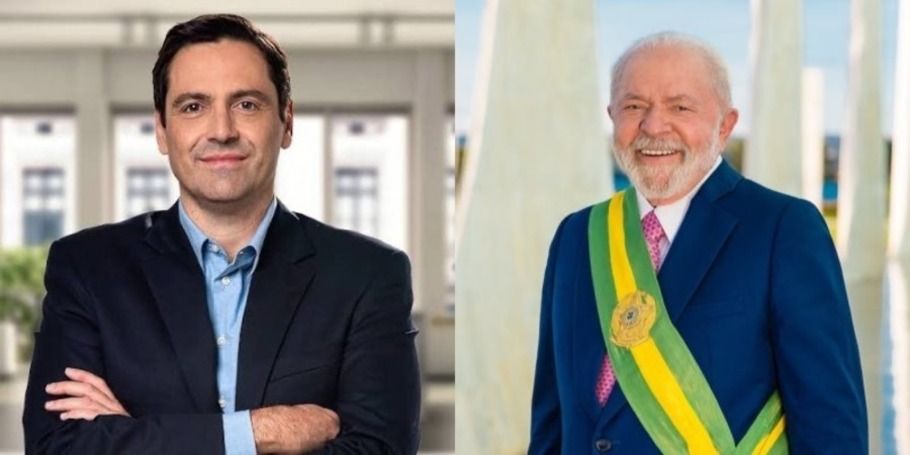
Brazil goes to the polls on October 4, when President Luiz Inácio Lula da Silva will seek a fourth term against Senator Flávio Bolsonaro, son of jailed former president Jair Bolsonaro. If no candidate clears 50 per cent of the valid vote, a run-off follows on October 25. Lula currently leads Bolsonaro 48 per cent to 43 per cent in a hypothetical run-off, according to a Datafolha poll of 2,004 voters conducted on July 22–23 – up from a 47–43 lead in June.
Washington described the trip as routine, aimed at discussing “election integrity, religious freedom and freedom of expression” with government officials and civil society groups. A Brazilian official told Reuters the visa denial rested on “evidence pointing to a renewed attempt to politically exploit the situation and undermine the electoral system”. A State Department spokesperson rejected the characterisation, calling any suggestion of a "ploy" to undermine the election "baseless."
A pattern of pressure and Economic Reciprocity Law
Sunday’s visa denial is the latest in a string of US actions that Brazil has read as attempts to influence its domestic politics on Bolsonaro’s behalf. In July 2025, the Trump administrationsanctioned Supreme Court Justice Alexandre de Moraes under the Global Magnitsky Act, freezing any US assets and accusing him of running “an oppressive campaign of censorship” through his oversight of Bolsonaro’s coup trial.
The sanctions followed
State Department visa restrictions on Brazilian judicial officials issued on July 18, 2025, and came the same day Trump signed an executive order imposing a 50 per cent tariff on Brazilian goods – a levy his own letter to Lula linked explicitly to what he called the “witch hunt” against Bolsonaro.
The measures were reversed in December 2025 after a phone call between Trump and Lula, alongside a rollback of the steepest tariffs. Lula’s government has consistently framed these moves as foreign interference rather than routine diplomacy or trade policy. Responding to the Moraes sanctions, Lula said the Brazilian government “stands in solidarity” with the justice, condemning what he called “the US government’s interference in the Brazilian justice system”. On the tariffs, he was more direct still, calling them an “attack on Brazilian sovereignty” and “unacceptable blackmail”, and insisting that “Brazil is a sovereign nation with independent institutions and will not accept any form of tutelage”.
Brazil has also taken concrete steps to push back rather than simply issue statements. In April 2025, Congress passed and Lula signed the Economic Reciprocity Law, giving the government authority to suspend trade concessions, investments and intellectual property obligations against countries – explicitly including the US – that take unilateral action against Brazilian interests, including interference in “Brazil's sovereign choices”.
Lula has since invoked the law’s logic directly: “If he charges us 50 per cent, we'll charge him 50 per cent." Brasília also said it would take the tariff dispute to the World Trade Organization. Jair Bolsonaro had, ahead of the 2022 election, questioned the credibility of Brazil’s voting machines without producing evidence; he is now serving a 27-year sentence for plotting a coup after his 2022 defeat. Brazil’s electoral authority has consistently defended the system as secure, and Washington itself called the 2022 vote free and fair.
The current episode also sits inside the Bolsonaro family’s direct line to Washington: Flávio and his brother Eduardo met US officials, including President Trump, in Washington in late May. Shortly after, the Trump administration designated two of Brazil’s largest drug-trafficking groups as foreign terrorist organisations – a move Lula’s government opposed. Earlier this month, Trump also imposed a fresh 25 per cent tariff on Brazilian imports, which Lula called “unfair” in a Washington Post opinion piece, and Brazil has said it is preparing a “tough” retaliatory response under the reciprocity law, reportedly including curbs on US audiovisual royalties and suspension of pharmaceutical patents.
A long regional pattern
The episode fits a longer history of US involvement in Latin American politics. “There is a deep historical sensitivity to any perceived US interference in Brazil’s domestic affairs,” Oliver Stuenkel, a Latin America expert at Fundação Getulio Vargas, told the Wall Street Journal. Washington backed the 1973 coup that installed General Augusto Pinochet in Chile after the overthrow of President Salvador Allende, armed the Contras against Nicaragua’s Sandinista government in the 1980s, and supported El Salvador’s government in its civil war against left-wing guerrillas.
The CIA-backed 1954 coup in Guatemala, which toppled the elected government of President Jacobo Árbenz, is another episode in the series. Washington’s most direct recent intervention came this January, when US special forces captured Venezuelan President Nicolás Maduro and his wife in a raid on his Caracas residence and flew them to New York to face US federal charges, with Trump declaring Washington would “run” Venezuela during the transition. That capture followed years of sanctions and Washington’s earlier recognition of opposition figure Juan Guaidó as interim president in 2019.
For many in the region, memories of past US interventions continue to shape how even routine diplomatic visits are read – making Sunday’s visa denial less an isolated snub than the latest data point in a year-long pattern of pressure and pushback that both governments now openly acknowledge.