
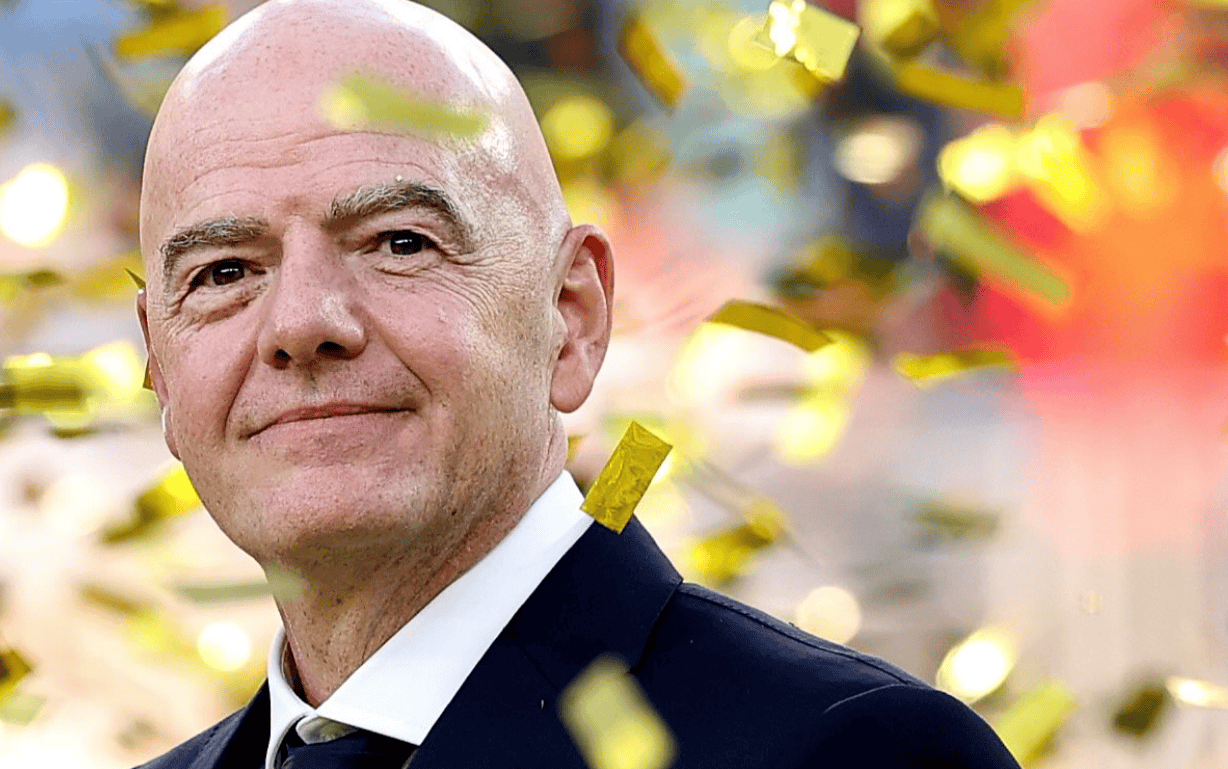
The maths behind Gianni Infantino’s bid for a fourth term as Fédération Internationale de Football Association (FIFA) president has shifted sharply against him. On August 10, the Asian Football Confederation (AFC) put its name alongside the Union of European Football Associations (UEFA) and the Confederation of North, Central American and Caribbean Association Football (CONCACAF) to a joint letter accusing his leadership of a “fundamental breach of trust” – the first time that all three confederations have moved together against him.
Together, they control 136 of FIFA’s 211 votes, a bloc large enough, in theory, to unseat an incumbent at the March 2027 election in Rabat, provided it holds together once nominations open. That it has come to this marks a remarkable turn for a president who, weeks earlier, presided over a World Cup that broke ticketing and viewership records – and who, as NWS previously reported, was already facing a European revolt even before the AFC signed on.The pattern began before that revolt took shape.
When Trump revealed that he had personally called Infantino to get American striker Folarin Balogun’s one-match ban lifted ahead of the round-of-16 tie against Belgium, Europe protested. Infantino insisted FIFA’s disciplinary process was independent, but few believed him.
The plan that broke trust
Then, on July 28 – barely two weeks after the final – came FIFA Forward Enterprise (FFE): a plan to spin off FIFA’s commercial operations and sell roughly a fifth of the entity to outside investors, in a deal reportedly valued near US$20 billion. Among the investors was a firm tied to Joshua Kushner, brother of Trump’s son-in-law Jared Kushner, with the idea reportedly born out of private talks between the two.
Almost nobody inside football had heard of it before the announcement.UEFA immediately raised the flag of rebellion. Even FIFA’s own senior officials were blindsided: adviser Carlos Cordeiro resigned in protest, calling it a bad deal for football, and chief operating officer Kevin Lamour said publicly he felt deceived by his own boss. UEFA voted to boycott every FIFA competition, including the World Cup, if the plan went ahead. Within days, under what FIFA itself called overwhelming pressure, Infantino withdrew it.
A rebellion that wouldn’t stop
A swift retreat should have closed the chapter. But it didn't. Already burned by the Balogun affairand now confronted with a scheme even FIFA’s own COO hadn’t been told about, UEFA refused to stand down after the “victory”, pushing for accountability rather than settling for an apology. Instead of showing contrition, Infantino convened an emergency meeting of senior officials in Rabat on August 5.
He was the only elected figure in the room; everyone else was FIFA management staff – not the Council, not member-association representatives. FIFA called the meeting “constructive” and said Infantino retained the board’s support. His critics, however, read it differently: a president curating his own room rather than facing the wider football family.Five days later came the joint letter from UEFA, the AFC and CONCACAF – never naming Infantino but unmistakably targeting him.
It said the FFE process reflected “a design intended to limit scrutiny” rather than honest oversight, and demanded a fully independent third party conduct any review, not FIFA’s own council or staff. It even instructed that all relevant documents be preserved – language more common to legal proceedings than diplomatic letters. Leadership, it stated plainly, is “a duty of service”, not something to be held or demanded; what football had witnessed was “not the conduct of a custodian of the game, but of one who believes the game is answerable to him."
Outside the federations, the language has sharpened further. Norway’s football association president, Lise Klaveness, told The Guardian that trust in Infantino was gone for good. Reports citing journalist Ben Jacobs suggest UEFA is preparing to formally withdraw its backing, with senior FIFA officials reportedly pushing for his resignation and warning of a possible vote of no confidence. Former FIFA referees’ chief Keith Hackett has openly called for member nations to vote him out.
Could this actually end him?
The arithmetic is messier than the rhetoric. Unseating an incumbent requires 106 of FIFA’s 211 votes. UEFA (55), the AFC (46) and CONCACAF (35) together control 136 – enough, in theory, if they voted as one bloc. But confederations rarely do. Mexico, a CONCACAF heavyweight and 2026 World Cup co-host, has backed Infantino, as have Kuwait and Qatar within the AFC – the latter a nation where Infantino reportedly owns a home.
The Confederation of African Football (CAF), with 54 votes, issued a unanimous statement of support last week, calling him a genuine ally of African football. The South American Football Confederation (CONMEBOL, 10 votes) and Oceania (11) have not declared a position. The letter is the most serious threat Infantino has faced, but it still leaves his opponents short of a guaranteed majority even with three confederation presidencies behind it.What happens next two dates matter most.
Candidates must formally declare by November 18, and nobody has yet stepped forward to oppose Infantino as he seeks a fourth term. CONCACAF president Victor Montagliani, one of the letter’s own signatories, is the name most floated as a potential challenger, alongside UEFA’s Aleksander Čeferin – though neither has confirmed any intention to run. Before that, September 5 brings the start of the U-20 Women’s World Cup in Poland, a UEFA member state, with genuine doubt over whether European teams will show up if Infantino is still in charge.Infantino retains real support in Africa, and pockets of Asia and the Americas, and unseating an incumbent in FIFA politics has never been easy.
But the numbers stacking against him are growing, and fast. He already speaks the language of a man who believes the game answers to him. A fourth term would risk handing total command to an unaccountable operator, deciding football’s future on a whim rather than by consent. It is hard to imagine a FIFA president planning a World Cup privatisation while his own COO, and the wider football world, were kept in the dark.Infantino continues to play hardball and refuses to reconcile. Re-electing him now would be nothing short of surrender. Though he expanded the World Cup and grew FIFA’s finances, he stands credibly accused of concentrating power rather than distributing it.