
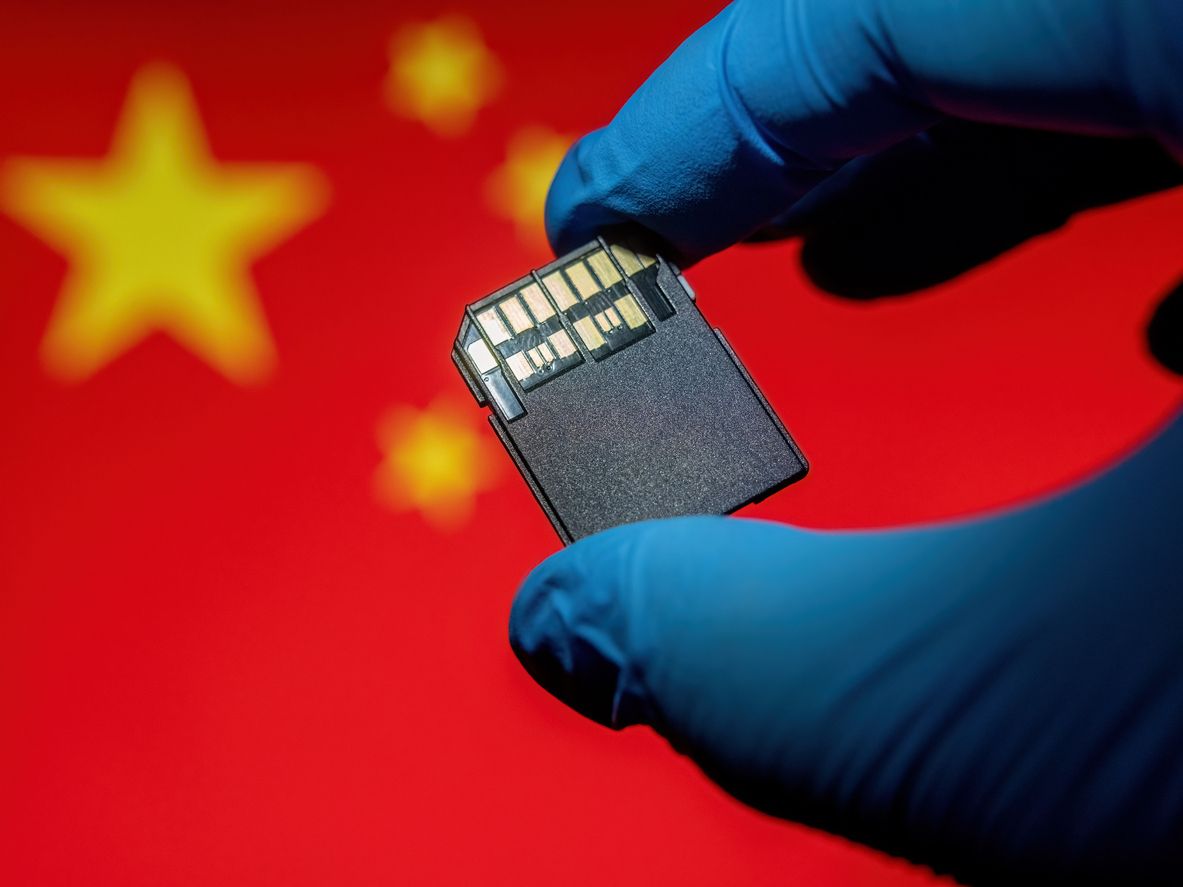
China is turning the global deep-tech dominance story on its head. Over the past five years, Chinese companies have faced a barrage of export controls from the US across multiple fronts. Now Beijing appears to be paying back in the same currency — barring international investors from its most successful deep-tech companies.
The latest case in point: international investors have been barred from ChangXin Memory Technologies' (CXMT) planned $9.8 billion IPO, China's largest in nearly four years, and are now scrambling to find alternative routes into the country's rapidly expanding semiconductor and artificial intelligence industries, as Beijing's regulatory architecture increasingly walls off foreign capital from its most strategically prized sectors.CXMT filed for a listing on the Shanghai Star Market (Science and Technology Stocks Board at Shanghai Stock Market) that would value the Hefei-based company among China's most significant public offerings since Ant Group's ill-fated 2020 debut was halted by regulators.
The IPO has drawn intense global interest given CXMT's emergence as a credible domestic rival to South Korean memory giants Samsung Electronics and SK Hynix. Analysts believe the exclusion of foreign capital from the IPO reflects Beijing's deliberate policy choices. China has grown wary of allowing overseas investors to capture the financial upside of technologies that are central to national security and economic sovereignty.
That posture has hardened into a broader pattern over the past four years, as restrictions on variable interest entity structures, tightened rules on data-related businesses and de-listing pressures applied to US-traded Chinese technology companies have collectively narrowed the channels through which foreign money can reach Chinese innovation.
Now China is ensuring that the foreign institutional investors face a thicket of obstacles that make direct participation in the CXMT offering effectively impossible. US export controls, Chinese regulatory restrictions on offshore ownership of sensitive technology companies and the structural limitations Star Market on foreign shareholding have collectively shut out most global funds.
The constraints ensure that strategic gains flow predominantly to domestic stakeholders — a feature, analysts say, not a bug. Locked out of the primary offering, asset managers in New York, London and Singapore are pursuing workarounds. Among the strategies being explored are investments in listed Chinese companies that hold equity stakes in CXMT, purchases of shares in domestic equipment suppliers and materials producers that count CXMT as a major customer, and positions in Hong Kong-listed holding companies with exposure to the memory chip sector.
Some funds are also examining whether derivatives or structured products linked to CXMT's eventual secondary market performance could offer a viable, if indirect, avenue for exposure. The hunt for proxy trades underscores a deepening frustration among global investors who see China's AI and chip buildout as one of the most consequential investment opportunities of the decade but find themselves systematically excluded from its most lucrative nodes.
China has designated semiconductor independence and artificial intelligence as twin pillars of its long-term economic strategy, pouring state resources into a network of national champions that are rapidly closing the gap with Western and Asian competitors.That dynamic has grown more acute as Chinese AI development has accelerated with unexpected speed.
The January 2025 release of DeepSeek's R1 model, which demonstrated performance comparable to leading American AI systems at a fraction of the reported training cost, signalled to markets that Chinese companies had made substantial advances despite US chip export restrictions. Yet foreign investors who wished to act on that signal found few clean instruments available.
DeepSeek itself remains private, and most of its ecosystem partners either lack public listings or carry ownership structures that limit foreign participation — a microcosm of the broader access problem confronting global funds.The result is an asymmetric relationship in which Chinese state funds and domestic retail investors stand to benefit most directly from the valuation gains generated by the country's technology surge.
Foreign funds, meanwhile, are left competing for secondary exposure through markets in Hong Kong, Taiwan, South Korea and Japan. They are scrambling to buy shares in companies that supply equipment, chemicals or intellectual property to Chinese chipmakers but do not themselves capture the full economic value being created inside China's borders.
CXMT's trajectory illustrates how quickly the landscape has shifted. The company, which produces dynamic random-access memory chips used in servers, smartphones and AI accelerators, was largely unknown outside specialist circles three years ago.
Today it is regarded as a strategic asset of the Chinese state and is expected to command a valuation that reflects not only its current revenues but the government's commitment to ensuring its long-term survival and growth regardless of external pressure. "What we are seeing with CXMT is the clearest expression yet of China's intent to keep the economic rewards of its technology buildout inside its own borders," said a senior emerging markets fund manager with extensive China exposure. "The message to foreign capital is that you can sell into China, you can supply China, but you cannot own a meaningful piece of China's strategic future."
A senior technology policy analyst framed the exclusion in broader terms. "Beijing has concluded that allowing foreign shareholders to profit from national champion companies creates leverage that could be used against China in a crisis," the analyst said. "Restricting ownership is as much a geopolitical calculation as a financial one."
Fund managers say they are being forced to develop new analytical approaches to identify which listed companies sit close enough to China's technology core to benefit from its expansion without being so tightly controlled as to be entirely inaccessible. The search for creative backdoors, they acknowledge, is an imperfect solution to a structural problem that shows little sign of resolution as long as technology competition between Washington and Beijing continues to intensify.