
When former Canadian Prime Minister Justin Trudeau alleged in 2023 that agents of the Indian government were behind the killing of Khalistan separatist leader Hardeep Singh Nijjar, India-Canada relations plunged into their worst diplomatic crisis in decades. However, a US federal indictment unsealed in Los Angeles has now shifted the focus of the case. The indictment charges jailed Indian gangster Lawrence Bishnoi and his alleged North American ally Goldy Brar with directing Nijjar's murder outside the Guru Nanak Sikh Gurdwara in Surrey, British Columbia. Significantly, unlike Trudeau's allegations, the indictment does not accuse the Indian government or its intelligence agencies of any involvement in the killing.
Murder plotted from an Indian jail
The indictment was announced as part of Operation Hard Ball, a sweeping US-Canadian crackdown on transnational organised crime. Authorities charged 37 defendants linked to three India-based criminal syndicates with offences ranging from murder and extortion to drug trafficking, firearms violations and money laundering. Twenty-four suspects were arrested during coordinated raids across California.
According to the indictment, Bishnoi orchestrated the operation while lodged in Delhi's Tihar Jail, allegedly using smuggled mobile phones and encrypted communications to continue running his criminal organisation. Prosecutors say he personally supplied co-conspirators with Nijjar's photograph and multiple residential addresses before ordering the assassination, while Goldy Brar, who remains at large, coordinated the gang's operations across North America and supervised the execution of the plot.
US investigators say Bishnoi used a decentralised network of operatives spread across India, Canada and the United States to coordinate murders, extortion rackets and other organised crime activities despite remaining behind bars. The FBI has announced a $50,000 reward for information leading to Brar's arrest.
Bigger than the Nijjar case
US authorities said Nijjar's murder was only one element of a much broader investigation into organised crime networks operating across the United States, Canada, India, Australia, New Zealand and the United Kingdom. According to prosecutors, the syndicates targeted business owners through extortion, threatened victims over encrypted messaging platforms and carried out shootings, kidnappings and murders while their leaders allegedly continued directing operations from prisons in India.
Investigators describe the Lawrence Bishnoi organisation as a sophisticated transnational criminal syndicate involved in contract killings, extortion, narcotics trafficking, firearms offences and intimidation of South Asian communities across several countries. Indian investigative agencies have linked the gang to dozens of similar cases and organised crime. Canada, meanwhile, designated the Bishnoi gang a terrorist entity last year, citing its alleged involvement in violence targeting members of the South Asian diaspora.
Announcing the charges, First Assistant US Attorney Bill Essayli said the operation demonstrated that "there is no safe harbour for thugs who direct violence across international borders," adding that American authorities would continue pursuing transnational criminal organisations wherever they operate.
A diplomatic boost for India
The significance of the US indictment lies in its omission. While it attributes Nijjar's killing to an organised criminal conspiracy led by the Lawrence Bishnoi gang, it does not accuse any Indian government official or intelligence agency of involvement.
Relations deteriorated sharply after Trudeau told the Canadian Parliament in September 2023 that Canadian security agencies were "actively pursuing credible allegations" linking agents of the Indian government to Nijjar's killing. The dispute escalated further in 2024 when Canada alleged that Indian intelligence agencies had used members of the Bishnoi gang to intimidate, threaten and kill supporters of the Khalistan movement.
Hours after the indictment became public, the Royal Canadian Mounted Police (RCMP) appeared to reinforce that conclusion. "There is no evidence to suggest" Indian government officials were linked to the murder, RCMP deputy commissioner Lisa Moreland told CBC News. "Nothing has come out to link the Indian government."
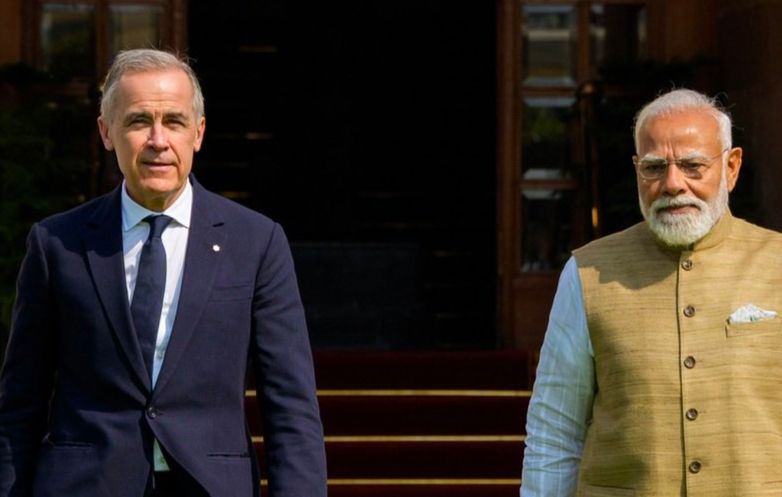
The indictment also comes as India and Canada cautiously rebuild relations after nearly three years of diplomatic hostility. Following Trudeau's resignation after declining public support, Prime Minister Mark Carney has moved to restore engagement with New Delhi. The two countries have resumed high-level contacts and restarted negotiations on a long-pending trade agreement, signalling a broader effort to reset bilateral ties.
Whether the indictment ultimately reshapes the wider political debate over foreign interference remains to be seen. What it has already done, however, is alter the diplomatic narrative surrounding Nijjar's killing by attributing it to an organised criminal conspiracy rather than alleging direct involvement by the Indian government, thereby strengthening New Delhi's position in one of the most contentious disputes in recent India-Canada relations.