
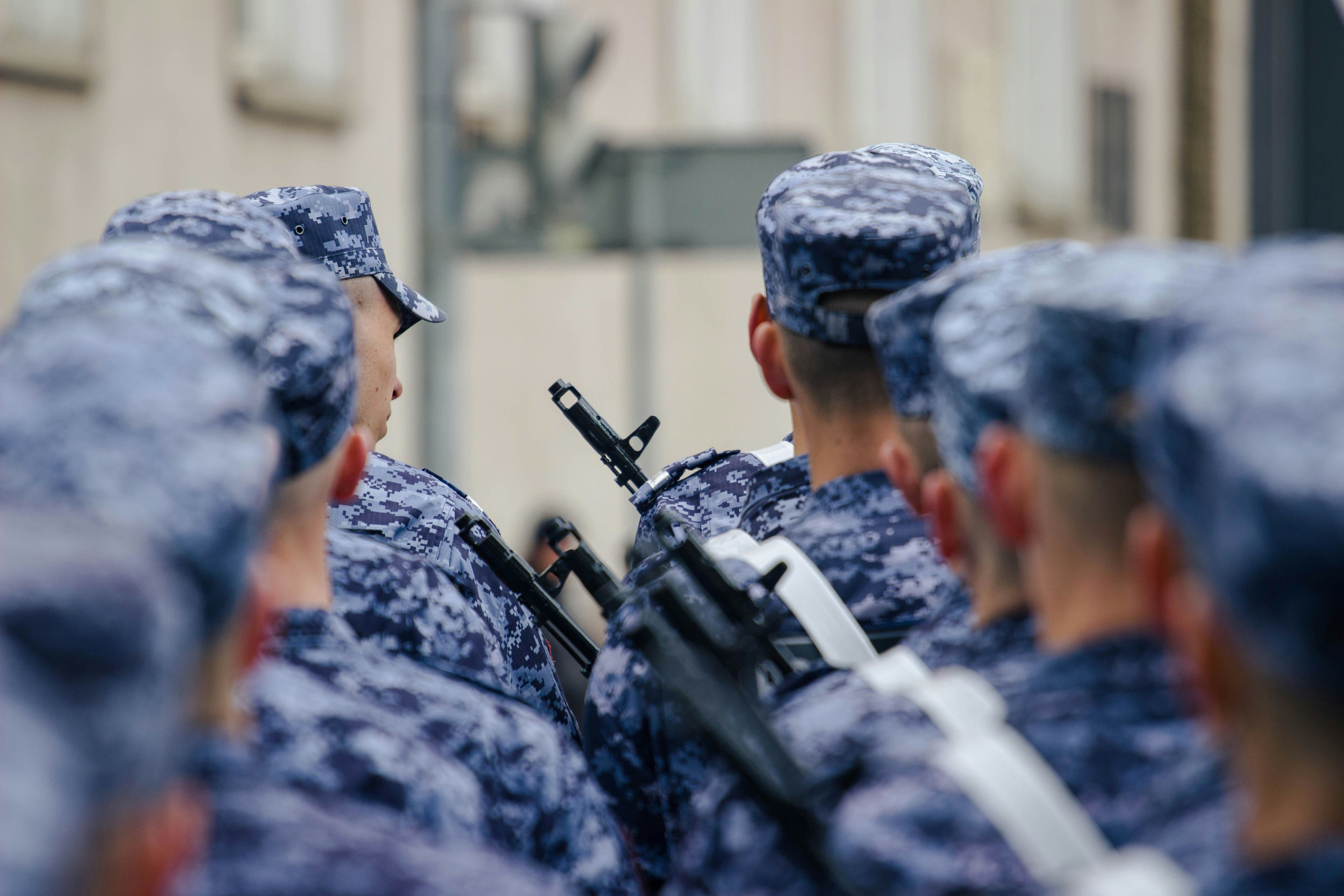
Now in its fourth year, the Russia-Ukraine war has pushed Moscow to look beyond its borders to replenish its armed forces. Russia is recruiting men from India, Nepal, Cuba, North Korea and several African countries to fight in Ukraine. While some enrol for higher wages, others are recruited through deception or coercion – a recent investigative report by DW found that migrants have been coerced into signing contracts written in Russian, a language many do not understand, or threatened with visa problems if they refuse military service.
This pattern lets the Kremlin keep the war going while avoiding another politically costly nationwide mobilisation. Recruits are typically lured with promises of jobs in construction, security or logistics, only to find themselves deployed to the front after arriving.
In March, Russian Foreign Minister Sergei Lavrov denied any such recruitment, telling a press conference alongside his Kenyan counterpart that "no one is being hired”. Human rights groups disagree, saying the pattern bears the hallmarks of human trafficking, especially among recruits from economically vulnerable regions.“This recruitment targets people in economically, socially and legally precarious life situations,” Ilya Nusov, co-author of a joint investigation reports by the International Federation for Human Rights (FIDH), Truth Hounds and the Kazakhstan International Bureau for Human Rights and Rule of Law, told DW.
Several documented cases may amount to trafficking under the UN Palermo Protocol, especially where recruits are deceived about the nature of the work or made to sign Russian-language contracts.For many, frontline salaries far exceed what they earn at home, often with signing bonuses and compensation for families.
Moscow needs roughly 30,000 to 35,000 new recruits each month to offset battlefield losses, a report by the Africa Center for Strategic Studies says. Charles Mukota, father of Kenyan recruit Oscar Khagola Mutoka, said his son did not tell the family where he was going. A week after leaving, Oscar sent a photo of himself in uniform and was never heard from again; he was reportedly killed soon after, though his family has been unable to recover his body.
Arman Mondol from Bangladesh said he wanted to work abroad to lift his family out of poverty. Promised a warehouse job, he was instead forced to sign a Russian-language military contract. Recruits, he said, were “used as human shields”. Mohammad Sufiyan from Hyderabad said his documents were confiscated and he was pressured into joining a private military company, and described nightmares of drone strikes and gunfire after his return.
Despite Russia claiming it has stopped recruiting from certain countries, predatory recruitment continues. Ukrainian authorities predict Russia will engage more than 18,500 foreign nationals in 2026 – the highest annual figure since 2022 – says Maria Tomak, associated researcher at Truth Hounds. About 20 per cent of recruits don’t survive more than four months, the same investigation found, with some reporting ill-treatment by fellow soldiers or commanders.
Russia’s war economy has been taking a hit. Casualties over four years are nearing 1.4 million, CSIS estimates, underscoring the immense human cost of sustaining offensive operations. Gains in eastern Ukraine have come at a heavy price in equipment and personnel too: military spending and the cost of replenishing the armed forces now account for roughly 6–7 per cent of Russia’s GDP, citing the Stockholm International Peace Research Institute (SIPRI) and Russia's own finance ministry – a burden that has fed inflation and labour shortages at home.
US Senator Marco Rubio said on July 23 that Russia was losing “5,000 to 6,000 soldiers a week”, calling it a “staggering number” though he added the war hadn't been good for Ukraine either, Sky News reported.North Korean troops are also a sizeable part of Russia’s fighting force, deployed under the Comprehensive Strategic Partnership Treaty signed with Pyongyang in 2024.
The pact includes mutual defence aid; in return, North Korea has supplied artillery and missiles, notably in Russia's Kursk region, for economic assistance and military technology. The active front spans over 1,000 km, straining both sides’ logistics. Since capturing Avdiivka in early 2024, Russian forces have made incremental gains towards Pokrovsk and other strategic positions, at heavy cost.
A partial call-up in September 2022 triggered public protests and administrative chaos, prompting many military-aged Russians to leave – a repeat the Kremlin is keen to avoid. It has instead widened its recruitment pool through contract soldiers, financial incentives, prisoners, migrants and foreign nationals. Most foreign recruits come from India, Nepal, Sri Lanka, Cuba, Kenya, Sierra Leone, Somalia and Uganda – economically vulnerable countries – as well as Central Asian migrants already living in Russia, from Kyrgyzstan, Tajikistan and Uzbekistan.
For many, the incentives are financial, and in some cases include a pathway to Russian citizenship. While the Kremlin maintains that foreign recruits enlist voluntarily, the Indian and Nepali governments have repeatedly sought the return of their citizens after reports of deaths and injuries. By recruiting manpower from abroad, Russia avoids national unrest while shielding its middle class from the war’s direct effects. Lavrov insists no one is being hired. Twenty per cent of those who “volunteer” don't live to see four months of it.