
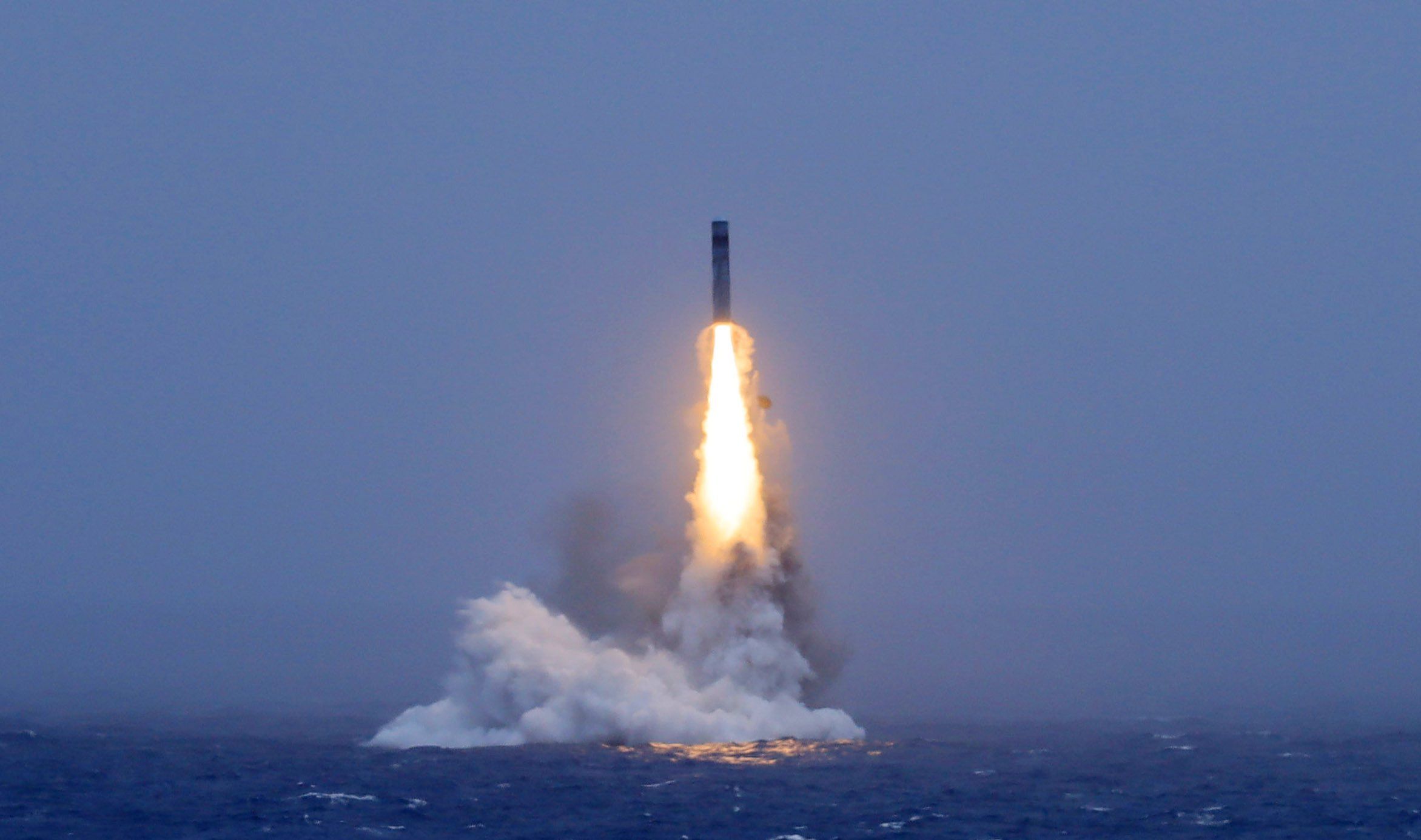
China test-fired a long-range ballistic missile carrying a dummy warhead from a nuclear submarine on Monday, unsettling the US, Australia and Taiwan. The test was in compliance with international law and practice, with neighbouring nations notified in advance. Tensions in the Asia-Pacific, however, have risen sharply since China stepped up military exercises near Taiwan.
The test comes two years after China tested an intercontinental ballistic missile (ICBM) over the Pacific in 2024. “The test is another step in Beijing continuing to modernise its forces and demonstrate capability to countries in the Pacific. We should expect more in the years ahead. The message to everyone in the region is that China desires regional preponderance,” Manoj Kewalramani, Chairperson of the Geostrategy Programme at the India-based Takshashila Institution, told NWS.
The latest test suggests that timing and precision now carry greater weight in world politics, and that Beijing’s launch points to a likely arms race. “China is preparing for a new and dangerous world; it is preparing for war. Countries like the US and Germany are testing more and more dangerous weapons. It is a trend of sorts to arm oneself to the T. Russia tested the Oreshnik missile in November 2024 – it’s a missile that can destroy deep bunkers. China views the US as a threat. The question here is, will India jump in on the arms race?" Anuradha Chenoy, former JNU professor at the School of International Studies, told NWS.
“The US has viewed China as a pacing threat, probably as its biggest competitor when it comes to developing and testing more advanced and dangerous weapons. China has possibly caught up with, or even overtaken, America in the arms race. The test also indicates that warning time has shrunk, and that China’s reciprocation in case of an attack would be quick and severe,” she added.
Even so, China and the US are keeping diplomatic channels open. Their rivalry is now best described as a managed competition. The recent meeting between the two sides appears to have averted the risk of a war risk for now.
Yet, the arm race between the big powers indicates that the world may be entering a new era reminiscent of the Cold War, when the time available to determine whether a missile launch was real, accidental or a false alarm was limited. This raises the chances of miscalculation and makes deterrence more important than ever, strategic analysts believe.
The latest missile test follows a meeting between US President Donald Trump and Chinese premier Xi Jinping, at which both sides signalled a willingness to keep diplomatic channels open. It underscores how diplomatic engagement does not necessarily slow the advancement of military capabilities. The next era of power competition may well depend on how quickly leaders calculate the need for deterrence.