
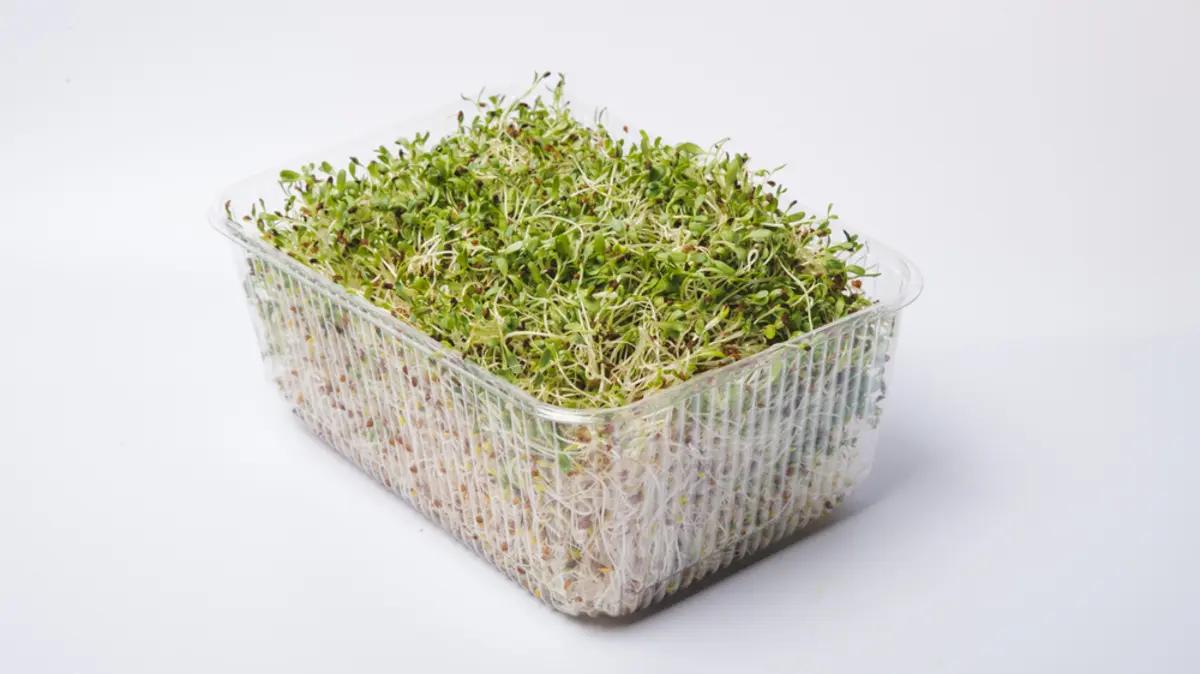
Finland has declared a Salmonella outbreak that caused two deaths and sickened dozens across Europe, after EU food safety investigators traced the source to alfalfa seeds supplied by an Indian exporter. Finnish health authorities closed the domestic case on July 13, weeks after European regulators traced the outbreak to a contaminated alfalfa sprouted-seed supply chain running from India through Italy to at least ten other countries.
In its closing report, the Finnish Institute for Health and Welfare (THL) said two people died within 30 days of testing positive for the outbreak strain, though Salmonella alone may not have caused their deaths, as both had underlying illnesses. THL recorded 64 suspected cases, of which 37 were confirmed as the outbreak strain, detected between March and May, with one further case in June. Patients ranged from four to 86-years-old, averaging 43; 41 of the 64 were women, and ten were hospitalised.
Finland’s assessment builds on an earlier joint investigation by the European Food Safety Authority (EFSA) and European Centre for Disease Prevention and Control (ECDC), which on June 25 listed two deaths in Finland linked to the outbreak – one confirmed, one probable.
The India link
EFSA’s Rapid Outbreak Assessment was explicit about where the trail led. Investigators said traceability work in Italy “identified a common seed supplier in India”, naming the region as a potential origin of the contamination. Two seed batches, referred to as Batch A and Batch B, were supplied by an unnamed exporter – Indian Supplier C – to an Italian company, Italian Seed Supplier B.
The seeds arrived in Italy on August 10, 2025 and were sold on to Italian Seed Supplier A in October, which repackaged them into numerous lots before distributing them across Europe. Italian Seed Supplier B had tested a sample from Batch A in November 2025 and returned a negative result, yet other batches from the same consignment were later linked to the outbreak – a gap investigators have not explained and are still probing.
The story so far
Ireland first alerted European authorities in April after detecting three cases of Salmonella Bovismorbificans; investigators subsequently found genetically related infections across the continent. The joint EFSA-ECDC assessment ultimately recorded 109 confirmed cases of Salmonella Bovismorbificans ST377 between mid-January and mid-May 2026, across ten EU countries and the UK, with 18 hospitalisations.
Finland recorded the highest caseload, with 35 confirmed infections, followed by the UK (30) and the Netherlands (17). The remaining cases were spread across Germany, Ireland, Belgium, Denmark, Austria, Luxembourg, Czechia and Spain.
Genome sequencing showed patients across multiple countries were infected with closely related bacteria, pointing to a common source. The outbreak strain was also detected in water samples used for sprouting in the Netherlands and Northern Ireland, and an unnamed Finnish sprout producer was epidemiologically linked to the Finnish cases.
Dry seeds can carry Salmonella for extended periods, and the warm, humid conditions needed for germination can allow the bacteria to multiply rapidly, making sprouted seeds a persistent food safety risk. After the implicated batches were withdrawn and destroyed, case numbers fell sharply, with no new outbreak-linked cases reported in June. EFSA and ECDC cautioned, however, that further infections cannot be ruled out until investigators pin down exactly where the contamination occurred.
What patients ate
Most Finnish patients reported eating sprouted seeds at a restaurant. Both Belgian patients had eaten bread containing sprouted seeds. Several Luxembourg patients recalled pre-packed salads. Some patients in the UK and Denmark could not recall eating sprouted seeds in any form. Salmonellosis, a common foodborne infection, leads to severe diarrhea, fever, and stomach cramps.
The unnamed exporter
The Indian exporter at the head of the supply chain has not been publicly identified in any investigation documents reviewed by NWS. Official reports refer to the companies only as Indian Supplier C, Italian Seed Supplier B and Italian Seed Supplier A; NWS could not independently establish the identities of the Italian firms either. Crucially, none of the public reports alleges wrongdoing by the Indian exporter or concludes that the contamination itself occurred on Indian soil – only that the seeds entered the European supply chain via that source.