
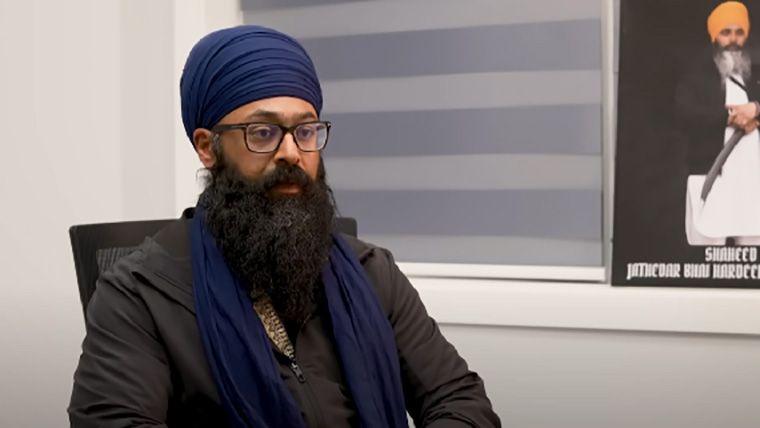
Five United Nations human rights experts have urged Ottawa to take all feasible measures to protect Sikh activist Moninder Singh, reviving concerns over alleged Indian government-backed threats against Khalistani activists on Canadian soil. Canadian authorities have warned 44-year-old Singh four times since 2022 of credible, imminent threats to his life.
The rapporteurs’ nine-page letter, dated June 3 and made public on August 3 under the standard 60-day disclosure procedure, warned that the threats “fall within a broader pattern of transnational repression by Indian authorities against Sikh activists in different countries, including Canada”. It was signed by Ben Saul, Gina Romero, Andrea Bolaños Vargas, George Katrougalos and Nazila Ghanea – special rapporteurs who hold mandates from the UN Human Rights Council but do not speak for the organisation itself. The communication has also been passed to New Delhi, which has been invited to respond; India has consistently denied targeting Sikh activists abroad, dismissing such claims as politically motivated.
The rapporteurs said “deeply concerned at the allegations that Moninder Singh appears to have been targeted directly before or after instances of cooperation with or reporting to United Nations entities in relation to the targeting of Sikh activists by Indian authorities” adding that such conduct, if verified, could amount to unlawful reprisals against his human rights work. They pressed Ottawa to “take all feasible measures at its disposal to protect” him and his family, to “accelerate the investigations into these allegations”, and to “hold perpetrators accountable” while ensuring “adequate remedy to victims” and steps “to prevent reoccurrence”.
Singh is spokesperson for the British Columbia Gurdwaras Council and Sikh Federation Canada. He told AFP in Geneva in March that he had travelled to the UN’s European headquarters to press for international action against transnational repression of Sikh activists. India regards both Singh and his late friend Hardeep Singh Nijjar as alleged supporters of Khalistan, a decades-old separatist movement – dating to India's 1947 partition – seeking an independent Sikh state; New Delhi has previously listed Nijjar as a “terrorist” over the campaign, a designation Canada has not endorsed.
A Killing That Strained Ties, And a Subsequent Thaw
Singh’s case follows the 2023 killing of Nijjar, shot dead outside the Vancouver-area Sikh temple he led. Then-prime minister Justin Trudeau publicly accused India of involvement – a charge Canadian intelligence later echoed.
Relations eased considerably after Mark Carney became prime minister in March 2025, and further still following a joint US-Canada operation, codenamed Operation Hard Ball, that indicted Indian gangster Lawrence Bishnoi and his associate Satinderjeet Singh, alias Goldy Brar, over orchestrating Nijjar’s murder. Royal Canadian Mounted Police (RCMP) Deputy Commissioner Lisa Moreland subsequently said investigators had found no evidence linking Indian officials to the killing and that New Delhi had cooperated with the probe – a claim CBC News noted appeared to contradict earlier statements by Canadian officials, and one India’s government quickly welcomed. Four Indian nationals remain charged with murder and conspiracy in the case, with none of the allegations yet proven in court.
Canada’s public safety minister has since declined to say whether Ottawa still believes India ordered the killing, even as ties continue to warm following Carney's visit to India in March.
What Comes Next
Though the rapporteurs’ letter makes no findings of fact, it keeps the allegations under international scrutiny, and any fresh attack on a Sikh activist would likely draw renewed attention from both Ottawa and UN mechanisms. Singh, however, remained defiant and said, “We won't be silenced”. He objected to Canada normalising ties with India “without anything changing”.
Saul, one of the five rapporteurs, raised similar concerns after Nijjar’s killing, saying he was among five UN experts who wrote to India in 2024 asking why Nijjar had been listed as a “terrorist” and what steps had been taken to investigate his death. The response, he said, left the experts “absolutely not satisfied”. Sikh activists are now pushing the Human Rights Council to appoint a dedicated expert on transnational repression.