
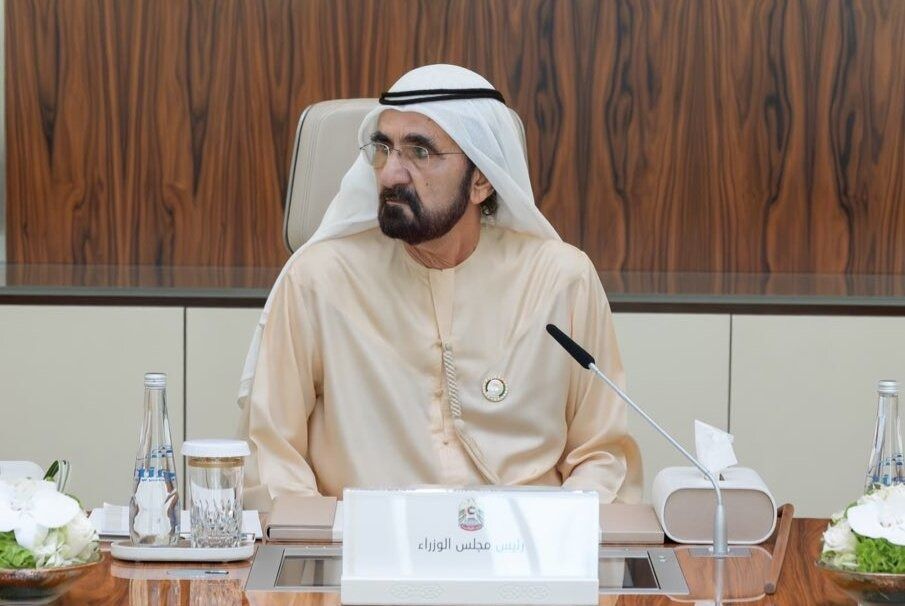
A Sudanese man confronted Sheikh Mohammed bin Rashid Al Maktoum, monarch of Dubai and prime minister of the UAE, on a central London street on Saturday (August 8), accusing the Emirates of arming the militia at war with his country. The matter snowballed when he was allegedly answered with a racial slur from a member of the ruler’s entourage.Footage circulating online, filmed in Knightsbridge, shows the man shouting across the road as Sheikh Mohammed walked past with his group: “Emiratis and UAE, they’re killing Sudanese people...UAE is killing people in my country. Stop killing my people.”
A man who appeared to be part of the entourage crossed the road and hurled abuse back, including a racial slur.The exchange revives a question that has trailed the UAE since Sudan’s civil war began: why a country that casts itself as a mediator stands accused of arming one side.The war broke out in April 2023, when a power struggle between the Sudanese Armed Forces (SAF) under General Abdel Fattah al-Burhan and the Rapid Support Forces (RSF) under Mohamed Hamdan Dagalo turned violent.
The RSF grew out of the Janjaweed militias blamed for atrocities in Darfur in the 2000s; it and the army had governed together after the 2019 overthrow of Omar al-Bashir, before the alliance collapsed over how to fold the RSF into a unified military. Fighting spread from Khartoum across the country within weeks. The RSF seized most of Darfur, while the army held the north, east and much of the capital region. Both sides stand accused of atrocities against civilians, and the UN describes the resulting displacement and famine as one of the world’s worst humanitarian crises.
The UAE has repeatedly denied arming the RSF, and points to a UN Panel of Experts report from April 2025 that found no evidence of such support. But researchers and UN investigators have reached the opposite conclusion: Chatham House has named the UAE as the RSF’s most significant external backer, alleging it has supplied drones, anti-aircraft missiles and mortars – all of which Abu Dhabi disputes. Sudan took the dispute to the International Court of Justice in 2025, accusing the UAE of complicity in genocide against the Masalit people of West Darfur.
On May 5, 2025, the court declined to hear the case, ruling that a reservation the UAE entered when it signed the Genocide Convention put the matter outside its jurisdiction – a procedural finding the court stressed was not a verdict on the underlying allegations. A Chatham House study found the UAE was also Sudan’s largest gold buyer in 2024, while the RSF built extensive commercial interests in the country’s gold-mining regions – control that has helped fund its weapons purchases and reinforces the UAE’s standing as a global bullion hub.
Sudan’s Red Sea coastline, on shipping lanes linking the Mediterranean, the Gulf and the Indian Ocean, sharpens the strategic stakes further.Talks have also failed in the process. A UK-hosted conference in April 2025 broke up without agreement, chiefly because Arab powers could not settle on sequencing: Saudi Arabia and Egypt pushed to halt the fighting first, while the UAE insisted a civilian-led transition come before any truce. The UAE, a member of the “Quad” alongside the US, Saudi Arabia and Egypt, has since called publicly for an immediate humanitarian ceasefire, and in July 2026 the RSF said it would join a truce proposed by the group – an offer Burhan rejected unless the RSF disarms first.