
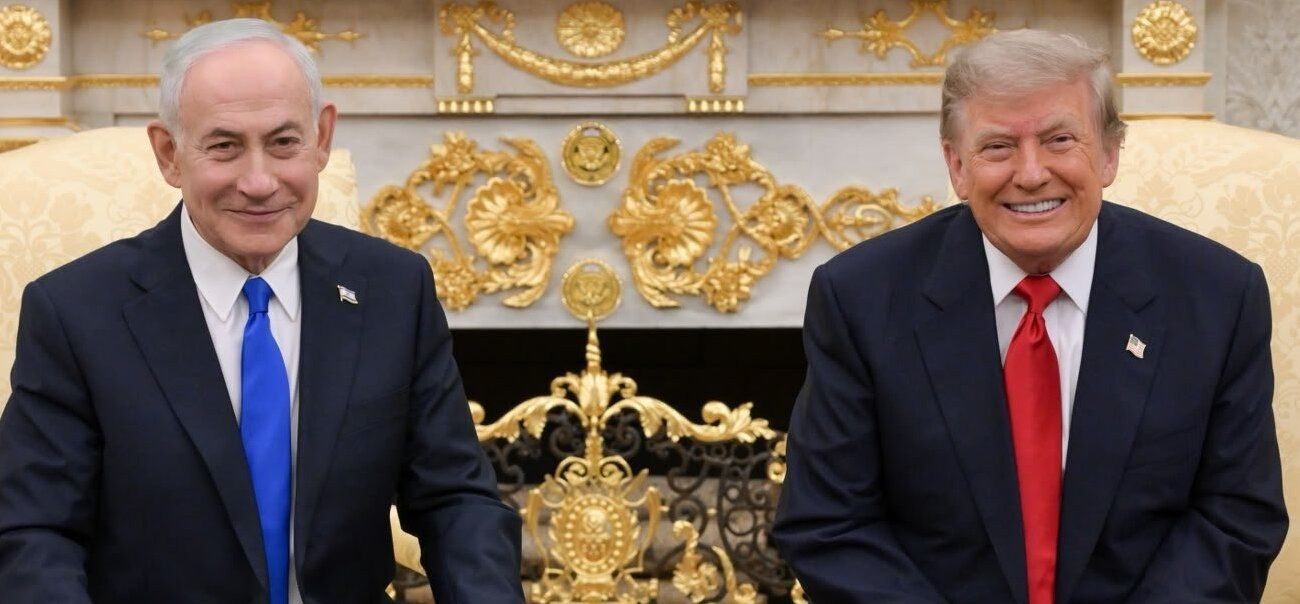
Israeli Prime Minister Benjamin Netanyahu’s rejection of US President Donald Trump’s 15-point Gaza plan has exposed a fundamental dispute over the sequencing of the proposed end to the war – whether Hamas must disarm before Israel withdraws, or whether an Israeli withdrawal must come first to secure Hamas’s disarmament. The disagreement could now determine whether Trump’s roadmap can move Gaza towards a post-war political order or whether the deadlock risks stalling the US-backed effort to end the conflict.Netanyahu, on Sunday (August 9), turned down Trump’s 15-point plan for Gaza, saying an Israeli military pullout from Gaza would not happen until Hamas was “genuinely” disarmed.
This is a rather rare, public rejection – Trump and Netanyahu have maintained a close relationship, even while disagreeing over tactics and timing.Trump’s Board of Peace, last month, said that it had reached an agreement for the “complete disarmament” of Hamas and other armed groups in Gaza. The Trump-backed roadmap also envisages an eventual transition of power to an independent Palestinian National Committee.
The peace plan received support by mediators including Egypt, Qatar and Türkiye, as the Trump administration invested considerable diplomatic capital in bringing the conflict towards a post-war settlement. “Israel rejects the 15-point document,” Netanyahu said at a cabinet meeting on Sunday, the BBC reported. “Israel does not accept the 15-point document. The IDF will not carry out any withdrawal until Hamas is disarmed. And when I say the disarming of Hamas, it means heavy weaponry, lighter weaponry, all weaponry. And we are talking about genuine disarmament, not fictitious disarmament.
Right now, we are talking with the Americans about this issue,” Netanyahu said. Israel, since agreeing to a ceasefire last October, has continued to carry out strikes on Gaza. At the centre of the Trump-backed 15-point plan is ending the conflict and establishing a post-war order in Gaza. It proposes a phased withdrawal of Israeli troops as Hamas would surrender its weapons, eventually allowing an independent Palestinian National Committee to take over governance of Gaza.
Under the plan, an International Stabilisation Force, along with a Palestinian police force, would help maintain security in areas no longer controlled by Israel. The plan builds on Trump’s 20-point Gaza plan, announced in October 2025. That plan, too, envisaged ending the conflict through the exchange of hostages and prisoners, an immediate ceasefire and the demilitarisation of Gaza.
The 20-point plan also outlined temporary international governance of Gaza and support for regional security. Like the current plan, it aimed at resolving multiple issues at the same time. Netanyahu is objecting because he fears that withdrawing forces before Hamas surrenders its weapons could allow the group to rebuild its military capacity. Hamas has agreed to hand over weapons, but it wants Israeli forces to stop military operations in the region.
Netanyahu is also facing pressure from far-right members of his coalition, who want to retain continued military control in Gaza. He also faces elections in October. Therefore, agreeing to a proposal that appears to be a compromise could be politically costly. The rejection is therefore a reflection of a deeper disagreement over who controls Gaza after the war and what guarantees Israel receives upon withdrawing its troops.
Trump and Netanyahu have maintained a close, cordial relationship but political mood in the US has slowly veered against Israel in recent times, as the latter continue to remain hostile towards any proposal of peace. The latest disagreement suggests that Trump’s desire to claim progress in ending West Asia’s wars is coming up against Netanyahu’s insistence that Israel must retain control over its own security decisions.Mediators must now find a way to give Palestinians and Hamas a meaningful path towards an Israeli withdrawal while providing Israel with credible security guarantees. If they cannot bridge that divide, the proposal is likely to remain stalled – leaving the central question of who controls Gaza, and under what security arrangements, unresolved.