
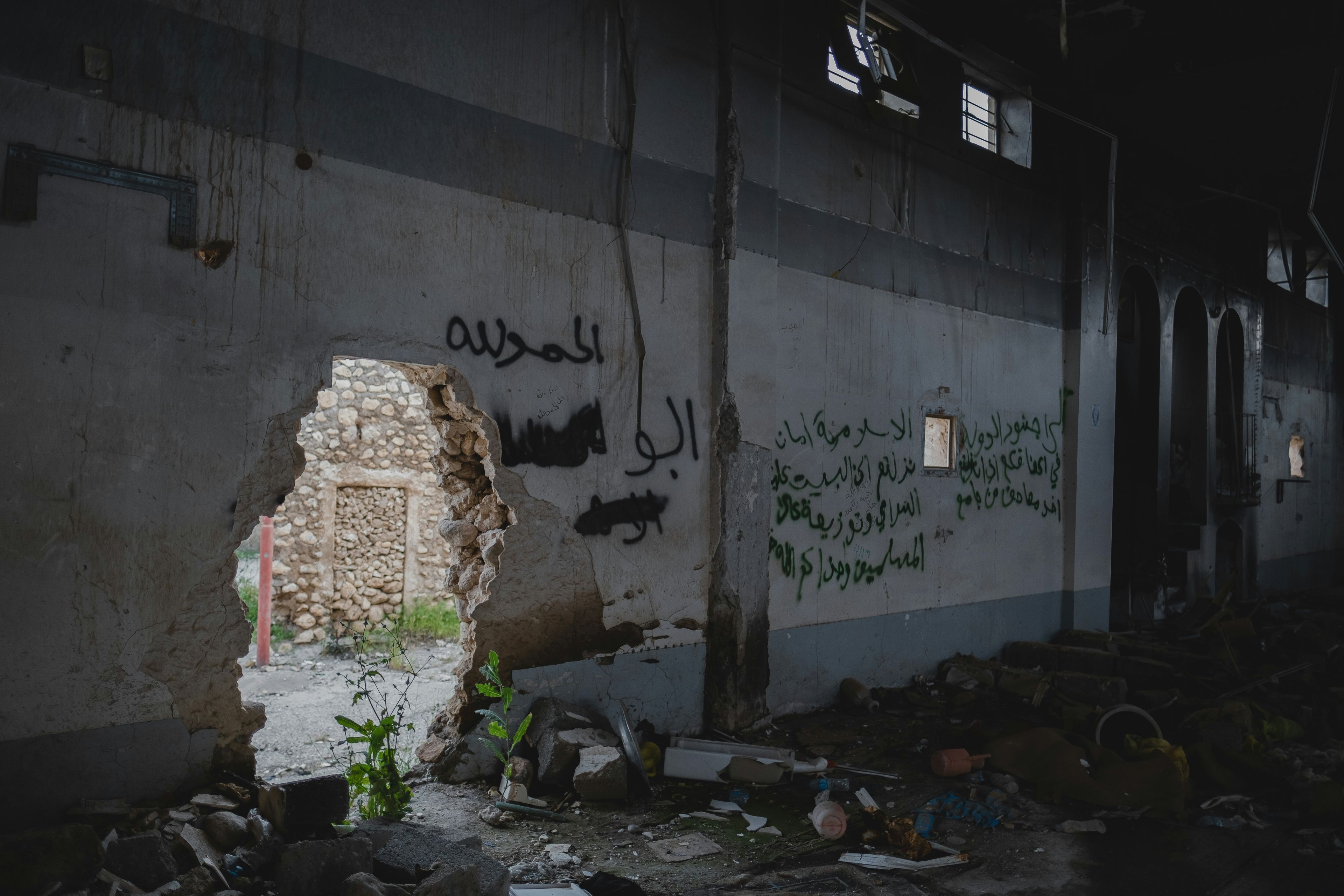
The US and Saudi Arabia carried out joint strikes against Iran-backed militias in Iraq on Tuesday (July 28, 2026), killing at least 20 militants and six Iranian advisers, after the groups attacked American forces and Saudi energy infrastructure. Iraq’s Popular Mobilisation Forces, the Shia paramilitary umbrella with allegedly deep ties to Tehran, called the raids “a highly dangerous escalation” and a violation of Iraqi sovereignty. The strikes landed just weeks after Iraq’s prime minister confirmed the last US troops will leave the country by the end of September, ending a 23-year presence.
Nearly five months after Israeli and American strikes on Iran’s nuclear programme triggered open conflict, it has become tempting to read every subsequent flashpoint – Iraq, Yemen, Lebanon, Syria – as a single Iranian proxy network being systematically dismantled. The reality, however, is messier and more multilateral. The US, Israel, Saudi Arabia and the UAE are each pursuing distinct, often competing interests across these same theatres, sometimes coordinating, sometimes not, and sometimes clashing with each other entirely independent of Iran. What is unfolding is less a single war radiating from Tehran than a set of overlapping regional contests, in which Iran’s allies are one significant party among several.
Iraq: A Contest Over the State Itself
Iraq’s militias remain the most direct flashpoint precisely because of how embedded they are in Iraq’s own state architecture. Factions such as Kataib Hezbollah, Asaib Ahl al-Haq and Harakat al-Nujaba have grown into powerful military and political actors since the 2003 US invasion, operating under the PMF umbrella while maintaining close ties to Iran’s Revolutionary Guard Corps. Kataib Hezbollah in particular is widely assessed to function as a de facto branch of the IRGC's Quds Force, which finances, trains and helps direct it. But Washington has its own stake independent of Tehran’s calculations: successive US administrations have used strikes on these groups to shape Iraq’s post-withdrawal security posture, not merely to punish Iranian influence – and Iraq’s own government, caught between the two, has its own domestic incentive to resist both an open-ended US presence and unchecked militia power. This is a three-way contest over who controls the Iraqi state, not a two-sided one.
Yemen: Three Wars in One Country
Yemen makes the multilateral picture starkest, because it now contains at least three distinct conflicts rather than one. The Houthis declared a naval blockade on Saudi-linked shipping in the Red Sea last week and have since struck at least two Saudi tankers, reviving fears for the Bab al-Mandeb Strait. That sits alongside a near-total breakdown of the 2022 Saudi-Houthi truce as reported earlier by NWS. President Donald Trump personally backed a Saudi-led strike on Sanaa airport in mid-July, and Saudi Arabia has since resumed wider operations against Houthi positions with US backing – its own war aim, not simply a proxy skirmish on Iran’s behalf. Meanwhile, on Socotra, forces of the UAE-backed Southern Transitional Council have consolidated control after sweeping across southern Yemen in December, clashing with the Saudi-backed government – a rivalry between two Gulf states that has nothing to do with Iran at all, yet is unfolding in the same fractured territory. Yemen today is a Houthi-Saudi war, a Saudi-Iran proxy contest, and a Saudi-UAE rivalry, layered on top of one another.
Lebanon: A Domestic Calculation as Much as a Regional One
In Lebanon, Hezbollah continues to reject demands that it disarm, even as Israel carries out near-daily strikes across the south under a ceasefire framework it says the group keeps violating. Israel’s defence minister has threatened to “burn all of Lebanon”, while Hezbollah has warned it will resume firing missiles if operations intensify. But Hezbollah’s calculus here is not purely a function of Iranian instruction; the group is also weighing its own severely diminished military position, its standing within Lebanon’s Shia community, and its role in domestic Lebanese politics after heavy leadership losses. Israel, for its part, is pursuing its own long-standing goal of permanently degrading Hezbollah’s arsenal, a goal that predates and outlasts the current Iran conflict. Both sides have reasons of their own for how this plays out, independent of Tehran-Washington dynamics.
Syria: From Iranian Corridor to Israeli-Backed Buffer
Syria’s role has flipped since Bashar al-Assad’s fall in December 2024. Where Assad’s Syria once served as Iran’s central logistics corridor for arming Hezbollah, the new government under Ahmed al-Sharaa has spent the past year dismantling that network rather than hosting it – intercepting weapons shipments bound for Hezbollah and disrupting Iran-linked plots along the Israeli border, cooperation that has quietly earned Damascus support from both Washington and Jerusalem.
Syria has stayed formally neutral in the wider Iran-US war, and Israeli and Syrian officials have even held direct, US-mediated talks over a new border security arrangement. Residual Iranian and Hezbollah smuggling cells remain active in pockets of southern Syria, but they now operate against the Syrian state’s wishes, not with its cooperation – making Syria less a battleground where foreign militaries collide, and more a test of whether a former Iranian client state can fully sever the relationship under pressure from all sides at once.
A Multipolar Middle East, Not a Two-Sided One
The throughline across Iraq, Yemen, Lebanon and Syria is not that Iran is orchestrating a unified proxy campaign being systematically claimed and countered by the US. It is that several powers – the US, Israel, Saudi Arabia, the UAE and Iran, alongside the semi-autonomous groups each supports – are simultaneously pursuing distinct national interests across the same overlapping terrain, occasionally aligned, occasionally in direct competition with one another, and only sometimes about Iran at all. Reading the region through a single Iran-versus-the-rest of the world lens misses the Saudi-UAE rivalry playing out in Yemen’s south, Washington’s own withdrawal calculations in Iraq, and Israel’s independent aims in Lebanon. The greater risk, if there is one, is not a single axis of confrontation escalating – it is that several genuinely separate conflicts, each with its own logic, ignite at the same time and become indistinguishable from one another.