
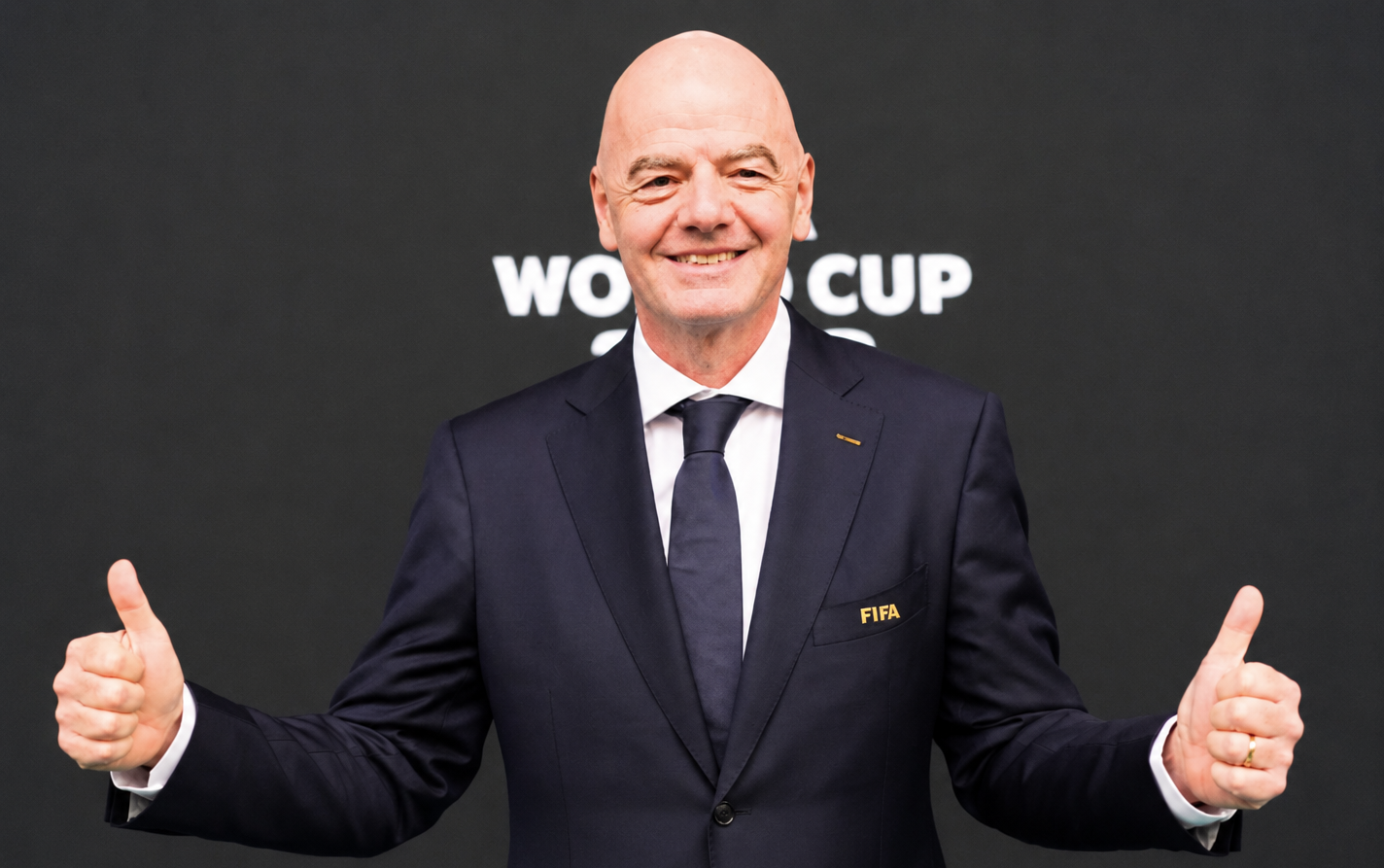
Gianni Infantino was the only official who stood untainted in 2015 when the US Justice Department’s massive indictment brought down the entire FIFA leadership, including then-president Sepp Blatter. Infantino won a contested race for the FIFA presidency in 2016, beating Bahrain’s Sheikh Salman 115-88 in the runoff, then enjoyed unopposed elections in 2019 and 2023. His re-election bid for 2027, however, is now under a cloud.
For a man who steered FIFA through a World Cup that broke ticketing and viewership records just weeks ago, Infantino has had a brutal August. Even before this latest story, he had lashed out at critics of the tournament, telling them to “reflect, meditate, pray or watch a football match” instead – a combative instinct that has only fuelled the sense in Europe that he answers to no one. The Union of European Football Associations (UEFA) president Aleksander Ceferin, Infantino’s longtime rival in football politics, reportedly boycotted the World Cup final itself in protest at the Balogun ruling, a sign the rivalry runs well beyond one press conference.
The latest blow came when a report said that UEFA quietly paid a six-figure sum to a woman who allegedly had an affair with him during his years as the European body’s general secretary. The money, according to the Daily Telegraph, came bundled with help landing a new job and funding for an MBA. UEFA has confirmed a “departure payment” was made, saying it was “in line with the regulations that existed for departing staff at the time”. Infantino has denied any wrongdoing; a spokesman said any suggestion of misconduct is defamatory, and insisted no employee has ever complained about his behaviour.
The real fight: privatising the World Cup
The scandal is only a subplot. The main event is FIFA Future Enterprise (FFE) – Infantino’s plan to spin off commercial rights to the World Cup and other tournaments into a separate company, then sell stakes to private investors. He pitched it as a way to funnel more money to football worldwide, reportedly offering each of FIFA’s 211 member associations US$40 million if they backed it. Three continental confederations rejected it outrightly. UEFA went further, voting unanimously to boycott FIFA competitions until the plan was dead.
Infantino insisted on the plan at first but had to scrap FFE within days under pressure from UEFA. The climbdown didn’t help him. UEFA’s statement afterwards was scathing: it accused FIFA of running “secret schemes on fast track timescales, cooked up by faceless individuals”, and demanded accountability. The players’ union FIFPRO went further still, declaring the episode “a profound abuse of presidential power” and calling for real governance reforms rather than a cover-up. A week on, the boycott is still active. UEFA reaffirmed it even after the plan’s withdrawal and an apology from Infantino, and the Confederation of North, Central American and Caribbean Association Football (CONCACAF) said that it too had lost confidence in his leadership.
Why Europe has turned
Gianni Infantino is a true-blue European football official, having run UEFA’s administration for years before taking the FIFA job. That history hasn’t stopped UEFA from turning on him. UEFA’s anger isn’t only about FFE. There is a sense of opacity, with European federations feeling that major decisions are made in back rooms and presented as done deals, FFE being the clearest example.
There is also political entanglement: a disciplinary ruling involving American striker Folarin Balogun during the World Cup drew accusations of political interference after Donald Trump said he had discussed the case with Infantino before FIFA cleared the player, and Norway has moved towards filing a formal complaint over Trump’s role. There is also the question of personal conduct – the affair-payout story, however old, feeds a narrative that Infantino operates by his own rules rather than institutional ones, precisely UEFA’s complaint about FFE.
Two national federations, England and Wales, have gone furthest, formally withdrawing support for his re-election bid. Norway’s football association has demanded his immediate resignation. UEFA vice president Laura McAllister put the underlying demand in personal terms, saying any future FIFA president should be a “custodian of the sport” capable of uniting the game beyond Europe.
Is he actually going to fall?
Not immediately, show the numbers. FIFA’s presidency is decided by one-member-one-vote across 211 national associations, and Infantino’s base outside Europe remains largely intact. Africa’s Confederation of African Football (CAF) has unanimously backed him, delivering 54 votes, his single largest and most reliable bloc. Europe’s 55 UEFA votes stand fully against him. Among the Asian Football Confederation’s (AFC) 46 members, there has been dissent over FFE specifically, but no break with Infantino’s leadership itself. CONCACAF’s 35 votes are split: the confederation criticised FFE as a body, and Mexico’s federation broke ranks to back Infantino personally, while the US position remains a wildcard given its close ties to the tournament and the Trump administration. South America’s CONMEBOL (10 votes) and Oceania’s OFC (11 votes) remain undecided. CONMEBOL has shown unusual caution rather than its past unanimous backing, though Argentina has publicly supported him. If UEFA’s opposition spreads to Asian and American football associations, Infantino's chances would look far more doubtful.
The crisis that isn’t going away
What’s brewing looks less like an imminent coup and more like a structural split – European football increasingly operating as if it doesn’t fully recognise FIFA’s current leadership, even while lacking the votes to remove it. UEFA’s boycott faces its first real tests soon: the FIFA U20 Women’s World Cup next month, and October’s Women's World Cup qualifying play-offs involving England, Scotland, Wales, Northern Ireland and Ireland. Whether, or how, European teams show up will say more about where this is headed than any statement from Zurich or Nyon, the headquarters of FIFA and UEFA respectively.
The presidential election will happen after March 2027, in Morocco, where Infantino is seeking a fourth term. That gives both sides months to either patch things over or harden positions. On current numbers, he survives. Whether he governs a federation that Europe still fully recognises as legitimate is a separate but more consequential question.