
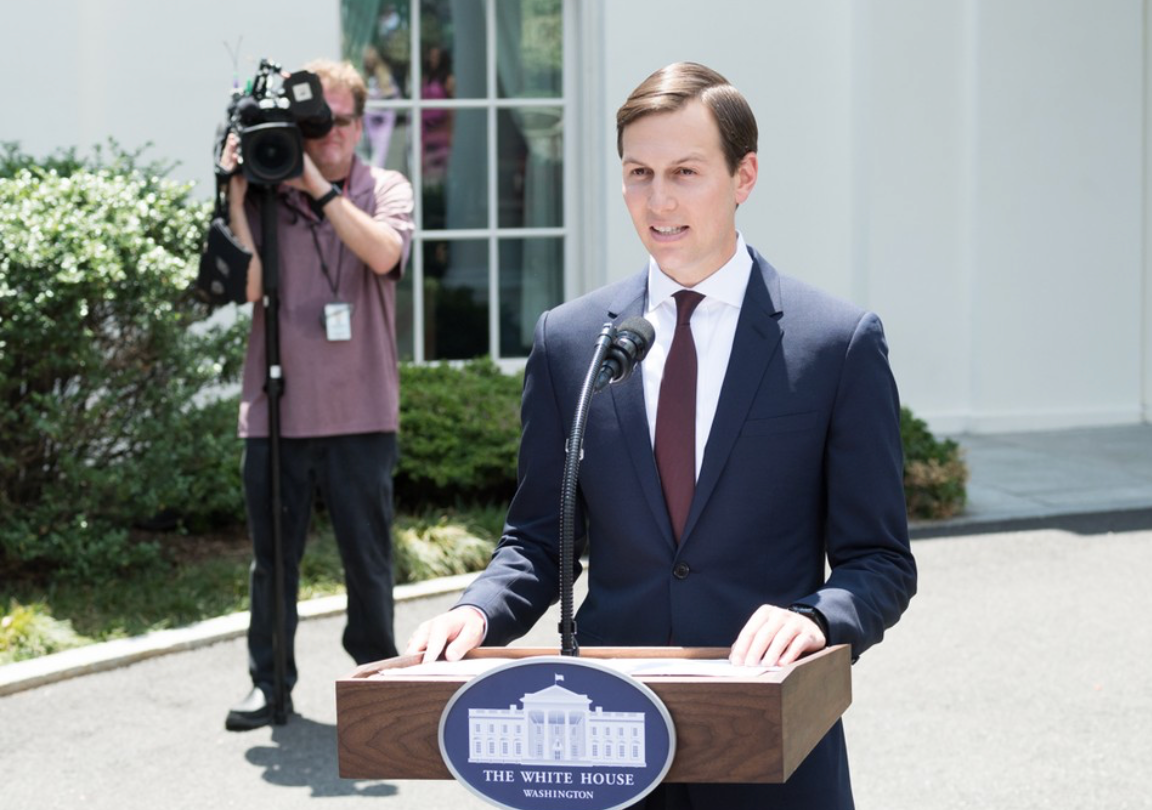
Jared Kushner, US President Donald Trump’s son-in-law and his West Asia envoy, met Hamas leaders in Egypt on Sunday (August 16), a rare direct engagement that comes just days after Israeli Prime Minister Benjamin Netanyahu publicly rejected Trump’s Gaza peace plan. Kushner, one of Trump’s most trusted aides, will now travel to Israel to press Netanyahu on the same roadmap.
The talks, held in the Egyptian coastal city of El-Alamein, mark a renewed diplomatic push involving the US and mediators Egypt, Qatar and Türkiye. The US-backed 15-point plan aims to move Gaza from war to a permanent political and security settlement: an end to hostilities, Hamas’s disarmament, an Israeli military withdrawal, an international stabilisation force, and the handover of Gaza’s administration to an independent Palestinian technocratic body.
Netanyahu has rejected the plan, arguing that Hamas won’t genuinely disarm – surrendering neither its heavy nor its light weapons – and insisting Israeli troops won’t withdraw until it does. Hamas, in turn, says it won’t disarm until Israel withdraws first. Trump’s plan tries to break this deadlock through a phased, simultaneous process: Hamas disarms as Israeli forces gradually pull back, with an international force and Palestinian police securing the vacated areas.
Netanyahu has expressed fears that if withdrawal happens first, Hamas could simply rebuild its military capacity. His rejection is also shaped by domestic politics – Israel’s election is approaching, and accepting a plan seen as making Israel look weak risks costing him support from his right-wing coalition. He also wants Israel to retain full control over its own security decisions. This leaves the Trump administration in a bind: it wants the war ended and a post-war order established, but the outcome now hinges on whether mediators can build credible guarantees linking Hamas’s disarmament to an actual Israeli withdrawal.
That is what makes Kushner’s meeting with Hamas political chief Khalil al-Hayya significant. It was his first meeting with Hamas leadership since the Gaza agreement was reached last October, and a member of the Trump administration sitting down directly with a US-designated terrorist group isunusual by design, a sign Washington is willing to deal directly with Hamas to keep the process alive, even as it insists it hasn’t abandoned Israel’s security demands. Kushner reportedly pressed Hamas for “concrete, verifiable steps” on disarmament, while Hamas reiterated its willingness to demilitarise but tied that to a permanent ceasefire, an Israeli withdrawal, and the promised transfer of power to a Palestinian technocratic administration that would formally exclude Hamas from governance.
Kushner’s visit is effectively a bridge-building exercise, attempting to convince Hamas that Israel needs credible assurances it will actually disarm, while convincing Israel that it can withdraw without opening a fresh security risk. Hamas has told Kushner it is prepared to move towards demilitarisation but has demanded Israeli troops return to the previously agreed ceasefire boundary, the “yellow line”, and has accused Israel of continuing attacks in breach of the truce.
Mediators Egypt, Qatar and Türkiye have invested heavily in the talks, giving the plan a regional framework and pushing for ceasefire and humanitarian access. Several Arab governments, including Saudi Arabia, the UAE and Jordan, have accused Israel of obstructing efforts to end the conflict. For Egypt in particular, Gaza is a matter of national security, since Cairo shares the territory’s only non-Israeli border crossing. When Kushner meets Netanyahu, the challenge will be finding a deal that gives Israel security guarantees without risking an open-ended Israeli presence in Gaza – possibly through a phased process overseen by international monitors.
The meeting is something of a litmus test for how much leverage Trump still has over Netanyahu, and whether his administration can bridge the core disputes over disarmament, withdrawal and guarantees against renewed fighting.