
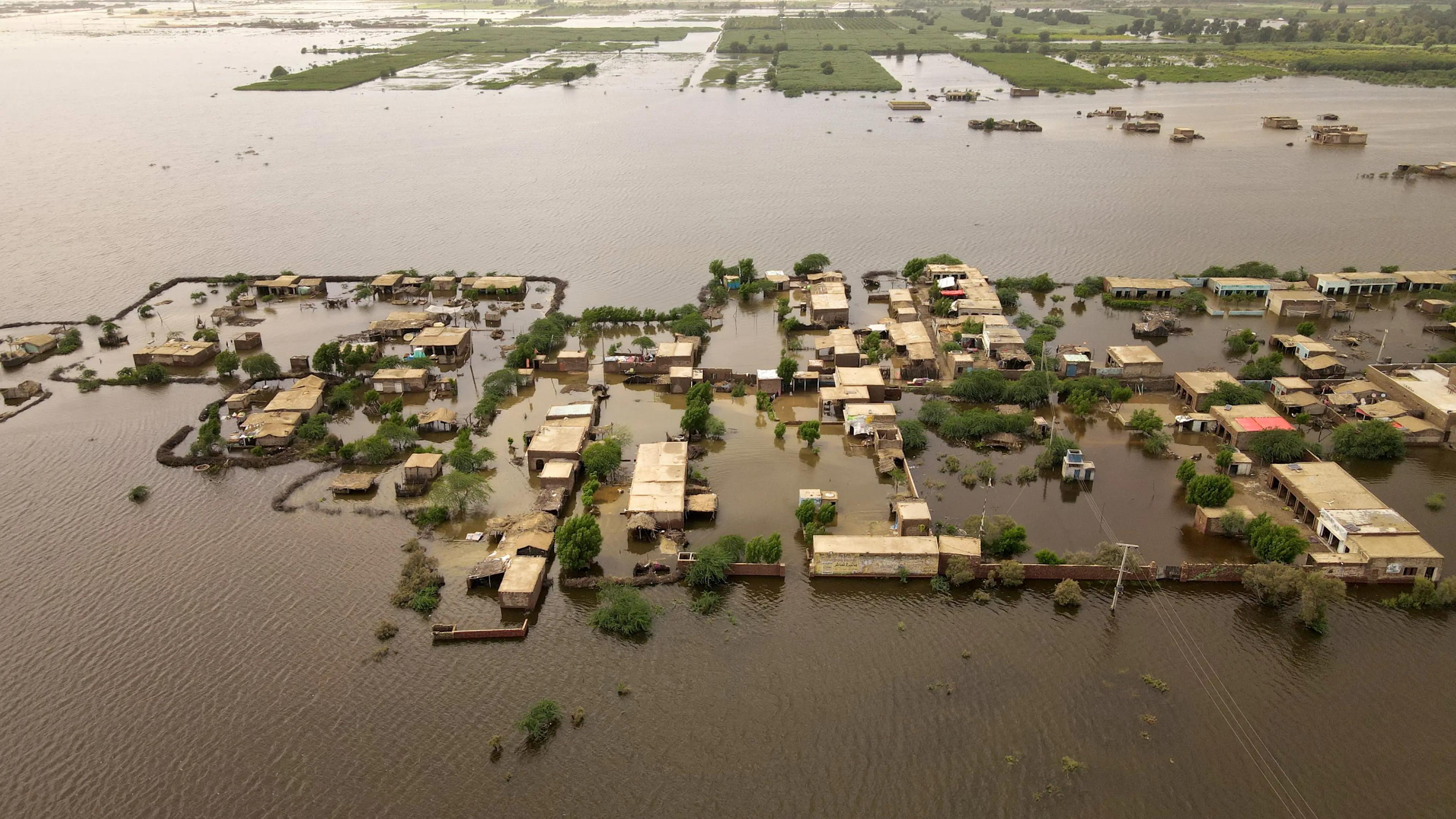
India’s decision to keep the Indus Waters Treaty in abeyance has put Pakistani authorities in a tight spot this monsoon season. Pakistan’s Punjab government has placed its irrigation department on high alert after India cut cross-border river flow data, leaving flood managers largely blind to conditions upstream along the Ravi as the monsoon gathers pace.
Provincial authorities in Lahore confirmed this week that the absence of real-time hydrological information – historically shared under bilateral arrangements – has forced officials to rely on what they themselves called “less credible sources” to anticipate flooding. The gap threatens early-warning systems protecting millions of people in low-lying communities along the river.
The timing could hardly be worse. Monsoon season, running from July to September, produces rapid, powerful river surges capable of inundating communities within hours. Without upstream gauge readings from Indian monitoring stations, Pakistani engineers lose the lead time needed to warn residents, mobilise evacuation teams and prepare flood-control infrastructure.
The breakdown stems from a diplomatic rupture following a deadly terrorist attack in Kashmir in April 2025, which New Delhi blamed on Islamabad. India subsequently suspended its participation in the landmark 1960 World Bank-brokered agreement governing river allocation between the two nations for more than six decades, and severed several technical communication channels alongside it, including the routine exchange of river gauge readings both countries had previously treated as a practical safety measure independent of wider diplomatic conditions.
Pakistani flood forecasters are now working backward from meteorological data and satellite imagery to model river conditions before water crosses into Pakistani territory. Officials acknowledge these methods carry a substantially higher margin of error than direct gauge readings, meaning downstream communities could face shorter response windows than in previous years.
For now, though, officials insist there is no immediate cause for alarm. A senior irrigation official told Dawn this week that flows in the Ravi and all other major rivers – including the Indus, Kabul, Jhelum and Chenab – were running normal, and pushed back on social media reports claiming rising water levels in the Ravi. The point of the high-alert posture, officials stressed, is not that flooding is imminent, but that Pakistan can no longer rely on advance warning if it were.
The Ravi, one of five rivers defining Punjab’s geography and identity, runs through the heart of Lahore before crossing into India and merging with other Indus tributaries. Its flood history is extensive and, at its worst, catastrophic, with inadequate warning systems and delayed responses contributing to significant loss of life in past inundations.
Pakistan has repeatedly suffered devastating monsoon floods, most notably in 2010, when unprecedented flooding affected roughly a fifth of the country, killing nearly 2,000 people and displacing millions. The 2022 floods, intensified by exceptionally heavy monsoon rains and glacial melt, affected an estimated 33 million people and caused more than 1,700 deaths. Punjab has also seen severe flooding along the Ravi and other eastern rivers in high-flow years, underscoring the importance of timely upstream data for evacuation planning.
In a related development, Pakistan's Punjab authorities announced plans to clear the Ravi riverbed of long-standing encroachments – structures and settlements that have accumulated along the channel, constricting flow and compounding flood risk. Officials described the clearance as urgent rather than routine, signalling how seriously the province is treating this season's threat.
Irrigation engineers said they are compensating by coordinating more intensively with meteorological departments, increasing the frequency of their own gauge readings at border-adjacent monitoring points, and developing faster internal escalation procedures to act on whatever data becomes available.
Civil society groups working on climate resilience have long argued that Pakistan’s flood-forecasting infrastructure remains underfunded and technologically behind comparable nations. The current crisis, they say, has exposed structural vulnerabilities that predate the diplomatic breakdown with India – even if that breakdown has made them dramatically more acute.
Pakistan's federal government has not publicly detailed whether it has sought to restore data flow through diplomatic channels, or raised the matter with the World Bank, which holds formal responsibilities under the treaty framework. For now, thousands of families along the Ravi wait in heightened uncertainty, dependent on a safety net operating without the information once available.