
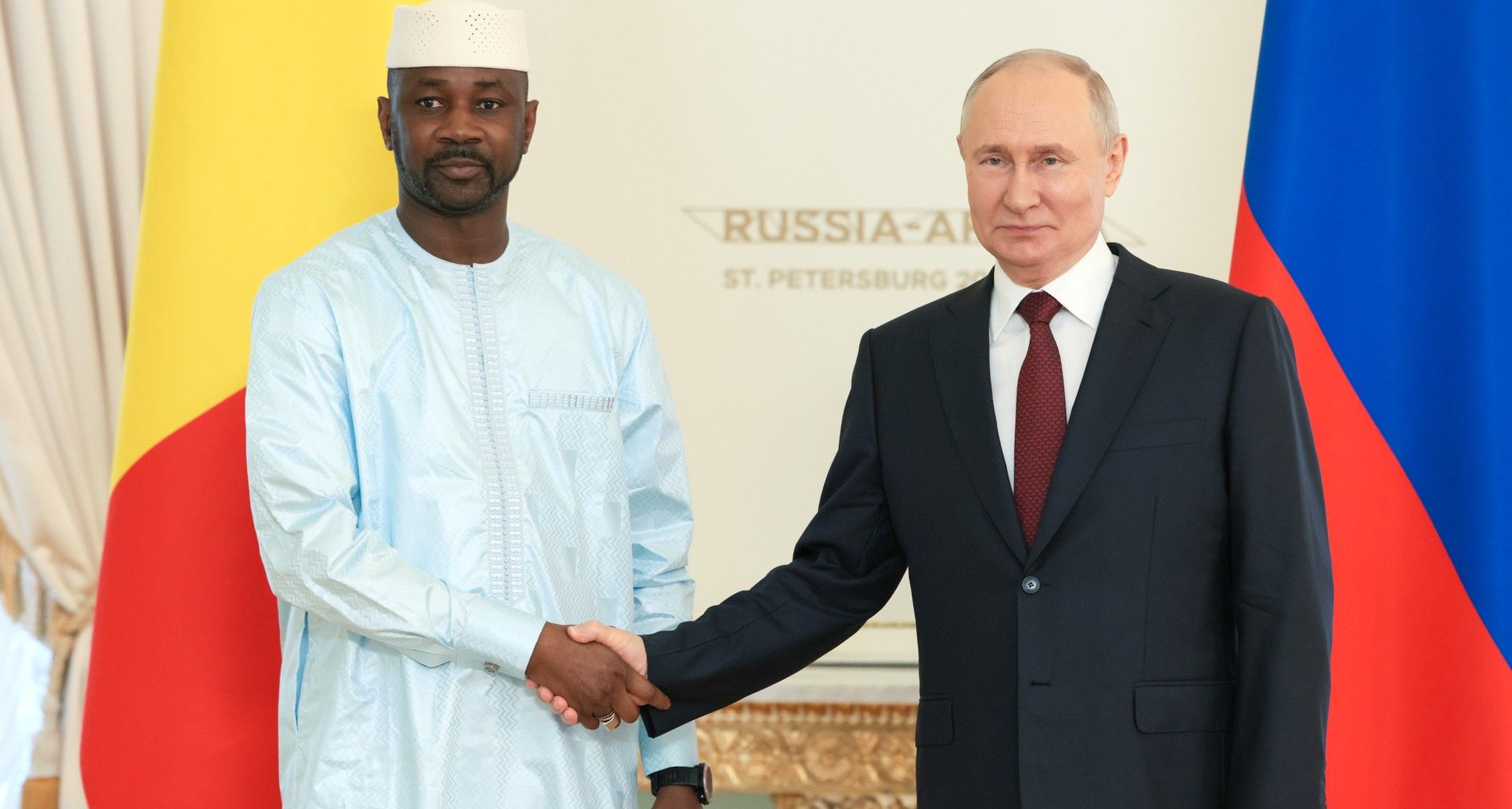
Mali’s junta leader, General Assimi Goïta, pardoned Yann Vézilier, a French intelligence officer serving a 20-year prison sentence – on Thursday (August 13), defusing one of the most contentious issues between Bamako and Paris after years of diplomatic and military tension. Vézilier, an official at the French embassy in Bamako, was arrested in August 2025 and sentenced in June 2026 over allegations that he took part in a plot to destabilise Mali’s military-led government, a charge France has consistently rejected.
France welcomed the news on Friday. “France expresses its great satisfaction following the release of Yann Vézilier,” its foreign ministry said, adding that his return home was “a relief” for the ministry and his colleagues alike. Mali, however, stressed that the clemency does not overturn Vézilier’s conviction or challenge the facts established by the court, and it ordered his immediate removal from the country.
A relationship that soured after the coups
France first sent troops to Mali in 2013 under Operation Serval, at the request of then-president Ibrahim Boubacar Keïta, to tackle a Islamist advance on Bamako; the mission was folded into the wider Operation Barkhane in 2014. That cooperation unravelled after Goïta seized power in two coups – ousting Keïta in August 2020, then removing the transitional civilian government he had installed in May 2021.
Mali then scrapped its defence agreements with France, and the last French troops left the country in August 2022. Bamako turned instead to Russia, with the Wagner Group, a mercenary fighting group, and its successor, Africa Corps, largely replacing French forces. In May 2022, Mali declared the presence of French and other European troops on its soil illegal, and accused Paris of espionage and of backing armed groups – accusations France has denied. Burkina Faso and Niger’s military governments followed a similar path away from French influence and towards Moscow, even as Islamist violence worsened across the region.
Domestically, Goïta’s transitional mandate has since been extended to a renewable five-year term through 2025; elections remain undated, and political parties were formally dissolved as the junta tightened its grip. Alongside Burkina Faso and Niger, Mali co-founded the Alliance of Sahel States (AES) in 2023, upgraded it to a confederation in 2024, and withdrew all three countries from ECOWAS, the West African regional bloc, in January 2025. Mali also went further by jointly quitting the International Criminal Court in September 2025, calling it an instrument of “neo-colonialist repression”.
Why the pardon matters
The gesture let both governments defuse the standoff without either having to publicly climb down: France does not have to accept the conviction, and Mali does not have to admit the allegations were false. For Goïta, it’s a low-risk way to project strength rather than concession – the junta has built its legitimacy on a “sovereignist” break from the West, so releasing Vézilier while insisting his conviction stands lets Bamako frame the move as generosity from a position of confidence.
Le Monde reported that Morocco helped broker the outcome. Morocco, whose relatively good standing with both Bamako and Paris made it a useful, discreet intermediary. That signals a Malian foreign policy that may be now more bilateral and transactional than a simple pivot to Moscow indicates. Even so, the pardon should be read as only a partial, practical thaw: France’s troops, defence pacts and broad counterterrorism role in Mali are gone for good, and relations remain far from pre-coup levels.
Security pressures behind the timing?
Groups linked to al-Qaeda and Islamic State like Jama'at Nusrat al-Islam wal-Muslimin (JNIM), along with a Tuareg-led separatist rebel group Front de libération de l'Azawad (FLA), continue to destabilise Mali. On April 25, 2026, coordinated attacks struck Bamako’s airport, the Kati military base and several towns in northern and central Mali, killing Mali’s defence minister and briefly costing the army the northern town of Kidal. On the same day Vézilier’s pardon was announced, Mali’s army confirmed the release of 82 government soldiers who had been held since April by Islamist fighters from JNIM and the separatist FLA alliance – reportedly with Algeria's help – a reminder of the extraordinary security pressure the junta is under even as it scores this diplomatic win.
Vézilier’s release could now open room for low-key engagement between Bamako and Paris, particularly on consular affairs, intelligence and security cooperation, as France remains an important economic partner for Mali.