
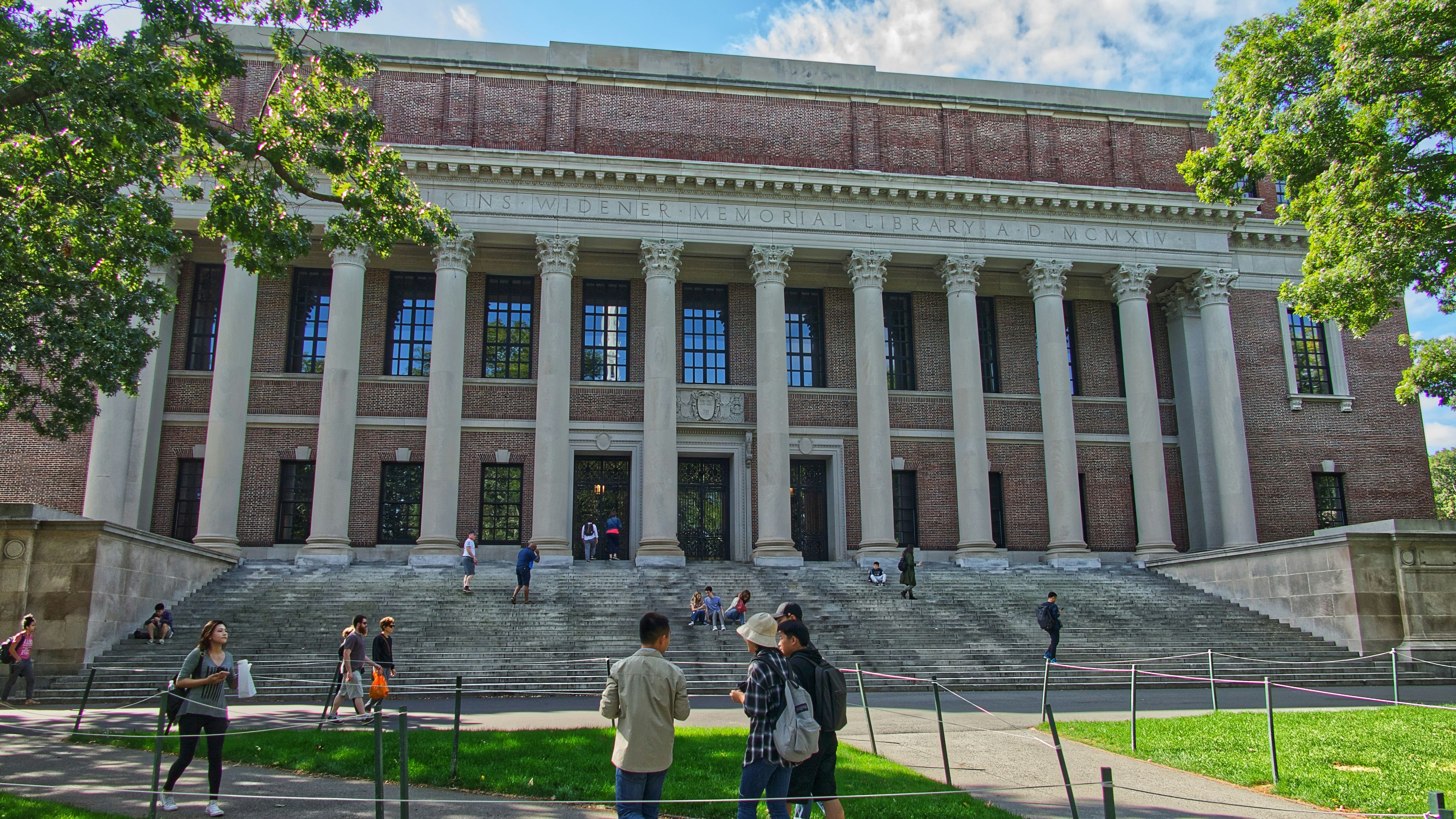
The dismissal of the Trump administration’s antisemitism lawsuit against Harvard University is the latest legal setback for a White House campaign that has used federal funding and civil-rights enforcement to pressure Ivy-League US universities – a campaign that has unfolded alongside a fierce debate over pro-Palestinian protests, academic freedom and Washington’s support for Israel’s war in Gaza.
The administration’s confrontation with Harvard has already involved billions of dollars in research funding, while growing opposition to Israel among Democrats and younger Americans is putting increasing pressure on US politicians to reconsider longstanding support for Israel. A federal judge in Boston dismissed the lawsuit against Harvard, which alleged that the university failed to protect Jewish and Israeli students from discrimination and harassment.
US District Judge Richard Stearns said the government had failed to plausibly show that Harvard was engaged in an ongoing violation of federal civil-rights law, ruling that the incidents cited were “too isolated and episodic” to establish a continuing pattern of discrimination. The ruling marks the latest development in the lengthy dispute between the Trump administration and Harvard over federal funding, academic independence and the handling of antisemitism on campus.
The case was also rooted in the wider political fallout from the Israel-Gaza war and the pro-Palestinian protests that spread across US university campuses following Hamas’ October 7, 2023, attack on Israel. According to the Justice Department, Harvard had failed to protect Jewish and Israeli students from harassment following the attack and the ensuing war in Gaza.
The government argued that the university had failed to discourage an environment in which antisemitic and anti-Israel conduct could flourish, interfering with Jewish students’ ability to participate fully in university life. The government based its argument on incidents surrounding pro-Palestinian protests at Harvard during the 2023-24 academic year. It claimed that Jewish and Israeli students had been harassed, assaulted, stalked and spat upon, and that some were subjected to calls of “Heil Hitler”.
The lawsuit argued that Harvard’s actions were not in compliance with Title VI of the Civil Rights Act of 1964, which bans discrimination based on race, colour and national origin in programmes that receive federal funding. Harvard receives substantial federal research funding.But Judge Stearns said that while the government had identified concerning incidents, most had occurred during the 2023-24 academic year, with only a handful of later incidents alleged in March 2025. The lawsuit was filed in March 2026.
Stearns therefore found the incidents insufficient to establish an ongoing institutional violation of Title VI. Stearns also said that the government had not provided sufficient evidence to establish a continuing civil-rights violation. The lawsuit is part of a bigger battle between the Trump administration and Harvard, as well as other elite universities, in which the administration has used federal funding as leverage over issues including the handling of pro-palestinian sentiments, diversity in hiring and admissions, campus protests and university governance.
Harvard resisted, arguing that the government’s demands threatened academic independence and constitutional rights.The administration’s pressure campaign has extended well beyond Harvard. In April 2025, it moved to freeze $2.2 billion in Harvard research grants, escalating its confrontation with the university after it rejected demands for changes to campus policies and governance. The funding freeze later grew into cuts of more than $2.6 billion. In September 2025, a federal judge ruled that the cuts were unlawful retaliation and violated Harvard’s First Amendment rights, ordering the administration to restore the funding.
The government has appealed that ruling.Other universities have also faced federal funding pressure. The Trump administration froze or cut funding to institutions including Columbia, Brown and UCLA amid investigations into antisemitism, pro-Palestinian protests and diversity policies. UCLA, for example, faced a $1.2 billion fine and funding freeze, while Columbia later reached a $200 million settlement with the administration that restored more than $400 million in research grants.
The funding battle has unfolded as pro-Palestinian protests have continued to reshape the political debate on US campuses. Encampments and demonstrations spread across universities including Columbia, Harvard and Yale in 2024, with protesters demanding an end to Israel’s military campaign in Gaza, university divestment from companies linked to Israel and greater transparency over institutional investments. The protests also triggered allegations of antisemitism and concerns over the safety of Jewish students, intensifying a polarised debate over free speech, academic freedom and the limits of campus protest.
The political pressure over US support for Israel has also grown. In July, 103 House Democrats joined one Republican in backing a failed amendment that sought to block the $3.3 billion in annual US security assistance to Israel. The 314-104 vote marked a significant break from the bipartisan consensus that has traditionally underpinned US support for Israel, with growing numbers of Democrats questioning continued military assistance over Israel’s conduct of the war in Gaza.
For Harvard, the dismissal represents an important legal victory, but it does not eliminate the university’s wider political and legal battles with the Trump administration. The ruling comes as Washington’s campaign against elite universities increasingly intersects with the broader US debate over Israel, Gaza, antisemitism and the right of students and academics to dissent over the war.