
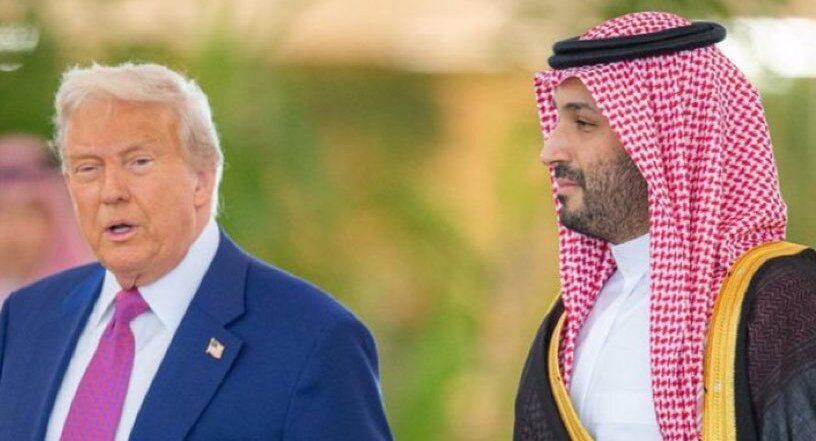
President Trump gave Saudi Crown Prince Mohammed bin Salman his backing for a military operation ahead of the most serious escalation between Saudi Arabia and Yemen’s Houthi government since the informal March 2022 truce, Axios reported, citing two US officials.
Saudi-backed forces struck Sanaa International Airport on July 13 to stop an Iranian aircraft from landing in the Houthi-controlled capital in the war-torn country. Within hours, the Houthi government retaliated with missiles towards Abha International Airport in southwestern Saudi Arabia; Saudi authorities said air defences intercepted them.
The exchange, Axios reported, could signal the collapse of the truce.The clash stemmed from a dispute over an Iranian aircraft carrying a Houthi delegation home from Tehran after attending the funeral of Supreme Leader Ali Khamenei, killed in US-Israeli strikes. At contention was who had authority over international flights into Sanaa.
The Saudi-backed Aden government insisted that the delegation return via national carrier Yemenia Airways; the Houthi administration in Sanaa rejected this, insisting on a direct flight via Iran’s Mahan Air.
As tensions rose, Saudi Arabia turned to Washington, where Ambassador Princess Reema bint Bandar Al Saud met Secretary of State Marco Rubio on Thursday, followed by a Friday call between Rubio and Saudi Foreign Minister Prince Faisal bin Farhan. Trump then spoke by phone with the crown prince, who sought – and received – his support.Aden claimed responsibility for the runway strike; the Houthi administration blamed Saudi Arabia directly, calling it “blatant aggression” that ended the 2022 de-escalation.
The Iranian aircraft was forced to divert to Hodeidah on Yemen’s Red Sea coast before the Houthis launched their retaliatory strike on Abha.Neither the White House nor Saudi Arabia has publicly detailed Trump's role, but the Axios report offers the clearest account yet of US involvement in the run-up to the escalation.
Whether it marks the full collapse of the four-year truce remains unclear, but the Sanaa strike and subsequent missile attacks have brought Riyadh and the Houthis closer to renewed conflict than at any point since 2022.Build-upThe crisis traces back to July 3, when a Mahan Air flight made the first publicly reported direct Tehran-Sanaa flight in roughly a decade.
According to Houthi officials, the aircraft carried wounded patients and stranded Yemenis before later flying the delegation to Tehran for Khamenei’s funeral.The flight immediately drew objections from the Aden-based government (the Houthis seized Sanaa and much of northern Yemen in 2014). It argued that only it had authority to approve international flights into the country and called the direct Tehran-Sanaa service a violation of Yemeni sovereignty.
Matters reached a head on July 13, when another Iranian aircraft carrying the returning delegation approached Yemen. As the delegation prepared to return, talks over which airline should fly them home collapsed: Aden proposed national carrier Yemenia Airways, while the Houthis insisted on a direct Mahan Air flight.
The Aden-based government said it struck the runway at Sanaa International Airport to prevent the Mahan Air flight from landing. Its Defence minister Mohsen Mohammed al-Daeri said diplomatic efforts had been exhausted and warned that any aircraft entering Yemeni airspace without government approval would be confronted “by all available means”.
What began as a dispute over transportation hardened into a contest over political legitimacy; each side viewed conceding on the flight as giving up authority over Yemen’s airspace itself. Earlier in the dispute, the Houthi government had already warned that any Saudi interference with Iranian flights would be met with attacks on Saudi airports, a threat that foreshadowed the retaliation to come.
The escalation also coincides with fraying relations within Yemen itself. A prisoner exchange mediated by the International Committee of the Red Cross (ICRC) collapsed in recent days, with the Houthi and Aden governments blaming each other. Aden also accused Houthi authorities of detaining an ICRC aircraft and its crew at Sanaa airport, though the ICRC later confirmed its personnel were safe.