
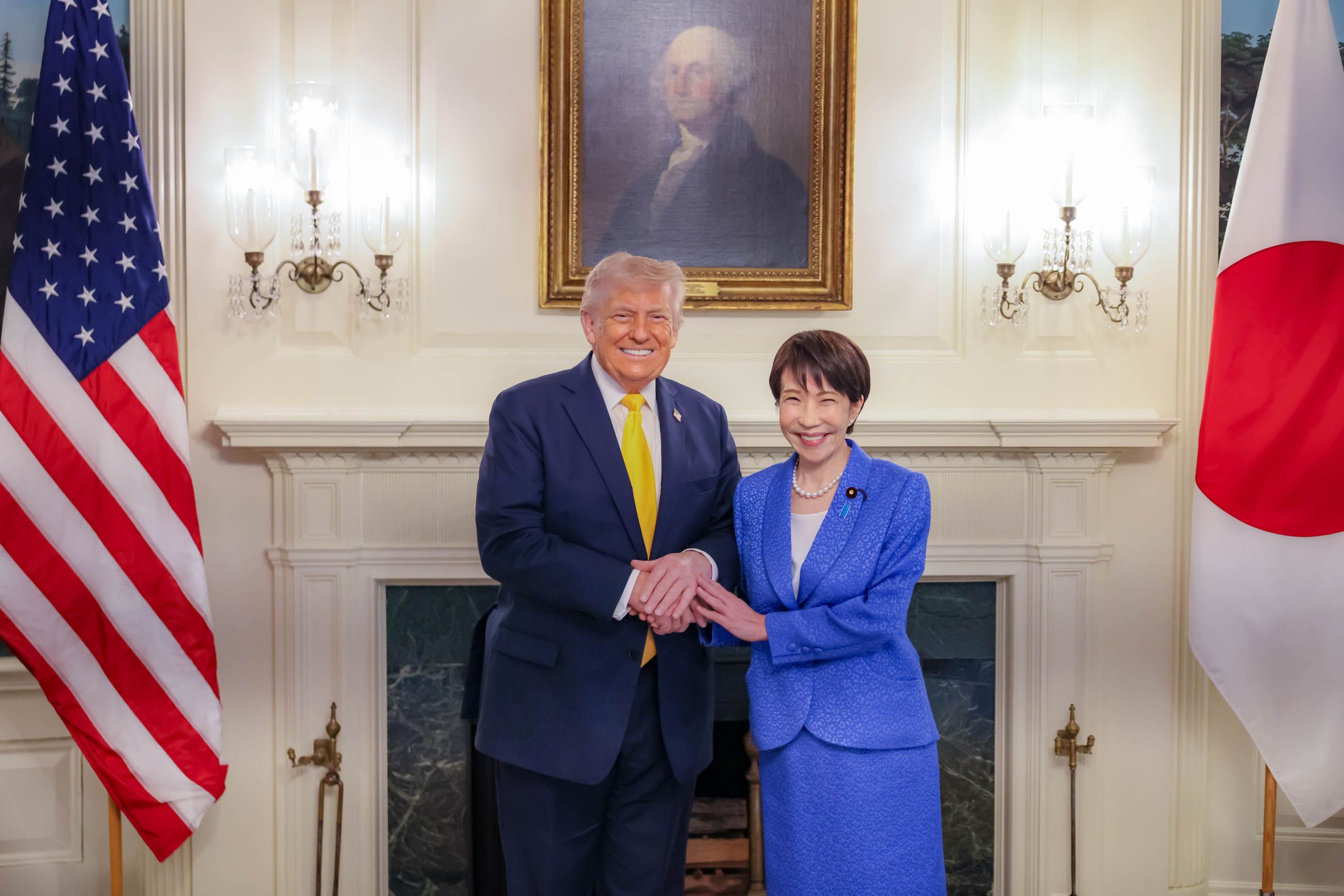
The US and Japan are preparing to jointly mine the world’s deepest seabed rare-earth deposits, in a direct challenge to China’s dominance of the minerals underpinning electric vehicles, advanced electronics, renewable energy and military technology. When President Donald Trump met with Japanese Prime Minister Sanae Takaichi at the White House in March, the two discussed Minamitorishima – a tiny island in the Pacific sitting atop deep-sea rare-earth deposits a joint US-Japan statement said could “meet centuries worth of industrial demand”.
The proposed project would explore resources at a depth of roughly 6,000 metres, potentially making it the world’s deepest undersea mine – and placing the island and the partnership itself at the centre of a strategic contest over minerals needed for EVs, electronics, renewables and defence.
Significant deposits of yttrium, gadolinium, dysprosium and other rare earths lie near the island, which the University of Tokyo estimates holds more than 16 million tonnes of rare-earth minerals in total. The project aims to reduce dependence on China, which currently dominates the global rare-earth market. The uninhabited island – home to little besides dangerous snails – lies about 1,950 km southeast of Tokyo. In February 2026, Japan’s deep-sea drilling vessel Chikyu successfully recovered sediment from a depth of nearly 6,000 metres (19,700 feet).
Rare earths are highly valuable in making high-performance permanent magnets and aerospace technology. They aren’t geologically scarce, but commercial supply is highly concentrated: China leads globally in mining, separation, refining, magnet production and downstream manufacturing. According to the International Energy Agency, China remains the dominant refiner for 19 of the 20 energy-related strategic minerals it analyses.
Crucially, the US-Japan partnership is focused on more than extracting ore – sending material to China for separation and refining would undermine the entire strategic objective. The two countries have instead signed a memorandum of cooperation to build an alternative supply chain from extraction through to refining. Beijing has leveraged its control of rare-earth exports and related technologies as part of its economic-security strategy, and in 2026 restricted exports to Japan of dual-use goods with civilian and military applications.
This has heightened concern in Tokyo that dependency on a China-controlled supply chain could leave it vulnerable in a political or military crisis – a worry that has driven Japan to diversify and reduce imports since a 2010 dispute with Beijing.
The stakes are higher still for the US, which relies heavily on the Chinese-linked supply chain for precision weapons, aircraft, electronics, EVs, wind turbines and other advanced technologies. The IEA estimates that replacing that supply chain could take time regardless: Beijing is projected to still control up to 76 per cent of global rare-earth refining by 2035. However, if the US-Japan project succeeds, it could give other countries a template to diversify their own sources and shift China’s bargaining power – the US, EU, Australia and Japan are all already pursuing alternative rare-earth supply chains separately.
Extracting the minerals remains technologically ambitious: mining at 6,000 metres is fundamentally different from conventional open-pit or underground methods. Equipment must withstand enormous pressure, and the entire chain of extraction, lifting, separation and refining will need to prove economically viable before the project can scale. Environmental concerns also loom, since deep-sea mining risks disrupting seabed ecosystems that remain poorly understood.