It has been 10 years since an international tribunal rejected China's sweeping claims over most of the South China Sea. On July 12, commemorating the milestone, 14 countries including Japan, the Philippines and the US challenged China’s claim.
The collective endorsement is drawing an angry response from Beijing. China has laid this expansive claim right after its birth in 1947. The Kuomintang-led nationalist government has asserted its power over the South China Sea by publishing a map featuring an ‘eleven-dash line’. This meant Chinese ownership of roughly 90 per cent of the sea.
This map was later modified into the ‘nine-dash line’ by the Communist government of mainland China in 1953. The U-shaped line encompasses nearly all the islands, reefs and shoals within the region, including the contested Paracel and Spratly Islands. China considers the nine-dash line a non-negotiable position.
“They (China) have protested those who have supported the arbitration award. Their view is that the arbitration is null and void. They did not participate in the process. This has been their view for more than a decade. This view has no legal basis, and neither does their historical rights argument. But this is their view, says Manoj Kewalramani, Chairperson of the Geostrategy Programme at the Takshashila Institution.
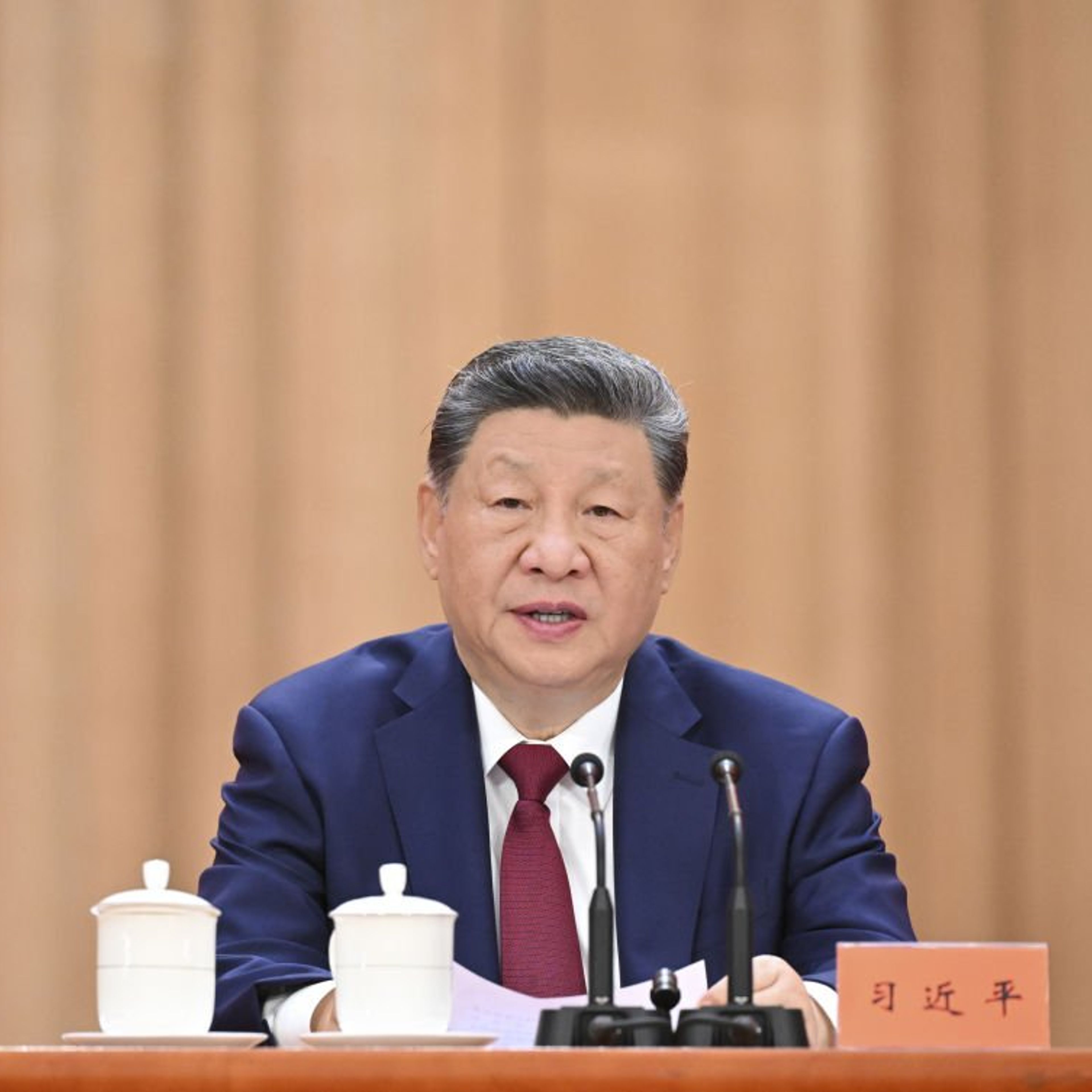
On July 12, China's foreign ministry reiterated the country's sovereignty claims and blamed intensified military deployments by outside powers, including the US, for tensions in the region. It called the core document nothing but a “piece of wastepaper that is illegal, null and void, and has no binding force.” “The tribunal had said it cannot adjudicate on sovereignty, but it had defined, based on UNCLOS, what territorial features mean and what they don’t. The tribunal also said that no one can claim historical rights over these features, which is the core point of the Chinese argument that it has sovereignty over the entire South China Sea. It is a critical waterway through which a substantial amount of global trade passes. Tremendous energy reserves beneath the surface and several countries with territorial claims in the region. Overlapping territorial claims,” Kewalramani explains.
China’s foreign ministry also summoned the chief minister of Japan's embassy in Beijing to register a protest on Tokyo’s interference in regional matters. “With Japan, the situation (China’s claim over the South Sea) is different as there’s distrust between the two nations– the nations, historically, have had antagonistic relations. Japanese PM Sanae Takaichi is a pro-right leader and has said if China were to impose a naval blockade or attack Taiwan, Japan would support Taiwan,” says Anuradha Chenoy, a retired professor and former dean at Jawaharlal Nehru University, New Delhi.
The South China Sea connects North Asia with Europe and the Middle East. It also carries about one-third of global maritime trade each year, provides rich fishing grounds, and contains potentially significant oil and natural gas reserves. For China, the Sea is strategically important to its navy. For Southeast Asian claimants, the dispute concerns access to exclusive economic zones guaranteed under UNCLOS (United Nations Convention on the Law of the Sea) and to marine resources.
Today, the European nations have also reaffirmed the tribunal's decision and called it a landmark for the peaceful settlement of disputes. The dispute extends well beyond overlapping territorial claims. Chenoy believes the issue should be resolved in accordance with international law and that the parties involved should share shipping lanes rather than threatening one another. “The SCS is a common heritage to all countries involved, and it must be safeguarded according to rules and norms of UNCLOS,” Chenoy says.
China’s foreign ministry claims that outside powers, including the US and Japan, have militarised the issue by increasing military deployments rather than negotiate. For China, the issue still largely remains one of sovereignty and historical rights. And reaffirmation of the arbitration ruling by other nations, coinciding with its tenth anniversary, therefore represents more than commemorating a historical milestone.