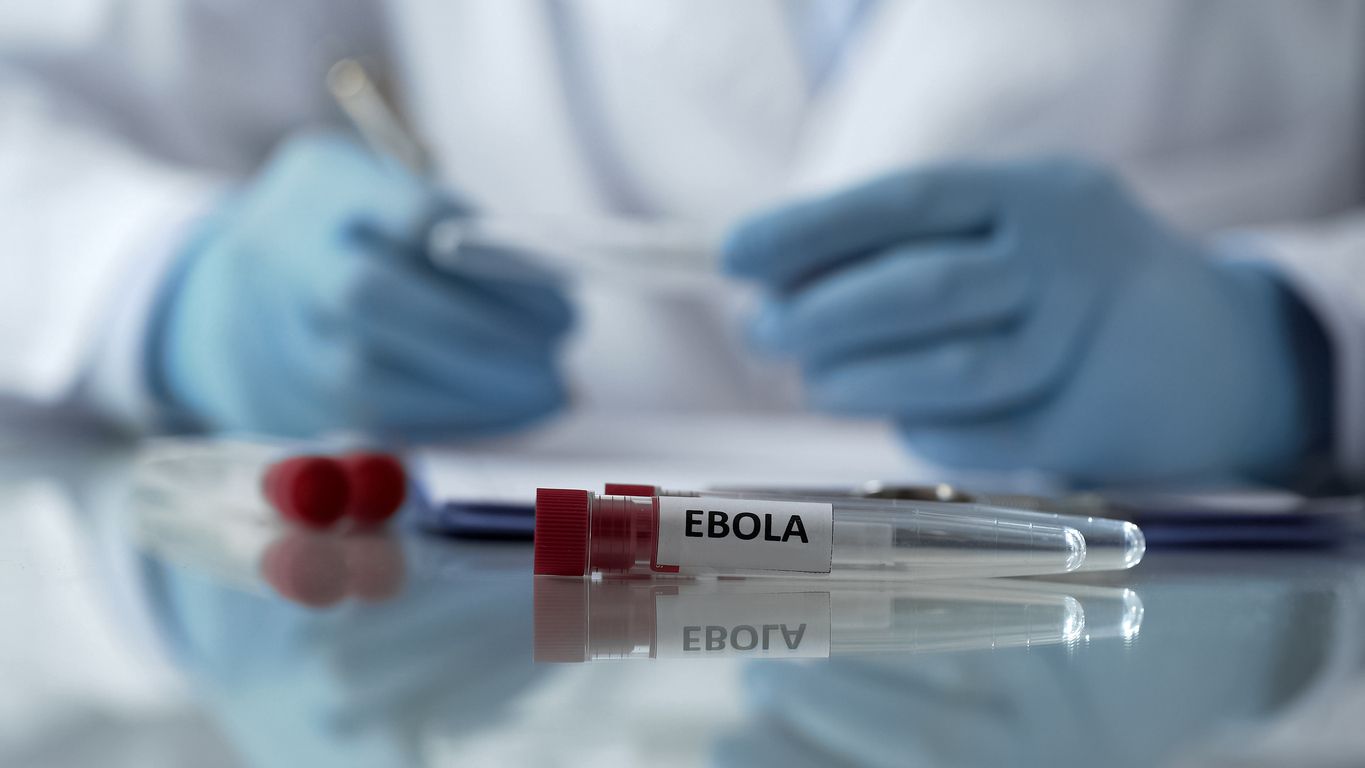
A rapidly expanding Ebola outbreak in the Democratic Republic of Congo has now surpassed the toll from the 2018-2020 outbreak to become the deadliest in the nation’s history, with 2,325 deaths recorded so far. The surge has prompted tighter surveillance at international borders and renewed warnings for travellers. The outbreak is caused by the Bundibugyo virus – a rarer Ebola species that has caused only a handful of previous outbreaks – and has spread across six provinces in north-eastern and central DRC.
As of August 17, the outbreak had recorded at least 4,945 confirmed cases. The case-fatality rate has climbed to 46 per cent, more than double what it was in June – a rise health officials attribute mainly to patients being found later, often after they have already died, rather than to the virus becoming more lethal. Uganda reported an outbreak of the virus in May 2026 but declared it over in July; cross-border transmission means the regional threat persists nonetheless.
The World Health Organisation(WHO) has said the outbreak could surpass West Africa’s 2014-16 epidemic, which recorded 28,616 cases and 11,310 deaths across Guinea, Liberia and Sierra Leone.The first signs of the outbreak emerged in May 2026, with cases first detected in the Mongbwalu health zone of Ituri province. WHO was informed on May 5, and laboratory tests confirmed the Bundibugyo strain. The outbreak initially appeared concentrated in Ituri but has since reached a sixth province – North Kivu, South Kivu, Haut-Uélé, Tshopo and, by August, Bas-Uélé.
The disease has spread at an alarming rate, overtaking the 2018-2020 outbreak’s case count by late July and becoming the fastest-growing Ebola outbreak on record. Several factors have driven this: population movement caused by armed conflict, weak healthcare in some regions, health workers going unpaid for months, misinformation, and poor transport infrastructure that slows response teams’ ability to identify and isolate patients. A large share of new infections are being detected outside existing contact-tracing networks, making it harder to track the virus's spread.
The outbreak has not been classed as a pandemic emergency, but the WHO declared it a Public Health Emergency of International Concern (PHEIC) in May – only the third Ebola PHEIC on record. This does not mean the virus is spreading rapidly around the world; rather, WHO has asked countries to strengthen preparedness rather than impose travel bans, judging the risk of Ebola reaching more distant countries to be low. The International Civil Aviation Organization (ICAO), through its Collaborative Arrangement for the Prevention and Management of Public Health Events in Civil Aviation, has said international air travel can continue safely provided appropriate precautions and health protocols are followed.
How are other countries dealing with it?
Countries have taken varying approaches – and some have gone further than surveillance alone. The US has suspended entry for non-citizens – and, since May, green card holders too, who have been in DRC, Uganda or South Sudan within the previous 21 days, and reroutes affected flights to designated airports for screening. Canada has similarly barred entry to foreign nationals arriving from DRC since July, and requires quarantine even for returning citizens and permanent residents.
India has not reported any Ebola cases linked to the current outbreak, but in May 2026 the government issued an advisory urging citizens to avoid non-essential travel to DRC, Uganda and South Sudan and stepping up surveillance at ports and airports. Indian authorities have focused on identifying potentially exposed travellers and referring symptomatic people for medical assessment, and India has sent emergency medical supplies and protective equipment to the affected countries.
South Asia is not off the hook simply because WHO has rated it low risk, virologist Gagandeep Kang told NWS in an exclusive interview. Kang, a fellow of the Royal Society and the scientist behind India's indigenous rotavirus vaccine, points out that airport screening only catches travellers who are already symptomatic – someone infected but still within the virus’s 21-day incubation period can pass through undetected, and a traveller who picked up the infection in DRC or Uganda before transiting through a third, unaffected country may not be screened at all. “I would never say that there is no chance of it spreading,” she said, but argued that the real safeguard is preparedness rather than border closures: honest disclosure of travel history, diagnostics specific to the Bundibugyo strain, and quarantine and treatment facilities ready in every country, including India, whether or not a case has appeared yet.
Kang does not believe the outbreak has pandemic potential unless the virus undergoes multiple mutations that change its route of transmission, noting that, unlike the coronavirus, Ebola does not spread through the air and is therefore comparatively easier to contain if caught early. Her bigger worry, she told NWS, is that a collapse in healthcare infrastructure or a lapse in infection control, in DRC or elsewhere, could change that calculus. The European Centre for Disease Prevention and Control advises travellers to affected countries to avoid contact with symptomatic people and the bodies of those who have died of Ebola, and to steer clear of wild animals – including bats, monkeys, forest antelopes and rodents, dead or alive – and bushmeat, since Ebola is a zoonotic virus that can pass between animals and humans.
Travellers returning from affected countries are monitored for 21 days, the period during which symptoms can appear. The exact source of the current outbreak is still under investigation, but Ebola viruses are believed to circulate mainly in bats. Human-to-human transmission occurs mainly through contact with an infected person's bodily fluids, including during caregiving and burial practices. There is still no approved vaccine or treatment for the Bundibugyo strain, though trials are under way: Oxford University began a trial of a ChAdOx1-based vaccine in July, WHO authorised a Phase 3 trial of the existing Ervebo vaccine, and the antivirals remdesivir and MBP134 entered clinical trials in DRC the same month.
Until a vaccine or treatment is approved, the main tools for controlling spread remain early detection, isolation, contact tracing, infection control and community cooperation.Virologists say that the situation is serious but has not become a global pandemic. Infections remain concentrated in DRC, and Uganda’s outbreak has been contained. A case was detected in France in June; the patient, who had been supporting the response in DRC, recovered fully, and none of five contacts developed symptoms. The bigger concern remains the speed of transmission within DRC, driven by conflict, displacement, underfunded health services and movement across porous borders. WHO’s Emergency Committee is due to meet on August 18 for its first formal review of the outbreak since the PHEIC was declared.