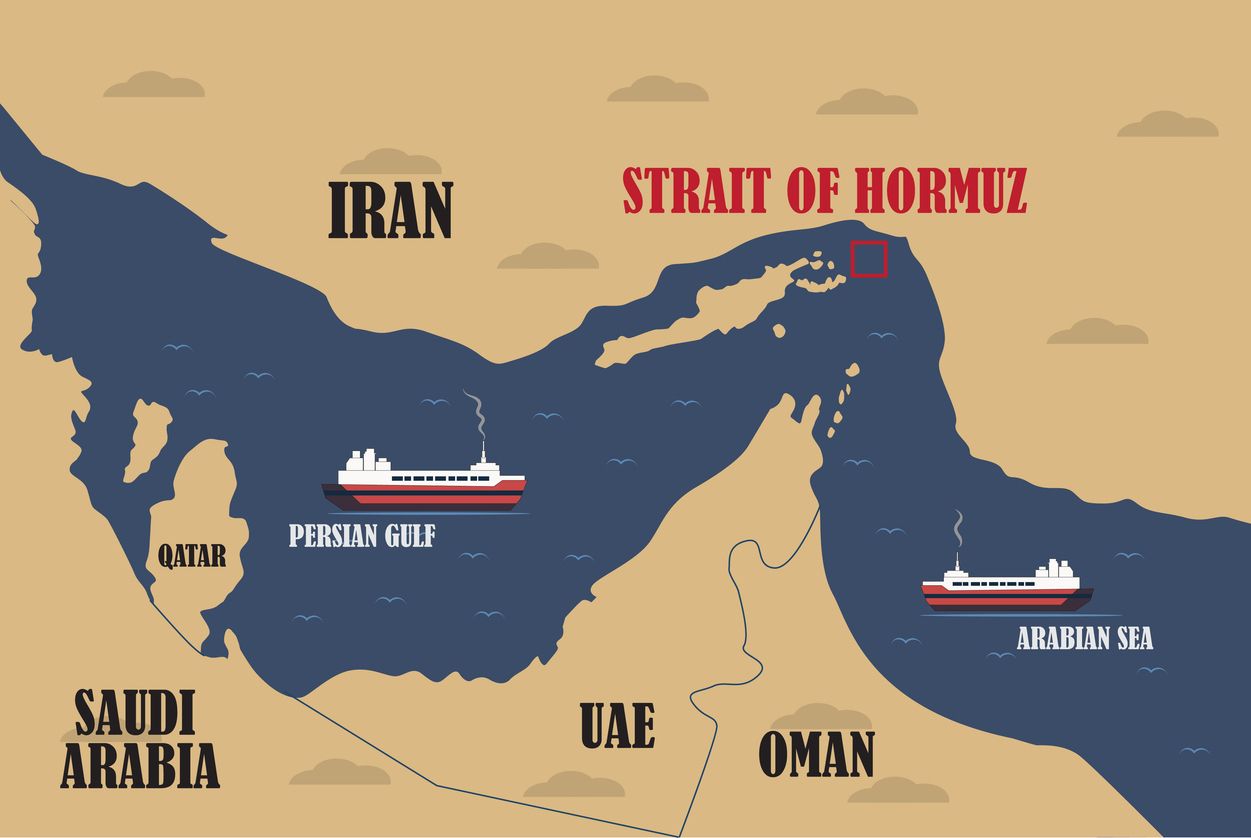
US President Donald Trump has threatened to bomb Oman, a US ally, if it “gets in the way” of Washington’s efforts over the Strait of Hormuz, as talks between Muscat and Tehran on reopening the waterway edge closer to a deal. The threat came hours after Trump rejected extending the Memorandum of Understanding (MoU) with Iran, which expired on Monday, telling Tehran to “put up the white flag of surrender”.
The US-Iran MoU was signed on June 17, 2026 between Trump and Iranian President Masoud Pezeshkian, and lapsed on August 17 after a 60-day window meant to buy time for a broader settlement. It left key questions unresolved – chiefly Iran’s nuclear programme and the sanctions tied to it, and who should oversee security around Hormuz. Tensions had already escalated after US and Israeli strikes on Iran began in February 2026, a conflict that soon spread across the region and disrupted shipping through the strait.
Iran has warned it will adopt a “fully offensive” posture if diplomacy fails. Oman’s position has grown more difficult as a result. Muscat, which borders Yemen, the UAE and Saudi Arabia, has long served as a back-channel mediator between Washington and Tehran, and has been negotiating directly with Iran on arrangements to reopen the strait to shipping. Iran’s semi-official Mehr News Agency claimed Saturday that Tehran and Oman had reached agreement on a traffic plan for the waterway, and Iranian Foreign Minister Abbas Araghchi said earlier this month that talks were in their “final stages”.
A foreign ministry spokesman has since cautioned that an agreement between Iran and Oman would not by itself mean the strait reopens, since that also depends on conditions still being negotiated with Washington.That prospect appears to have unsettled Trump, who has accused Oman of obstructing US efforts even as it works to mediate. Speaking to Fox News on Monday, he said the US would “bomb” Oman if it interfered with Washington’s negotiations – not the first time he has targeted Muscat; he warned in May that “Oman will behave just like everybody else” or face consequences.
Trump has also said Washington favours restoring shipping access as part of any wider agreement, while insisting the US remains in effective control of the strait and floating the idea of eventually declaring it US territory – a claim he has called a “great idea”. Iran, for its part, sees the strait as central leverage over Washington, using the threat of disrupted traffic to impose economic costs on the US and its allies. Oman is formally treated as a US ally, but Trump’s threats sit uneasily alongside that status – a tension that Democratic Senator Tim Kaine has seized on, saying he will introduce a resolution barring military action against Oman when the Senate returns from recess.
Muscat, for now, is trying to hold its position: continuing to engage Tehran while preserving its relationship with Washington, a balancing act that is proving increasingly strained. The standoff is already being felt in energy markets. Shipping through Hormuz has fallen sharply. Brent crude climbed to $91.49 on Tuesday, and US petrol prices have risen too. The longer the dispute runs, the greater the risk to transport, manufacturing and food production costs more broadly. Saudi Arabia and the UAE have tried to reduce their reliance on the strait with export facilities elsewhere, but these cannot fully replace it. Countries including India, China, Japan and South Korea remain exposed to further increases in crude prices, which would raise the cost of petrol, diesel, aviation fuel and petrochemical inputs.