
When a video of Indian tourists performing Garba (a traditional dance from the western Indian state of Gujarat) near an aircraft at Vietnam's Noi Bai International Airport in Hanoi recently went viral, it triggered a debate about the perception of Indian travellers abroad. Critics saw it as tourists disregarding civic norms, while others argued such a response was exaggerated.
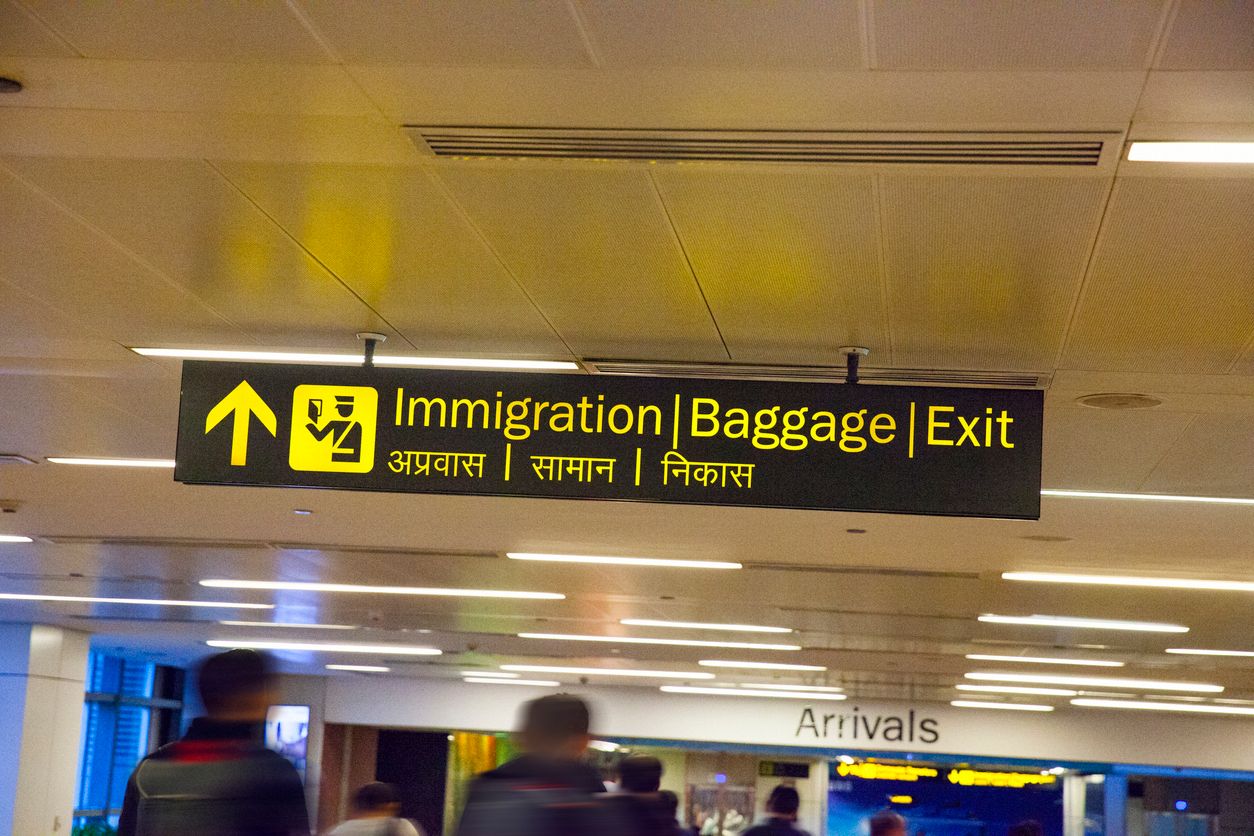
Yet the controversy touched on a broader concern that extends far beyond a Vietnamese airport. As Indians have emerged as one of the world's most frequent travellers, reports of stricter immigration checks, visa restrictions, deportations and entry denials for them are becoming increasingly common.
From Thailand and Georgia to parts of the Gulf and Southeast Asia, Indian travellers on social media have reported more questioning, closer examination of finances and travel plans, and, in some cases, deportation or denial of entry. Data suggest this is not an isolated trend. The reasons, however, appear more complex than a handful of viral incidents.
Thailand offers a pertinent starting point. Cheap flights and simplified entry procedures helped make Thailand one of the most popular international destinations for Indians. Yet even as arrivals surged, Thai authorities moved to scale back one of their most generous visa policies. After expanding visa-free stays to 60 days for visitors from many countries, including India, the government decided to reduce the period back to 30 days. The cabinet has also approved moving India, Azerbaijan, Belarus and Serbia from the visa-exemption programme to the Visa on Arrival category, although the changes are still awaiting publication in the Royal Gazette.

Speaking with NWS, Harsh Vardhan Shringla, former Foreign Secretary of India and former Ambassador to Thailand, said the changes should not be viewed as aimed specifically at Indian travellers.
"Indian outbound travel has grown rapidly in recent years, making India an important tourism market for many countries, including Thailand. It would be incorrect to judge Indian travellers based on the actions of a few individuals. Every country review and adjusts its immigration and visa policies from time to time according to its own priorities and circumstances,” he said.
“From my experience as India's Ambassador to Thailand, Indian tourists have always been well regarded and warmly received there. I do not believe the recent visa policy changes were directed specifically at Indians. They appear to reflect Thailand's broader tourism and immigration objectives rather than any negative perception of Indian travellers," Shringla currently is a nominated Member of the Indian Parliament, told NWS.
Thailand welcomed nearly 33 million international visitors in 2025, while Indian arrivals crossed 2.48 million, making India the country's third-largest tourism source market after Malaysia and China. However, even as Indian tourism continues to grow, Thailand is tightening immigration checks and visa policies, reflecting concerns that extend beyond tourism alone.
Speaking to NWS, Sirilak Niyom, Thailand’s Deputy Permanent Secretary for Foreign Affairs, said the decision to reduce visa-free stays from 60 days to 30 days was not directed at Indian travellers and applies to 93 countries. "We continue to warmly welcome Indian tourists," she said, adding that India and Thailand share long-standing cultural and people-to-people ties.
According to Kittharath Punpetch, Commissioner-General of the Royal Thai Police, immigration authorities denied entry to 29,490 foreign nationals between January and May 2026 as part of a nationwide crackdown on visa abuse, illegal employment, and transnational crime. Authorities also arrested 14,161 overstayers and illegal workers and revoked 668 student visas for misuse.
That broader context is important when assessing Thailand's recent policy changes. Several experts argue that the country's actions reflect wider immigration-management concerns rather than any shift in its attitude toward Indian travellers.
Srirupa Choudhury, a India-based international lawyer specialising in immigration, human rights and global mobility, said the policy change should be viewed in a context of global concerns around immigration rather than as a response to Indian tourists alone.
"Thailand introduced visa-free entry to revive tourism after the pandemic, but once visitor numbers recovered, it became necessary to reassess the policy's long-term sustainability. Concerns such as visa overstays, unauthorised employment and difficulties in monitoring compliance often become more visible under liberal visa regimes," Choudhury told NWS.
"It would be more accurate to view the decision as a policy recalibration rather than a measure targeted specifically at Indian travellers."
Increasing deportations of Indians
Official data submitted by India's Ministry of External Affairs to Parliament reveals that Thailand deported 256 Indians in 2021.

The number increased to 345 in 2022, a rise of 34.8 percent. In 2023, deportations surged dramatically to 823, representing an increase of 138.6 percent in a single year. Although the figure later declined to 575 in 2024 and 481 in 2025, deportations still remained nearly 88 percent higher than they had been four years earlier. At first glance, these figures appear to support the perception that Thailand has become tougher on Indians. Yet a closer look reveals that deportations are rising across multiple regions simultaneously, including countries where tourism plays only a minor role. The pattern suggests broader migration and enforcement trends are at work.
The strongest evidence comes from Southeast Asia's emerging trafficking corridors. Myanmar deported just 89 Indians in 2024. One year later, that number surged to 1,591, the largest increase recorded in the parliamentary dataset. Cambodia showed a similar pattern. According to the International Organization for Migration, more than 17,000 presumed victims from over 42 countries fled scam compounds in Myanmar through Thailand during 2025. The figures suggest that tighter immigration controls in the region are increasingly linked to trafficking and irregular migration concerns rather than tourism alone.
According to the UN-backed Thailand Migration Report 2024, Southeast Asia has become a focal point for irregular migration, trafficking networks and cyber-fraud operations, particularly along the Thailand-Myanmar corridor. Thailand hosts around six million foreign nationals and regularized more than 2.9 million migrants in 2025, underscoring the scale of the migration-management challenges facing the country.

A similar pattern is visible in the Gulf. While public attention often focuses on Thailand and Georgia, the largest deportation numbers appear elsewhere. Saudi Arabia deported 10,884 Indians in 2025, by far the highest figure in the parliamentary data. Yet Saudi Arabia rarely features in discussions about India's image abroad, highlighting the gap between perception and reality.
The trend extends beyond Saudi Arabia. The UAE deported 1,469 Indians in 2025, while Malaysia and Bahrain also recorded substantial increases. These countries are more closely associated with labour migration than tourism, suggesting that immigration compliance issues are a major driver of deportation trends.
Georgia, meanwhile, occupies a unique place in the story. Unlike Thailand or the Gulf countries, its significance lies not in the scale of deportations but in the intensity of complaints from Indian travellers. Official figures show that Georgia deported 133 Indians in 2025, a relatively modest number compared with other countries. However, Georgia has generated disproportionate attention because of repeated reports from Indians who claim they were denied entry despite holding valid visas, hotel bookings and return tickets. Some Indian travellers who were eventually allowed into Georgia describe detailed immigration checks and extensive questioning about their travel plans and finances.
Speaking to NWS, Indian traveller and YouTube content creator, Yash Jaiswal described his recent experience entering Georgia.

"During my recent trip to Georgia, I faced extensive scrutiny even before boarding my flight. After arriving, immigration officers spent nearly 30 to 40 minutes verifying my finances, return ticket, accommodation booking and onward travel plans. They even contacted my hostel to confirm my reservation before allowing me to enter the country. Although I was eventually admitted, the experience left me with the impression that Indian travellers, particularly solo travellers, are facing much closer scrutiny than before."
Vitaly Savinsky, an immigration attorney based in Georgia who advises foreign nationals on immigration, residency, and cross-border mobility matters concerns, said that Georgia's migration framework has become more stringent in recent years. He noted that amendments that took effect in October 2025 gave authorities the power to monitor the legal status of foreign nationals, strengthened enforcement against immigration violations and simplified deportation procedures. However, he said there was no evidence that the measures were aimed specifically at Indian travellers.
“I don’t see any trend suggesting that Indian nationals are being subjected to any specific or separate control regime. Rather, this is part of a broader global trend towards stricter border management and more thorough screening of incoming travellers,” Savinsky told NWS.
“Border screening today is based on a combination of factors, including travel route, visa history, purpose of entry and overall risk profile, rather than nationality alone.”

The debate that sparked this concern among Indians began in Vietnam. While social media reactions to the airport Garba video were intense, local perspectives suggest the controversy may not reflect the broader public sentiment.
Speaking to NWS, Dong Van Tran, a Vietnam-based travel guide who frequently works with Indian tourists, said the reaction to the recent airport Garba incident appeared stronger online than offline.
"I think the reaction to the airport incident was amplified on social media. Most Vietnamese people are not opposed to visitors expressing their culture or religion as long as they respect local laws and customs. In my experience, Indian tourists are generally respectful and interested in learning about Vietnam. Most people judge visitors by their behaviour, not by their nationality."
The data indicate that the issue extends beyond tourism and into broader questions of immigration control, border security, and visa compliance. The question facing Indian travellers today is no longer simply whether they have a visa. Increasingly, from Bangkok to Tbilisi, immigration authorities want to know why they are travelling, how long they intend to stay and whether they represent a migration risk. That shift, rather than any single viral video, lies at the heart of why many Indian travellers feel scrutiny has increased abroad.
(Reporting inputs from Maradia Tsaava and Magda Gugulashvili in Tbilisi, Georgia, and Ron Gluckman in Bangkok, Thailand.)