
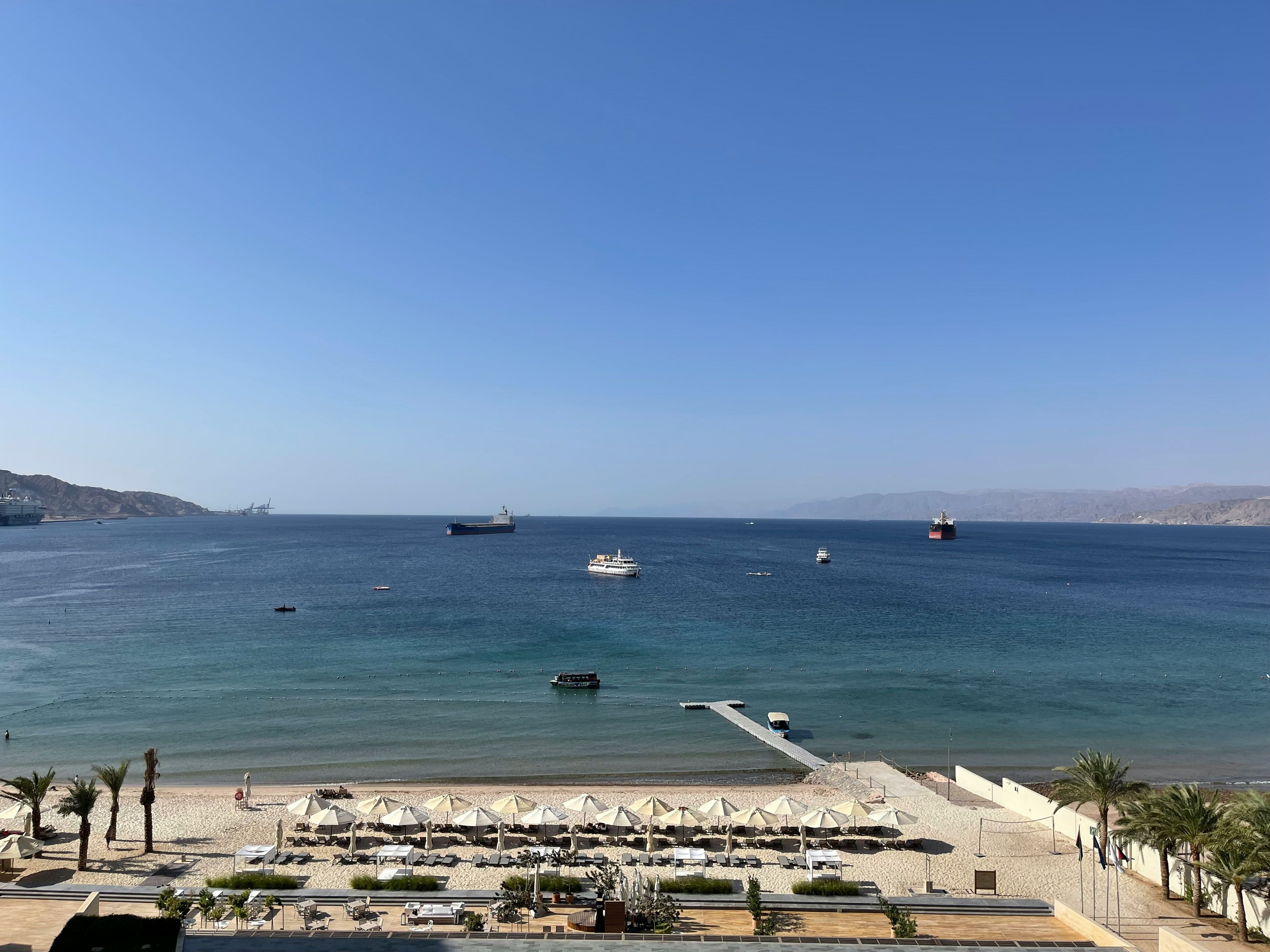
Saudi Arabia on Thursday (July 30) announced plans for a multinational maritime defence coalition to protect international shipping and energy supply routes in the Red Sea, amidst a rise in attacks by Yemen’s Iran-aligned Houthis. Chiefs of staff and military representatives from 43 of the 51 countries invited – including Pakistan, Turkey, Egypt and Djibouti – along with the European Union, gathered in Riyadh for the meeting, days after Saudi Defence Minister Prince Khalid bin Salman visited the United States for talks on regional security.
The Saudi Ministry of Defence said in a statement that the coalition, to be called the Multinational Maritime Defense Alliance, was designed to “enhance maritime security, protect international maritime corridors” and counter threats to navigation and trade. The ministry added that “the door remains open for other countries to accede to the coalition’s charter” once they complete their national procedures.
Saudi Arabia has offered to serve as the coalition’s founding and leading member and to host its headquarters. 14 countries have so far issued a joint statement backing the initiative, though Oman and the UAE are notably absent. The push for a coalition comes as the US-Iran war enters a more dangerous phase. Iran closed the Strait of Hormuz in March following US and Israeli strikes on its territory, cutting off a route that normally carries around a fifth of the world’s oil and liquefied natural gas – a closure the UAE’s state oil company has said may not fully lift until 2027.
That has left the Red Sea an increasingly vital alternative export corridor, particularly for Saudi Arabia’s Yanbu terminal, even as it too comes under threat. The Houthis, after announcing a blockade on Saudi shipping on July 20, have since claimed a series of attacks on Saudi-linked vessels, with at least one Saudi-owned tanker hit and Brent crude climbing past US$100 a barrel for the first time since May. Since 2023, the Iran-backed Houthis have targeted merchant vessels that they believe are linked to Israel, the US and the UK. The attacks have forced many global shipping firms to avoid the Bab el-Mandeb Strait and reroute vessels around Africa’s Cape of Good Hope – adding roughly two weeks to transit times and pushing up freight rates, insurance premiums and fuel costs. The diversion has also cut the volume of trade passing through the Suez Canal, which normally carries around 12 per cent of global trade, 30 per cent of container traffic and about 10 per cent of seaborne oil trade.
With Hormuz closed, the stakes around the Red Sea, the Bab el-Mandeb Strait and the Suez Canal have grown further, since disruption to any one route now has fewer viable alternatives left to absorb the shortfall. Under the proposal, Saudi Arabia would coordinate intelligence-sharing, maritime surveillance, joint naval patrols, counter-smuggling operations, anti-piracy efforts and the protection of shipping lanes, improving information exchange between members including Sudan, Yemen, Eritrea and Somalia, and enabling joint responses to emerging maritime threats. The initiative is aimed at bolstering regional security and giving coastal states greater ownership of safeguarding one of the world’s busiest shipping corridors – while also building on, rather than replacing, existing efforts such as the EU’s Aspides naval mission and the US-led Operation Prosperity Guardian, launched in 2023.The Red Sea is also central to Crown Prince Mohammed bin Salman’s Vision 2030 agenda to diversify the kingdom’s economy through projects such as NEOM, the Red Sea tourism development, and expanded logistics and trade corridors. NEOM is Saudi Arabia’s roughly US$500 billion mega-city and economic zone being built along the Red Sea coast, designed to attract global investment, tourism and advanced industries; sustained attacks on shipping routes risk dampening investor confidence and denting both energy exports and tourism.
Riyadh is positioning itself as a regional security leader while avoiding direct military confrontation with the Houthis, part of a broader diplomatic push since it restored ties with Iran in 2023. China, too, has a stake in Red Sea security. As one of the world’s largest importers of Gulf oil, Beijing depends heavily on uninterrupted shipping through the Bab el-Mandeb Strait and the Suez Canal, and operates its first overseas military base in Djibouti, near the strait’s entrance. The US, Japan, India and European states also rely on these routes for energy and trade, making Red Sea security a matter of global, not just regional, interest.