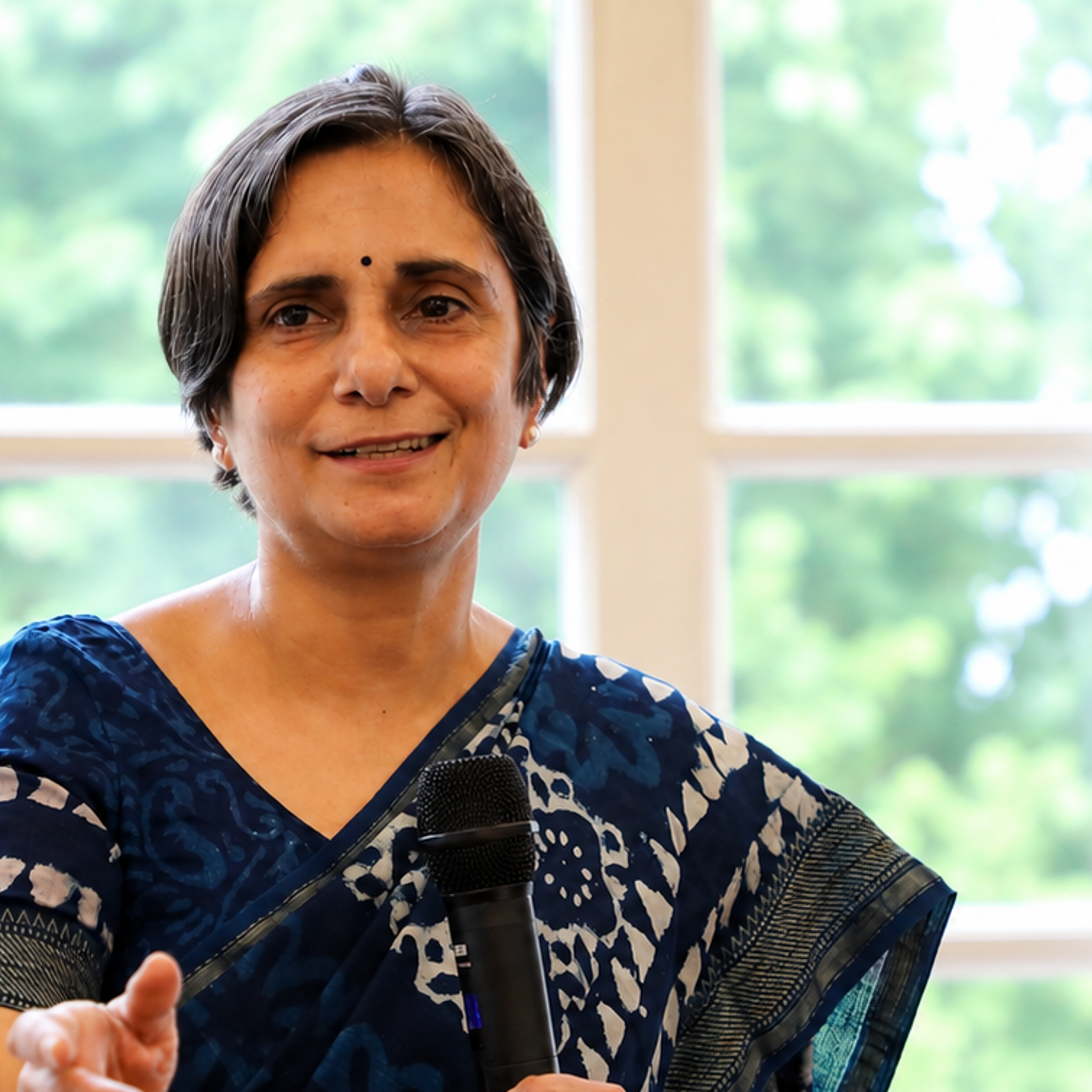
Nikita Naidu, a climate justice activist from Hyderabad, stepped into an unlikely spotlight when she boarded a flight to Libya to join the Global Sumud Flotilla's North African land convoy. She is the first Indian to join the Flotilla's North African land convoy just as Israel’s navy forcibly stopped the maritime convoy off the Greek island of Crete.
The Flotilla, the largest civilian-led humanitarian mission ever mounted to break the siege on Gaza, has seized global attention on multiple fronts. There is the sheer human tenacity of its participants, among them Greta Thunberg, Saif Abu Keshek and Thiago Ávila, who have pressed on in the face of interception and arrest. There are the serious questions of international law raised by Israel’s decision to stop unarmed civilian vessels carrying food and medicines in waters far outside its jurisdiction. And there is the larger, darker fact the mission keeps forcing into view - that Gaza has lived under illegal occupation for over two years, and that the world, for the most part, has looked on.
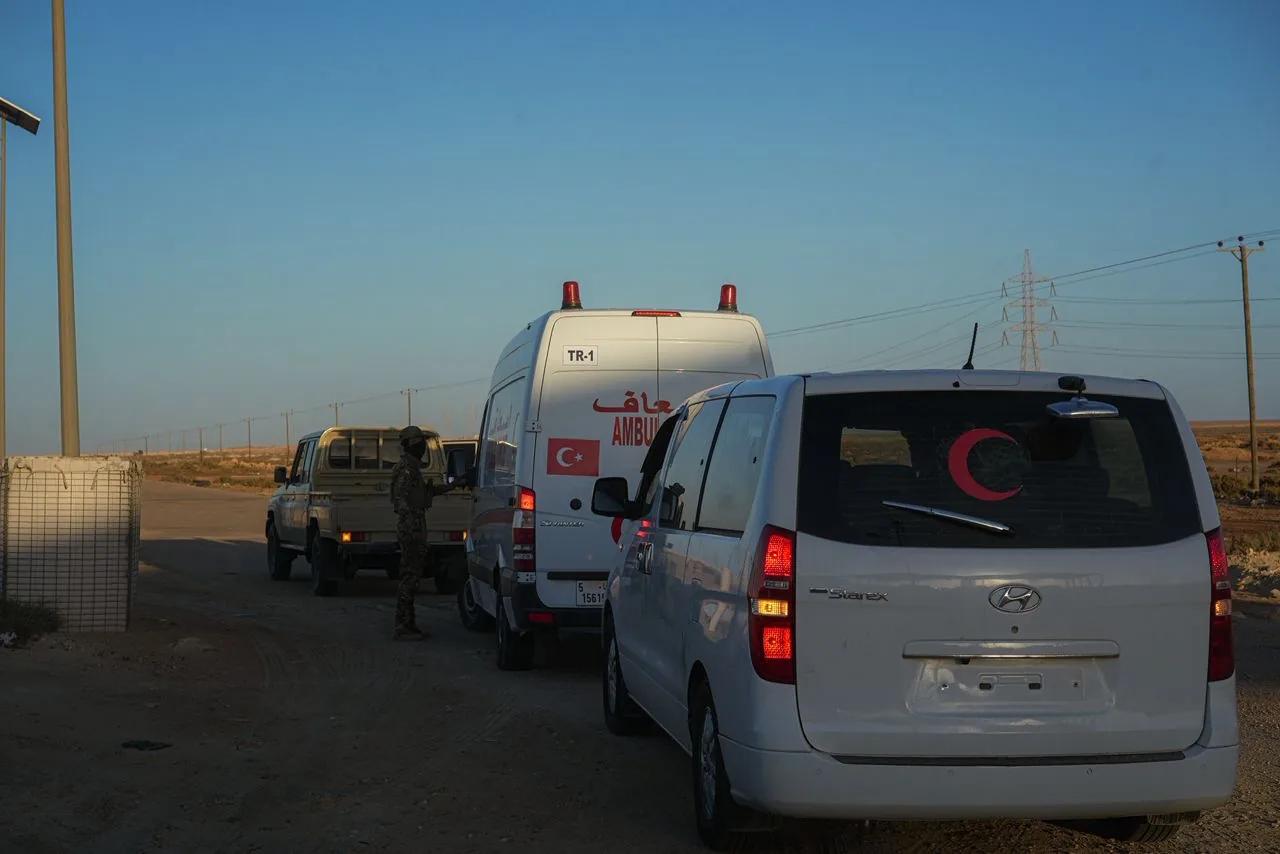
The convoy’s lorries have been stranded for days at the Sirte crossing in western Libya, unable to enter eastern Libya. The holdup, the convoy’s media wing said, was due to an ‘unexplained’ breakdown in communications with eastern Libyan security authorities and the Libyan Red Crescent.
NWS editor-in-chief Rahul Devulapalli caught up with Naidu on May 16, 2026 over voice messages as she travelled with the convoy. She joined the land crew in Tripoli on May 7. The convoy had originated in Mauritania on April 30, 2026 a week ago.
Despite patchy connectivity along the route, she took time out to send voice notes to have a conversation. Naidu spoke candidly - about what she had witnessed, what had driven her there, and why governments across the world cannot afford to keep ignoring the work of people who have braved surveillance and institutional indifference to do something fundamentally human: bring food, clothing, and shelter to those who have none.
Excerpts:
Where is the convoy now?
We are now six kilometres away from the east Libyan border. We are on the 12th day of our convoy in Libya and have been made to set up camp at the border. We have limited food and water, and our means of communication have been disrupted, making it difficult for us to contact family and friends. This by no means compares to what the people of Gaza are forced to suffer every day. Negotiations are still ongoing. We have been facing multiple diplomatic measures to stop our convoy. One of the conditions put on us was that only Libyans would be allowed entry into east Libya. Egypt, too, announced recently that people from the Maghreb region will now need a visa to enter its territory.

What led you to join the convoy?
It wasn’t one single moment. Ever since I got to know about the Israel-Palestine issue after October 2023, the deeper I went into it, my singular thought was that I wished a whole bunch of us could just walk into Gaza and try to help them out or deal with this situation. And then when the Flotilla movement picked up pace and there was a global call for it, I knew I wanted to be on those boats or help facilitate somehow. Actually, last year, during the very first global Flotilla mission of August-September, I wanted to join. But they preponed the dates by a month, so I wasn't able to mobilise fast enough. Luckily, this year, we got to know a little by January-end and that's how we started planning. But, of course, we couldn't go on the boats because there were way too many obstacles and risk factors. So eventually I ended up getting onto the land convoy.
Did you discuss the mission with your family?
I generally don’t need to discuss anything. I think my family understands the kind of person that I am, the decisions that I make, and why I make those decisions. So all I can do for them is help them prepare for what I'm undertaking and how that might affect me, my life, and their future. It's less of a discussion and more of a preparation, I would say.
Did you assess the risks and complications?
We have to think about the larger picture here. Why is Gaza a conflict zone? Why are these complications even in place for someone who wants to go on a humanitarian mission? If you just concentrate your energies on Gaza, then whatever happens after that happens. Everything is a fight. Everything is a battle. You have to deal with it, no matter what. At the end of the day, certain actions have to take precedence, and for me, the action is to help the people of Gaza - to do whatever it is that they need done. If I can help, if I can facilitate anything for them, then that is what I want to do.
Tell us a little about your journey from India to Libya.
The journey from India to Libya was actually very short and quick. As soon as we realised that we wouldn’t be able to join the sea convoy, we were asked if we could join the land convoy instead. That wasn't the plan we wanted because the North Africa convoy is inherently North African. We were hoping to organise a convoy in the rest of the world, within Asia, or anywhere else, after the sea convoy. It wasn’t even real until the tickets were booked, which was barely a week before I left. That’s when it got real.

Then you prepare everything - visa and all that - and just fly out and land in Libya. More than 40 countries are represented in the land convoy. It actually started on April 30 from Mauritania, then moved through Algeria and Tunisia. The rest of the convoy joined us in Libya roughly a week ago, and we have since begun our journey from Tripoli eastward - hopefully through Egypt and eventually to the Rafah border and into Gaza.
Have there been any challenges during the convoy?
Yes, definitely. There are quite a few. The political situations in each of these countries are different. The security scenarios are different. The risks vary even within countries. Culturally, though, it has been wonderful getting to know people from across the world and sharing thoughts on what is happening, and how to respond to it, whether personally, intellectually, or practically. I have come across some remarkable people - teachers, professors, librarians, students, young people of all kinds. It has been an incredible journey, at least where people and culture are concerned.

Your comments on India's response?
I think the response could have been much better, more nuanced and more sympathetic to a people whose sovereignty is being taken from them. The Indian government can do much better, but that is their politics. I am doing what I can. I think Indians should, if they have not already, take a clear stand on what they believe the rights of people across the world should be. Because whatever standards we apply to others will eventually be applied to us as well.
For those who may not fully understand the Israel-Palestine issue, there is plenty of information available now. The Flotillas have played a significant role in spreading awareness globally. All anyone needs to do is use whatever platforms they have access to and look into it. We should all try to learn more, because this issue did not begin on October 7, 2023. It has been going on for 70 years. What is happening to the people of Palestine is not simply displacement. It is Erasure.
But how does your role as a climate activist intersect with the Palestine struggle?
I don’t think we can view climate justice or socio-economic and political justice in isolation, because the system that created socio-economic and political divides, pushing people to extremes, is the same system that gave rise to climate change. My work on climate change has always been intertwined with my work on socio-economic and political injustices.
To clarify, I am not solely a climate justice activist. I haven't worked on that specifically or in isolation for a very long time. For the last five or six years, it has been inseparable from socio-economic justice - whether in my social work or my activism more broadly. We cannot look at these things in isolation. There is no climate justice without social justice.
Just to clarify, I am not just a climate justice activist. In fact, I haven’t done that specifically or in an isolated manner for a very long time. It has been mixed with socio-economic injustices for the last five to six years, whether it’s my social work or whatever level of activism I do. We cannot look at these things in isolation at all. There is no climate justice without social justice.”
What does the convoy intend to achieve?
What would make this mission successful for me? The end result, right? If we are able to break the siege on Gaza, enter Gaza, and do the necessary work for the Palestinians there, that would be a success. Whatever they need us to do, for however long we are able to stay. Any reparation, any rebuilding, any kind of regenerative work we can do for them: that, at least for this mission, is what I would call success.
In the long run, however, breaking the siege on Gaza is tied to far more complicated issues, and that would require a much more global approach. But right now, for the people of Palestine and Gaza, if we are able to enter, to put my organisational skills to work, to help the people there, and to be with the children of Gaza, which is one of the main reasons I am making this journey, then that, personally at least, would be enough.

You are the only Indian in the convoy.
This year, the sea convoy had 10 members from India. Eight had to drop out due to health, legal, and visa rejection issues. The remaining two withdrew due to high-risk concerns. Of the original 10, three applied to join the land convoy, but a last-minute family health emergency caused two of them to drop out as well. That is how I ended up as the only Indian on the land convoy.
Some of the responses have been edited for clarity.