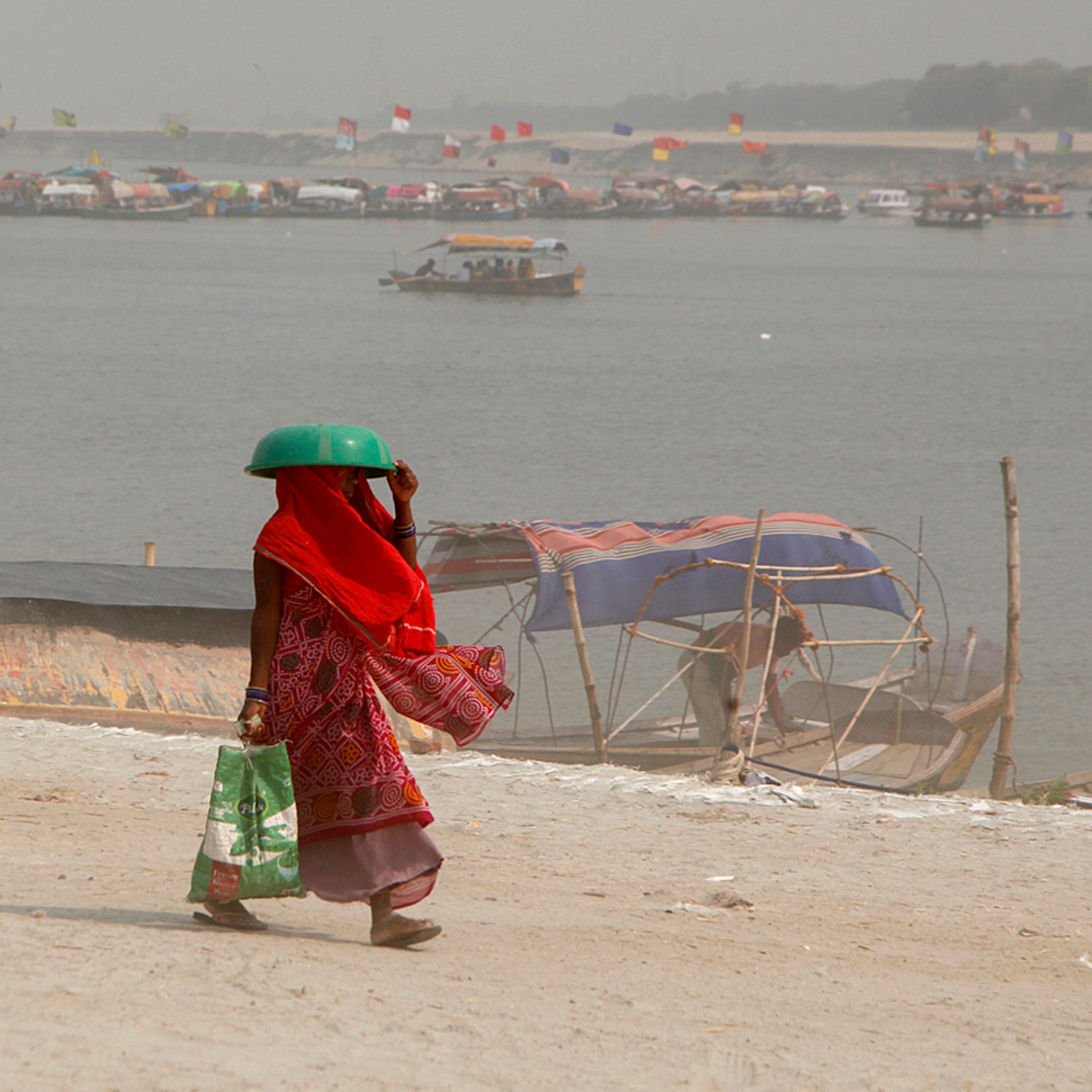
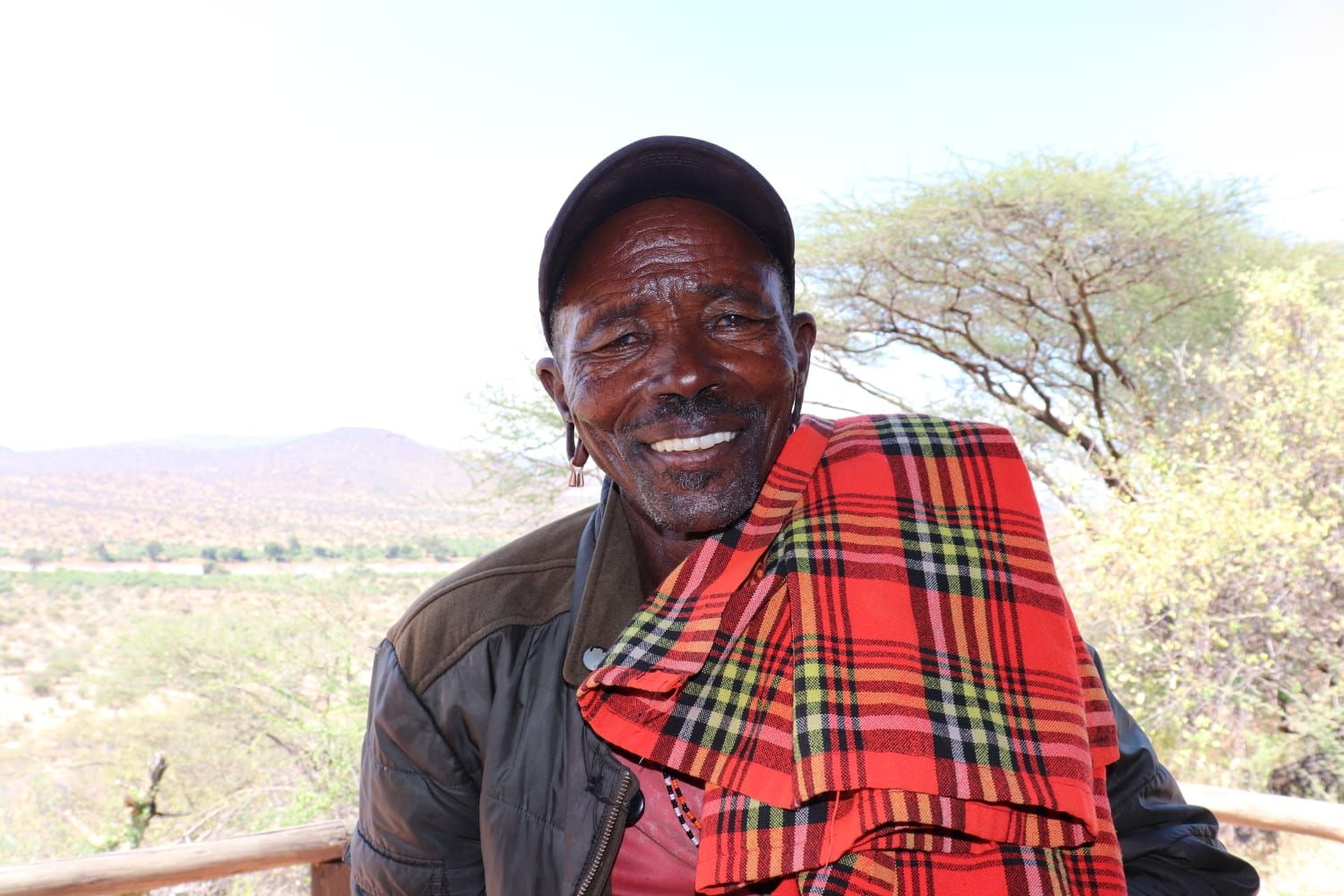
The road into the Naisuulu Conservancy is a brutal, bone-jarring stretch of dust and thorn bush in Samburu County, Northern Kenya. At the end of it stands an 80-year-old man leaning on a wooden staff, guarding an eco-lodge from wild animals that stray into the compound. His name is Labor Lantamine, and he has never heard of a carbon trading desk in New York or London. He cannot define a greenhouse gas emission. But he knows exactly what carbon credits have done for his community.“I may not understand exactly what carbon is, but I know it has brought benefits,” he says. “Our children have gone to school because of this money."
Labor is the human frontline of a sprawling, invisible market – one where an unseen commodity, traded thousands of miles away, is quietly rewriting life in one of Kenya's most unforgiving landscapes. He is part of the Northern Rangelands Trust (NRT) network, which spans a vast stretch of community land across northern Kenya. Here, carbon finance has funded real things: school fees, bursaries, jobs. However, an investigation reveals that behind those benefits lies a volatile multi-million-dollar industry now locked in a high-stakes standoff over indigenous land rights, shifting legal definitions and a global regulatory freeze.
The clash of perspectives: aid vs exploitation
While for some, the carbon pipeline is a lifeline – school fees, bursaries, survival, for many it is a predatory mechanism dressed in green. "Carbon credits are not donor aid. It is a business,” Abdullahi Osman, the lead petitioner whose legal challenge shook the foundations of one of Kenya's largest carbon projects, tells NWS.
According to Osman, the biggest systemic flaw is transparency: global corporations are trading assets worth millions, while the communities on the ground are left in the dark.

To others, the same market looks nothing like exploitation – it looks like survival. Esther Peresina Lesingera, a 38-year-old mother of seven, remembers when the idea of carbon itself triggered panic.
"When people heard that air was involved, many refused the money because they did not understand how air could be taken," she says, recalling rumours that outsiders were buying the atmosphere and leaving pastoralists unable to breathe. “We decided to build bandas and a lodge. We decided to empower young people because many of the conflicts here involved youth, she says.
For Osman, however, minor community payouts cannot justify the structural erasure of local sovereignty. “Even if you gave us all the money, our land and freedom matter more," he says.
The asset freeze: millions trapped in limbo
The Northern Kenya Rangelands Carbon Project (NKRCP) — one of the largest soil carbon initiatives on Earth, spanning 4.69 million acres — is currently reeling from an unprecedented operational halt.Following a landmark judgment by a three-judge panel at the Isiolo Environment and Land Court in the case of Osman & 164 Others v Northern Rangelands Trust (NRT), the court found that the project's sibling conservancies were established unconstitutionally on unregistered community land without genuine Free, Prior and Informed Consent (FPIC).
As a direct consequence of this ruling, the international carbon registry Verra formally placed a freeze on the project. Yet, Carbon Project Director Alois Naitira revealed a striking detail: despite the regulatory freeze, the land has not stopped sequestering carbon. "We can embark on doing the marketing and sales of credits that are there, and others that have been generated since then,” Naitira tells NWS. Until Verra acts on it, those millions of credits cannot be liquidated or sold to tech and entertainment titans like Meta and Netflix, which have historically used northern Kenyan soil to neutralise their corporate emissions footprints.

The stakes are high. Consider this: The NRT project generated six million total credits at an average unit price of $15, resulting in a gross financial valuation of $90 million during its first ten years of operation (2013–2022).
The ghost commodity
To understand why an isolated patch of rangeland in northern Kenya has become a corporate playground for Western conglomerates, one must unpack the voluntary carbon market.
“A carbon credit is an amount you are given in exchange for what you have cut in terms of emissions… it is like an incentive for using cleaner energy or capturing carbon,” explains John Kioli, Chairman of the Kenya Climate Change Working Group (KCCWG) and a leading national climate policy architect.In projects like these, the underlying science depends entirely on keeping the earth undisturbed. “When land is tilled or disturbed, carbon is released into the atmosphere," Kioli says.
For international buyers, this creates a major financial and reputational risk: they may be paying millions for an asset that can literally evaporate during the next dry season. The ultimate challenge, therefore, is correcting its structural flaws.Under NRT's modified rules, pastoralists must systematically rotate their herds.
This gives native grasses time to heal and send their roots deep into the earth. During photosynthesis, grass acts as a natural filter, pulling carbon dioxide out of the atmosphere to grow, and pumping the excess carbon deep into its root systems, locking it safely underground as soil organic matter.
Transparency: The hidden price
While carbon projects publicly report the number of credits issued, retired or sold, the precise prices paid by individual corporate buyers are shrouded in confidentiality. Many transactions occur entirely through closed-door, private non-disclosure agreements.
Kioli tells NWS that because these private sales bypass local governance, it is nearly impossible for participating herders, independent researchers or journalists to verify the true commercial value of individual credit transactions.
They are forced to blindly trust whatever trickled-down percentages the middlemen or international brokers choose to declare.To project managers and satellite auditors, ‘planned rotational grazing’ is an effective climate algorithm. But to the pastoralists whose survival depends on the seasonal movement of livestock, it can feel like a corporate fence.
According to Osman, these top-down grazing restrictions were enforced with aggressive security pressure, fundamentally disrupting ancestral migration paths during catastrophic rangeland droughts.
The government stance and international blowback
The government of Kenya is deeply invested in the market, viewing carbon as a lucrative sovereign asset that could rival traditional exports like tea and coffee. However, the regulatory collapse of the NRT flagship project has sent shockwaves through state boardrooms, forcing regulatory bodies to re-evaluate how carbon concessions on communitarian lands are vetted.Under the newly enforced mandates of the Climate Change (Carbon Markets) Regulations, 2024, overseen by the National Environment Management Authority, the government has launched a strict new verification framework.

Following the legal fallout over NRT's land allocations and intense lobbying by civil society, updated legislation passed by the Parliament of Kenya explicitly dictates that any land-based carbon project situated on public or community land must allocate at least 40 per cent of its aggregate annual earnings directly to the local population.
The ongoing crisis in northern Kenya has directly impacted the state’s rollout of the Kenya National Carbon Registry, where all domestic climate assets must be formally logged to prevent double-counting. Government officials are now caught on a diplomatic tightrope: they must defend Kenya’s status as an African hub for green finance while addressing international concerns regarding human rights and land tenure.
The international stage and the battle at COP (Conference of the Parties)
On the international stage, this domestic crisis strikes at the heart of Article 6 of the Paris Agreement, which served as a major battleground at recent UN Climate Change Conferences. Article 6 governs how countries and corporations can trade carbon credits internationally to meet their climate targets.
Civil society groups and global watchdogs have repeatedly used the Northern Kenya project as a textbook example of why nature-based soil offsets are fundamentally flawed. Because soil carbon lacks permanence, global experts argue that relying on it compromises real progress towards preventing planetary warming.
At the COP conventions, critics have argued that allowing Western conglomerates to buy these volatile assets creates an unearned “license to pollute” at home, using African soil as an accounting trick to shield their carbon-heavy business models from genuine systemic change.
A battle for trust?
The future of carbon trading in Kenya may depend less on carbon itself and more on trust. As carbon credits become more valuable, communities are asking harder questions: Who owns the carbon stored on their land? Who negotiates the deals? How much money is being made? And who decides how that money is shared?If these questions remain unanswered, more disputes and legal challenges are likely to follow, creating uncertainty for both communities and investors.The implications extend far beyond Kenya.
International buyers increasingly want carbon projects that are not only scientifically credible but also legally secure and socially accepted. A project may store millions of tonnes of carbon, but if communities challenge its legitimacy, the value and credibility of those credits can quickly come into question.Ultimately, the future of carbon trading may rest on a simple principle: communities should not merely host carbon projects on their land; they should understand them, trust them and have a meaningful voice in how they are run.