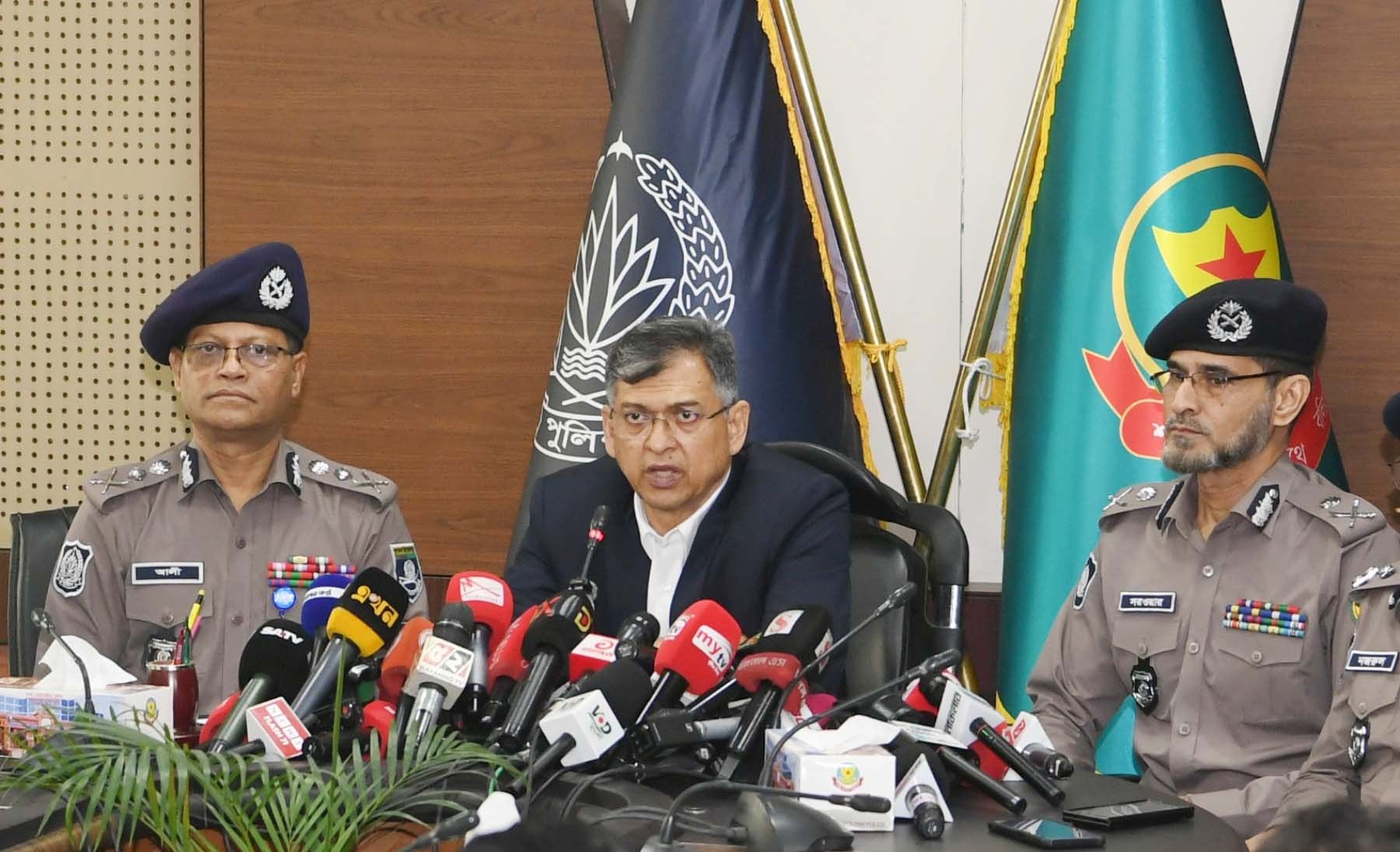
Earlier this week on September 20, Bangladeshi police said that they have uncovered a “pay-per-explosion” network behind a wave of crude-bomb attacks in Dhaka, in which suspects were allegedly paid in cash and directed through WhatsApp accounts registered to Indian phone numbers.
The Detective Branch of Dhaka Metropolitan Police said suspects were offered between 5,000 and 10,000 taka (roughly $41-$82) per blast, paid only after attackers sent video proof to their handlers. The network is linked to explosions and fires across the capital in recent weeks – including blasts in Jatrabari, Kamalapur and elsewhere, and a bomb that exploded outside the Supreme Court’s main gate earlier in September. Several vehicles were also set ablaze, with related arson reported elsewhere in the country, though Dhaka remains the investigation’s focus.
The network operates against a fraught political backdrop: the Awami League was banned and its leadership, including former prime minister Sheikh Hasina, fled to India after her government fell last year, leaving relations between Dhaka and Delhi markedly strained – the context in which allegations of party figures “directing violence from India” now sit.
Cross-border link
Questioning of detained suspects and phone analysis pointed to instructions delivered via WhatsApp text and voice messages from Indian-registered accounts, with some suspects saying the messages specified targets and timing.
However, technology expert Suman Ahmed Sabir told bdnews24.com that an Indian-registered WhatsApp account does not necessarily mean its user was in India, since the app works from abroad and Indian SIMs can stay active overseas through roaming – meaning further technical evidence is needed to locate those giving orders.
Police said that some suspected individuals linked to the banned Awami League allegedly directed the attacks, with investigators believing some are currently in India. However, media outlets which reported on the matter could not immediately verify these claims, and said they remain unconfirmed.
The clearest strand centres on the Jatrabari bombing. Police identified and jailed Raihan Uddin, an office secretary of an Awami League ward unit in Dhaka South, and later arrested three more men described as Chhatra League members. Investigators also recovered four unexploded crude bombs.
According to police, Raihan said four men rode two motorcycles to Jatrabari and threw five crude bombs from a flyover onto the police station below before fleeing through Kajla toll plaza. He alleged he was instructed by Sabbir Hossain, a former Dhaka Metropolitan South Chhatra League general secretary, via an Indian phone number.
Investigators have also made arrests over two further blasts, according to police accounts that could not be independently corroborated against primary wire copy at time of writing. Two crude bombs are reported to have exploded on a platform at Kamalapur Railway Station on September 19, leading to the arrests of Sakhawat Hossain Raihan, identified as a Chhatra League organiser and Bangladesh Railway employee, and Mohammad Sanmun, described as a Jubo League member. A separate blast on September 15 outside the Supreme Court’s main gate led to the arrest of Salman Islam Sakib, also known as Asif, named by police as a Chhatra League leader; his seized motorcycle reportedly led investigators to four more suspected crude bombs.
Indian national held
Separately, police detained an Indian national, named by authorities as Robiul Islam, in Dhaka on suspicion of involvement in sabotage. Police said he entered Bangladesh on September 14 and that his passport and identity documents showed conflicting dates of birth; his prior travel history to Bangladesh is also under examination. A court has granted police four days to question him. Police said they suspect possible ties to recent sabotage incidents but stressed no finding of guilt has been made.
Investigators are continuing to probe how the network was organised, who supplied the explosives, who coordinated attackers on the ground, and who controlled the Indian-registered WhatsApp accounts – while acknowledging that the communications trail alone does not establish that those directing the attacks were physically in India.