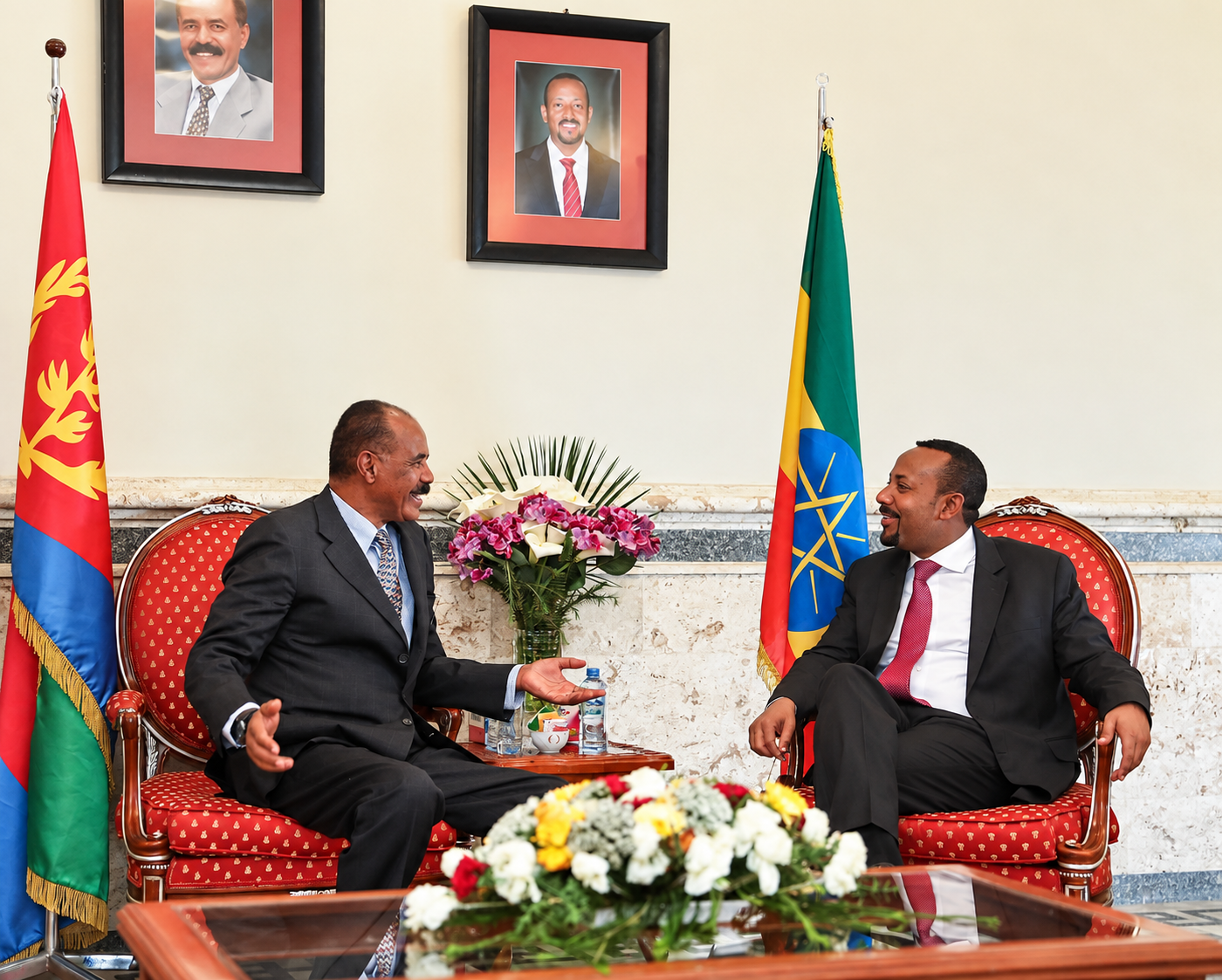
Ethiopia and Eritrea have once again found themselves on the brink of confrontation, less than a decade after the two neighbours ended two decades of hostility and restored diplomatic relations.
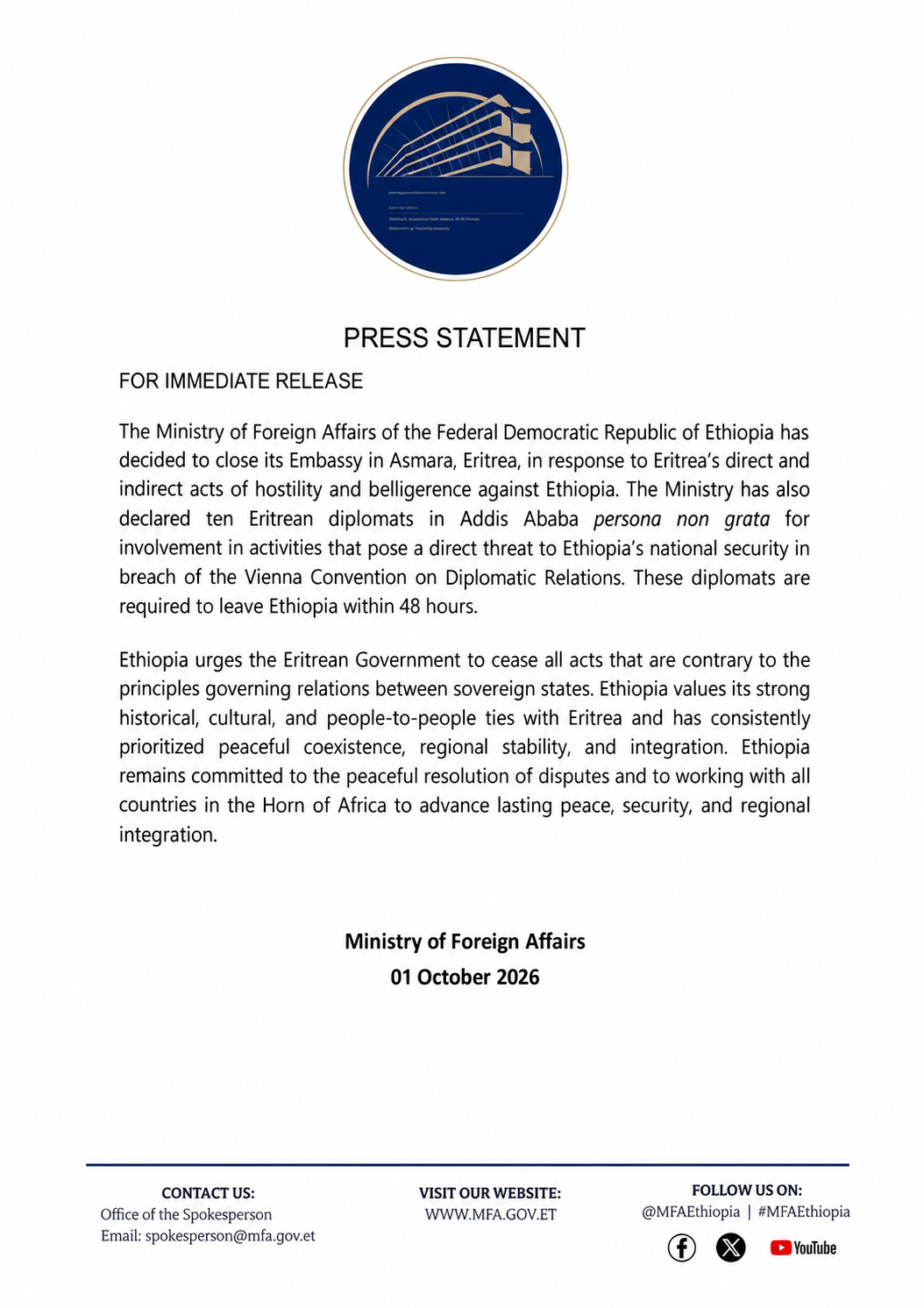
On October 1, Eritrea severed diplomatic relations with Ethiopia after Addis Ababa ordered the closure of its embassy in Asmara and expelled 10 Eritrean diplomats. Ethiopia accused Eritrea of direct and indirect acts of hostility and of supporting an armed opposition alliance led by the Tigray People's Liberation Front (TPLF). Eritrea has denied the allegations and responded by cutting all diplomatic ties with its neighbour.
The rupture comes as fighting has erupted again in northern Ethiopia, particularly in and around Tigray. Ethiopian federal forces are fighting an alliance of armed and political groups led by the TPLF, with the conflict spreading into neighbouring Afar and Amhara regions. Explosions have also been reported in Addis Ababa, raising fears that the conflict could acquire a wider regional dimension.
The immediate conflict is an Ethiopian internal struggle, but Eritrea's alleged involvement has transformed it into a much wider security concern. To understand why the latest breakdown is so serious, it is necessary to go back several decades. Ethiopia and Eritrea have repeatedly moved from alliance to war, from bitter hostility to reconciliation and now back towards confrontation.
A conflict rooted in history
While Ethiopia was almost never colonised, Eritrea was an Italian colony from 1890. After the Second World War, Eritrea's political future became an international question. In 1952, the United Nations established a federation between Eritrea and Ethiopia. Eritrea retained its own parliament and a degree of autonomy, while Emperor Haile Selassie remained Ethiopia's ruler.
The arrangement gradually unravelled as Addis Ababa restricted Eritrea's autonomy. In 1962, the federation was formally dissolved, and Eritrea was incorporated into Ethiopia. The decision triggered an armed struggle for Eritrean independence.
The Eritrean Liberation Front began the independence campaign in the 1960s. Internal divisions within the movement eventually contributed to the emergence of the Eritrean People's Liberation Front (EPLF), led by Isaias Afwerki. Around the same period, the TPLF emerged in Ethiopia's northern Tigray region.
The EPLF and TPLF had different political objectives, but they shared a common enemy in Ethiopia's military government, the Derg, a Marxist-Leninist junta. The two movements fought alongside each other against the Derg, which eventually collapsed in 1991. The EPLF took control of Eritrea, while the TPLF became the dominant force within the coalition that took power in Ethiopia. The former allies would eventually become bitter enemies.
Eritrea becomes independent
In 1993, Eritrea held an independence referendum in which an overwhelming majority voted for separation from Ethiopia. Isaias Afwerki became Eritrea's first president. Initially, the two countries maintained relatively close relations, but the relationship deteriorated within a few years.
Several disputes accumulated, involving the border, currency, trade and access to ports. The boundary between the two countries had never been properly demarcated and was based largely on vague colonial-era treaties. Areas including Badme, Tsorona-Zalambessa and Bure remained contested.
An economic dispute further strained relation. In November 1997, Eritrea replaced Ethiopia's birr with its own currency, the nakfa. The two governments could not agree on how trade should be settled. Ethiopia wanted transactions to be conducted in hard currency, while Eritrea wanted the currencies to be treated at par.
Ethiopia had also become landlocked following Eritrea's independence and increasingly shifted its trade away from Eritrean ports such as Assab and Massawa towards Djibouti. The economic dispute deepened the political rivalry between the former allies, particularly between Eritrean President Isaias Afwerki and Ethiopian Prime Minister Meles Zenawi. Then came the border clash that changed the relationship permanently.
The 1998-2000 war
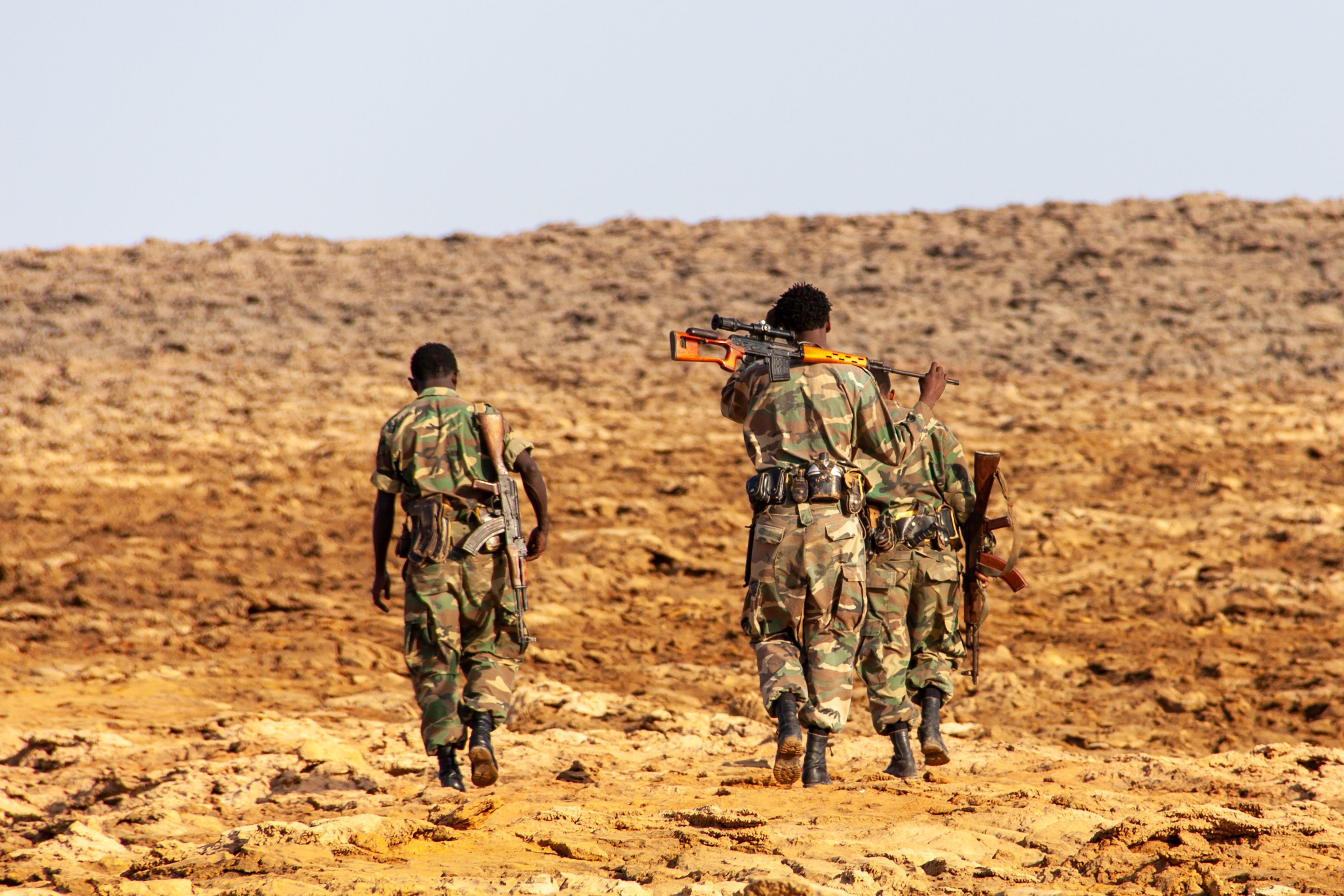
In May 1998, fighting broke out around Badme. What began as a border dispute escalated into a full-scale war between Ethiopia and Eritrea. The conflict lasted roughly two years and killed an estimated 70,000 or more people.
The two countries signed a cessation-of-hostilities agreement in June 2000 and a comprehensive peace agreement in Algiers on December 12 that year. The Algiers Agreement established a Boundary Commission to determine the frontier and a Claims Commission to consider claims arising from the war.
But the agreement did not restore normal relations. In 2002, the Boundary Commission ruled that Badme belonged to Eritrea, but Ethiopia refused to implement the ruling. The result was a prolonged "no war, no peace" situation. The frontier remained heavily militarised and diplomatic relations stayed hostile for years.
The 2018 breakthrough
The breakthrough came after Abiy Ahmed became Ethiopia's prime minister in April 2018. Abiy announced that Ethiopia would accept the earlier border decisions and seek to normalise relations with Eritrea.
In July that year, Abiy travelled to Asmara and met Isaias Afwerki. The two countries signed a Joint Declaration of Peace and Friendship, formally ending the state of war and agreeing to restore diplomatic, transport and communications links.
The reconciliation was hailed internationally as a major diplomatic breakthrough after two decades of hostility. Abiy was awarded the 2019 Nobel Peace Prize, with his reconciliation with Eritrea among the developments cited in the award.
For a time, Ethiopia and Eritrea appeared to have moved beyond their history of war. But the underlying strategic differences between the two countries had not disappeared. The Tigray crisis would soon change the relationship again.
Tigray war changes everything
The TPLF had dominated Ethiopian politics for nearly three decades through the Ethiopian People's Revolutionary Democratic Front. Abiy's rise to power in 2018 fundamentally altered that political balance. His government reorganised the ruling coalition and relations between Addis Ababa and the TPLF deteriorated.
In November 2020, fighting broke out between Ethiopian federal forces and the TPLF in Tigray. Eritrea entered the war on the side of the Ethiopian federal government. Eritrean troops fought alongside Ethiopian forces against the TPLF during the 2020-22 Tigray war, one of the deadliest conflicts in Africa in recent years.
The war ended with the Pretoria Agreement in November 2022. But Eritrea was not a party to the agreement. That became significant because the peace settlement was negotiated between the Ethiopian government and the TPLF, while Eritrea, despite having fought alongside Ethiopian forces, remained outside the settlement.
Relations between Addis Ababa and Asmara subsequently deteriorated again. Eritrea was unhappy with aspects of the post-war settlement, while Ethiopia increasingly focused on another strategic issue: access to the Red Sea.
Red Sea question
Ethiopia's geography is central to the current dispute. When Eritrea became independent in 1993, Ethiopia lost its coastline on the Red Sea and became landlocked. It subsequently became heavily dependent on foreign ports, particularly Djibouti, for international trade.
For Addis Ababa, reliable access to the Red Sea is therefore not simply a commercial matter. It is increasingly viewed as an important strategic and economic requirement. For Eritrea, however, its Red Sea coastline is sovereign territory. Its ports, including Assab and Massawa, are part of its national territory and therefore a matter of sovereignty and security.
This creates a fundamental divergence between the two countries. Ethiopia wants reliable maritime access, while Eritrea does not want Ethiopian demands for maritime access to threaten its territorial sovereignty. The issue has increasingly become one of the most sensitive elements in relations between the neighbours.
Eritrea has accused Ethiopia of pursuing access to the sea through a policy of hostility, while Ethiopia has maintained that its interests in maritime access are strategic and economic. The dispute has added another layer to the tensions left unresolved after the Tigray war.
Why Tigray is the flashpoint
Tigray sits directly along Eritrea's southern border, making developments there particularly important to Asmara. There is also a long political and military history between Eritrea and the TPLF. The two movements fought together against the Derg in the 1980s and early 1990s, later became enemies and eventually fought on opposite sides during the 2020-22 Tigray war. Now the alignment has changed again.
The Ethiopian government accuses Eritrea of supporting the TPLF-led opposition alliance fighting federal forces. Eritrea denies the allegation. Ethiopia has also accused Sudan and Egypt of supporting the opposition alliance, while those countries have rejected the accusations.
The TPLF has joined six other armed and political movements, including Amhara Fano and the Oromo Liberation Army, in an alliance that says it wants to remove Abiy's government and establish a transitional administration. The Ethiopian government rejects that characterisation, while the TPLF describes its military campaign as a defensive war.
These competing accounts underline the complexity of the current conflict, which is inseparable from Ethiopia's wider political crisis.
The collapse of the Pretoria peace
The renewed fighting also represents a breakdown of the fragile political settlement reached in 2022. The TPLF has accused the Ethiopian government of failing to fully implement the Pretoria Agreement, including provisions concerning the withdrawal of Amhara forces from disputed areas and the return of displaced Tigrayans.
It has also complained of economic pressure, including budget cuts and restrictions on fuel. The Ethiopian government, however, has accused the TPLF of launching an offensive against federal positions.
Renewed fighting began in September and has expanded into neighbouring areas. The conflict has raised fears of a return to the devastating war that ended with the Pretoria Agreement. The humanitarian consequences are already being reported. AFP said hundreds of wounded people had been registered at hospitals in Tigray, while humanitarian sources reported that tens of thousands had fled their homes in Afar. Verification of battlefield claims remains difficult because access and communications are restricted.
The conflict reaches Addis Ababa
The geographical spread of the fighting has raised another concern: whether the conflict is moving beyond northern Ethiopia. Explosions were reported in Addis Ababa on October 1. Diplomatic and security sources confirmed the blasts, although their cause, responsibility and the number of casualties remained unclear. An opposition-linked source claimed responsibility for drone strikes targeting military positions. Ethiopian authorities had already banned drone flights around the capital.
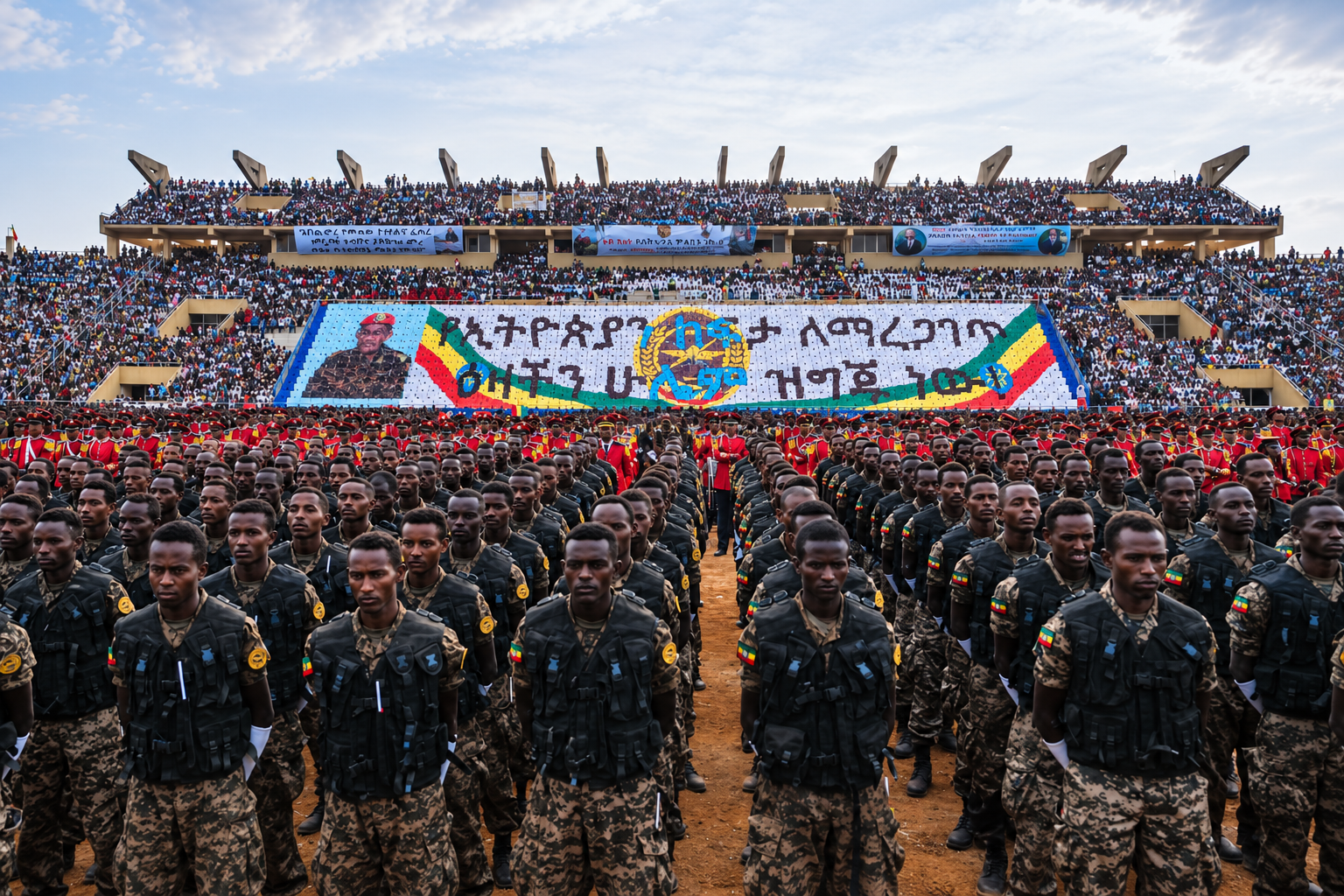
The reports are significant because attacks reaching the capital would indicate a potentially wider geographic reach for the conflict. However, claims about battlefield developments and responsibility for individual attacks remain difficult to independently verify.
From allies to adversaries again
The extraordinary feature of the present crisis is how dramatically the relationship between Ethiopia and Eritrea has changed over the decades. In the 1980s and early 1990s, the EPLF and TPLF were allies against the Derg. After Eritrea's independence, Ethiopia and Eritrea became enemies and fought a major war. In 2018, Abiy Ahmed and Isaias Afwerki became symbols of reconciliation. During the 2020-22 Tigray war, Ethiopian and Eritrean forces again fought on the same side against the TPLF.
Now Ethiopia accuses Eritrea of supporting the very forces that the two countries once fought together to defeat. That reversal illustrates how alliances in the Horn of Africa can change when questions of territory, sovereignty, political power and strategic access overlap.
What the diplomatic rupture means
The severing of diplomatic relations does not itself mean that Ethiopia and Eritrea are formally at war again. But it removes an important channel of communication between two countries with a history of direct military confrontation.
Ethiopia has closed its embassy in Asmara and expelled 10 Eritrean diplomats. Eritrea has responded by severing diplomatic ties. The rupture has come at an especially sensitive moment because fighting is taking place close to Eritrea's border.
The African Union has urged Ethiopia, Eritrea and Egypt to exercise restraint and resolve their differences through established diplomatic channels and peaceful dialogue. Whether the current crisis remains an Ethiopian internal conflict or develops into a broader confrontation will depend on several factors: the trajectory of the fighting in Tigray, the role of Eritrea, Ethiopia's pursuit of Red Sea access, the behaviour of neighbouring states and whether diplomatic channels can be restored.
Why this crisis is different from 1998
The danger today is not simply a repeat of the 1998 border war. The dispute now involves several overlapping conflicts: the internal Ethiopian struggle between the federal government and the TPLF-led opposition alliance, the unresolved legacy of the 2020-22 Tigray war, the historic hostility between Eritrea and the TPLF, the unresolved consequences of the Ethiopia-Eritrea border dispute and Ethiopia's strategic demand for reliable access to the Red Sea.
Beyond these bilateral and domestic disputes lies a wider regional contest involving Sudan, Egypt and other actors in the Horn of Africa and Red Sea region. The renewed fighting is taking place amid shifting alliances and competing regional interests, increasing the risk that an Ethiopian conflict could draw in neighbouring states.
That is why the latest diplomatic rupture matters beyond Ethiopia and Eritrea. The two countries have been allies, enemies, wartime partners and, briefly, partners in peace. The danger now is that several unresolved disputes have converged at the same time.
The current crisis is therefore not about one disagreement alone. It is the product of Eritrea's separation from Ethiopia, the unresolved consequences of the 1998-2000 war, the unfinished settlement of the Tigray conflict and Ethiopia's strategic search for access to the Red Sea.
The collapse of diplomatic relations has brought all these issues back into the same arena—and placed the Horn of Africa once again on edge.