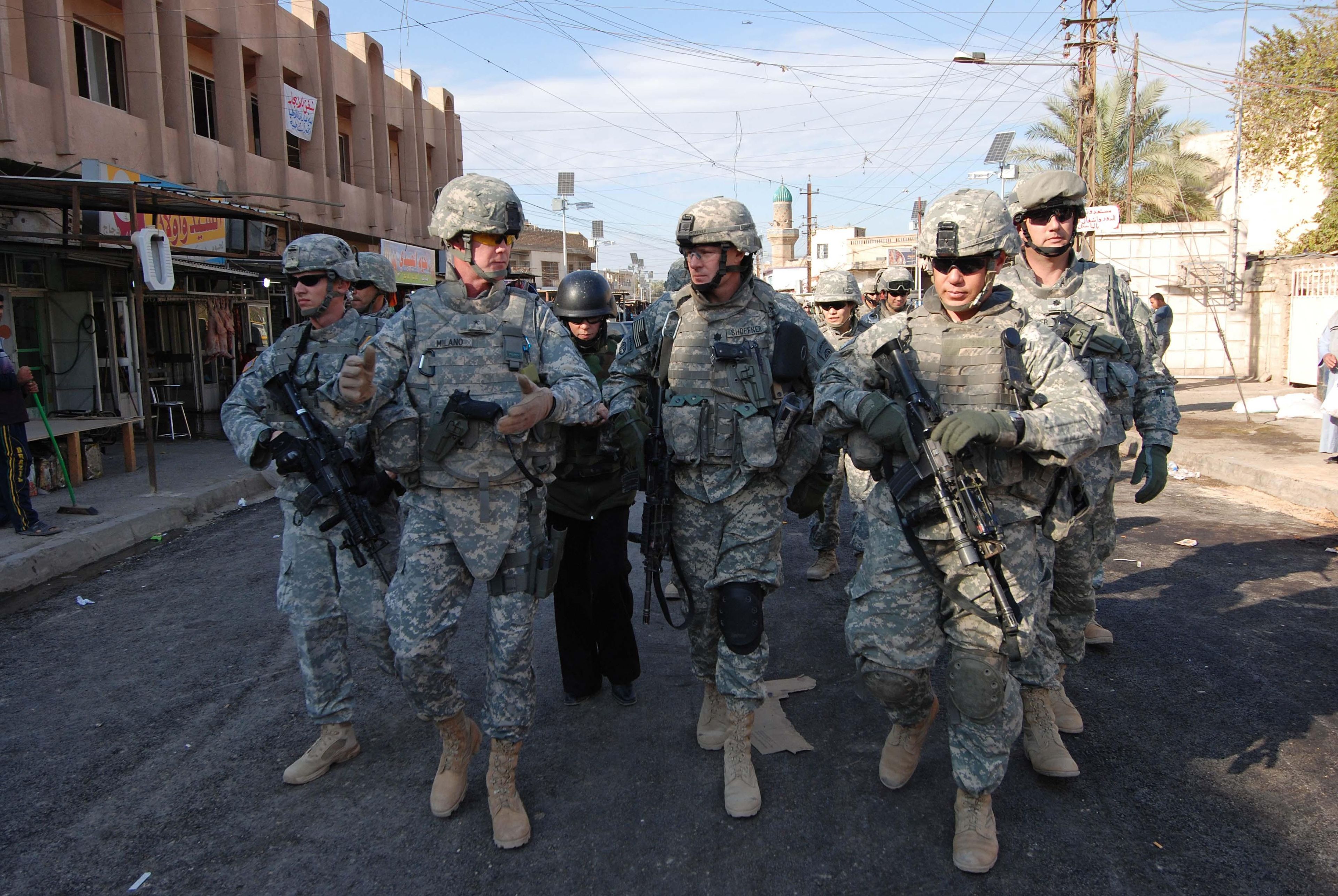
The US forces pulled out of their last bases in Iraq by the September 30 deadline, Iraqi officials said, ending a nearly 23-year American military occupation in Iraq. Iraq’s government announced that the Victory base at Baghdad International Airport had been vacated and most of the remaining troops, including those in the Kurdistan Region, are being redeployed to Jordan and other neighbouring countries. The exit completes a timeline agreed by Washington and Baghdad in 2024.
For many years, the US had been rejecting Baghdad’s demand to withdraw its troops. However, after the US accepted Iraq’s demands, the preparations started two years ago. The withdrawal comes while the US and Israel are at war with Iran, which began in late February, and American facilities in Iraq have been regularly attacked. Many in the US and West Asia think that the US departure could open more opportunities for Iran, which is militarily active in the country by supporting the militias, known by their umbrella name – Popular Mobilisation Forces. The US withdrawal is mostly being celebrated, though Kurds and some Sunni leaders are wary about the development.
Baghdad cheers
The US troop withdrawal has been touted as a major achievement in Baghdad and portrayed positively. Prime Minister Ali al-Zaidi, who took office in May, has called the September 30 date “fixed and final” and promised that October 1 would be “a new day in the course of the Iraqi state”. Celebrating this occasion, Iraq will mark four “Sovereignty Days” as a national holiday. An Iraqi official told The National that al-Zaidi himself pushed for the date during his July visit to Washington.
The US withdrawal is also linked to mainstreaming the Iran-linked militias. The US government has threatened to sanction Baghdad if the militias were not brought under Iraqi state control by September 30. The Iraqi government set the deadline for militia groups to disarm and join the national army. However, the hardest-line groups like Kataib Hezbollah, Harakat al-Nujaba and Kataib Sayyid al-Shuhada have rejected disarming by the original deadline, though they have not ruled out eventual disarmament. PM Al-Zaidi has now pushed that deadline to June 30, 2027, and said work on the goal is “moving on track”.
US experts cautious
Some strategic experts sounded caution over the withdrawal proposal. Alina Romanowski, a former US ambassador to Iraq (2022–2024) and a distinguished fellow at the Atlantic Council, says Washington should find the patience to stay. She argues that many in Iraq and across the region will see a US departure as the abandonment of a partner. She also warns that renewed US-Iran hostilities could derail the exit, particularly if Iran-backed factions resume attacks on American personnel stationed in neighbouring countries. Jasim al-Bahadli, an Iraqi security analyst who studies Iran-aligned armed groups, told Reuters that Tehran stands to gain strategically from the US troop withdrawal. In his view, the coalition’s departure removes a military presence that for years acted as a counterweight to Iranian influence in Iraq.
However, there is also support for the opposite view, which is also shared by the Donald Trump administration. In a piece published by Atlantic Council, C. Anthony Pfaff, a former NSC Iraq director, argued that the exit could strengthen US-Iraq ties by ending the cycle of militia attacks, US retaliation and political fallout in Baghdad. Daniel Shapiro, a former deputy assistant secretary of defense, says the move reflects a bipartisan consensus that Iraq and Syria’s governments should take over the counter-ISIS fight, though he worries about what happens if they fall short. Victoria Taylor, the council’s Iraq Initiative director, notes that the departure fulfills a Trump priority and a core demand of Iraq’s government.
Kurdish alarm
The US withdrawal has raised particular alarm in Iraq’s Kurdistan region. Officials of the region have been among the most vocal critics. US air defences in Erbil, which helped thwart attacks by Iran and Iran-aligned militias, are being removed. The region’s Peshmerga Affairs Ministry warned that the exit comes at a “sensitive time.”
A Kurdish commander told Reuters that ISIS sleeper cells have grown more active since the timetable was announced, and that the loss of American intelligence and drone support has boosted militants’ morale. Atlantic Council fellow Yerevan Saeed says the Kurds are losing their main external shield and leverage in disputes with Baghdad over budget shares and territory.
Iran, allies claim victory
Iran and its allies have termed the US troop withdrawal a major victory. Kataib Hezbollah security official Abu Mujahid al-Assaf called it “the beginning of full sovereignty” and warned al-Zaidi’s government against carrying out American plans. The group also threatened to shoot down aircraft it deems hostile over Iraq after September 30. His threat was connected to the Iraqi government complying with the US ban on Iranian airlines. Baghdad had barred the Iranian airlines from entering Iraq. Unhappy about the decision, Iran’s supreme leader’s representative separately accused al-Zaidi this week of implementing US sanctions on Iranian airlines. China is already the dominant buyer of Iraqi oil, the Atlantic Council notes, and it and Iraq’s neighbours could fill the space the US leaves.
Al-Zaidi has said that both the US and the Iran-aligned militias have assured they will refrain from attacks for 90 days after the withdrawal. The militias’ response would indicate Iran’s strategic posturing in the country. Iraqi militias have also grown active beyond Iraq, in step with Yemen’s Houthis, who are trying to capture the Red Sea coast of Yemen to threaten shipping through the Bab al-Mandeb Strait. Saudi Arabia blamed Iraqi militias for drone attacks on September 10-11 on the East-West pipeline that carries Saudi oil to the Red Sea port of Yanbu. The militias deny it, but Iraq’s government said that investigations confirmed the drones came from Iraq.
US leverage stays
The troop withdrawal doesn’t entirely diminish the US’s clout over Iraq. During his White House trip on July 14, PM Al-Zaidi stated that American troops leave and American companies enter, emphasising the continued economic coordination between both countries. The State Department said the transition reflects growing Iraqi capability, including the Peshmerga, the Kurdish military, and backed al-Zaidi’s efforts to assert sovereignty. Strategic experts agree that Washington’s economic leverage is still powerful enough.
Oil has historically supplied more than 90 per cent of Iraq’s state budget, and revenues pass through the Federal Reserve Bank (FRB) of New York. Iraqi central bank officials told Shafaq News in 2025 that the FRB holds $80 billion to $85 billion of Iraq’s reserves, and the US Treasury has barred 35 of Iraq’s 72 licensed banks from dollar transactions. The leverage has been used recently. In April, the US halted shipments of Iraq’s oil dollars in a pressure campaign over Iran-linked groups. In January, Washington threatened sanctions on the Iraqi state, possibly including oil revenues, if Iran-backed groups entered the next government.
The war is also reshaping Iraq’s energy map. Iraq’s exports averaged 3.4 million barrels a day before the war and have dropped sharply with the Strait of Hormuz effectively shut. Baghdad is exploring alternative export routes, including pipelines toward Turkey, Syria and Jordan studied with a consortium that includes the US firm Chevron, though analysts say such projects are years away. The US also hopes that historical animosity between Iraq and Iran would ensure Iraq's strategic doubt about the latter.