On a humid December evening in Mogadishu, Ahmed Jama pauses mid-scroll. The headline is terse: Israel has recognised Somaliland. He does not react at once. He leans back, phone still in hand, as if waiting for the meaning to settle. "This changes things," he says, at last.
For Jama, 34, the change is not abstract. He was born in Hargeisa, the capital of the self-declared Republic of Somaliland. For the past six years, he has built a life in Mogadishu as a logistics officer. His days pass easily among colleagues from across Somalia. Many nights end with calls home to family in the north.
Until now, that dual life felt manageable, bound by an unspoken assumption that he would not have to choose. That assumption is beginning to fracture. "I want Somaliland to succeed, but I also believe in Somali unity. I do not want to choose," he says.
For decades, people like Jama could live with that contradiction because the broader political question remained suspended. Somaliland functioned as a state in practice, while Somalia insisted on unity in principle. The rest of the world avoided taking a definitive stance. It was an uneasy balance, sustained by ambiguity.

Israel's recognition has begun to remove that ambiguity. To understand why this moment carries weight, it must be seen against the region's historical trajectory.
The roots of this moment lie in a fragmented past. During the colonial period, Somali-inhabited regions were divided under British, Italian and French rule, each power leaving behind a distinct administrative legacy. The British governed the north lightly as a protectorate alongside the Red Sea routes. It did not see it as a major colony like Kenya or India. Italian rule in the south, later reinforced by a United Nations trusteeship, introduced more centralised systems. France retained Djibouti, while Somali-inhabited regions in Ethiopia and Kenya remained outside the emerging Somali state.
By the 1940s, the idea of Soomaaliweyn, Greater Somalia based on the same language, culture and religion, had gained momentum. Somalis aspired to create a unified Somali state by merging the two Somalilands, Djibouti, Ogaden in Ethiopia and the Northern Frontier District in Kenya. The merger of the two Somalilands was envisaged as the first step for this greater unity.
This aspiration soon translated into concrete political developments. After the Second World War, a weakened Italy lost its colonies, including South Somaliland. In 1949, the United Nations placed Italian Somaliland under a ten-year trusteeship, with independence mandated for 1960. Italy was given a second chance to prepare its former colony for self-rule. Meanwhile, Britain agreed to grant independence to British Somaliland as Somali nationalist sentiment mounted. British Somaliland gained independence on 26 June 1960, and within days, on 1 July, it united with the former Italian Somaliland to form the Somali Republic.

But the union carried structural imbalances from the start. The South’s stronger institutions gradually dominated political and economic life. Grievances in the north deepened, even as conflicts with Ethiopia and Kenya strained the fledgling state. In 1969, Mohamed Siad Barre seized power, promising unity and modernisation. Backed initially by Soviet support, he built a powerful military and pursued territorial ambitions. But his rule grew increasingly authoritarian. The 1977 war with Ethiopia over the Ogaden region ended in defeat, weakening the regime and triggering internal dissent.
What followed was not merely political decline but institutional collapse. By the late 1980s, Barre’s campaign against the Isaaq clan in the north had devastated entire regions, deepening divisions that would prove irreversible. On 26 January 1991, Barre was overthrown, and the Somali state collapsed. In May, Somaliland declared independence. While it went on to build functioning institutions and relative stability, the rest of Somalia splintered. Power was fragmented among clan militias, warlords and later semi-autonomous regional administrations, leaving the central government weak and unable to exert full control.
From that collapse emerged a paradox that would define the next three decades. Somaliland operated as a state but remained unrecognised. Somalia retained international recognition but struggled to exercise authority. That paradox endured because it served a purpose: Somalia preserved its territorial claim, Somaliland governed itself, and external actors avoided taking sides. The African Union reinforced this balance by upholding the principle that colonial-era borders should not be altered, wary of triggering widespread fragmentation.
In effect, the Somali question was not resolved but contained. Israel’s recognition in December 2025 has begun to unsettle that containment.
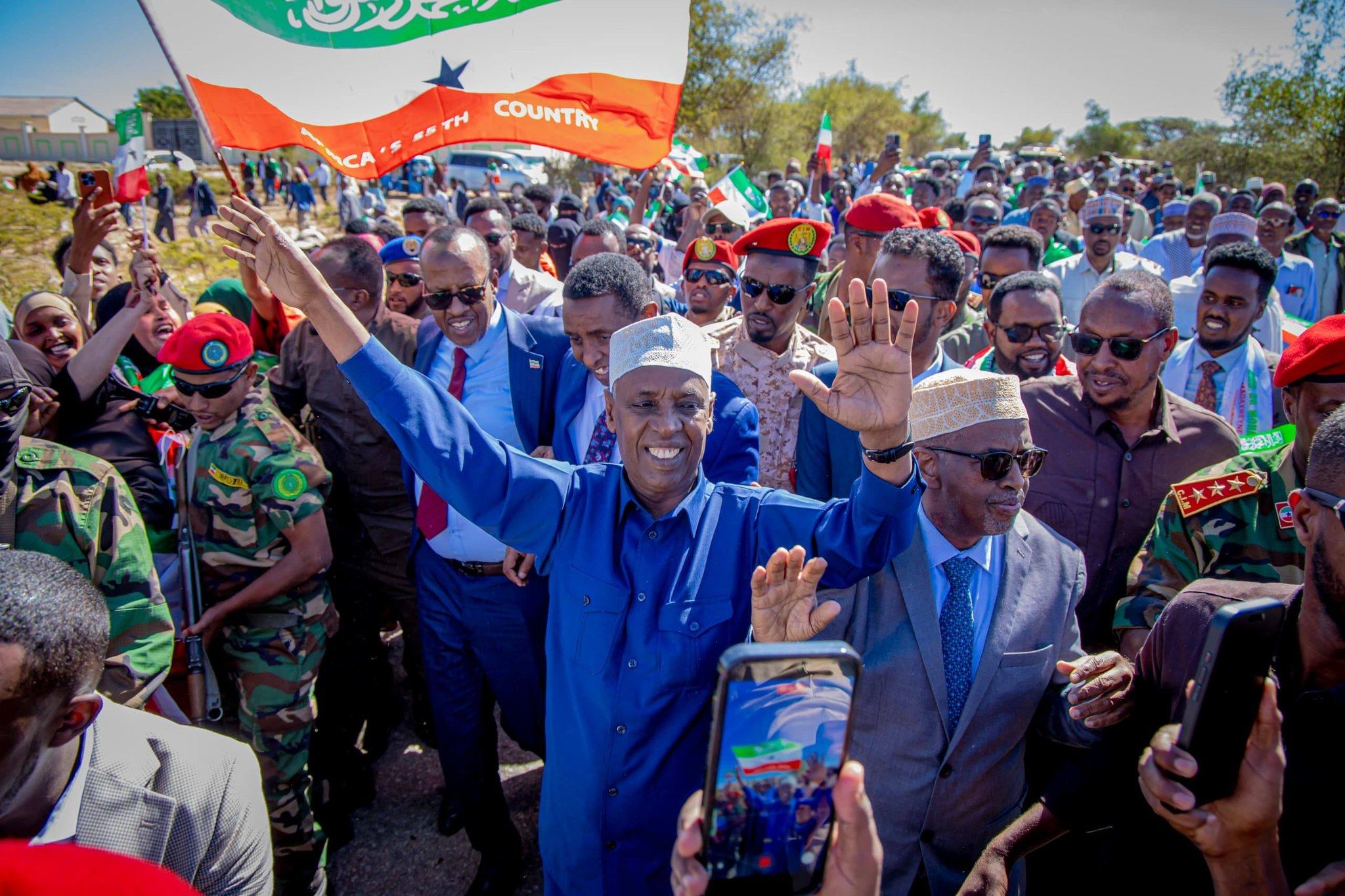
By formally recognising Somaliland as a state, Israel became the first UN member state to cross a line that others had avoided for decades. Since the recognition, Israel moved quickly. In January 2026, Israel’s foreign minister visited Somaliland, signalling a shift from quiet engagement to visible diplomacy. In February, Somaliland appointed its own ambassador to Israel. By April, Israel named its first ambassador to Somaliland, formalising diplomatic relations.

These are not merely symbolic gestures. Talks have moved into practical spheres such as agriculture, water management and healthcare. Technical training programmes for Somaliland officials have begun. There are also indications of security cooperation, though these remain preliminary. Recognition, once institutionalised through diplomatic and economic ties, becomes harder to reverse.
Despite these developments, wider international acceptance remains cautious. For now, most countries are holding back. African states continue to align with the African Union’s position, which supports Somalia’s unity. Gulf states are watching closely but are unlikely to act quickly, balancing strategic interests and regional sensitivities.
This uncertainty places the African Union in a particularly sensitive position. For decades, the AU has upheld the principle of maintaining inherited borders to prevent fragmentation. Somaliland’s case has long tested that principle. While past assessments have acknowledged its relative stability and described it as a unique case, the AU has stopped short of endorsing independence.
In Washington, D.C., the approach reflects a similar caution. The proposed Somaliland Economic and Opportunity Access Act is not a recognition measure but a step toward engagement. It focuses on financial access and economic interaction, not sovereignty. The United States continues its security cooperation with Somalia, particularly in counterterrorism operations, while maintaining limited and low-profile engagement with Somaliland.
But even without immediate follow-on recognition, the shift is already altering calculations. Once one country recognises a disputed entity, the cost of considering recognition for others begins to change. What was previously off-limits becomes debatable.
This shift is not happening in a vacuum. It is closely tied to Somaliland’s geographic position. The country sits along the Gulf of Aden, near one of the world’s most critical maritime corridors linking the Indian Ocean to the Red Sea and the Suez Canal, through which a significant share of global trade passes. Across the water lies Yemen, where conflict has already disrupted shipping lanes, increased costs and prompted expanded naval deployments, affecting global supply chains and commercial routes.
In such an environment, recognition is not just about legitimacy, but about access, proximity and influence, with each new actor adding another layer of uncertainty to an already strained and closely watched region.

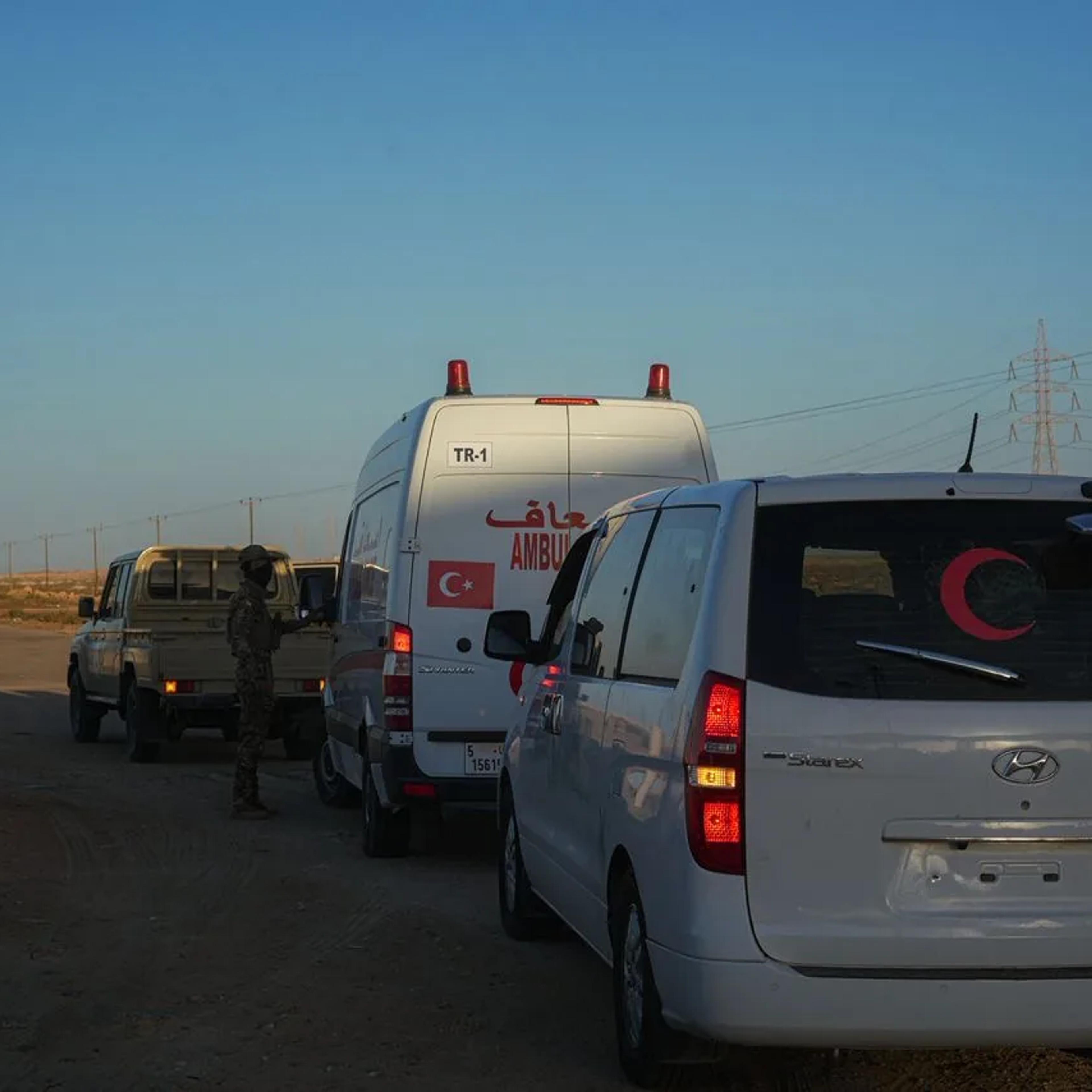
This is why Somaliland has drawn greater external attention, as countries move to secure influence along this corridor and its surrounding trade routes. The United Arab Emirates has invested heavily in Berbera port, transforming it into a growing logistics hub. Ethiopia, landlocked and reliant on external ports, sees Somaliland as a potential route to the sea. At the same time, Turkey, meanwhile, has anchored its influence in Mogadishu through military and development ties. Saudi Arabia and other Gulf states monitor the Red Sea corridor closely, mindful of its importance for energy and trade. Israel’s entry adds a new dimension, introducing a different set of strategic calculations into an already crowded space.
This growing external involvement has sharpened political responses within Somalia. In Mogadishu, the response reflects both principle and concern. President Hassan Sheikh Mohamud has reaffirmed that Somalia’s territorial integrity is non-negotiable. The government has moved quickly to consolidate political support and signal resistance. Minister of Public Works, Reconstruction and Housing Ayub Ismael Yusuf himself from Somaliland, does not hedge. “There is no ambiguity here, Somalia is one and Sovereignty is not a matter for external bargaining.” He speaks carefully, but firmly. For him, this is not just policy. It’s personal. “We have differences” he adds. “But they must be resolved by Somalis, not decided elsewhere.”

The resignation of Osman Dube, a federal senator from Somaliland, has added to the sense of strain. While no official reason has been given, it is widely interpreted as a sign of the pressure on leaders navigating divided loyalties.
For Somalia’s leadership, the issue is not limited to one country’s decision. It is about what that decision could set in motion. Recognition, once it begins, can create momentum that is difficult to contain, even if that momentum is not guaranteed. Most states are still weighing costs and consequences.
Back in Hargeisa, the mood reflects this uncertainty. Some residents see recognition as a long-awaited breakthrough, a step towards international legitimacy. Others worry about the risks of becoming entangled in wider geopolitical rivalries. Religious voices, including Somali scholar Mustafa Hajji Ismael, have warned that Israel’s recognition, driven by geopolitical interests, may undermine internal cohesion.
Sheikh Mustafa’s condemnation of any Israeli recognition of Somaliland carries weight far beyond routine political reaction. It reflects a layered position where religion, identity and geopolitics intersect, resonating deeply across Muslim societies. Accepting support from Israel under the current circumstances is seen by some as deeply problematic. His criticism reflects a broader concern across sections of society where religion, identity and geopolitics intersect, making engagement with Israel deeply contentious for some.
However, other groups, particularly in urban and business circles, take a more pragmatic view. They see engagement as a pathway to economic growth and global relevance. These differences could sharpen into visible political divides. Protests, public debate and elite disagreements are all possible outcomes. Whether these tensions escalate or are absorbed will depend on how the relationship evolves and whether it delivers tangible benefits.
Somali national and regional security expert Professor Shafici Yusuf Omar says, “Lasting stability depends on inclusive political solutions, not externally driven realignments that risks widening insecurity across the Horn of Africa and the Red Sea corridor.” He argues that the risks extend beyond politics. Groups like Al-Shabaab and the Houthis could exploit such developments, targeting strategic coastal areas and amplifying narratives of foreign interference. A visible Israeli presence in Somali territories could provide new material for such narratives, potentially strengthening recruitment and justification for attacks.
Ultimately, these shifts converge at both political and personal levels. Somaliland’s story has long been about recognition and that of Somalia’s has been about unity.
For Somalis, this issue is not just about politics or diplomacy; it shapes identity and lived reality. For years, those two ideas coexisted because neither was forced to yield. Now, that space is narrowing. What was once a managed ambiguity is becoming a defined contest. Recognition has turned a suspended question into an active one, and with that shift comes pressure on governments, institutions and individuals.
For people like Ahmed Jama, the change is immediate. The balance he once lived with is harder to sustain. The hardest part is not where the lines are drawn, they are now unavoidable for him. The future may force him into a difficult choice he can no longer avoid.