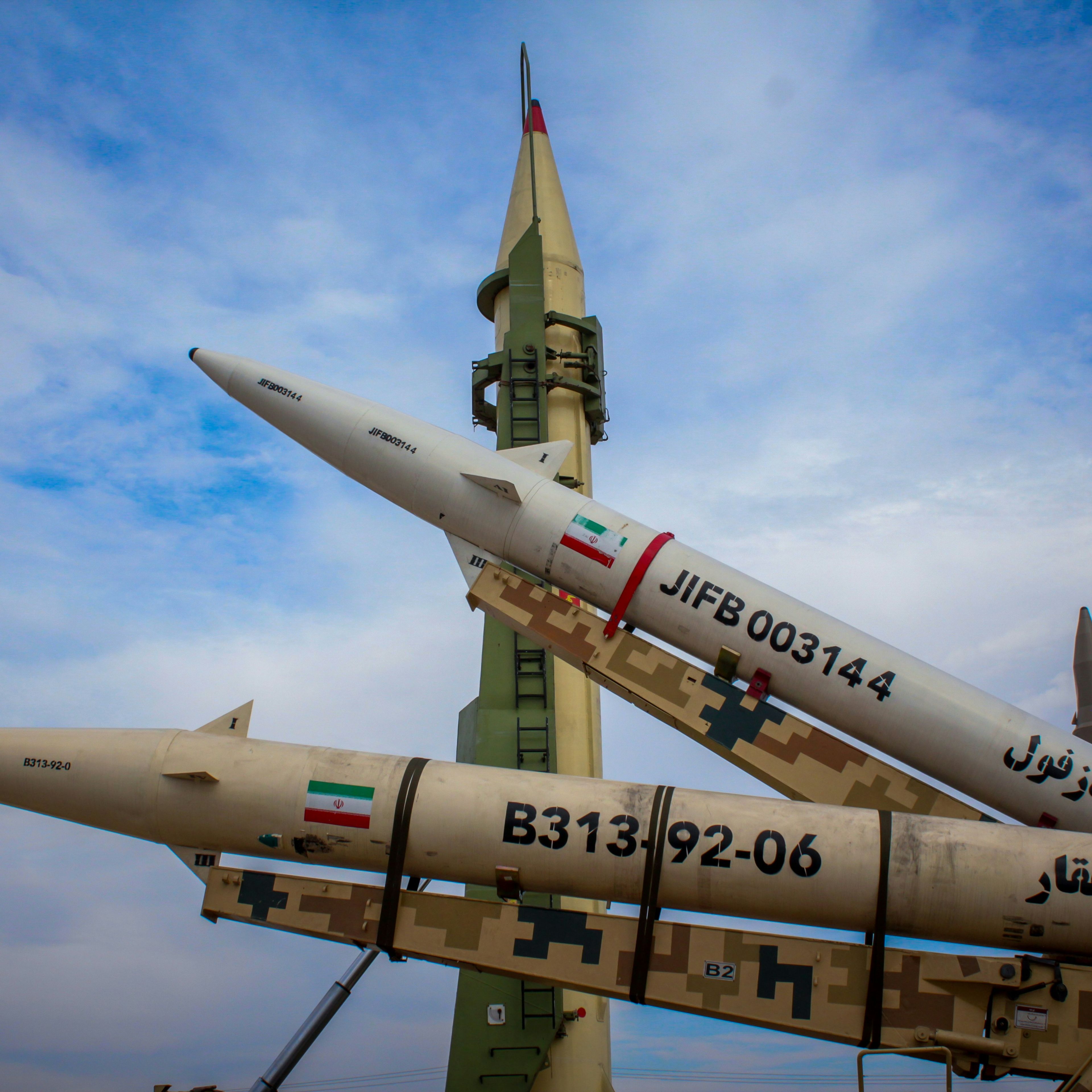
On March 18, Israel struck Iran's South Pars gas field, which accounts for a majority of the country's gas production and helps generate much of its electricity. The damage spread beyond production. In the following days, Iranian state-linked outlets, including Fars News Agency, reported attacks on gas pipelines and pressure stations. The pattern of attacks pointed to a widening strain on Iran's energy system — from supply lines to distribution networks — with power outages reported in parts of Tehran and nearby regions following strikes on grid infrastructure.
To address the issues in power productions, Iran's renewable energy authority SATBA moved to fast-track four new utility-scale solar power plants, backed by financing from the National Development Fund, according to Iranian energy sector officials. The projects are being expedited to expand decentralised generation capacity as parts of the country's conventional power infrastructure had come under sustained pressure. Iran's pivot toward solar is not new. For nearly a decade, SATBA has been quietly building that capacity — not through domestic industry alone, but through a network of foreign companies willing to do business in a sanctions-hit economy.
That network, our investigation reveals, goes well beyond commercial risk-taking. The most recent case in point is Iran signing a $1.2 billion contractwith a Chinese solar company in 2024 to build the Khayyam Solar Photovoltaic Power Plant. This is the largest solar deal in the country's history. The plant would produce 2 gigawatts once it is fully operational. But the company chosen to build it — LDK Solar — has been facing several financial and legal disputes. The company had gone bankrupt a decade earlier. Its founder was a fugitive from Chinese law enforcement, and its current ownership is not publicly known. LDK was not an exception. Every global partner Iran chose for its solar expansion was carrying legal troubles at home. Our investigation reveals that some of these deals may have violated the US sanctions.
Iran began attracting foreign solar companies after SATBA launched an incentive package for the solar industry in 2015. The SATBA offered 20-year guaranteed power purchase agreements at premium rates and a 30 per cent tariff bonus for projects using locally manufactured equipment. Feed-in tariffs announced the same year applied across all project sizes — from small installations to utility-scale plants above 30 megawatts — with rates varying by capacity band. It was a significant financial package for investors willing to absorb the sanctions risk. The companies that responded were, without exception, companies that had their own reasons to take that risk.
Shipment records, corporate filings and leaked documents reviewed through the Wiki Iran database trace how these firms signed development agreements, delivered equipment and maintained a presence on the ground. While not all of these deals may have breached US sanctions, at least some appear to have done so. At least two companies — LDK Solar of China and METKA of Greece — did business with Ghadir Investment Group, which is linked to Iran's Islamic Revolutionary Guard Corps and is a subsidiary of EIKO, the Execution of Imam Khomeini's Order. The US Treasury has described EIKO as a vast financial conglomerate operated under the direct personal control of the late Supreme Leader Ali Khamenei since at least 2013. A Reuter’s investigation valued EIKO's holdings at roughly $95 billion. US officials have described it as generating massive, off-the-books investments hidden from the Iranian people and international oversight.
Ghadir's former CEO, Gholamreza Soleimani, served as EIKO's deputy for planning for five years. Its board chairman, Mahmoud Ahmad Pourdaryani, is a former senior IRGC officer. Deals with Ghadir channel money into a structure the US government has formally flagged as designed to evade international scrutiny. As of 2026, Ghadir remains on the US Treasury's SDN list. Doing business with it triggers primary US sanctions and exposes non-US companies to secondary sanctions, including possible exclusion from the US financial system.
LDK Solar
LDK Solar — which signed the major deal with Ghadir Investment Group in 2024 — has a documented history of corporate failure. In the mid-2000s, it was China's leading solar manufacturer, a photovoltaic company that rode the global clean energy wave to a New York Stock Exchange listing and made its founder, Peng Xiaofeng, a billionaire. In 2007, Charley Situ, the company's former finance controller, alleged that LDK had overstated its polysilicon inventory by roughly 250 tonnes, nearly a quarter of its reported stockpile. He also alleged poor financial controls in the company. As a result, shares fell 25 per cent in two days. LDK denied wrongdoing and later settled an investor class-action for $16 million without admitting liability. Falling panel prices and mounting debt followed. By 2014, its multiple subsidiaries had filed for Chapter 11 bankruptcy protection in the United States. Peng himself later faced Chinese police over a separate peer-to-peer investment fraud, allegedly defrauding thousands of retail investors through a platform called Solarbao. An international manhunt was launched. His current whereabouts are publicly unknown.
The LDK Solar that signed the 2024 deal is a different entity — a regrouped version of the original, now led by a new CEO named Tong Xingxue. The ownership trail is unclear. The original company, incorporated in the Cayman Islands and listed in New York, entered bankruptcy in 2014. Its core assets were supposed to be acquired by Henan Yicheng New Energy Company in 2016 as part of restructuring, however, the process did not go ahead. The current LDK-branded entity appears to draw from surviving operations or the brand's legacy, but full beneficial ownership cannot be established from public records.
The 2024 agreement with Ghadir was not the beginning of the relationship between the two organisations. Leaked data from Iran's Ports and Maritime Organisation, available through the Wiki Iran archive, shows LDK-linked shipments of solar modules to Iranian companies as early as 2014 — the same year its US subsidiaries were sheltering in Chapter 11. The recipient was Faraz Pendaran Aria Moudj Company, known by its acronym FARPAM, which once described itself as "the largest solar power plant operator in the country." FARPAM signed a power purchase agreement with LDK Solar in 2015 as the Chinese company's shipments began arriving, and publicly listed LDK alongside Yingli Solar and Trina Solar as supply partners on its website. The supply chain was not concealed — it was also documented in industry reports on foreign participation in Iran's solar market. Presently, FARPAM's website is no longer accessible and its operational status appears limited or dormant. No regulator in any jurisdiction has publicly explained how LDK's subsidiary continued filling Iranian orders while its parent sheltered in American bankruptcy courts.
The Italian deals
While LDK was shipping panels, Italian companies were signing contracts. In 2016, solar industry media reported Italy as leading solar investment into Iran. Two Italian firms, Genesis and Denikon Srl, signed agreements with the provincial government for 100 plants of 10 megawatts each in Qazvin province over ten years. Another Italian developer, Carlo Maresca, confirmed a 50-megawatt facility on Qeshm Island. The announcements were made at conferences, reported in trade journals and registered in government files. Whether these companies faced any sanctions exposure is less clear — they entered these agreements when Iran was receiving sanctions relief under the Joint Comprehensive Plan of Action.
But something else emerged. Months after Denikon signed the Qazvin agreement in April 2016, its CEO Carmelito Denaro registered two new entities in Malta: Denikon Limited and DK Ener Group Limited. Both shared the same address and were later identified in the ICIJ Paradise Papers. Denaro was simultaneously the CEO of Genesis's American branch — meaning one individual held senior roles on both sides of the same negotiating table. Ali Setayesh, who ran Genesis's Middle East operations, later appeared as a shareholder in DK Ener Group Limited per the Paradise Papers database. Two individuals. Four companies. Two jurisdictions. One Iranian solar deal.

The purpose of the Maltese entities remains unclear from public records. The Paradise Papers data contains no transaction records. Whether these companies received payments, invoiced Iranian counterparties or moved money in connection with the Qazvin deals would require access to Maltese company registry filings and banking records. No public information establishes that these companies breached US or European sanctions. But a risk pattern is visible — Italian developers, Iranian contracts and immediate offshore registration in Malta.
METKA and Isfahan
The contracts of the Greek company METKA, the engineering arm of the conglomerate Mytilineos, are more direct. In April 2017, METKA built a 10-megawatt solar park near Isfahan valued at approximately $18.5 million, in partnership with Ghadir Investment Group. Both companies appeared in the PMO shipment records. The plant did not stay at 10 megawatts. Satellite imagery from Google Earth shows the Isfahan Solar PV Park expanding continuously beyond its 2017 footprint, with Phase II appearing complete by May 2025 — years after the original agreement, and years into the intensified sanctions period that followed Ghadir's November 2018 re-designation.
While the Isfahan installation was expanding, Mytilineos was managing parallel legal proceedings in Athens. Greek prosecutors had investigated allegations that METKA paid a €250,000 bribe in connection with a €194 million gas-plant contract in Lavrio, part of the Athens metropolitan area. In 2018, the Athens Council of Appeals cleared Mytilineos chairman Evangelos Mytilineos of money-laundering charges but referred him to trial on bribery charges. Former Public Power Corporation chief Stergios Nezis faced bribery and money-laundering counts. Both men denied wrongdoing. The trial's outcome has not been publicly reported. Mytilineos now operates as METLEN. Whether its continued activity in Iran could trigger US secondary sanctions has not been publicly assessed.
Sinosteel and Yazd
The timing of Sinosteel's entry into Iran's solar market was either coincidental or deliberate. In September 2018, Sinosteel Corporation, a Chinese state-owned commodities trader, signed a memorandum of understanding for 100 megawatts in Yazd province — alongside Denikon, making its second appearance in this investigation.
Like its peers, Sinosteel had its own audit record. China's national audit office found the company had overstated sales by 1.99 billion yuan — approximately $306 million — between 2007 and 2009. Commission payments were withdrawn in cash without documentation. Funds were moved into personal employee accounts. Overseas investments were poorly recorded. Transactions were routed through offshore futures brokers with minimal controls. Sinosteel later faced a significant debt crisis before being merged into China Baowu Steel Group in 2023. Whether those present at the Yazd signing had advance knowledge of the impending Ghadir re-designation — which came seven weeks later — cannot be established from public records.
The pattern
Over ten years, a US Treasury-designated Iranian entity helped build Iran's solar industry using a roster of foreign partners each carrying fraud histories, bribery referrals or offshore exposures. China's once leading solar manufacturer has played a central role from 2016 to the present. The 2017 Isfahan plant, built by a Greek firm then under a domestic bribery referral, expanded through the re-sanctions period with Phase II completed in May 2025. The 2016 Italian deals were accompanied by Maltese shell companies created within months of signing, registered by a CEO who simultaneously held a senior role at his Italian partner's American branch. The 2018 Yazd memorandum was signed seven weeks before Ghadir's re-designation, with a Chinese state firm whose auditors had flagged $306 million in irregularities and the Malta-linked Italian intermediary appearing for the second time. The 2024 Khayyam deal — $1.2 billion, sufficient panels to dwarf Iran's entire existing solar fleet — went to a reconstituted LDK Solar whose original corporate shell entered bankruptcy, whose founder is a fugitive and whose current ownership cannot be traced through public records.
The companies mentioned in this article were contacted for comment prior to publication. No responses had been received at the time of going to for publication. This article will be updated if and when replies are received.