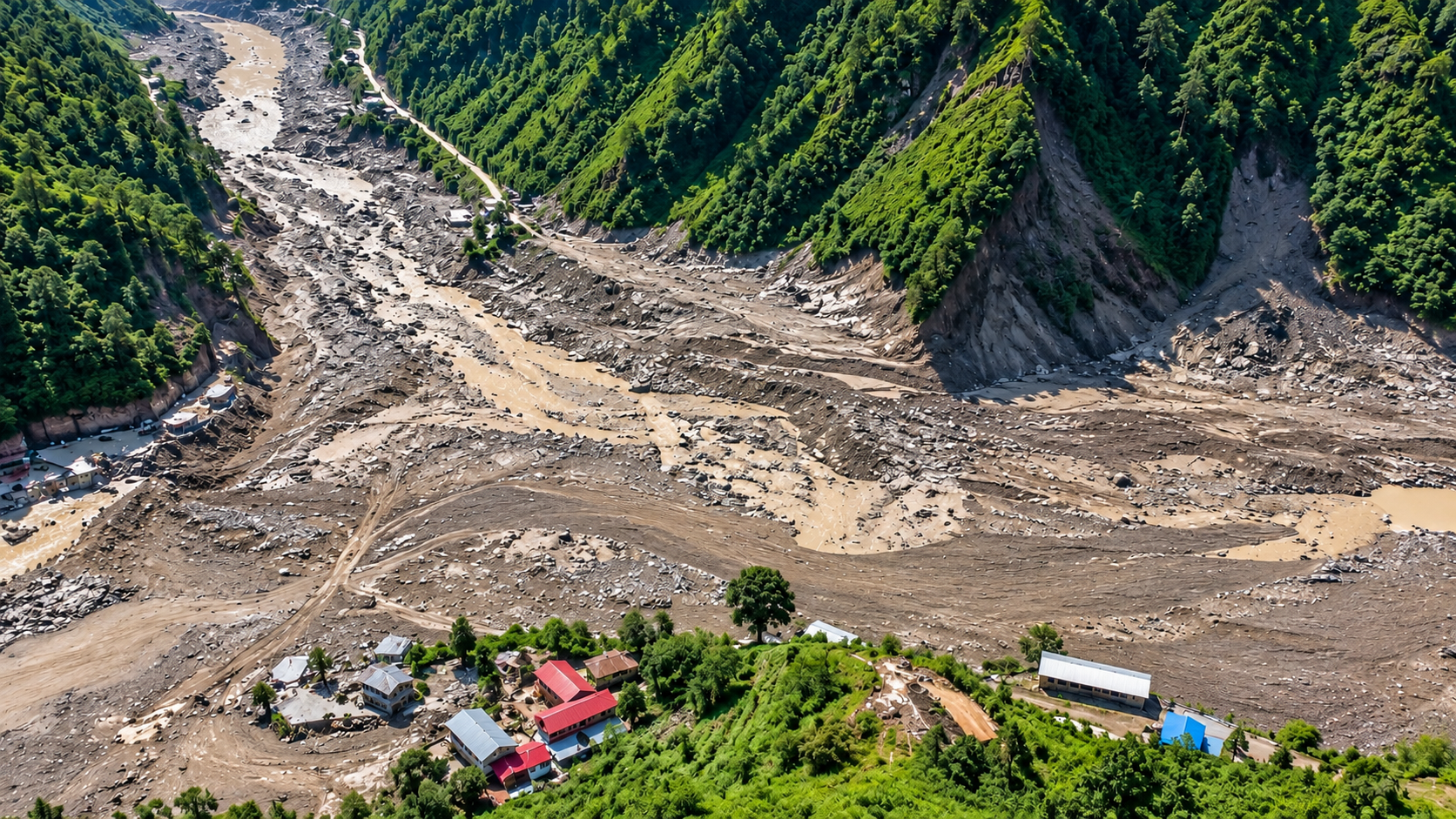
Kathmandu/Rasuwa: Days after violent floodwaters swept through river basins and severed mountain highways, the scale of the disaster is measured not just in destroyed asphalt but in the human weight of survival. Across the hardest-hit corridors, the ambitious vision outlined in executive boardrooms contrasts starkly with the perilous, mud-choked realities on the ground.
Around Betrawati town and beyond, the formal government machinery remains largely invisible. Local communities and youth volunteers are bearing the initial brunt of the emergency response.
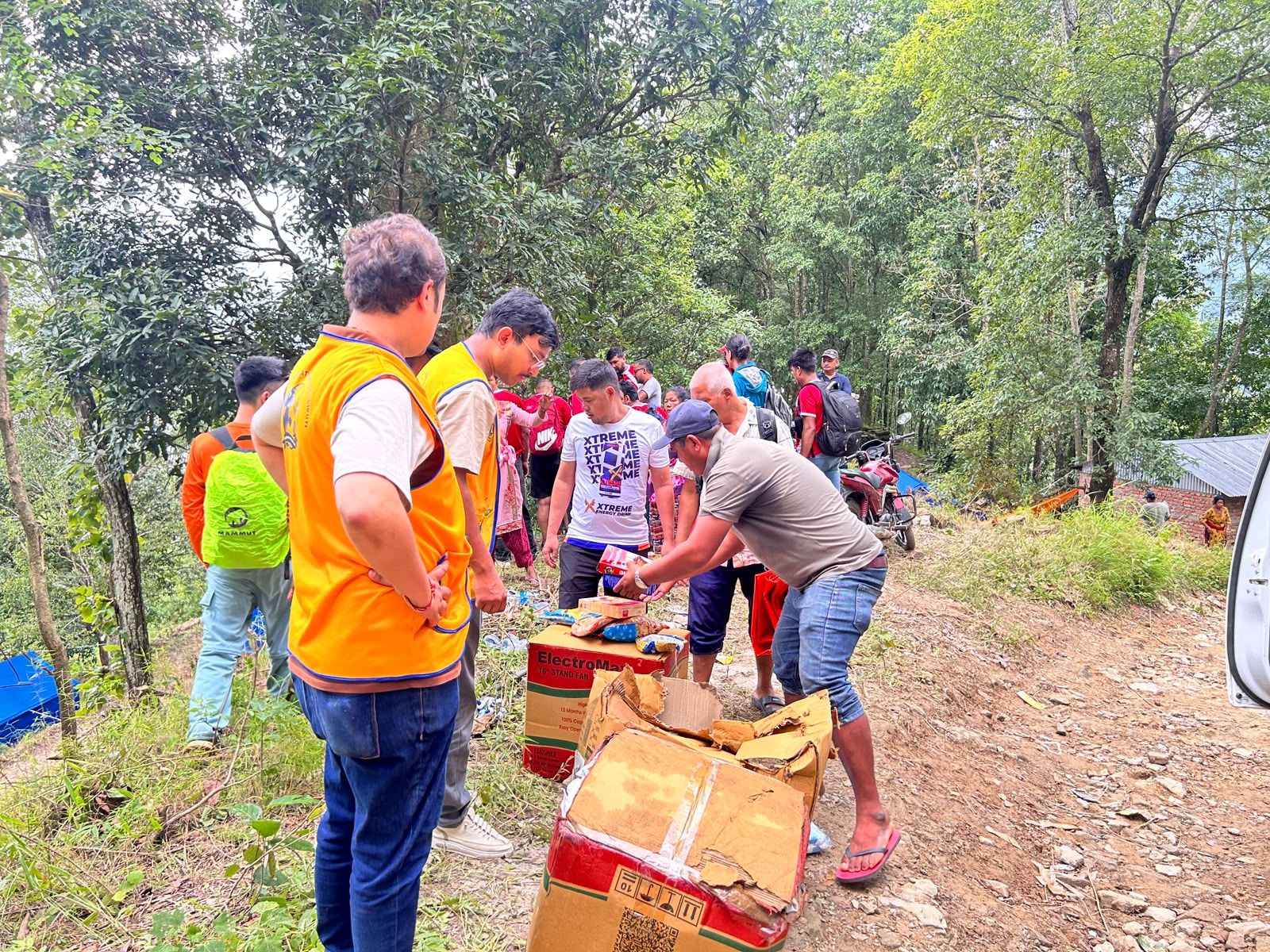
In an interview with frontline volunteers, Upasana Pandey, Secretary of the Leo Club of Kathmandu Bhrikuti, recounts how her team traversed damaged tracks to bring aid to displaced families.
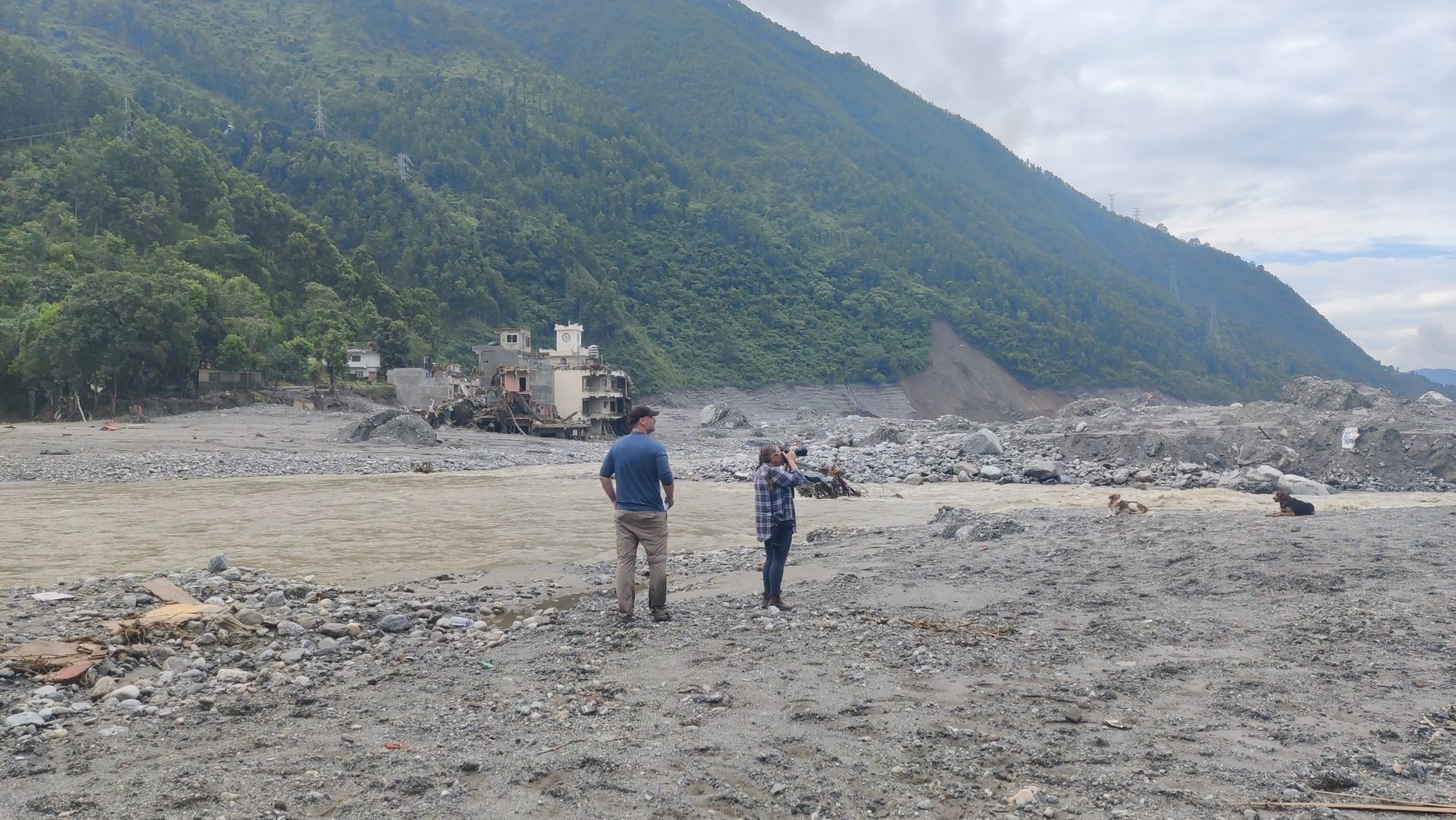
“The journey to reach the affected areas was filled with extreme difficulties,” she recalls. “There are still many people missing – the victims themselves are working as volunteers and helping us to rescue the bodies. When we arrived at the Betrawati River, we saw only a few tents set up – far from enough for all the displaced victims—and just a single, overcrowded place to prepare food.”
As relief teams push deeper, physical isolation continues to trap entire populations. Beyond Betrawati, roads simply cease to exist in the remote villages of Rasuwa.
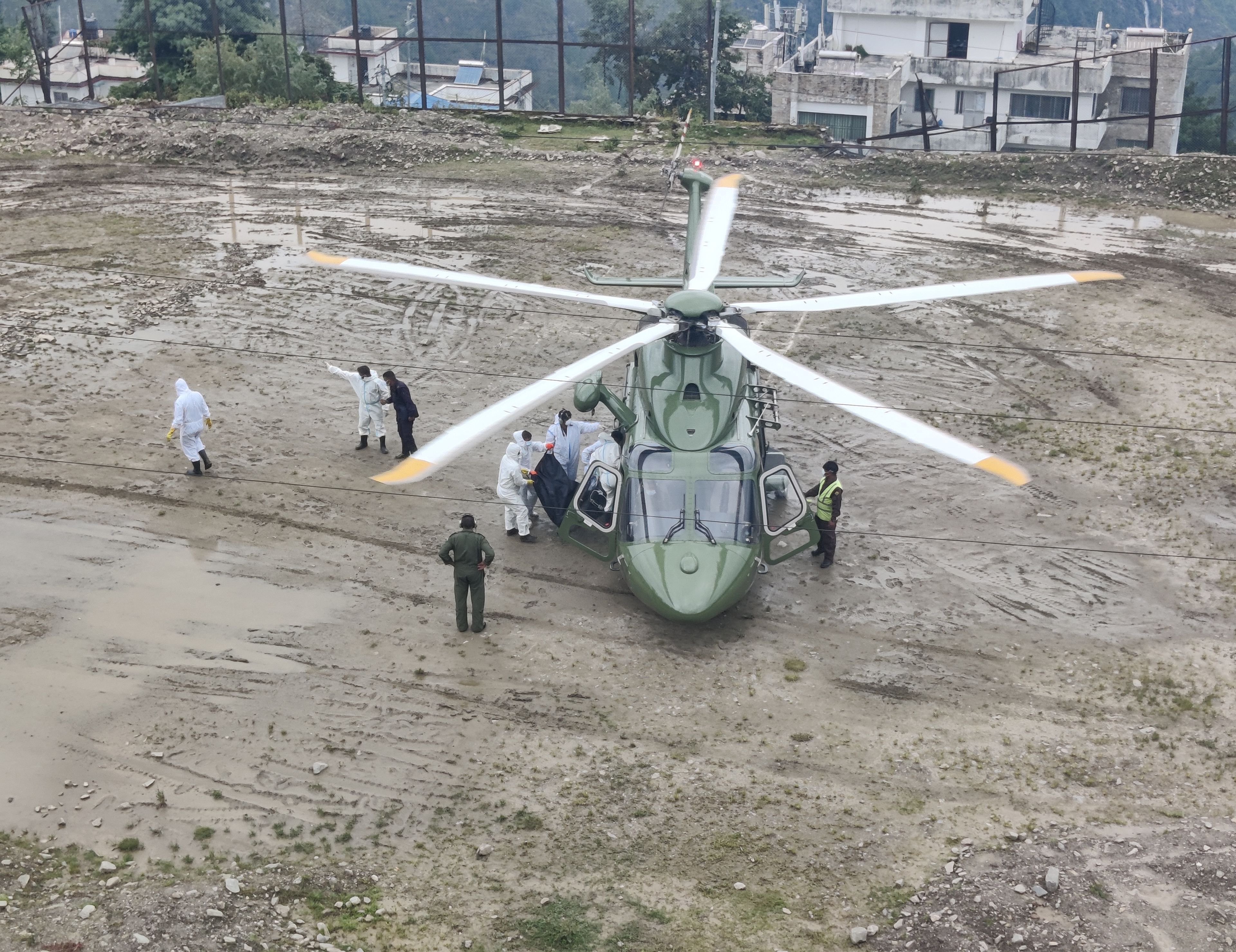
“Our main priority now is pushing forward into the core flood zone in Rasuwa, where at least 1,000 victims remain completely cut off from food, warm clothing, and basic supplies,” Pandey adds. “Reaching these villages will take much longer because we have to travel entirely on foot, crossing river stretches over small, temporary wooden bridges built by local residents.”
Pandey points out that while food distributions occasionally trickle in, survival requires more than raw grain. “We realised that while food supplies have started arriving in some areas, families lack basic kitchen utensils to actually prepare meals. To help every family become self-sufficient, we donated sets of essential kitchenware.” She stresses an urgent, ongoing shortage of basic medical necessities, including paracetamol, sanitary pads and first-aid kits.
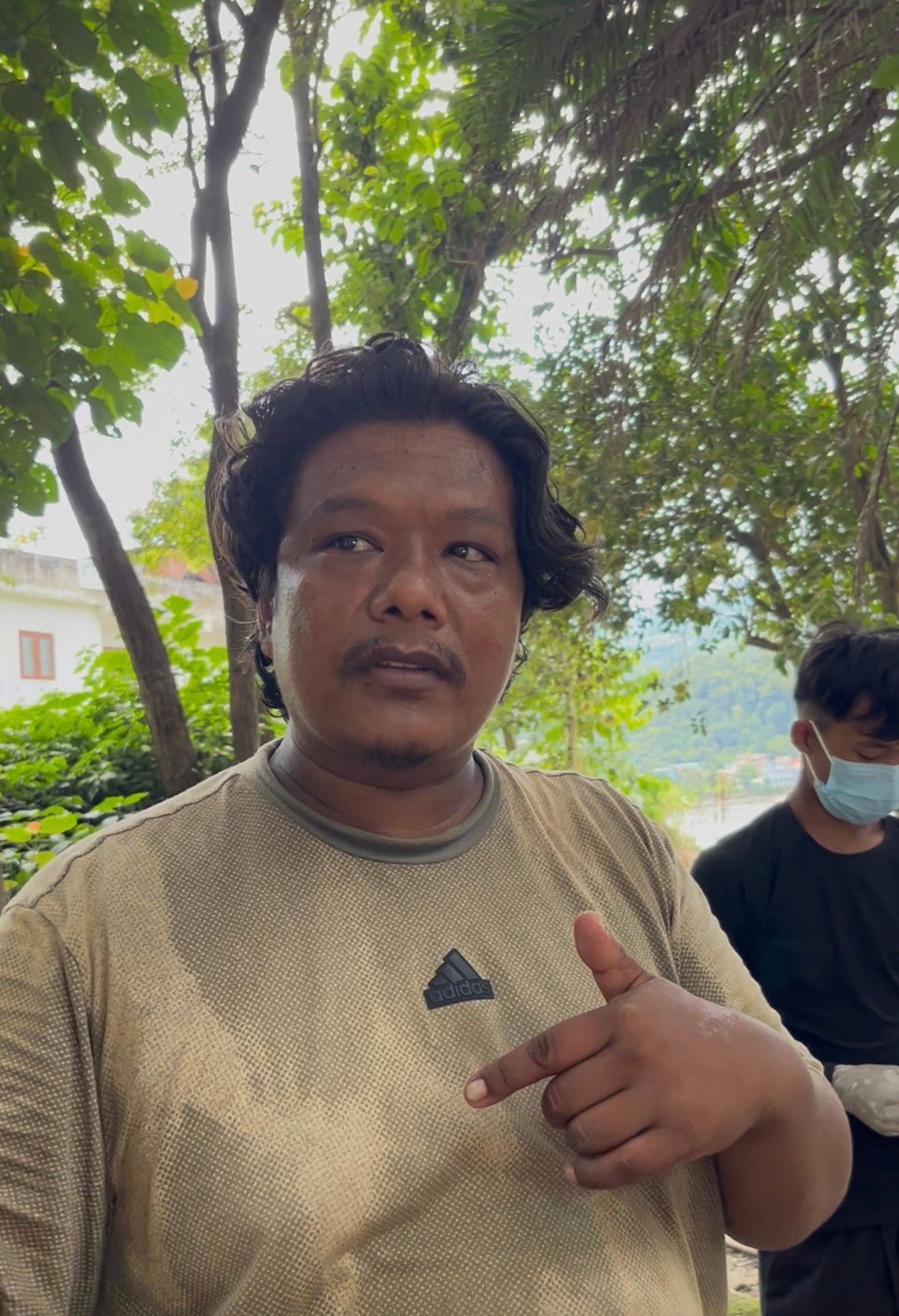
Further down the relief chain, flood victim and local volunteer Milan Shrestha describes resource rationing and systemic neglect. He and his team have had to make hard decisions about who receives support.
“I am a victim too, but I’m out here volunteering myself,” Shrestha says. “We’ve categorised them too; we’ve assessed the situation. We told some, ‘This isn’t meant for you, please move along’.”
Those turned away were indirectly affected, Shrestha explains: stranded by blocked roads and unable to buy supplies because nearby shops and transit routes vanished. “Indirectly, this road got blocked... buying a single sack of rice requires immense effort. Either you have to travel a huge distance just to buy one sack of rice.”
To cope with severe shortages, volunteers in villages such as Ghyangfedi and Syale have resorted to communal survival strategies, dropping off bulk items such as 20 sacks of rice for entire hamlets to share and cook together.
Yet Shrestha is highly critical of official intervention. “For the first two or three days, we were the ones distributing relief... then later Home Minister Sudan Gurung came here. After Sudan Gurung came, they dropped off two or three helicopter loads of supplies, and after that, nothing. Whatever has arrived here since then is from our own sources. People came only because someone shared on Facebook saying, ‘Contact this person’. That’s the only extent of government help.”
Shrestha warns that the crisis is far from over. Many of those directly affected are staying in Kathmandu to perform mourning rituals for lost loved ones, or taking temporary shelter with relatives. Once roads reopen and temporary stays expire, hundreds will return to destroyed homes requiring long-term relief.
In the capital, meanwhile, high-level officials present a narrative of rapid, large-scale state intervention.
In an official statement and interview, Minister of Infrastructure Suil Lamsal said the government moved swiftly from the moment news broke. “By 8:30 AM, we convened an emergency internal meeting, and by 11:00 AM, the Cabinet formally entrusted my ministry with full responsibility for reconstruction and rehabilitation,” he asserted. “From day one, we hit the ground running – clearing debris, restoring emergency connectivity, and invoking emergency procurement provisions.”
Lamsal highlights rapid engineering responses in high-risk landslide areas such as Krishnabhir, where geotechnical experts approved stabilisation designs within 48 hours. The government estimates the budget required at approximately NPR 100 billion (roughly US$650 million), covering road networks, drinking water schemes, public buildings and municipal infrastructure.
“The Department of Roads completed its assessments well ahead of schedule, requesting 90 billion rupees for immediate repairs, alternate bypass routes, and heavy disaster management equipment,” Lamsal told NWS, assuring that fast-track steel truss bridges will restore destroyed river crossings within three to four months.
For the long term, the ministry promises a fundamental departure from past disaster responses. “We cannot repeat what happened after the 2015 earthquake,” Lamsal insisted. “We will not allow or force displaced families to return and rebuild on the exact high-risk, flood-prone riverbanks where they lost everything. Instead, we are pursuing a scientific township model – purchasing or pooling land near their original villages to build planned mini-towns fully equipped with schools, health centres, local enterprise zones, and utility networks.”
To ensure continuity, the government is fast-tracking legislation to convert the National Disaster Risk Reduction and Management Authority (NDRRMA) into a permanent, empowered body.
Yet for families waiting in makeshift tents along the Betrawati, or trekking across precarious wooden logs in Rasuwa, grand architectural plans and multi-billion-rupee budgets remain a distant promise. While the authorities plan the townships of tomorrow, the immediate burden of keeping survivors fed, clothed and healed rests firmly on local volunteers and the resilient communities themselves.