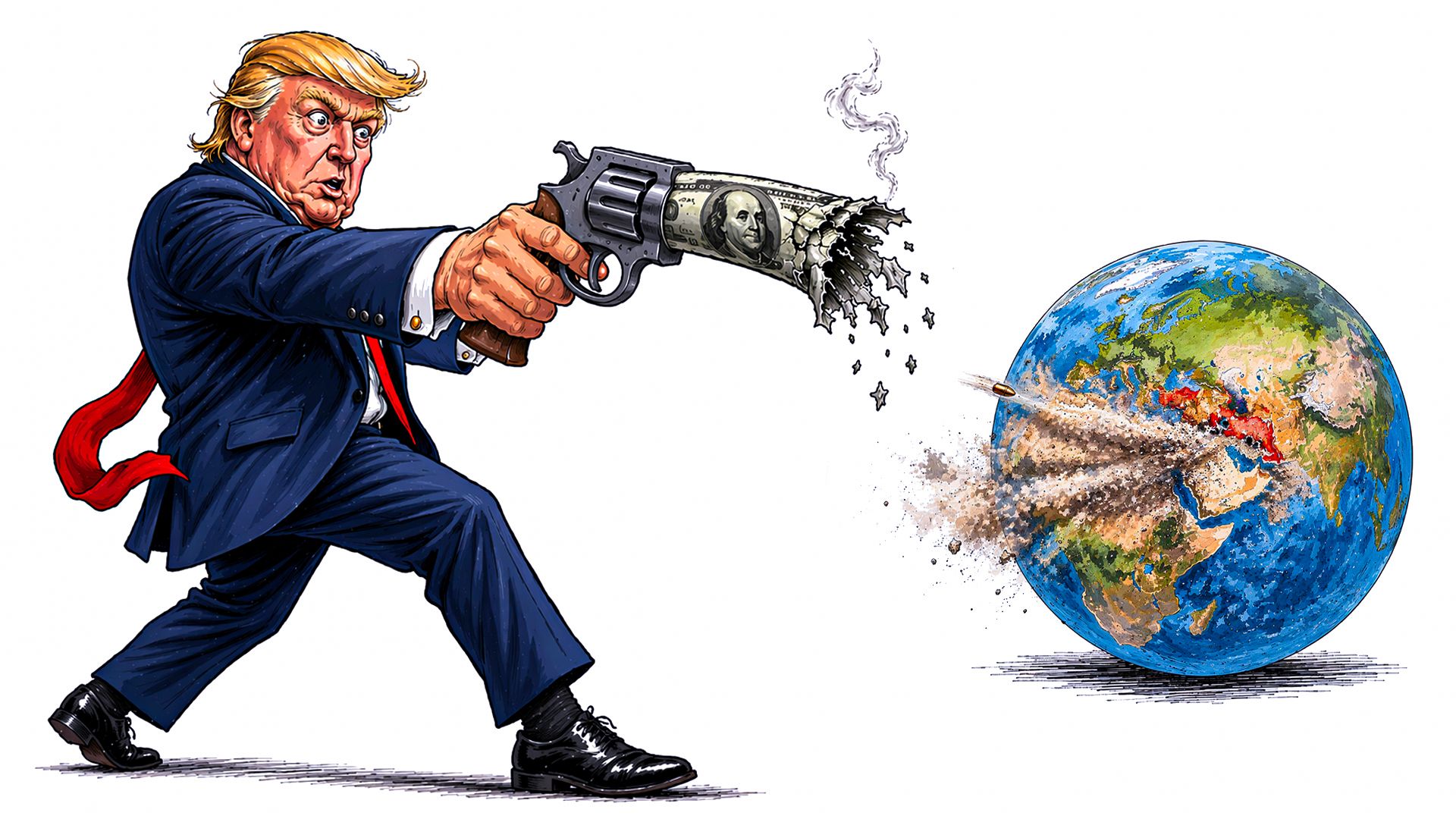
The US and Iran have announced a two-week truce, and future talks will decide how and when this war will end. War endings often invite a familiar expectation: recovery. Markets stabilize, supply chains resume, and economic life gradually returns to its pre-conflict trajectory. However, in this case, the default expectation no longer holds. Across the Persian Gulf, the war is not only measured in strikes and disruptions, but in everyday life. Rising prices, intermittent shortages, and uncertainty are reshaping daily routines. What was once abstract risk is now experienced directly through delayed shipments, financial pressure, and shifting expectations.
Those disruptions are not temporary. Even if hostilities cease, recovery will not follow automatically. What has unfolded is not a temporary disruption but a systemic shock that will continue to reshape energy flows, supply chains, food systems, capital allocation, and regional security architecture. The Persian Gulf economies are not going to return to equilibrium. They are entering a different phase. Energy infrastructure, the physical backbone of the regional economy, has suffered serious damage. Restoring the pre-war refining capacity can take 12 to 36 months, creating a sustained supply constraint rather than a temporary shortage.
Direct strikes and operational disruptions have affected critical facilities across multiple countries. At least eight major refineries have been damaged or partially shut down. With construction costs typically between $5 and $8 billion, and repairs reaching $1 to $3 billion per facility, total exposure is already in the range of $ 8 to $24 billion. The disruption extends beyond oil into global LNG markets, where Qatar’s reduced output has created a gap that cannot be filled quickly. Qatar supplies roughly 20 percent of global LNG, and even a 17 percent reduction removes around 13 million tonnes per year from the market, equivalent to $6 to $10 billion annually.
Shipping through the Strait of Hormuz has also been repriced as a risk category, adding a permanent friction cost to global trade. The Strait carries about 20 percent of global oil consumption. War-risk insurance premiums have risen significantly, adding hundreds of thousands of dollars per shipment. Even small increases in per-barrel costs translate into billions of dollars annually. This creates a new baseline: not disruption, but a new reality underpinned by persistent friction.
One of the most important aspects of this war is that Iranian decision-makers have understood it not as a purely military confrontation but as a strategic and economic contest. Iran is aware of its vulnerabilities, including infrastructure exposure and structural economic limitations. Yet, it has made a strategic calculation: to consolidate effective control over the Strait of Hormuz. For Iran, control over the Strait is not merely a security objective; it is an economic one with far-reaching implications. Greater control over the Strait could give Iran significant leverage in future negotiations and would create economic ramifications. There are already indications that Iran is planning to collect the transit fee in rials. If this idea is implemented, it could carry implications beyond Iran and gradually challenge the aspects of the petrodollar system.
The objectives of the United States and Israel’s campaign appear to be less about decisive military victory and more about degrading Iran’s military, technological and civilian infrastructure. Many analysts hold that Iran is unlikely to face conventional defeat, whether through state collapse or through the elimination of its core strategic capabilities. This raises a critical question: could such an outcome produce stability?
The assumption that reconstruction would naturally follow and lead to lasting peace overlooks a key dynamic. The issue is not simply whether the Strait of Hormuz remains open, but how secure it will be and the price the world will pay for transit. If Iran’s economic interests are not accommodated by the post-war arrangements, the country retains the capacity to disrupt conditions in the Strait, even under international pressure to keep it open. This creates a difficult choice for Gulf states and US-aligned actors: accept new economic arrangements, potentially including transit payments in rial, or face continued instability in a critical maritime corridor. At the same time, such arrangements could expose them to US sanctions. Iran appears to have recognized the Hormuz leverage and positioned itself accordingly. The two-week truce reflects precisely this dynamic — Iran's newly consolidated leverage over the world's most critical maritime corridor.
Even if the military objectives of the recent campaign are achieved, it is unlikely that the previous levels of unilateral dominance by the United States and its allies can be fully restored. The new arrangements could create space for other actors, including China and Russia, and help expand their influence. For instance, China has played a key role in Pakistani-mediated talks between the USA and Iran.
Another striking point that conflict brought out is a stark asymmetry in the financial costs, with the United States bearing the highest burden by a wide margin. In the first week of the conflict, America’s military spending exceeded $11 billion, driven by the intensive use of precision-guided munitions, sustained air and naval operations, and forward deployment of forces. By the end of March, cumulative costs are estimated to have reached $40 billion, reflecting the structural costs of high-intensity warfare.
Israel’s military costs, while smaller in absolute terms, are substantial relative to its economy. More than $10 billion is estimated to have been spent within the first three weeks of the conflict, largely due to the extensive use of missile defence systems and continuous air operations. The high unit cost of interceptors has made defensive operations particularly resource-intensive. For the Persian Gulf states, military spending has been primarily defensive but still significant. Elevated alert levels, activation of air defence systems, and localized damage to security-related infrastructure have resulted in expenditures in the range of several billion dollars. Even without sustained frontline engagement, their exposure to regional instability has required costly defensive measures.
Assessing Iran’s losses remains difficult. Estimates vary widely, reflecting limited transparency and the nature of its military structure, which includes dispersed and hardened systems.
What is clear, however, is that prolonged instability in the Persian Gulf region is economically unsustainable. No party to this conflict can afford to continue it indefinitely. Large-scale development projects such as Saudi Arabia’s Vision 2030 depend on stability. Rising geopolitical risk increases financing costs, delays implementation, and weakens investor confidence.
This creates a structural tension. While political alignment remains unlikely, the economic cost of continued confrontation is becoming increasingly difficult to sustain. What may emerge is not reconciliation, but pragmatic coexistence driven by necessity. The Persian Gulf will remain central to the global economy, but under different conditions: higher risk, more expensive trade, and more complex alignments.
The idea of returning to the pre-war system is nothing but a misreading of the scale of the shock. This war has not interrupted the system. It has completely altered its structure. What follows is not recovery. It is an adaptation to a world where disruption is no longer an exception, but part of the system itself. The refineries, shipping lanes, and insurance markets are already pricing in the new risk.