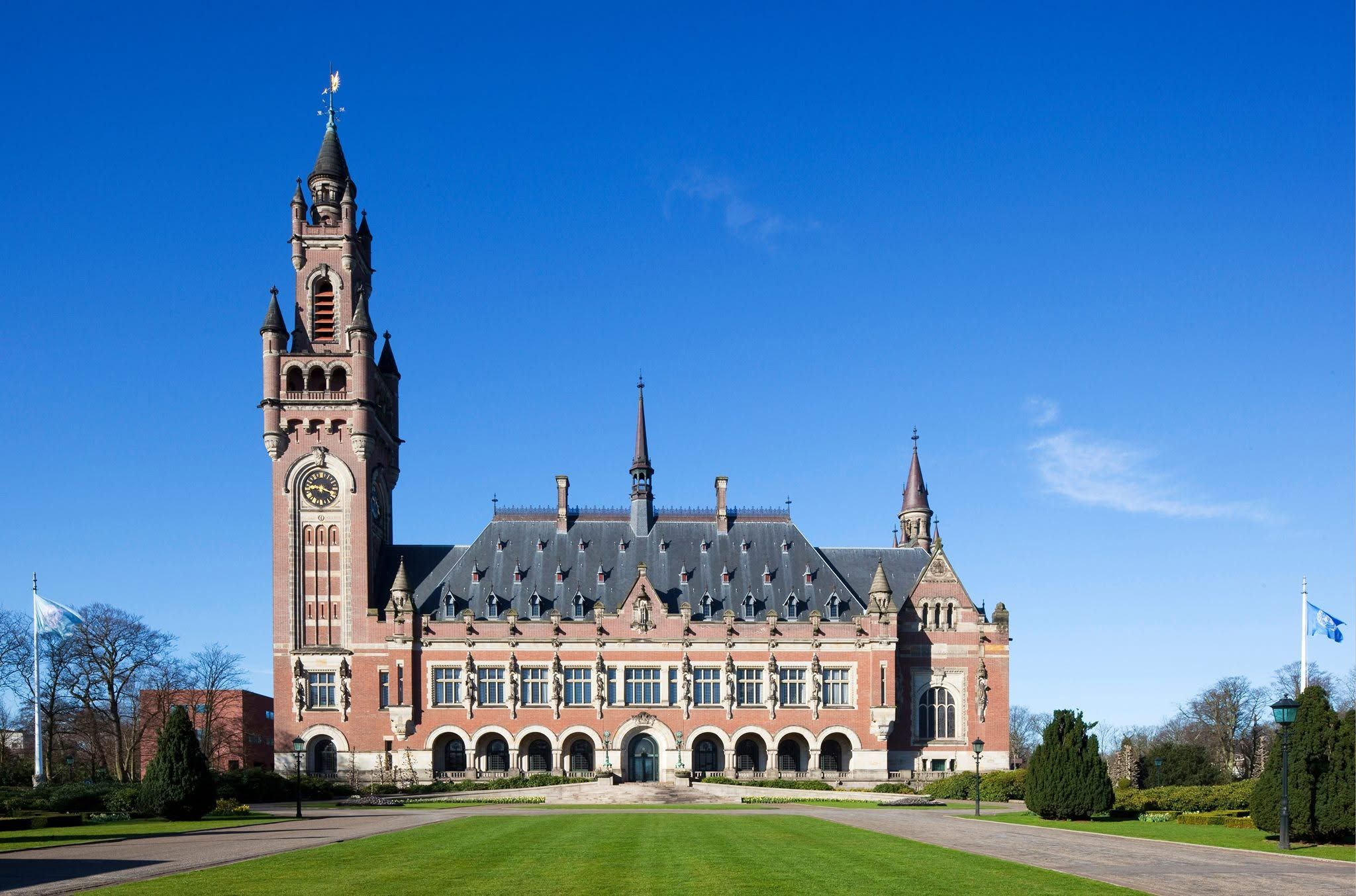
A ruling by the Permanent Court of Arbitration (PCA) ordering India to restore the Indus Waters Treaty has become the latest flashpoint between New Delhi and Islamabad, with India dismissing the tribunal within hours as “illegally constituted” and Pakistan hailing the same verdict as vindication of its position.
The Hague-based court ruled unanimously on August 31 that India’s April 2025 suspension of the 1960 treaty was not permitted under the pact or international law, and ordered India to limit construction work on the Ratle hydroelectric project in Jammu and Kashmir. India’s Ministry of External Affairs (MEA) responded that it “has never recognised the existence in law of this so-called Court of Arbitration” and that the decision to hold the “treaty in abeyance” remains in force.
Pakistan’s Deputy Prime Minister and Foreign Minister, Ishaq Dar, welcomed the award on social media, writing that it confirmed “the Treaty remains fully in force and binding on both parties”. Senator Sherry Rehman of the Pakistan Peoples Party echoed the sentiment, calling the ruling a reaffirmation of Pakistan’s water rights. New Delhi, however, was unmoved: MEA spokesperson Randhir Jaiswal has repeatedly maintained that “there is no change in the way we think” on the treaty’s abeyance.
A Six-Decade Pact Under Strain
Brokered by the World Bank and signed in September 1960, the Indus Waters Treaty divides the six rivers of the Indus basin between the two countries, giving India control over the eastern rivers and Pakistan the lion’s share of the western ones. It is often cited as one of the world’s more durable transboundary water arrangements, having outlasted three India-Pakistan wars, and roughly 80 per cent of Pakistan’s agriculture depends on the water it guarantees. But the pact has faced growing strain in recent years, as both countries cite climate change, population growth and disputes over hydropower design at projects such as Kishenganga and Ratle as reasons the six-decade-old framework needs revisiting.
India suspended the treaty a day after the April 2025 Pahalgam attack, which killed 26 civilians; India has said two of the three attackers were Pakistani nationals, a claim Islamabad denies. The treaty’s abeyance has since become tangled with rhetoric on both sides. Pakistan’s army chief warned India against building further dams on the Indus, while Prime Minister Shehbaz Sharif has declared water a “red line”, and PPP chairman Bilawal Bhutto-Zardari warned that “either water will flow in the Indus River or blood”. On the Indian side, Water Minister C.R. Patil has vowed that "not a single drop of water" will reach Pakistan, while Jaiswal has cautioned Pakistan to “temper its rhetoric” or face “painful consequences”.
Challenging India’s suspension, Pakistan approached the PCA in March 2026 to rule on the treaty’s status; it had earlier taken objections over the Kishenganga and Ratle projects’ design to the same forum in 2016. A separate “supplemental award”, issued more than a year earlier in June 2025, had already found that India’s abeyance did not limit the tribunal’s competence to rule on those objections – a decision India dismissed at the time as “this latest charade at Pakistan’s behest.”
A Different Record
India’s blanket rejection marks a shift from its past conduct at the PCA. In the Enrica Lexie case, stemming from the 2012 killing of two Indian fishermen by Italian marines, both countries fully participated in PCA arbitration under the UN Convention on the Law of the Sea; when the tribunal ruled in 2020 that the marines held immunity from Indian prosecution and ordered compensation, India complied and the marines returned to Italy. In 2014, India similarly accepted a PCA award on its maritime boundary with Bangladesh, even though it handed Bangladesh a larger share of disputed waters than New Delhi had sought.
Even within the Indus framework, India’s stance has shifted. In the original Kishenganga arbitration a decade earlier, India contested the tribunal’s jurisdiction but still appointed arbitrators and appeared before the court – conduct the PCA later said amounted to accepting the tribunal’s authority to decide jurisdictional questions, a precedent India cannot now easily disown.
New Delhi’s current stand rests on process rather than a rejection of its own past conduct. India argues that the treaty specifies a neutral-expert mechanism for technical disputes, and that Pakistan’s resort to a parallel “Court of Arbitration” breaches the treaty by bypassing that structure. India has also pushed to renegotiate the pact, citing what it calls Pakistan’s “obstinacy”. The MEA has repeatedly said that Pakistan’s recourse to the tribunal is a bid to deflect from its alleged role in cross-border terrorism while rejecting both the June 2025 supplemental award and this year’s main ruling.
Why the Calculus Has Changed
Analysts tracking the dispute note that India’s compliance in the Enrica Lexie and Bangladesh cases came at a cost New Delhi judged worth paying – in the marines’ case, one that helped thaw ties with Italy, which were elevated to a full Strategic Partnership within a few years; in the Bangladesh case, ceding maritime territory cost India comparatively little. The Indus dispute offers no such trade-off: the treaty is widely seen as India’s most significant non-military lever over Pakistan after a terror attack on Indian soil, and complying would mean surrendering that leverage rather than absorbing a one-off loss. Some Indian officials and commentators also point to a retrospective grievance – that past generosity in water-sharing, extended without reciprocal cooperation from Pakistan on security, was a strategic misstep New Delhi does not intend to repeat.
Strategic expert and commentator Brahma Chellaney said, “The question is why New Delhi chose not to invoke the recognized doctrines of international law governing treaty suspension or withdrawal, but instead adopted the legally undefined formulation of placing the IWT "in abeyance," creating ambiguity about its practical effect and its permanence.”
“The novel formulation may ultimately reflect India's deeply ingrained bureaucratic culture, where administratively crafted ambiguity can come at the expense of legal clarity,” he added.
What Happens Next
No enforcement mechanism compels India to comply. The PCA has no police, no sanctions arm, and no way to force compliance beyond issuing rulings. With India rejecting the tribunal’s jurisdiction outright, the ruling stands unenforced, the treaty’s abeyance continues, and work on both Ratle and Kishenganga remains contested. The next real test, however, may not come from The Hague at all: a World Bank-appointed neutral expert, the very mechanism India has long argued should govern the dispute, is due to deliver a finding before July 2027. India may yet face a verdict from the process it has insisted all along should have applied from the start.