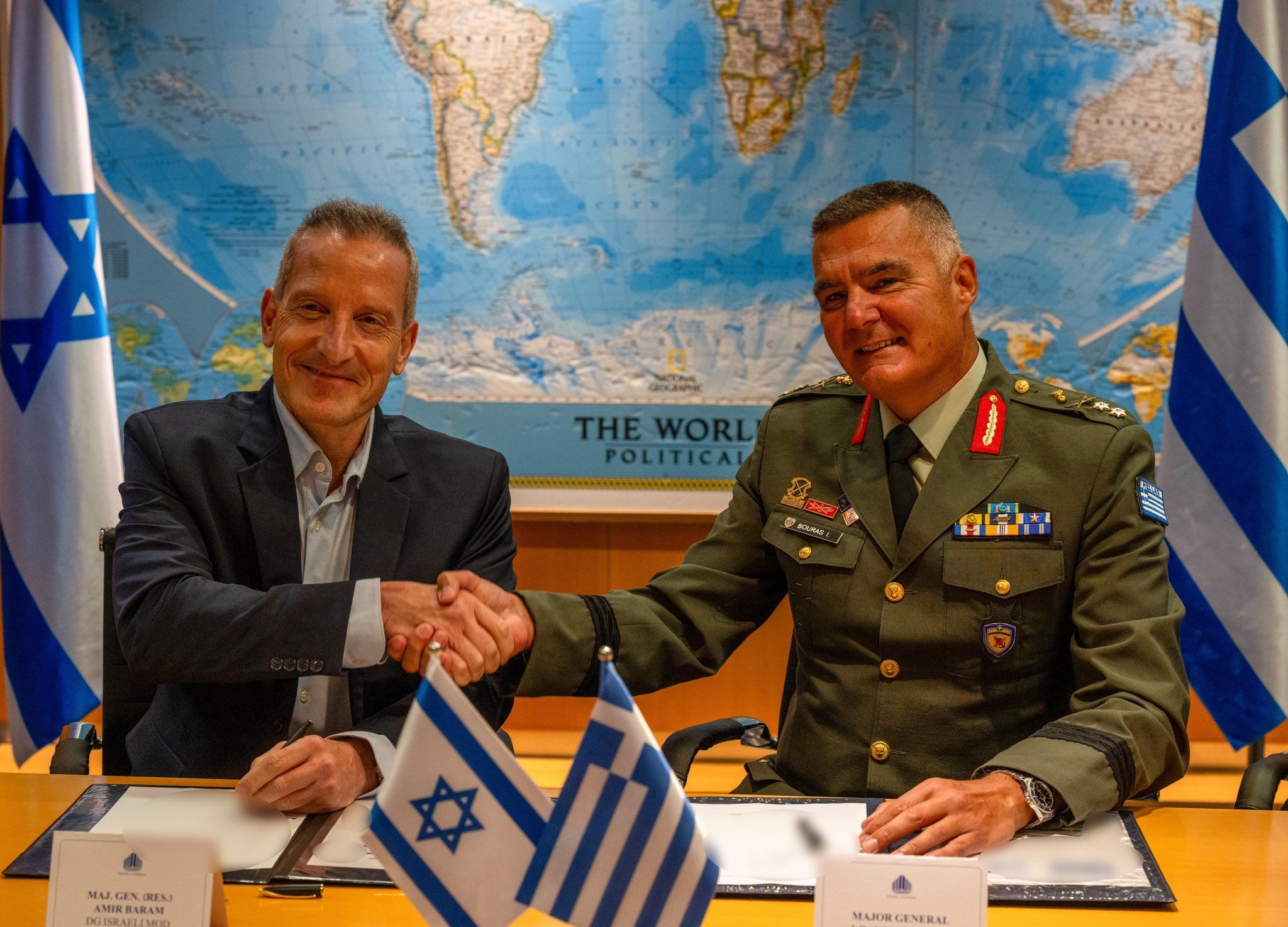
Israel and Greece signed a nearly €3 billion (US$3.5 billion) air-defence agreement on August 31 – Israel’s largest-ever defence export contract – just three weeks after Turkey, Saudi Arabia and Pakistan struck a rival mutual-defence pact of their own. Together, the two agreements, signed within a month of each other and finalised on the very day their signatories met again in Istanbul, illustrate how Ankara’s growing regional assertiveness is now redrawing security alignments from the Aegean to the Gulf.
Under the deal, named “Achilles Shield”, Israel will build Greece's first fully integrated, multilayered air defence network. Israel’s Ministry of Defence described it as the largest defence export contract in the country’s history – a claim that fits a broader surge in Israeli arms sales. A SIPRI report published in March 2026 found Israel had become the world’s seventh-largest arms exporter, overtaking the United Kingdom for the first time on the strength of transfers between 2021 and 2025.
Israeli Defence Minister Israel Katz said Israel and Greece “share common strategic interests and face shared regional challenges”. Without naming Turkey, he added that both countries would deepen defence and strategic cooperation as “actors with hegemonic ambitions” sought to expand their influence and undermine regional stability. Greek Defence Minister Nikos Dendias said that “modern conflicts have already altered the parameters of military defence and deterrence”, citing ballistic missiles, drones, cyberattacks and “hybrid forms of warfare” as threats that had rendered older defence doctrines “completely unrealistic.”
The integrated system combines missile defence, anti-drone capability and a new command-and-control network. It includes David’s Sling, built to counter heavy rockets and ballistic missiles, and mobile SPYDER batteries designed to counter drones and low-flying aircraft, with some units to be deployed on Greek islands – both manufactured by Rafael Advanced Defense Systems. Israel Aerospace Industries (IAI) is contributing the Barak MX system for broader air and missile defence, alongside MMR multi-mission radars built by its ELTA Systems unit. A national-level, AI-enabled command-and-control centre, developed by Rafael, will tie the network together, integrating data from Greek radars and from Greek F-16 and F-35 aircraft.
A separate €26 million ($30 million) contract covers Rafael’s Drone Dome anti-drone systems. Greek defence firms are expected to receive around €700 million ($813 million) of the total contract value as subcontractors to Rafael and IAI, and officials have said the wider Achilles Shield programme could eventually be worth up to $28 billion by 2036. The agreement followed roughly three years of negotiations between the two governments.
Greece-Turkey tensions
Greece and Turkey, both NATO members, remain locked in a long-running dispute over maritime and airspace boundaries in the Aegean and the divided island of Cyprus. Greek officials have cited the need to modernise the country’s air defences to keep pace with Turkey’s military and drone industry as a driver of Achilles Shield – the latest step after a $1.65 billion deal for Israeli contractor Elbit to build a flight training school in southern Greece, and earlier sales of Israeli rocket launchers, anti-tank missiles and drones.
Relations between Israel and Turkey have deteriorated sharply since the Gaza war began in October 2023, and further during Israel’s operations against Hezbollah in Lebanon and against Iran. On August 18, Israeli aircraft struck a Syrian air base at Abu al-Duhur, reportedly linked to Israeli concern over an expanding Turkish military presence in Syria.
Prime Minister Benjamin Netanyahu subsequently said Israel “will not tolerate” a Turkish foothold taking root there, and Netanyahu and President Recep Tayyip Erdoğan have since traded sharply worded public criticism. Turkish officials, in turn, have condemned Israel’s conduct in Gaza; Israel has separately said it will not permit Turkish forces to operate there as part of reconstruction efforts.
Mecca Pact
On August 7, Turkey, Saudi Arabia and Pakistan signed the Mecca Joint Defence Agreement, building on an earlier Strategic Mutual Defence Agreement between Pakistan and Saudi Arabia from September 2025. It carries a collective-defence clause modelled on Article 5 of NATO’s founding treaty: an armed attack on any one signatory will be regarded as an attack on all three. Saudi Arabia is expected to provide financing, Turkey its defence-industrial base, and Pakistan military staffing and its nuclear-armed deterrent – though analysts note Pakistan’s nuclear umbrella does not formally extend to the other two. On August 31, officials from the three states met in Istanbul to begin operationalising the pact, formally naming it the Mecca Defence Alliance; Turkish Foreign Minister Hakan Fidan confirmed a secretariat “has been established in Riyadh”, with its first secretary-general to be drawn “amongst our Pakistani brothers”.
The Council on Foreign Relations has noted that the agreement gives Turkey and Pakistan greater leverage in the Gulf “at the expense of their own adversaries: India and Israel, respectively”. Regional media outlets have cast the pact as a potential counterweight to Israeli and Iranian influence, with some analysts informally dubbing it an “Islamic NATO” – though the Atlantic Council and others caution it is not, in practice, a NATO equivalent.
Signed roughly three weeks apart, the Achilles Shield and Mecca agreements converged on August 31: the same day Israel and Greece finalised their deal, the Mecca Pact’s three signatories were meeting in Istanbul. Turkey sits at the centre of both – as the challenge drawing Israel and Greece closer, and as the anchor of a rival bloc taking shape in response.