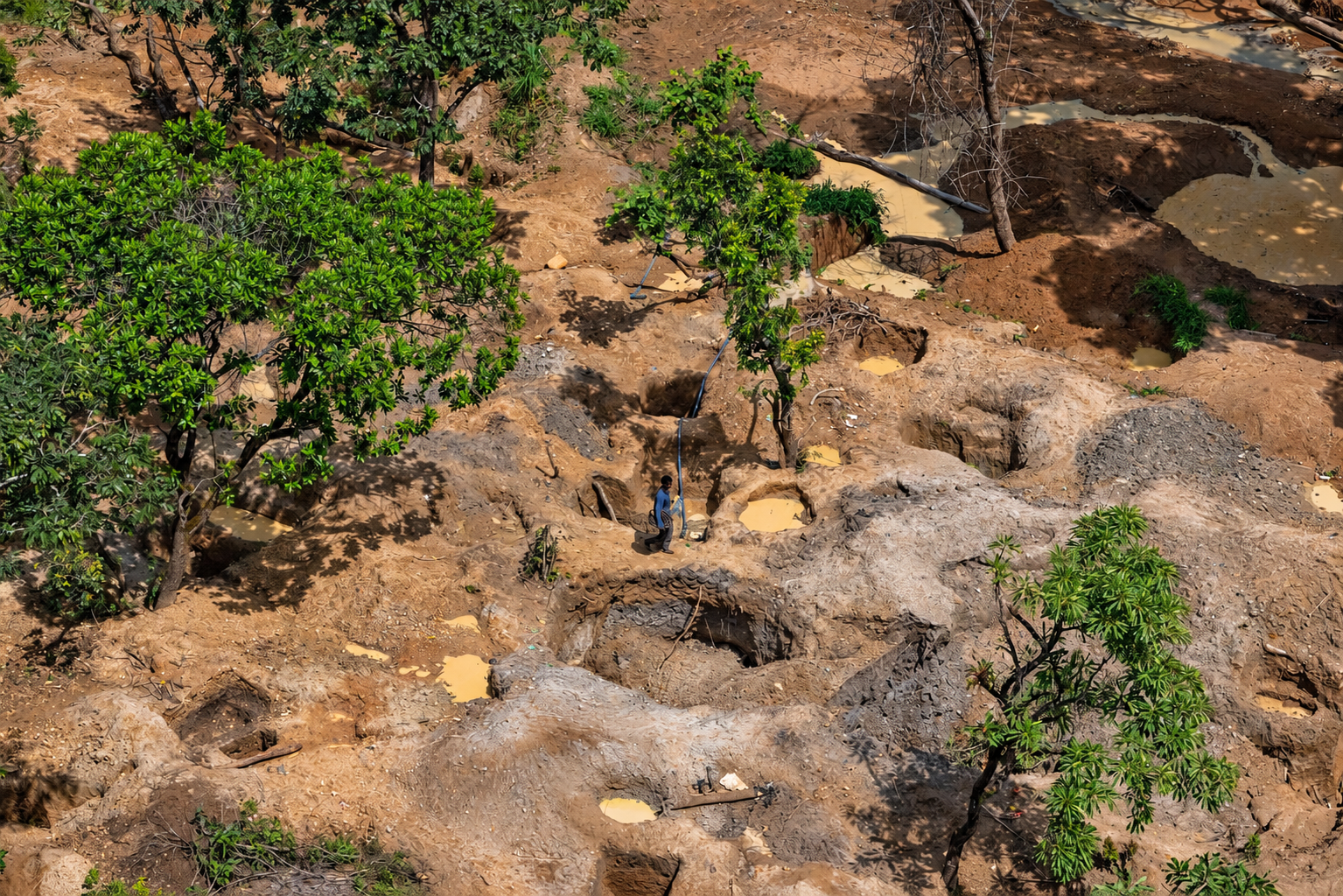
A military-backed operation has driven more than 4,000 artisanal gold miners from an illegal mining site in Gashaka-Gumti National Park, Nigeria’s largest, but conservation officials warn the closure may prove temporary unless the economic pressures drawing people into the park are addressed, according to a report published in Mongabay. The Africa Nature Investors (ANI) Foundation, a Nigerian conservation organisation that works with the government to manage the park, said the Kila mining site was shut in July 2026. Mongabay could not independently verify the figure of more than 4,000 miners.
The park’s chief authority, Ibrahim Musa Goni, conservator-general of the National Park Service (NPS), called the closure a success but offered no guarantee that the miners would not return. “There is a tendency the miners might come back in a different way,” he told Mongabay. The operation comes as governments and conservation groups meet in Armenia from October 19 to 30 for the United Nations biodiversity summit, where countries are working towards protecting 30 per cent of the world’s land and waters by 2030.
Miners fled before soldiers arrived
Kila, near the park’s northern boundary, had drawn more than 4,000 miners, according to ANI. Executive director Tunde Morakinyo said the miners had already left by the time Nigerian soldiers arrived. No shots were fired, he said, and bulldozers were brought in to fill the mining pits and shafts.The closure followed negotiations between ANI and community leaders, and appeals by the organisation to the government. ANI also helped close a second mine at Bodel, in the park’s southern sector.
The sequence matters. Because the miners left before the soldiers arrived, the operation did not test whether the site can withstand a determined attempt to return. Filling pits can obstruct mining, but keeping the site closed will need continued patrols, enforcement and cooperation from surrounding communities.
Ranger killings hardened the push
The operation followed years of friction between miners and park authorities. Morakinyo said two members of his team were killed by miners in October 2025, a loss he said deeply affected morale and strengthened his determination to stop the mining. “We were a small team and when two members of our team are killed, the impact and the morale of the entire team, it’s hard to state how traumatic this was,” he told Mongabay.
Goni confirmed the deaths and said another ranger was stabbed the same year. Mongabay could not verify the details of the incident or whether the killings directly prompted the military operation. Goni said the governors of Adamawa and Taraba states supported the effort, along with the military and ANI, which provided financial and technical assistance. The NPS is responsible for the park, while ANI supports its conservation and management. “The efforts of the government are not enough,” Goni said. “You need the support of development partners, NGOs and international donors to complement the efforts of government.”
Who financed the mine?
Removing miners does not necessarily remove the money behind the trade. ANI alleges that politically connected financiers and armed groups profited from the gold. “These are guys with a lot of money and serious political backing,” Morakinyo said. Mongabay could not verify the allegation, though it noted that the claim reflects a pattern seen in the illegal gold trade elsewhere in Nigeria.
Asked who financed Kila, Goni pointed to holders of mining licences but named no individuals and provided no prosecution records. He said the NPS challenges licences that extend into protected areas and cautioned that some mining takes place just outside park boundaries, which complicates enforcement.
The reporting does not establish who bought the gold, how much was produced, or whether any financier has been prosecuted. Those gaps make it hard to judge whether the closure has disrupted the trade or merely displaced it. Artisanal miners often depend on daily earnings, while financiers have the capital to organise operations and move gold to markets. If those networks stay intact, miners may return when enforcement weakens, or the activity may shift elsewhere.
A biodiversity stronghold under pressure
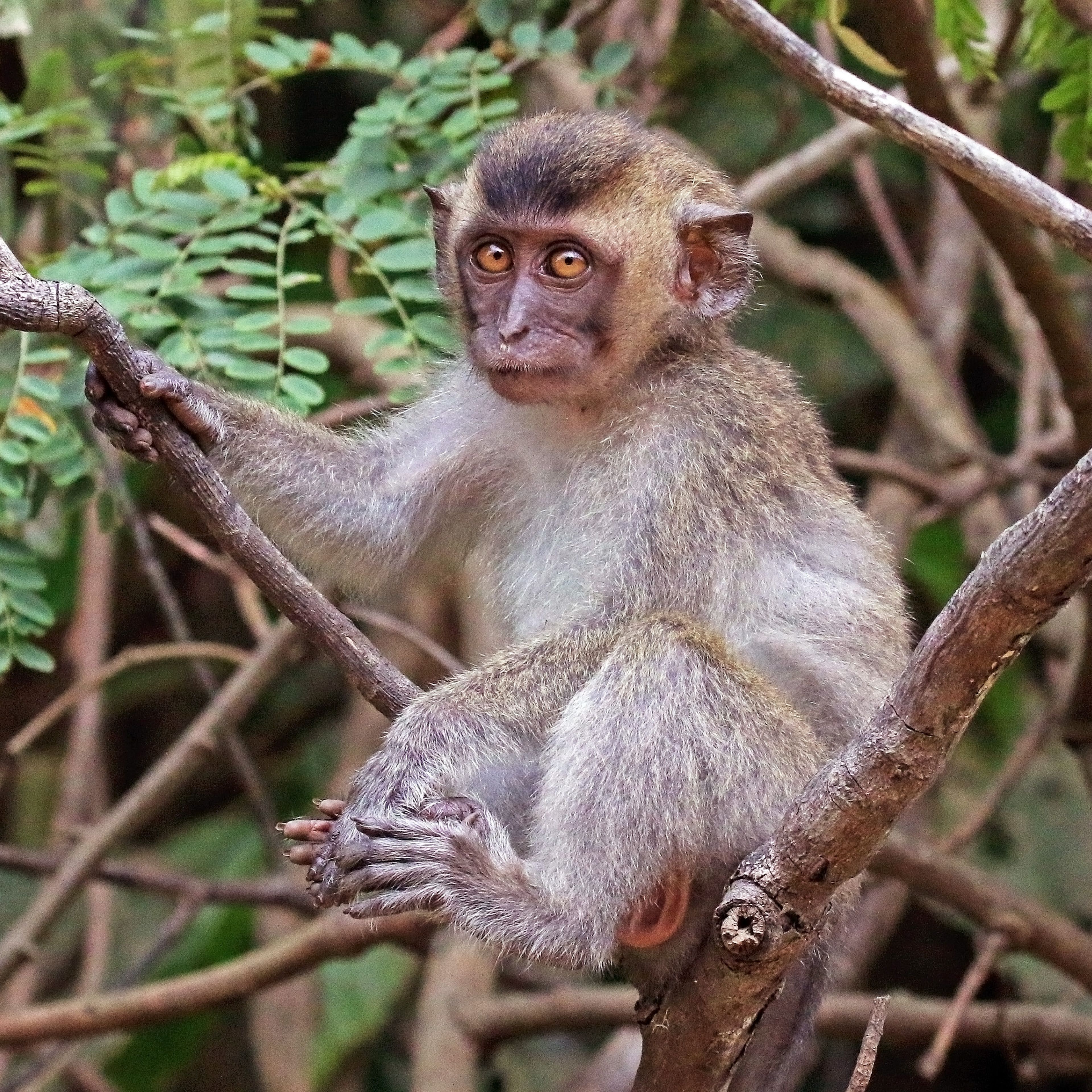
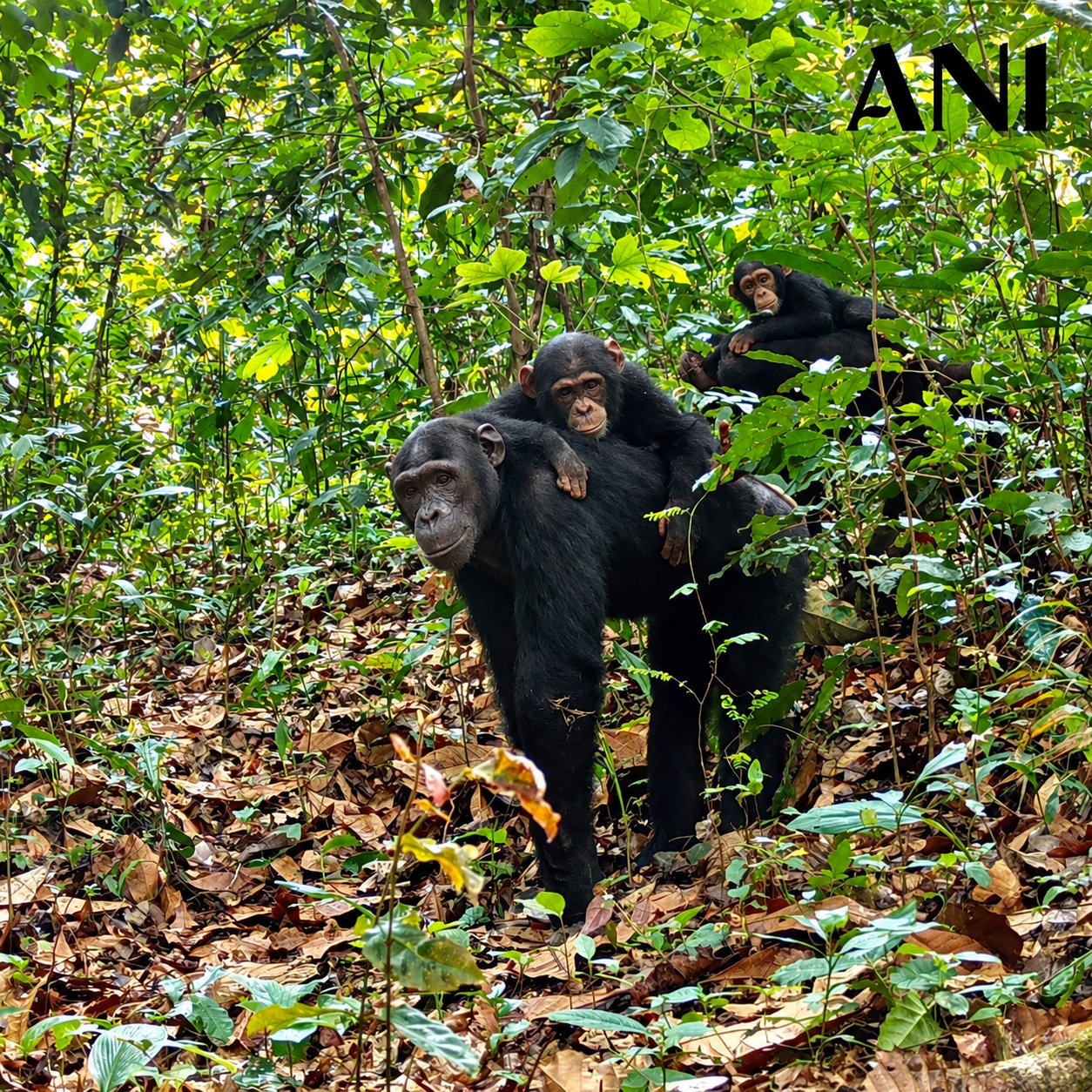
Created in 1991, Gashaka-Gumti covers 6,731 square kilometres (2,599 square miles) across Adamawa and Taraba states, along Nigeria’s border with Cameroon. It is a stronghold for the Nigeria-Cameroon chimpanzee (Pan troglodytes ellioti), one of the rarest primates in the world. The park is also home to more than 1,000 plant species and hundreds of bird and butterfly species, with some of the highest rates of endemism on the continent, according to Mongabay. Like many protected areas across Africa, it faces mounting pressure from illegal mining, poaching and insecurity. Morakinyo said mining spread from outside the park into protected forest. ANI says it employs more than 180 rangers to protect the park.
Goni described mining as a growing threat to Nigeria’s protected areas, linked to wildlife crime and insecurity. Nigeria has 17 national parks, of which 13 are operating, he said, and all of them still have ranger patrols. He acknowledged, however, that tourism has been suspended in parts of Kainji Lake and Chad Basin national parks because of insecurity.
Communities lose more than mining jobs
The closure has hit more than the diggers. Iliyasu Jussaini, 64, the village head of Kila, said traders, food sellers, young people and traditional leaders all benefited from the mine. He acknowledged that he, too, received payments linked to it, and that miners had promised to build him a house. Those benefits ended with the closure. Some former miners now transport passengers by motorcycle, he said, while others have gone to new mining sites. Jussaini said he still supports conserving the park and wants talks on alternative livelihoods. He also raised a long-held grievance that some families lost land without compensation when the park was created. Goni disputed this, saying compensation is always paid when government takes over land in Nigeria.
Musa Yuguda, 40, a former Kila miner, said he turned to mining because other work was scarce. He knew it was illegal inside the park, but the earnings were hard to resist and helped him build part of his house. He said he would now prefer farming or motorcycle transport. Other miners, he said, had moved to mining areas elsewhere in Nigeria or across the border into Cameroon. Adamu Salihu, 21, who washed gold-bearing material and operated mining equipment, now has no job and wants support to start a business. The interviews were facilitated by ANI and conducted by Mongabay over WhatsApp through interpreters. Salihu’s situation reflects the central problem facing authorities: closing an illegal source of income does not automatically create a lawful one. Households with land, vehicles or access to credit may adapt more easily than those without start-up capital.
What the research says
Gold extraction has existed in the region for more than a century. A 2021 field study in Gashaka Local Government Area in Taraba state described artisanal gold mining as an important livelihood activity, despite much of it being illegal. A 2024 survey of 118 women in the same area, focused largely on gemstone mining, found livelihoods tied to selling food and trading minerals as well as extraction. A 2025 study of communities near the park found that many respondents said they would stop entering it illegally if alternative income were available. A 2023 survey of 1,500 people around four Nigerian parks, including Gashaka-Gumti, recorded demands for jobs, roads, water, schools and healthcare.
The studies do not show that poverty is the only driver of illegal mining, nor that any single livelihood programme would persuade all miners to leave. But they suggest that enforcement alone is unlikely to hold. “There is no point employing hundreds of rangers and equipping hundreds of rangers and deploying them, unless you address the root cause of these illegal activities, which is poverty,” Morakinyo said.
No transition plan yet
ANI supports farming, livestock, microfinance and education initiatives, and is building a school in Kila. Goni credited the group with supporting some 1,200 farmers and creating more than 5,000 direct and indirect jobs. He said the NPS is helping young people apply for government jobs and discussing skills training, scholarships and small businesses with partners. The figures describe ANI’s broader work, and the reporting does not show that those jobs or beneficiaries are linked to Kila or have absorbed people displaced by the closure.
No Kila-specific transition plan, funding or timeline was provided. That gap matters because the pull back to mining can build long before development projects deliver results. A school can improve future prospects but cannot replace an unemployed adult’s income, and farm support depends on access to land, inputs and markets.
Can the miners be kept out?
Rangers now monitor Kila and nearby buffer areas, drawing intelligence from local vigilantes. But surveillance alone may not be enough if the incentives remain strong and the financiers are untouched. The closure could also push miners to other sites, inside or outside the park, or across the border. Lasting success will depend on sustained patrols, protection for rangers, action against those organising and financing the mining, coordination among agencies, and livelihoods for affected communities.
Authorities will also need to distinguish between financiers and organisers on one hand and people who depended on the mine for daily income on the other. At Kila, the pits may be closed. Whether people find ways to earn a living without reopening them is another question. “We’re still building the park,” Morakinyo said. “We have a long way to go.”