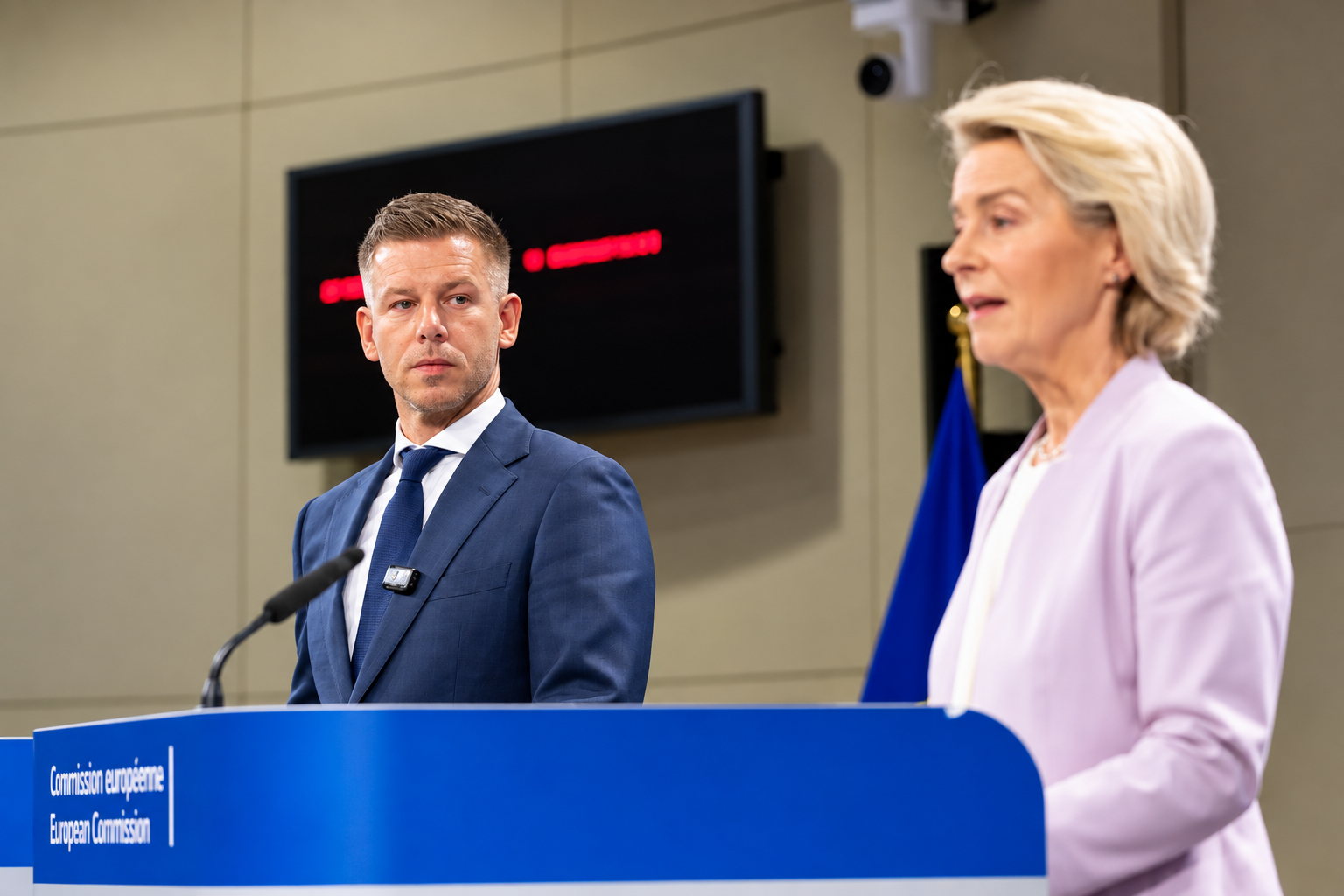
In a major break with the EU’s approach that could further weaken European unity over Russian energy sanctions, Hungarian Prime Minister Peter Magyar said he expects the United States to extend Hungary’s exemption from US sanctions on Russian oil by at least another year. In an interview published on October 17 by Hungarian news outlet 444.hu, he argued that Washington’s new diesel deal with Moscow gives it little reason to reject the Hungarian request.
“Hungary has an exemption from sanctions on Russian crude oil until November. The Americans extend this annually. If the American president has reached an agreement on diesel exports, it would be illogical not to grant Hungary this exemption for at least another year,” Magyar stated. The PM said President Donald Trump could make whatever deals he wanted, but the deal mattered for Hungary. He acknowledged Ukraine’s dissatisfaction.
US waiver expires in November
Hungary has its own US sanctions waiver, separate from Trump’s diesel deal with Russia and the EU rules for phasing out Russian energy imports. In October 2025, the US sanctioned Russia’s two largest oil companies, Rosneft and Lukoil, and gave firms dealing with them a month to cut ties or face secondary sanctions. Hungary buys Russian oil through the Druzhba pipeline and Russian gas through the TurkStream pipeline, so it asked Trump for relief. After meeting then-Prime Minister Viktor Orban at the White House on November 7, 2025, Trump granted an exemption, and the White House confirmed it would last one year. That exemption expires in November 2026, which is why Magyar wants it renewed.
Trump’s diesel deal
Trump’s diesel deal with Russian President Vladimir Putin was announced a week ago. The US Treasury issued a temporary general licence allowing Russian diesel to enter the global market. Russia says it will release 300,000 metric tons immediately and another 500,000 next month. Trump has also waived parts of a US law that authorised 500 per cent tariffs on Russian goods and halted certain other sanctions on Russia. The law also provided for potential 100 per cent tariffs on major buyers of Russian oil and gas.
Little room to switch
Hungary has little room to switch suppliers quickly, and Hungarian leaders keep this practical consideration at the forefront. Its reliance on Russian oil rose from 61 to 92 per cent after the 2022 invasion. It receives about 100,000 barrels a day of Urals crude through the Druzhba pipeline, as does neighbouring Slovakia. Together, the two countries bought 290 million euros’ worth of Russian crude in September, according to the Centre for Research on Energy and Clean Air.
Bulgaria and Slovakia too…
Hungary is not alone among EU governments in taking a different approach to Russian energy. On October 15, Bulgarian Prime Minister Rumen Radev backed the Trump-Putin diesel deal as he arrived at the Brussels summit, saying he welcomed any step that reduces fuel prices. His comments put him at odds with other EU leaders, who condemned the deal as risky, dangerous and misguided. Radev, who became prime minister in April, has called for dialogue with Moscow. Slovakia’s Robert Fico, who said in April that the EU should end sanctions on Russian oil and gas, has also been pushing back against Brussels’ sanctions policy.
Policy continuation
Despite being elected on a strongly anti-Orban platform, Magyar has not changed the country’s policy direction on energy security or Ukraine. Though Magyar’s government has adopted a softer tone on energy than Orban’s, many of the same policies remain in place. Magyar’s centre-right Tisza Party’s manifesto pledges to end dependence on Russian energy by 2035. However, it leaves open the possibility of continued imports.
On Ukraine, he has retained elements of Orban’s line. He has said Hungary will give humanitarian aid but send no weapons, a position the Kremlin welcomed. Magyar also rejects fast-tracking Ukraine’s accession to the EU, but he has also ended Hungary’s blanket opposition to its membership. However, Hungary and Ukraine continue to clash over Hungarian minority rights in Ukraine, and this issue could continue to strain relations.
European imports
Hungary and Slovakia are not the only European buyers. Russia’s deputy prime minister, Alexander Novak, claims EU countries have bought $320.7 billion of Russian hydrocarbons since 2022, including $21.3 billion in the first nine months of 2026. In July, the five largest EU buyers of Russian fossil fuels paid Russia a combined $1.46 billion, led by Hungary and Slovakia, followed by Belgium and France. Belgium sourced all its LNG imports from Russia that month. Spain was the third-biggest EU importer in June, taking $289 million of Russian LNG. EU sanctions do not cover Russian gas, and the EU’s own gas ban only starts in 2027. Over the fourth year of the war, the EU’s Russian fossil fuel imports totalled $16.2 billion, down 36 per cent year on year.