From classrooms and university campuses, student anger has spilled into streets, drawn trade unions and other groups into the protests, and triggered clashes with police. Across France, Albania, Belgium and Argentina, young people are challenging not only education policies but also government spending priorities, inequality and corruption. They fear that the institutions meant to prepare them for adulthood are undermining their prospects.
France: When the classroom becomes a battleground
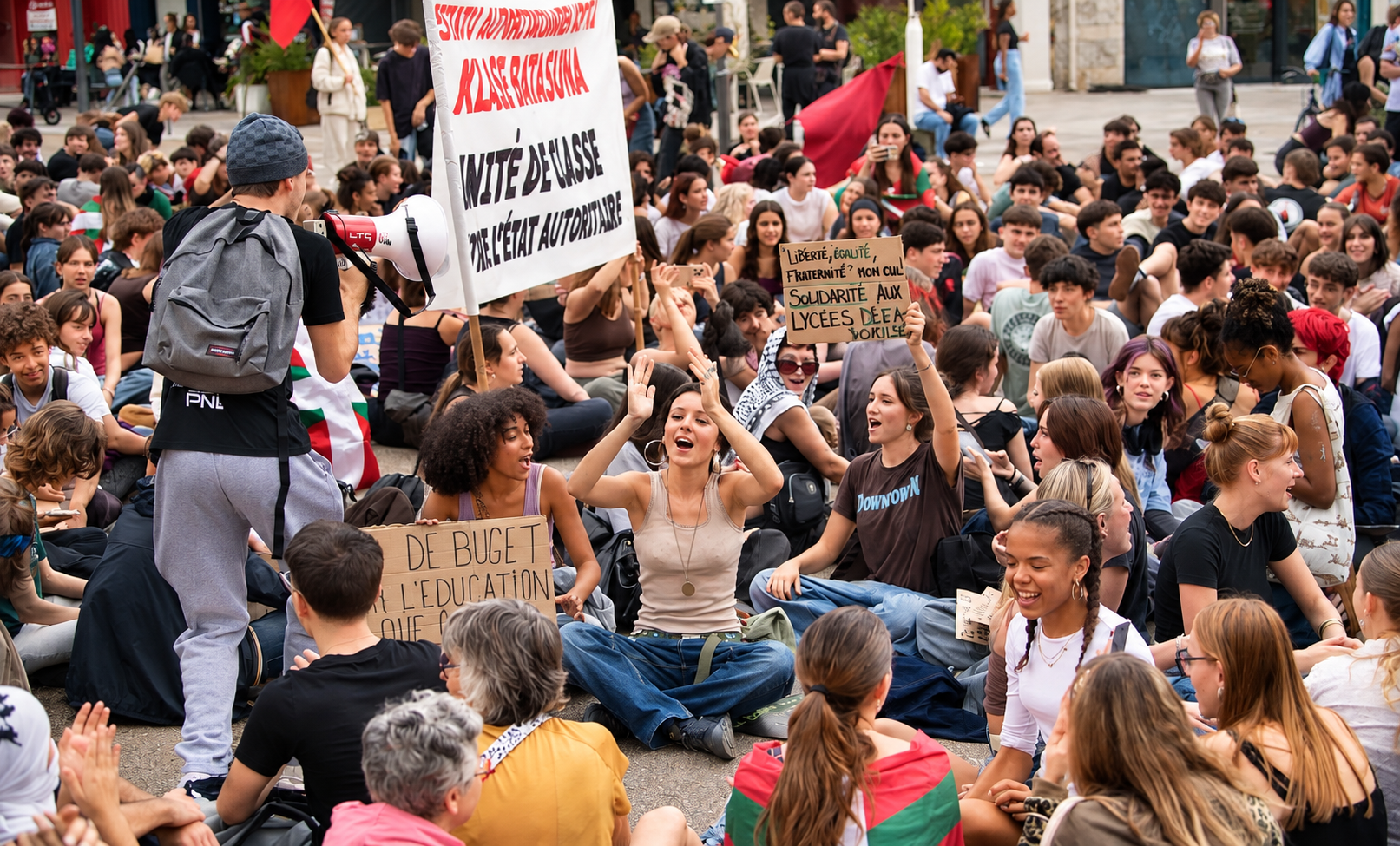
France’s protests began on September 17 in Créteil, southeast of Paris, when students and teachers demanded more resources and staff. The movement spread as students complained of overcrowded classrooms, teacher shortages, dilapidated buildings and inadequate facilities. In disadvantaged suburbs, many felt they were receiving fewer educational opportunities than students in wealthier parts of the capital.
Speaking to Al Jazeera on October 7, Olympe, a 16-year-old student, said teachers were frequently absent, and her school had fewer resources than schools in Paris. Students had blockaded their school throughout the week. Clemence, a 30-year-old mathematics teacher, said classroom temperatures had reached 35–40°C during a heatwave.
At least 250,000 students, teachers and parents demonstrated on October 7, according to Al Jazeera, while hundreds of secondary schools had already been blockaded. By October 17, the movement had become a nationwide mobilisation: the Interior Ministry counted 550,000 demonstrators across 110 marches, while organisers estimated 800,000. Trade unions joined the protests, which had expanded to encompass rising prices, wages, pensions and deteriorating public services.
The movement echoed the yellow-vest protests that began in 2018 against living costs and perceived social injustice under President Emmanuel Macron. On October 17, clashes, fires and looting occurred in Paris and elsewhere. The Associated Press reported 400 arrests, while a later Guardian report, citing Prime Minister Sébastien Lecornu, put the figure above 1,200. Interior Minister Laurent Nuñez condemned the violence. But students’ underlying anger concerns the gap between France’s promise of educational opportunity and the conditions in which they are expected to learn. They want schools where a child’s prospects do not depend on their postcode.
Albania: From education grievances to demands for the prime minister’s resignation
In Albania, students have joined a wider anti-government movement demanding Prime Minister Edi Rama’s resignation. High-school and university students joined demonstrations in Tirana during the week leading up to October 17, linking grievances over education, unemployment and limited opportunities to allegations of corruption. Rama’s Socialist Party has governed since 2013, and he won a fourth term in 2025. His government’s ambition to take Albania into the European Union by 2030 has not quelled protesters’ anger over their immediate prospects.
Students complain about expensive university fees, inadequate facilities, and limited job opportunities. Their discontent has also been fuelled by a luxury tourism development on Albania’s southern coast linked to an investment company founded by Jared Kushner, US President Donald Trump’s son-in-law. Villagers alleged that the project's land had been sold to them under false pretences; Reuters found no evidence of wrongdoing by Kushner. For protesters, the controversy symbolises a wider concern: ordinary citizens struggle to secure opportunities while wealthy or politically connected interests appear better placed to benefit from development.
By October 17, the fifth consecutive day of demonstrations, confrontations had intensified. Protesters threw stones, fireworks and petrol bombs, and set vehicles and rubbish bins alight. Police responded with tear gas, water cannon and batons; Reuters reported that officers fired what appeared to be rubber bullets. Police chief Skender Hita said authorities had suspended seven officers over alleged excessive conduct or failure to observe proportionality. Reuters reported 1,067 arrests, with 388 people facing criminal prosecution. Albania’s Ministry of Health and Social Welfare said nine protesters and four police officers received medical treatment on October 17, while police reported 132 officers injured over five days.
Rama said his government respected students’ right to protest but warned against destruction. Yet the demonstrators’ demands extend beyond EU membership: they want credible investigations into corruption, accountable institutions and a country where education can lead to a decent future. “We are demanding our rights, our future and a better country,” journalism student Sinan Billa told AFP, according to Al Jazeera’s October 17 report.
Belgium: Fears that higher education will become less accessible
In French-speaking Belgium, student protests began on October 1 against education reforms the Parliament of the Wallonia-Brussels Federation approved on June 5. The reforms form part of a cost-cutting plan intended to save €500 million by 2029, against a 2025 education budget of €10.65 billion. Students oppose proposed tuition-fee increases, changes to teachers’ working hours and measures that could reduce support for students needing additional academic assistance.
They fear austerity will mean fewer resources, less individual attention and higher barriers to education. In early October, pupils blockaded Brussels’ Athénée Charles Janssens secondary school. Speaking to Le Monde, students stressed that Belgium’s own policies drove their movement, not protests in France. On October 17, several hundred predominantly young demonstrators gathered in central Brussels. The protest escalated when some overturned a car; police used tear gas and water cannons. Demonstrations also took place in Liège. Interior Minister Bernard Quintin condemned the violence and promised measures to restore public order.
The grievances extend beyond tuition fees. Protesters argue that cuts to education, public transport and other services disproportionately burden people with limited financial security. At a Liège demonstration reported by The Brussels Times on October 17, students, workers and parents warned that rising costs and reduced support could force some young people to abandon their studies. Belgium’s protests have been smaller than France’s nationwide mobilisation and less violent than Albania’s clashes. But the underlying concern is similar: students fear that access to education will increasingly depend on their ability to absorb rising costs while navigating a system with fewer resources.
Argentina: “Obey the law, Milei”
In Argentina, students and university workers are challenging President Javier Milei’s austerity programme over funding for public higher education. On October 15, students, university authorities, teachers’ unions and supporters marched in Buenos Aires and other cities, demanding implementation of the University Financing Law. Organisers estimate the fifth federal university march drew about one million people nationwide; the figure has not been independently verified.
Congress passed the law, legislators reaffirmed it after a presidential veto, and courts backed its implementation. The government argues that additional spending would undermine fiscal balance. Universities say funding is essential to salaries, scholarships, research and the survival of public higher education. The legal confrontation intensified on October 6, when federal judge Martín Cormick declared unconstitutional a provision in an executive decree suspending implementation of the law and ordered the government to apply it.
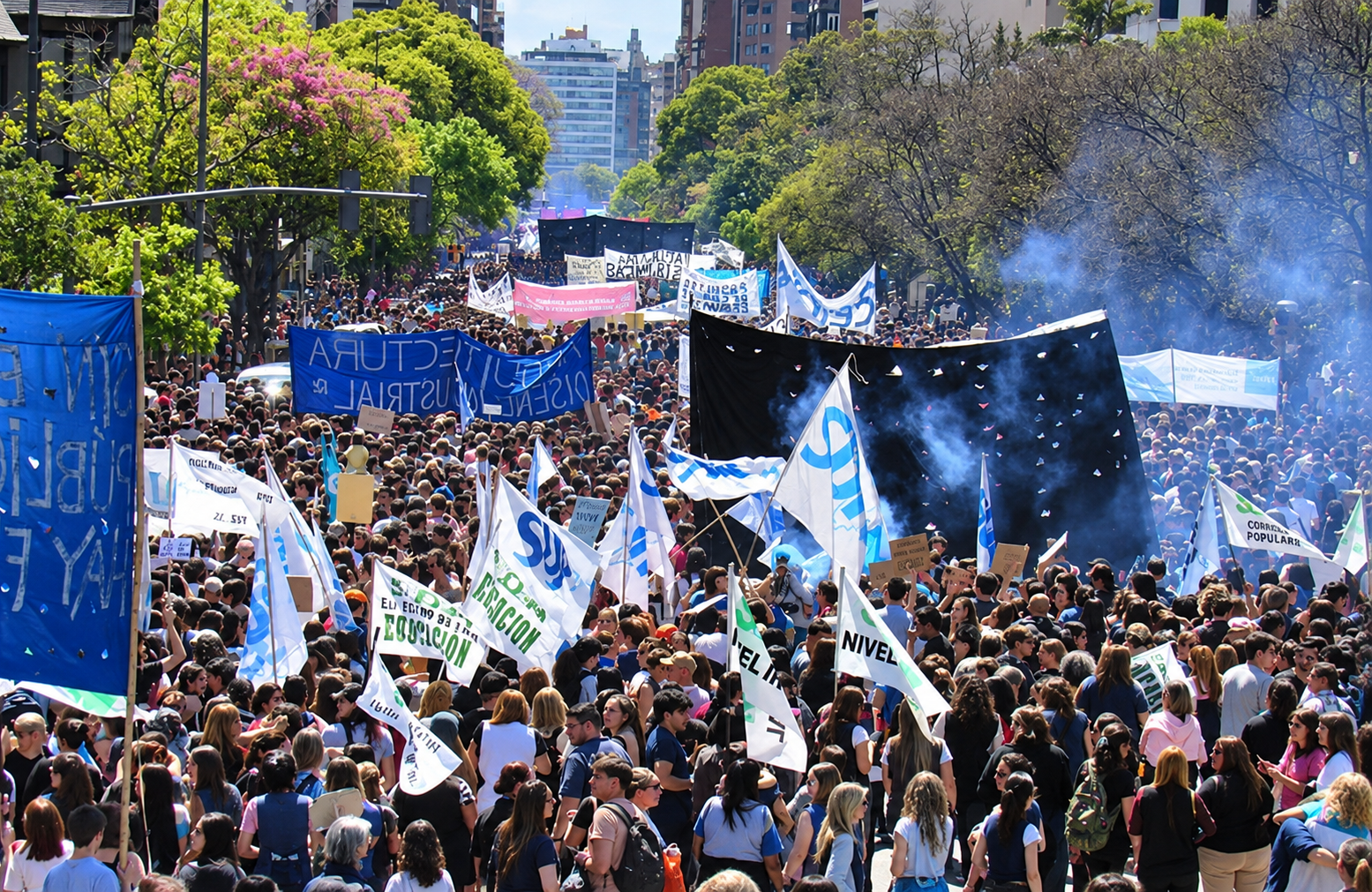
At the University of Buenos Aires, students held assemblies and occupied campus spaces. Al Jazeera reported on October 16 that students gathered in the central hall of the university’s Exact and Natural Sciences faculty and displayed banners against the cuts. At the October 15 march towards Congress, protesters demanded that Milei obey the law. Sonia Alesso, secretary-general of the education workers’ union CTERA, said the protest concerned education, sovereignty and democracy. The march was largely peaceful before clashes erupted near Congress. Police used tear gas and water cannons, 31 people were detained, and eight officers were reported injured, according to reports cited by El País.
University of Buenos Aires rector Ricardo Gelpi warned that the cuts were damaging education, scientific progress and the training of young people. Franco Bartolacci, president of the National Interuniversity Council, questioned how much more the university community must do to secure a response. For protesters, public universities are not simply another budget item. They offer social mobility, scientific advancement and opportunities beyond family wealth. The dispute has become a battle over whether fiscal discipline can be pursued while respecting the law and protecting institutions generations have relied on.
A common anger, four different battles
France’s mass marches, Albania’s sustained clashes, Belgium’s school blockades and Argentina’s university-funding demonstrations stem from different grievances. But across all four countries, young people fear that governments are compromising their futures. A missing teacher, unaffordable tuition or shrinking university budget can close doors before a young person enters the job market. Governments defend cuts and reforms as necessary; protesters see their costs in classrooms, families and lost opportunities. Their message is a demand for functioning schools, accessible universities and accountable government. In Paris, Tirana, Brussels and Buenos Aires, leaders face the same question: how long can public trust endure when young people feel their future is being sacrificed?