NWS Asia Desk
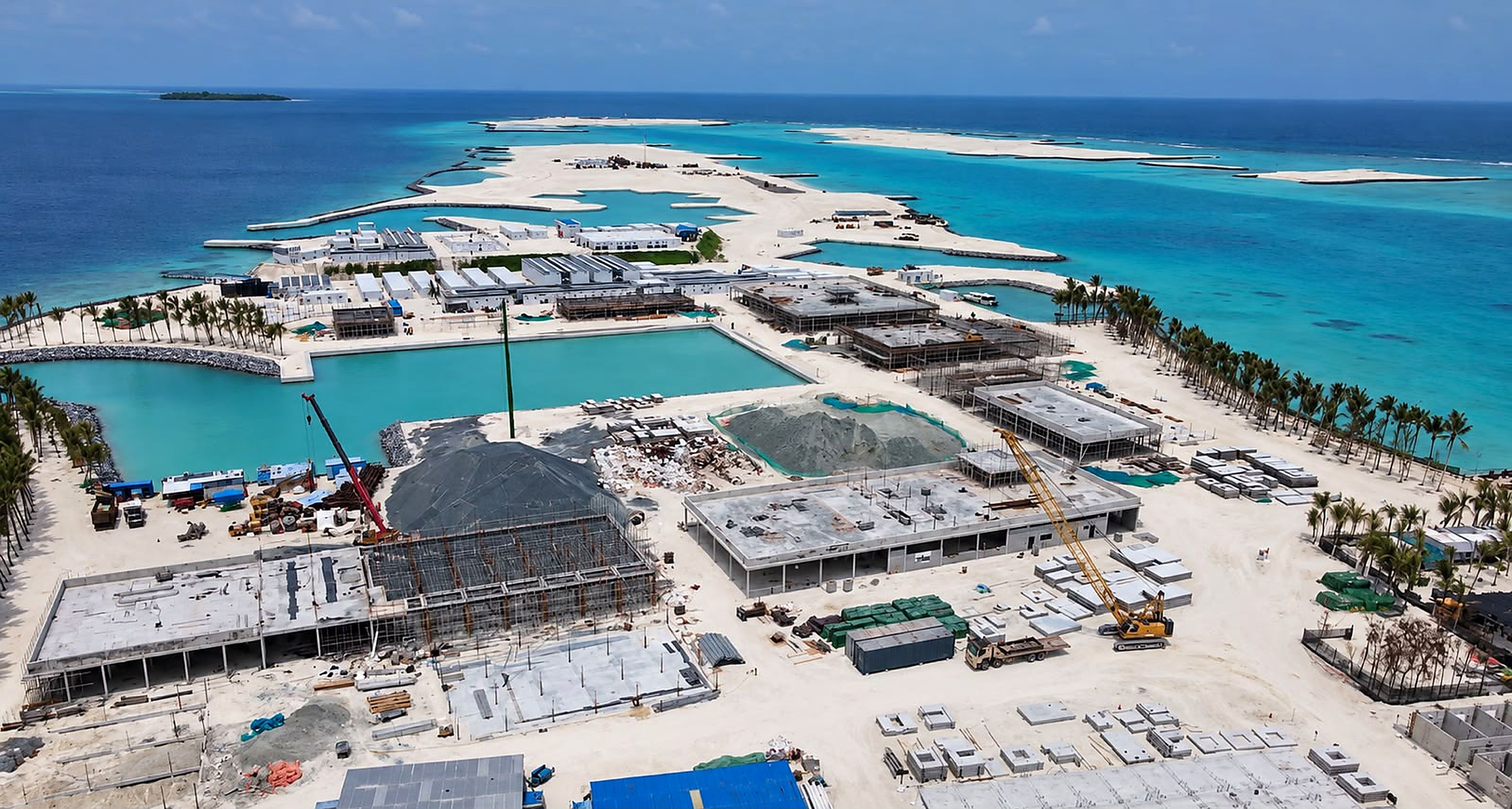
In the turquoise waters of the Maldives’ Noonu Atoll, dredgers and excavators are reshaping the seabed to create a new investment destination for the world’s wealthiest people. Artificial islands, luxury residences and long-term property leases are central to a government strategy to attract foreign capital. Known as Project Ayla, the $790-million development represents an ambitious attempt by President Mohamed Muizzu’s government to diversify an economy heavily dependent on tourism. A separate initiative, the Maldives Pearl Residence programme, is designed to attract wealthy foreigners with the prospect of residency in the Indian Ocean nation.
But a recent investigation published by The Maldives Independent, in partnership with the Organized Crime and Corruption Reporting Project (OCCRP), has raised questions about who ultimately owns the development, how its financial arrangements will be monitored and whether the country’s safeguards against illicit finance are adequate. The report does not allege that Project Ayla or its investors have engaged in criminal activity. Instead, it highlights potential regulatory weaknesses involving ownership disclosure, offshore banking and investor-residency schemes.
Islands for the wealthy
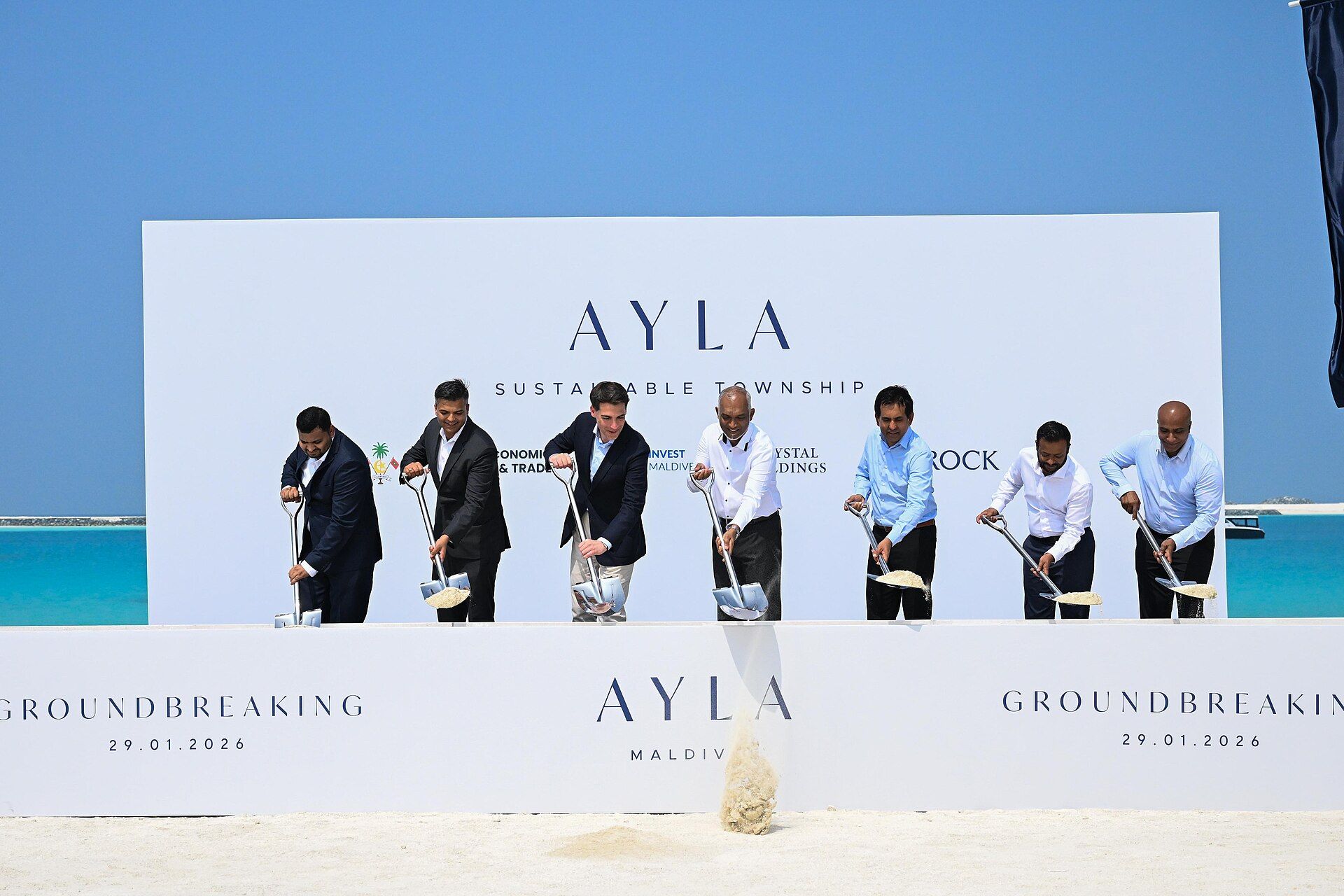
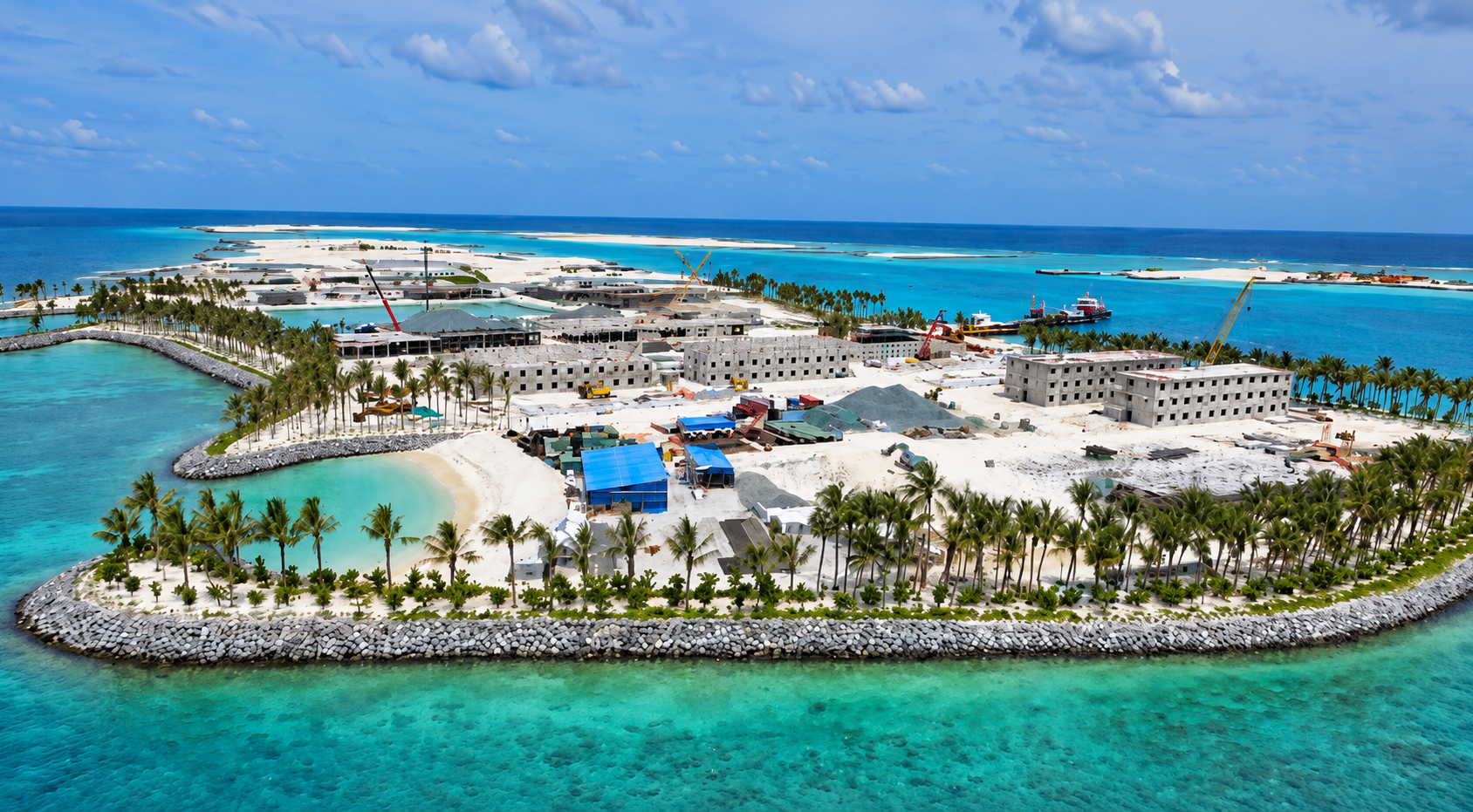
Project Ayla plans to create 25 artificial islands and islets, with more than 70 luxury dwellings. President Muizzu attended the groundbreaking ceremony in January 2026. Crystal Holdings Private Limited, which holds the special economic zone (SEZ) permit, and Dubai-based BluRock Group are developing the project.
Through the development, the government aims to move beyond traditional tourism by attracting international investors with long-term property rights and potential residency. However, the investigation found that the ultimate beneficial owners of Crystal Holdings and BluRock had not been publicly disclosed. Both companies declined to comment. This lack of transparency raises concerns about the government’s ability to scrutinise investments and establish who ultimately controls the assets.
Tax concessions, financial secrecy
The ownership questions are compounded by the financial privileges available within SEZs. Foreigners cannot own land in the Maldives, but the SEZ framework allows them to lease property for up to 99 years and benefit from certain tax exemptions or reduced rates. SEZs can also host offshore banks authorised to provide services for trusts. Although trusts serve legitimate purposes, complex ownership structures can make it harder to identify the individuals who ultimately control assets.
The investigation reported that disclosure of the ultimate beneficial owners of offshore banks and their customers can be restricted without a court order or the owner’s consent. Former Maldivian Information Commissioner Ahmed Ahid Rasheed described this lack of transparency as an “accountability gap”. He called for publicly accessible registers of beneficial ownership and land ownership within SEZs.
Critics warn that financial secrecy, tax concessions and long-term property rights could make it harder to trace the origins of invested money. The Asia/Pacific Group on Money Laundering has raised concerns about the Maldives’ regulation of trusts and cited the government’s own assessment that the real estate sector is highly vulnerable to money laundering.
Residency programme
Alongside the property development, the Maldives Pearl Residence programme, being developed with international consultancy Henley & Partners, is intended to attract wealthy foreign residents. The programme is planned to launch in the second half of 2026, but the minimum investment threshold has not been announced, and the regulatory framework is still under development. Economic Development and Trade Minister Mohamed Saeed estimates that the programme could generate more than $1 billion in direct and indirect inflows, though the timeframe is unclear.
The government says the scheme will incorporate international screening, financial and reputational assessments and checks by relevant national-security and regulatory authorities. Henley & Partners will assist with application processing and make recommendations, while the Maldivian government will take the final decisions. Despite these proposed safeguards, investor-residency schemes face scrutiny because they can be misused to launder illicit proceeds or conceal assets. The Financial Action Task Force has highlighted the importance of programme design, due diligence and regulatory oversight.
Henley & Partners has also faced scrutiny over its work in other jurisdictions. An OCCRP investigation into St Kitts and Nevis found that the firm had facilitated passport applications for nearly a dozen figures, including prominent politicians and people accused of crimes or described as fugitives. Henley disputes the suggestion that allegations concerning other jurisdictions demonstrate inadequate due diligence in the Maldives.
Greater oversight
The proposed residency scheme has drawn opposition from politicians who question whether the safeguards will be sufficient before wealthy foreigners are granted residency. In July, opposition lawmaker Ahmed Shamheed sought parliamentary suspension of the programme and disclosure of related agreements. His resolution was rejected in August. Shamheed has warned that SEZs could become opaque enclaves, particularly if offshore banking activities expand without adequate oversight.
Former economic minister and opposition politician Fayyaz Ismail has also questioned whether the government can prevent unsuitable applicants from obtaining residency. These concerns carry added weight given the Maldives’ history of corruption involving land and tourism development. A major scandal in 2014 and 2015 involved senior politicians improperly leasing islands to tourism developers and pocketing tens of millions of dollars, according to an OCCRP investigation. Azza Mohamed, a governance manager at Transparency International’s Maldives chapter, has called for transparency over beneficial ownership, independent oversight of procurement and approvals, and effective systems to trace, freeze and recover illicit funds across borders.
Debt pressures
Despite the concerns, the government has a strong economic incentive to pursue the scheme. The OCCRP investigation cited International Monetary Fund projections that the Maldives’ gross debt burden would reach around 130 per cent of gross domestic product in 2026. The country also faces pressure from population growth, overcrowding and the need to finance infrastructure. Nearly half of its population, approx. 260,000 people, lives in Malé, a capital that occupies just about 2 sq. km.
The government has expanded existing islands and developed artificial ones to address land shortages. However, the economic returns from creating new space for wealthy residents remain uncertain. The promised investment could generate employment and foreign-currency inflows. Yet the actual benefits will depend on how much capital enters the local economy, how much tax revenue concessions forgo, and whether jobs and services reach ordinary Maldivians.
Environmental costs
The financial questions surrounding Project Ayla are accompanied by concerns about its environmental impact. The construction site at Dhigufaru Lagoon supports marine life, including protected parrotfish and nurse sharks. Environmental activist Humaida Abdul Ghafoor of the Save Maldives campaign has warned that dredging can generate sediment that damages coral reefs, destroys marine habitats and alters ocean currents and water movement.
President Muizzu has argued that development should be balanced with environmental protection, citing measures such as coral spawning and planting. The developers have also promised renewable energy and improved water and waste management. However, these commitments do not establish how much environmental damage the project may cause or whether it can be reversed. The stakes are particularly high for the Maldives, where around 80 per cent of its nearly 1,200 islands lie less than one metre above sea level. The country is among the nations most vulnerable to rising seas and climate change, making the long-term consequences of land reclamation an important public concern.
Who ultimately benefits?
The Maldives has a legitimate interest in attracting investment to diversify its economy and manage its debt burden. But Project Ayla and the Pearl Residence programme raise difficult questions about how the government will balance private investment with public accountability. Who ultimately owns the companies financing the artificial islands? What safeguards will govern the residency programme? How will authorities verify applicants’ sources of wealth? And how much of the promised investment will benefit Maldivian communities? The answers will help determine whether the country’s strategy becomes a model for investment-led development or creates opportunities for financial secrecy and private privilege to expand at the expense of public accountability.