Within six weeks, North Korea has opened road links to both of its powerful neighbours. The crossings are modest in engineering terms, but they show Pyongyang being drawn into a closer, more openly coordinated relationship with Beijing and Moscow, even as it tries to keep the balance between them.
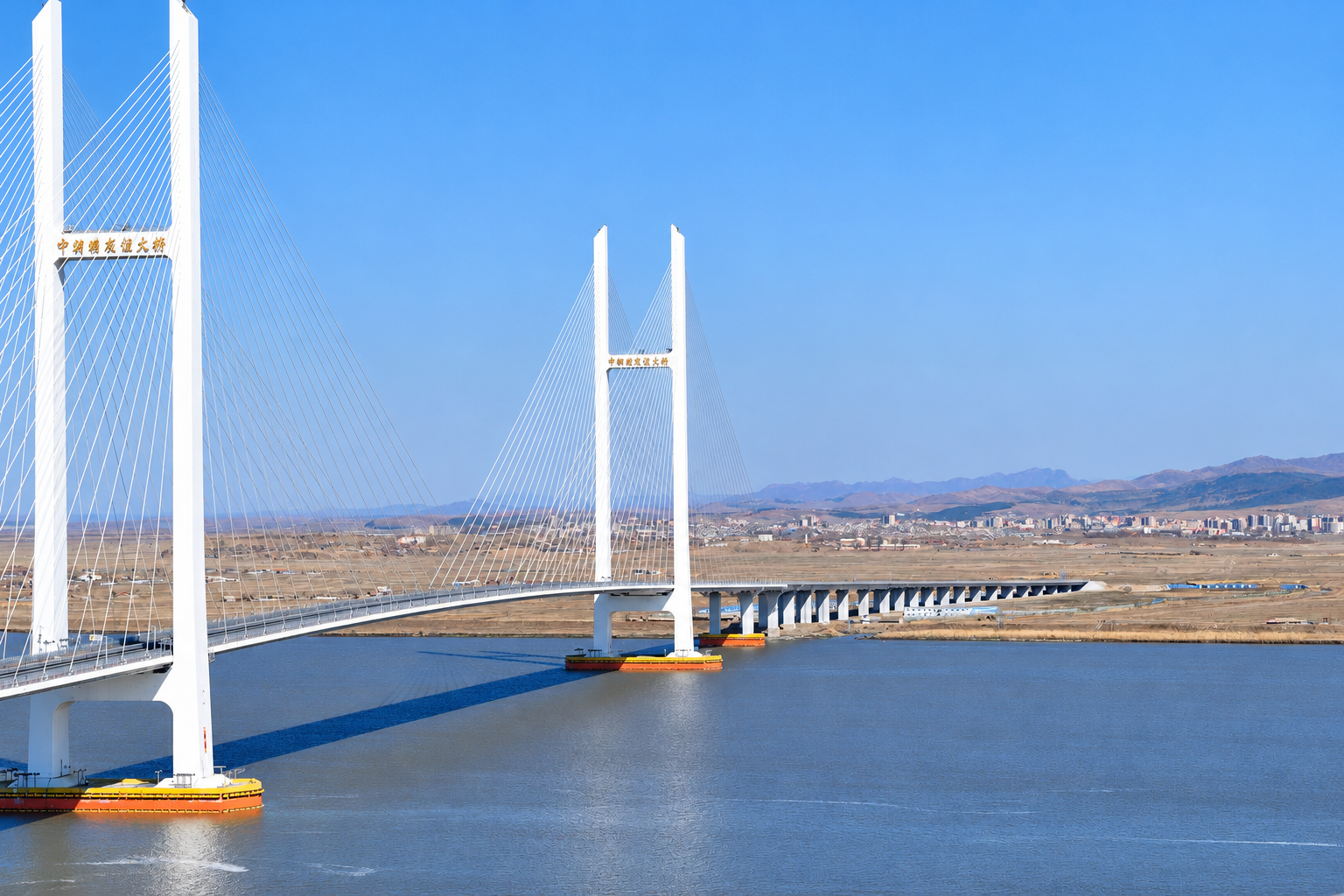
The New Yalu River Bridge, which links the Chinese border city of Dandong with Sinuiju in North Korea, opened on Thursday (October 16). Construction began in October 2011 and finished in October 2014, but the bridge remained unused because North Korea had not completed the buildings and infrastructure on its side. The delay was widely read as fallout from Beijing’s support for UN sanctions over Pyongyang’s nuclear tests. Its opening therefore says as much about politics as about trade.
However, on Thursday, Chinese Premier Li Qiang set a much different tone, and described the bridge as “a new landmark symbolizing the two nations’ traditional friendship”. China’s official news agency Xinhua reported him as saying in a video address at the ceremony: “The relations between China and North Korea have entered a new stage, embarking on a new chapter.”
North Korean Premier Pak Thae Song, on the other hand, said in a video address that the bridge would “accelerate the advance for the prosperity of the two countries and the well-being of the peoples,” according to the country’s Central News Agency.
A relationship rebuilt
The improvement in diplomatic and commercial relations over the last couple of years has been steady. Chinese exports to North Korea reached a six-year high of $2.3bn last year, and Xi Jinping was welcomed in Pyongyang in June for the first time since 2019. At that summit, Xi and Kim Jong-un pledged to raise ties to a strategic level and step up exchanges.
The new crossing has practical value. The old Friendship Bridge opened in 1943 and, according to AP, handles more than 70 per cent of official trade between the two countries, though it can take vehicles only one way at a time. Ahn Chan-il, a researcher originally from North Korea, told AFP that hundreds of vehicles could cross the new bridge every day.
China has its own reasons to want it open. Local data cited by one news aggregator suggests Dandong’s economy grew just 0.3 per cent in the first half of 2026, against 4.7 per cent nationally, which makes the delay look costly for the border city.
Moscow’s parallel track
The Russian link for North Korea came first. On September 7, Russia and North Korea opened their first road bridge across the Tumen River, a one kilometre, two-lane crossing that Russia says can handle up to 300 vehicles a day. Russian Prime Minister Mikhail Mishustin and his North Korean counterpart, Pak Thae Song, joined by video link, much as the Chinese and North Korean premiers did on Thursday. The bridge is named after a Red Army soldier whom Pyongyang credits with saving Kim Il Sung’s life in 1946, a nod to Soviet-era ties.
According to AP, North Korea has been supplying ammunition and troops to support Russia’s war against Ukraine, in return for economic and military assistance. That follows the mutual defence treaty Kim and Vladimir Putin signed in Pyongyang in 2024. Lim Eul-chul, a professor at Kyungnam University, argued that Russia has gained a direct road route for moving military supplies, ammunition and manpower, and that the bridge shows sanctions on North Korea are becoming meaningless.
An “axis”, or a convenience?
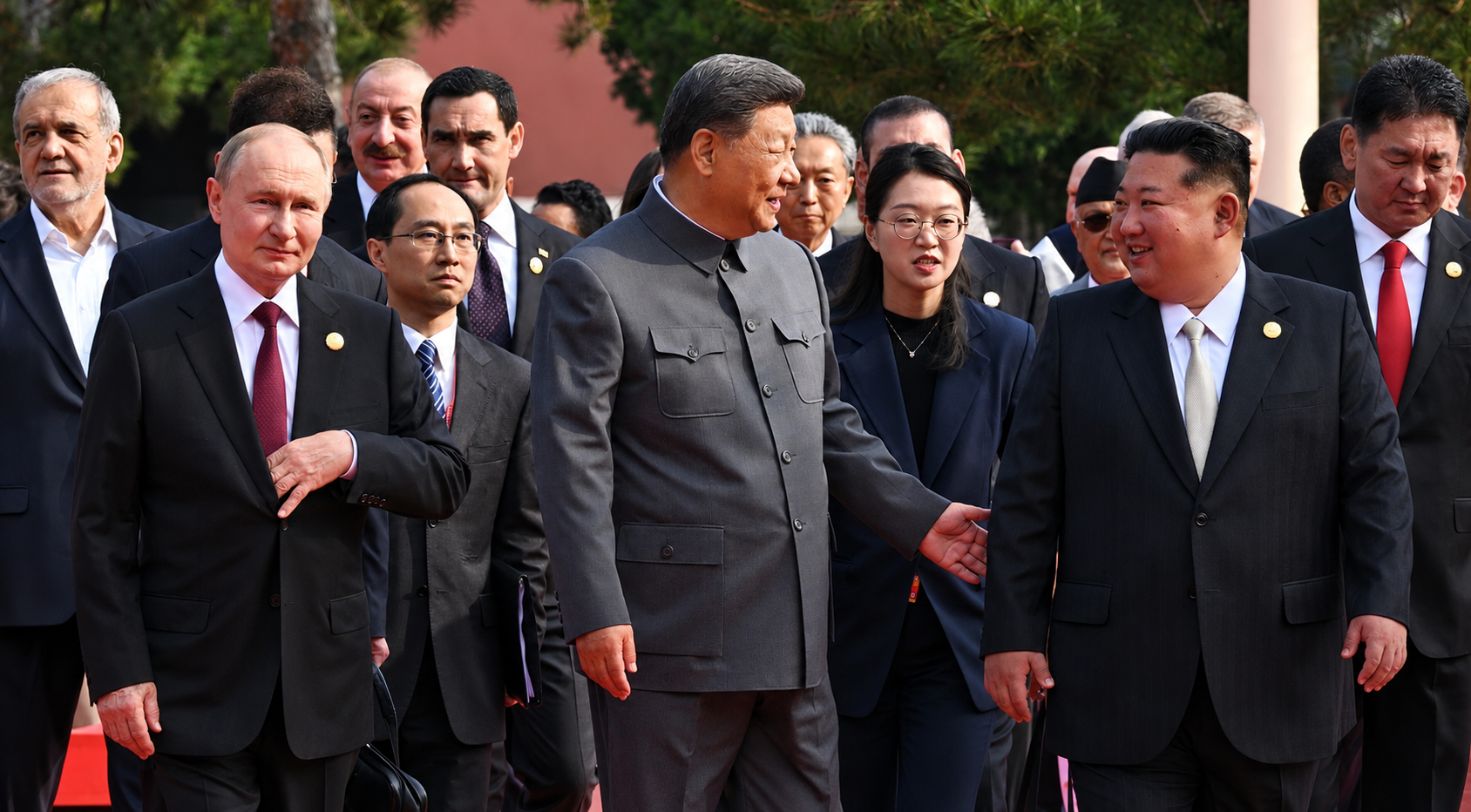
Some analysts see a pattern. Lim described the two bridges as a signal of an emerging “North Korea-China-Russia continental triangular bloc”. The image was hard to miss in September 2025, when Xi, Putin and Kim stood together at Beijing’s military parade.
However, there are good reasons for caution. The relationships are bilateral, not a formal three-way alliance. China, which is by far Pyongyang’s largest trading partner, has not publicly endorsed the North’s military support for Russia. Reuters noted that the bridge opens despite Pyongyang’s lingering wariness of greater economic dependence, and that North Korea is working to balance relations with its two key economic and strategic partners. For Kim, two patrons mean more leverage than one. For Beijing and Moscow, a friendly buffer state on their borders is worth more than any single trade deal.
Seoul is watching, as South Korea’s unification ministry said it is “closely monitoring” developments around the bridge.
Whether the bridges amount to a durable bloc or a marriage of convenience will depend on what crosses them, and on whether Beijing and Moscow ever pull in the same direction. For now, North Korea has two new roads out, and both of its big neighbours have a stake in keeping them open.