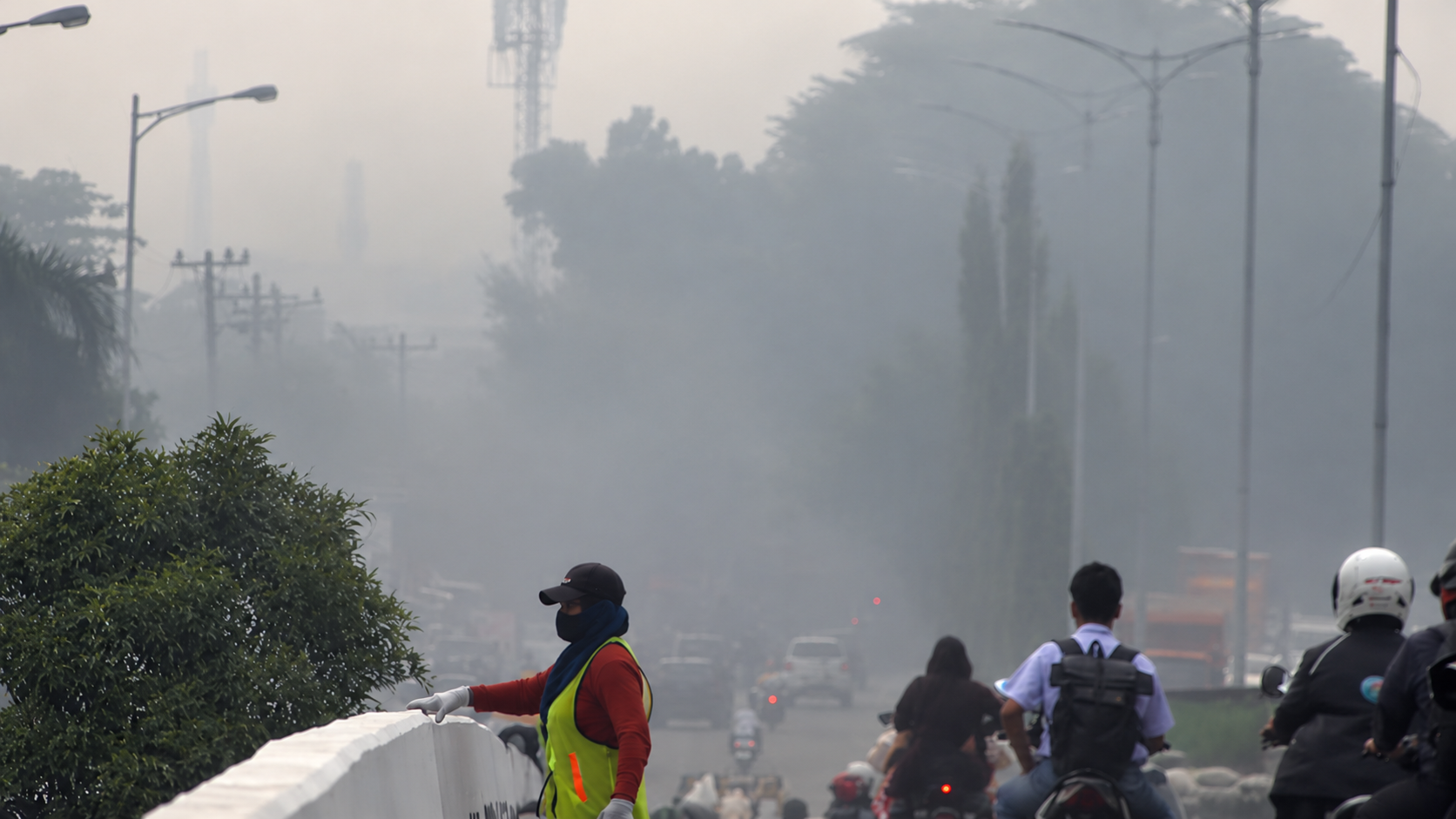
Medan, North Sumatra: Indonesia and its Southeast Asian neighbours are facing an unprecedented wildfire crisis. What began as scattered wildfires in January in Kalimantan, the Indonesian part of Borneo, an island shared by Indonesia, Malaysia and Brunei, has grown into an inferno, with flames consuming vast forest lands and threatening the communities. Thick smoke from the fires has blanketed parts of Indonesia and drifted across national borders, degrading air quality, reducing visibility, disrupting flights and forcing schools to suspend in-person classes. In Timor-Leste, Malaysia, Singapore and the Philippines, the haze is exposing millions to polluted air and raising urgent questions about forest and peatland management.
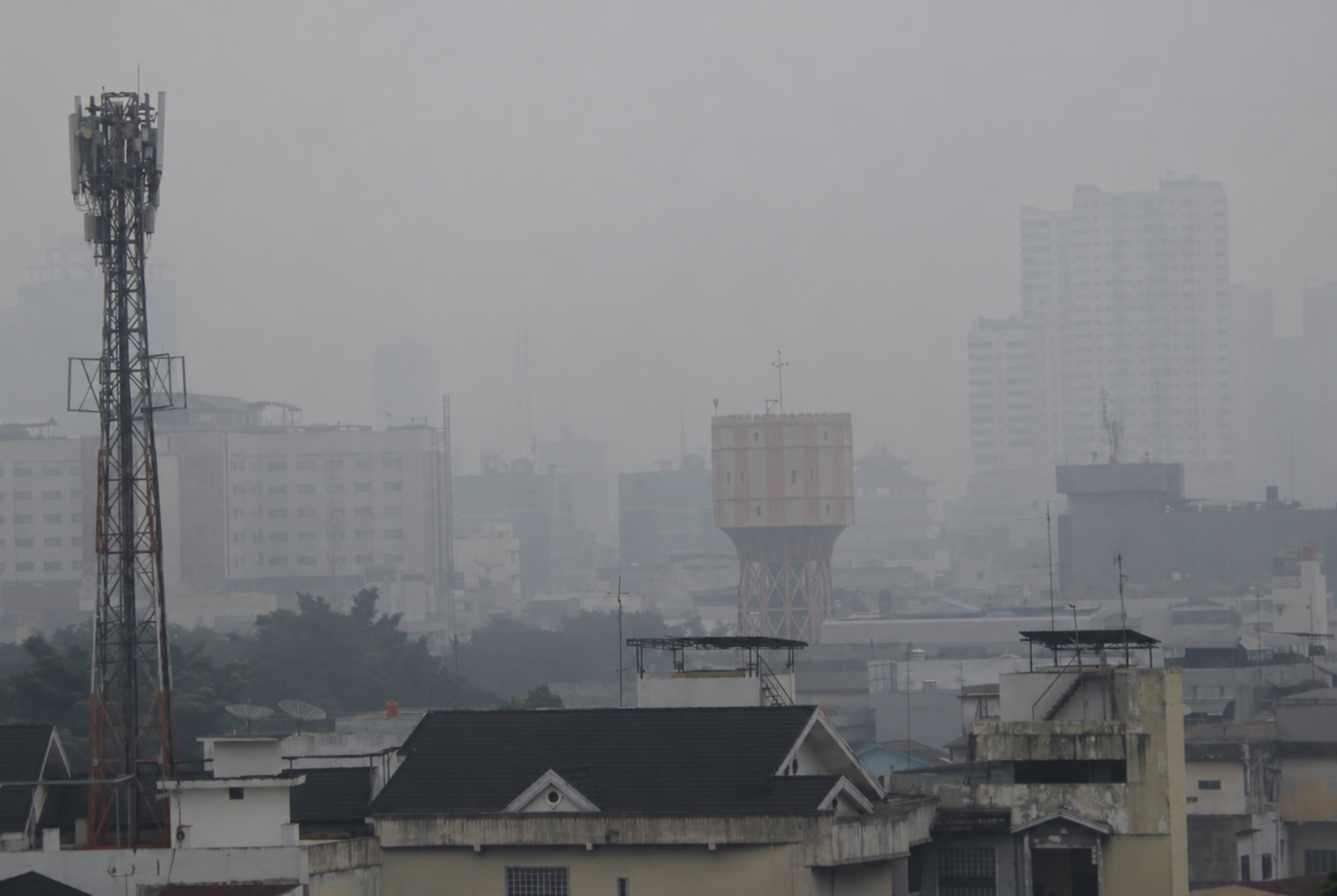
In some parts of Indonesia, thick haze has obscured high-rise buildings and visibility at airport runways has fallen to less than two km, far below the ideal 10 km. In Central Kalimantan, Indonesia’s air pollution index reportedly soared above 1,200, far exceeding the 300-point threshold classified as hazardous. Hundreds of kilometres away, Singapore has recorded its highest one-hour PM2.5 reading of the year. Malaysia closed schools in six states and federal territories. Timor-Leste suspended face-to-face classes from October 15 to 17, as authorities warned of health risks from airborne pollutants.
Scattered fires to a sprawling inferno
The fires began relatively quietly in early January 2026, when forest and land fires were reported in West and South Kalimantan. As the months passed, prolonged dry conditions and El Niño's effects left vegetation and peatlands increasingly vulnerable to burning. El Niño intensified heat and drought, suppressed rainfall, and dried forests and peatlands across fire-prone parts of Sumatra and Kalimantan, particularly in Riau, Jambi, South Sumatra, West Kalimantan, and Central Kalimantan, allowing fires to ignite more readily and spread rapidly.
By July, the outbreaks had escalated into a much wider emergency. Satellite monitoring recorded a sharp rise in hotspots in August, when the Indonesian Forum for the Environment (WALHI) documented 202,848 hotspots across the country between August 1 and 24. Of these, the organisation classified 12,165 as high-intensity hotspots in its dataset.
Estimates of the cumulative burned area are considerable, though different organisations project different numbers. The environmental organisation Auriga estimated that more than 637,000 hectares had burned between January and August, while Nusantara Atlas put the figure at nearly 900,000 hectares. Government figures reported through July were more than 202,000 hectares. The estimates use different periods and methods. Even so, the independent estimates indicate that the crisis has affected a substantial area of land.
North Sumatra - worst hit
In North Sumatra province, the choking haze has disrupted daily life, forced schools to shift to remote learning and grounded or delayed flights as visibility plunged to as little as one kilometre in some areas. On October 14, the Meteorology, Climatology and Geophysics Agency (BMKG), based in the provincial capital Medan, reported haze across the province. By October 15, visibility in several areas had fallen to between one and two kilometres.
The haze wrapped Medan city. On October 15, Kualanamu International Airport in the city reported 14 delayed flights and three cancellations due to reduced visibility. Ten of the delayed flights had since departed, according to Muhammad Zul Andika, a spokesperson for PT Angkasa Pura Aviasi, the airport operator. At the time of writing, visibility on one runway was 1.7 km and on the other 2 km. The airport operator said, however, that operations continued normally overall.
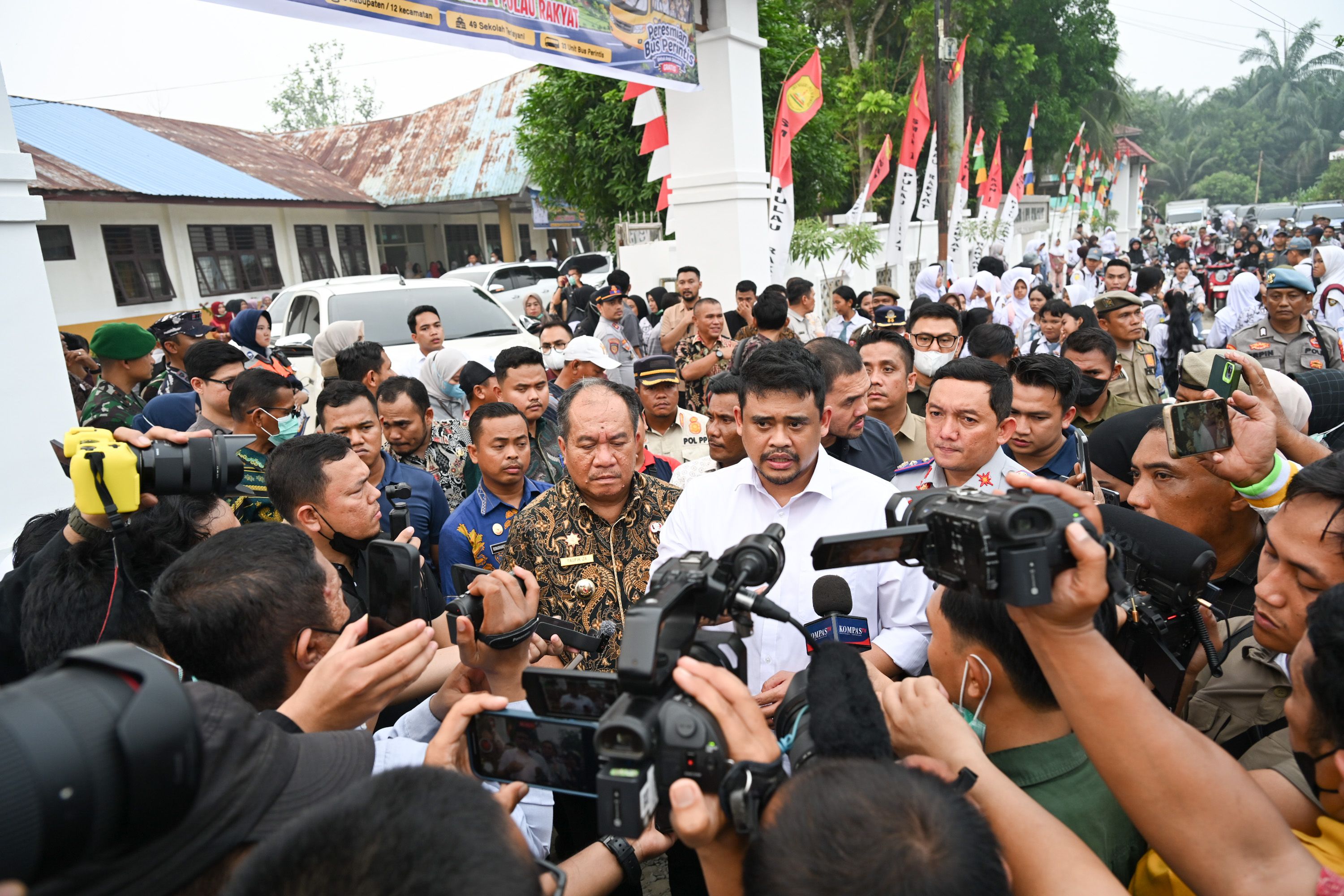
On October 16, North Sumatra Governor Muhammad Bobby Afif Nasution urged regents and mayors across the province to take precautionary measures, asking high schools, vocational schools and special education schools to shift to remote learning to protect students from exposure. “For high schools, vocational schools, and special education schools, I expect remote learning to begin tomorrow. Students will continue their studies from home—this is not a holiday—as we must protect them from exposure to fine particulate pollution (known as PM2.5 -Ed.),” Bobby said, talking to media.
The human toll
The health impact of haze generated from wildfires is substantial. According to the Indonesia Health Ministry, 283,270 people across seven provinces had suffered acute respiratory infections cumulatively between August 18 and October 13. South Kalimantan recorded the highest number, with 74,636 cases, followed closely by South Sumatra, with 74,458, according to Then Suyanti, the ministry’s director of environmental health.
The numbers represent reported illness cases associated with the fire emergency. Fine particulate matter, or PM2.5, can penetrate deep into the lungs and worsen respiratory and cardiovascular conditions. Children, older people, pregnant women, people with asthma and outdoor workers are particularly vulnerable to its effects. In North Sumatra, BMKG has advised residents to limit outdoor activities and wear masks when going out.
On October 15, the BMKG warned that smoky conditions could persist for another three days. For families, the consequences extend beyond respiratory symptoms. School closures can complicate childcare, while outdoor workers may have to choose between earning a living and limiting their exposure. If the fires persist, health services may also face heavy pressure.
From Singapore to the Philippines
Smoke from Indonesia’s fires has become a regional burden, with haze affecting cities across Southeast Asia. Consequences vary by country, but the pattern is the same: deteriorating air quality is forcing authorities to take precautions even when the fires are hundreds of kilometres away.
In Singapore, the one-hour PM2.5 concentration reached 284 micrograms per cubic metre on October 14, the highest reading so far this year. The city-state has said it would take action against companies responsible for the wildfires. In Malaysia, haze prompted school closures in affected areas, including parts of Malaysian Borneo, which shares the island with Indonesia’s fire-prone Kalimantan.
In Timor-Leste, the government suspended classes for three days from October 15 because of pollution, although its announcement did not explicitly identify Indonesia as the source. Smoke has reportedly travelled more than 800 kilometres from Indonesian fire zones to the Philippines, according to Associated Press reporting. The extent to which Indonesian fires contributed to pollution at specific locations requires confirmation through satellite observations and atmospheric modelling.
The mismanagement
El Niño has worsened drought conditions; however, environmental groups argue that poor forest and peatland management, corporate land-use practices and weak enforcement have amplified Indonesia’s wildfire crisis. WALHI, the Indonesian Forum for the Environment, accused the government of mismanaging forests and peatlands, prioritising corporate interests and failing to enforce environmental laws. In an August statement, it described the recurring fires as an accumulation of “state-corporate crimes”—its assessment, not a judicial finding.
WALHI recorded 4,472 high-confidence hotspots in West Kalimantan and 1,954 in Central Kalimantan between August 1 and 24, with another 770 in South Sumatra. Its analysis also identified 72 high-confidence hotspots within corporate concessions in Sumatra: 56 in forestry concessions and 16 in oil-palm plantations. These detections raise questions about fire prevention and land management but do not, on their own, prove that companies started the fires or are legally responsible. “There have been no concrete efforts from the government to address the forest and land fires that continue to this day,” said Sri Hartini, director of WALHI West Kalimantan, in a written statement. She said children, older people and women were suffering from lung-related illnesses despite President Prabowo Subianto’s visit to the province.
Peatlands under threat
Indonesia has an estimated 13.43 million hectares of peatlands, including about 4.54 million hectares in Kalimantan, the Indonesian part of Borneo, and 5.85 million hectares in Sumatra. These waterlogged ecosystems store vast amounts of carbon in accumulated organic material. When drained or dried out, the peat becomes combustible. Unlike surface fires, peat fires can smoulder underground long after visible flames disappear, making them difficult to extinguish and vulnerable to reignition.
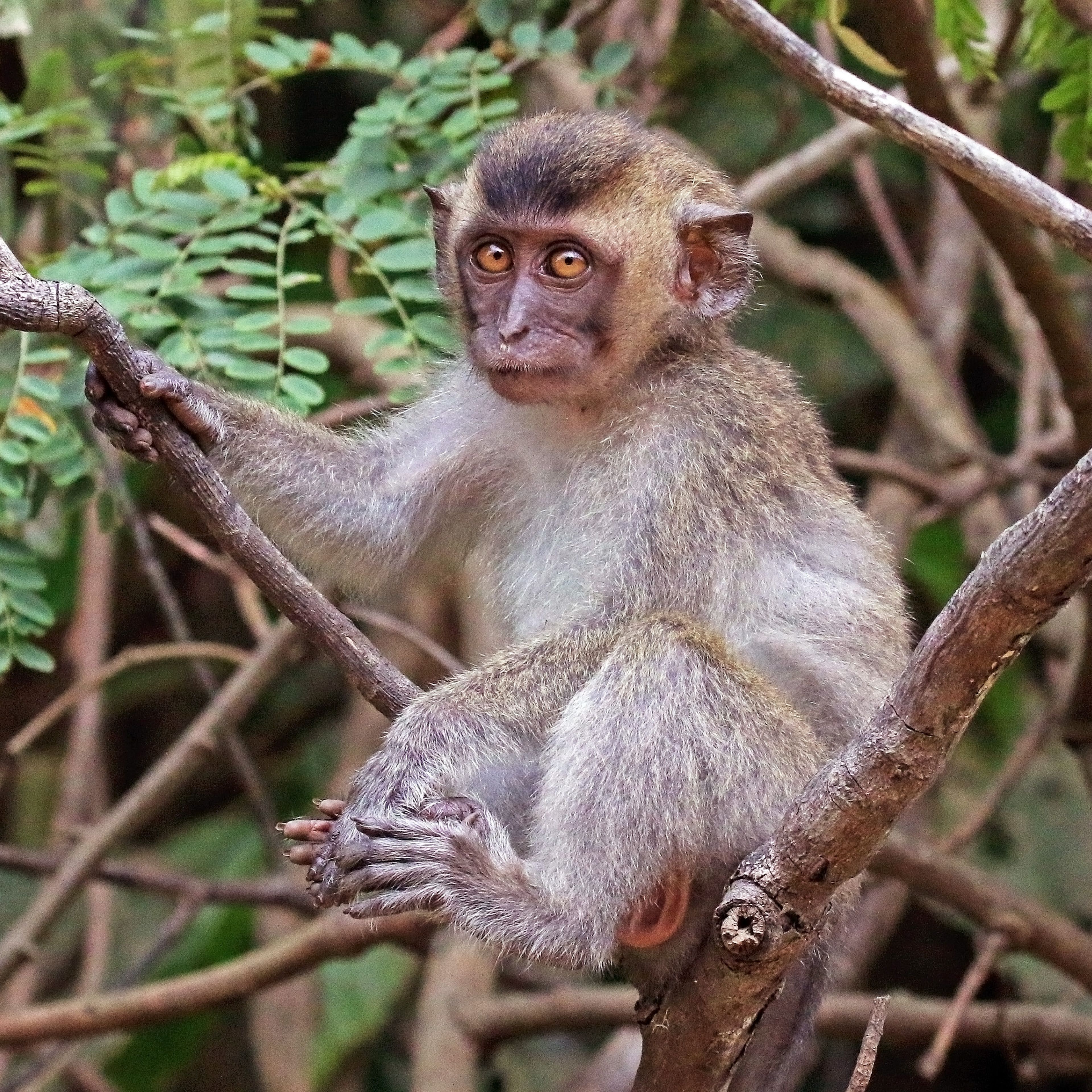
The damage extends beyond the immediate burning area. Repeated fires release stored carbon, degrade ecosystems and threaten wildlife. In West Kalimantan, the YIARI orangutan rehabilitation centre reported rescuing 49 orangutans since August, compared with an annual average of three to five over the previous three years. The number of orangutans under its care rose to 90, highlighting the growing pressure on wildlife, although rescue figures alone cannot establish how many animals have been killed or displaced.
Response under pressure
The Indonesian government has deployed more than 60,000 personnel and around 50 aircraft for firefighting and related operations, according to Reuters latest reporting. Authorities have also used cloud seeding and considered additional suppression methods. The provincial government’s weather-modification efforts in North Sumatra are intended to induce rainfall and improve conditions. However, such measures do not address the underlying causes of the fires, and their effectiveness depends on atmospheric conditions. North Sumatra Governor Bobby said officials carried out operations in Samosir Regency and plan to extend them to other areas.
The government has also faced criticism over its handling of international assistance. On October 16, Foreign Minister Arrmanatha Nasir said President Prabowo was prepared to accept foreign help after Malaysia and Singapore made offers. BNPB was reviewing the offers and deciding which resources to deploy. An offer or approval does not necessarily mean that foreign aircraft and personnel have arrived and begun operations. The challenge is not simply to extinguish the fires already burning. It is to prevent new ignitions, protect vulnerable peatlands, enforce land-use rules and establish accountability where evidence demonstrates illegal burning or failures to meet legal obligations.
Can Indonesia break the cycle?
Indonesia’s wildfires have exposed the consequences of dry weather, vulnerable peatlands, land-use practices, and enforcement gaps. Emergency operations remain essential, but lasting prevention will require restoring degraded peatlands, maintaining water levels, improving early warning systems, supporting community fire prevention, and consistently enforcing environmental rules.
New remote-learning measures in North Sumatra show how the crisis is affecting everyday life, even in areas where the main threat is drifting smoke rather than nearby flames. Flights are delayed, schools are moving classes online, and health authorities are dealing with hundreds of thousands of reported respiratory cases.
For Southeast Asia, the stakes extend beyond Indonesia’s borders. The haze has disrupted transport, closed schools and exposed communities in neighbouring countries to unhealthy air. The question now is whether Indonesia can shift from repeatedly responding to fires after they spread to preventing ignition and reducing the vulnerability of its forests and peatlands—or whether the region will face another season of burning, choking haze, and emergency measures when the next prolonged dry spell arrives.