Prime Minister Anwar Ibrahim announced that Malaysia would establish its own sovereign AI cloud to keep citizens’ data and sensitive information under Malaysian control. However, he did not specify who would supply the technology. A Bloomberg report in September said Malaysia was seriously considering using Huawei’s Ascend 910C chips for the project. The programme is worth approximately RM2 billion ($494 million), and the government is also considering a second tender that would allow Nvidia to compete.
The decision has largely been portrayed as another contest over semiconductor chips. However, the PM’s primary concern was not which company would supply the chips, but who would ultimately have access to Malaysia’s data. In April, he cited the US CLOUD Act as the reason for his decision. “I do not consider that the law is reasonable,” he said, wondering, “but how does one argue with President Trump?” The 2018 legislation obligates US cloud and communications service providers to disclose communications and customer records, wherever they are located, that they possess, control, or have custody of. This applies regardless of where the data centre may reside. Therefore, even if a US-based provider operates a data centre in Johor state, Malaysia, it remains subject to US courts.
China presents a similar concern. Under China’s National Intelligence Law, organisations are required to “support, assist and cooperate with national intelligence efforts.” Providers have a right to challenge certain US data requests only under specific conditions, including where the customer is a foreign national of a country that has signed a CLOUD Act agreement with Washington. According to the US Department of Justice, only the UK and Australia have such agreements.
The implication is clear: storing data within national borders does not necessarily keep it out of reach for foreign governments. A country may control where its data is stored without fully controlling who can access it.
Chinese models becoming default options in different ways
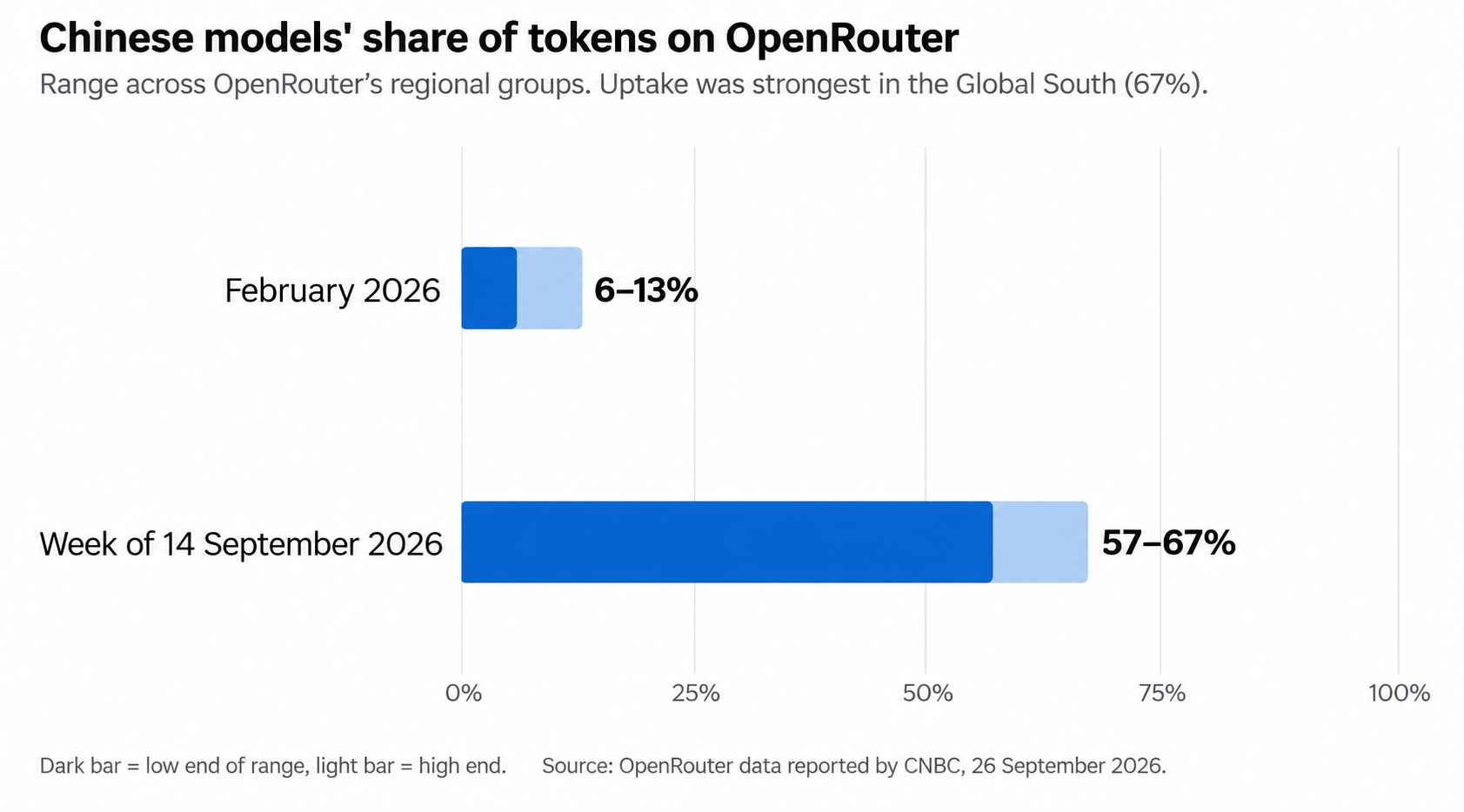
The question of control extends beyond data storage to the AI models themselves. According to a CNBC report, the share of tokens processed by Chinese AI models on the developer platform OpenRouter rose from 6–13 per cent in February 2026 to 57–67 per cent by mid-September. Tokens are small units of text that AI models process and generate. The figures, which cover users in the United States, Europe and the Global South, suggest that developers are increasingly turning to Chinese models rather than their American counterparts.
But greater use of Chinese models does not necessarily mean greater dependence on China, or the same level of dependence. The more important question is what happens after a model is adopted: can users improve it independently, access future versions and switch to another technology if necessary? Examples from Southeast Asia show how dependence can persist even when organisations host models locally or develop their own AI systems, though the extent of dependency varies.
Examples from Singapore and Malaysia illustrate this. For instance, Singapore’s Overseas Chinese Banking Corporation (OCBC) builds its generative AI tools using open-source models hosted on its own premises. This lets the bank keep its data within its systems, reducing exposure to external data access. However, it still depends on model developers for future versions and improvements. In other words, local hosting can give an organisation control over its data without giving it full control over the technology it uses.
Singapore’s own AI development efforts illustrate a related challenge. Through AI Singapore (AISG), a government-backed national initiative, the organisation developed the Southeast Asian Languages In One Network (SEA-LION). This is a family of large language models designed to represent Southeast Asian languages and cultural contexts better. Yet SEA-LION uses Alibaba’s Qwen models, following AI Singapore’s switch from Meta’s models to Qwen in 2025. The switch demonstrates that even a locally developed AI initiative can rely on an external model as its technological foundation. Singapore can adapt the technology to its own needs, but that does not necessarily eliminate its reliance on the organisations developing the underlying models.
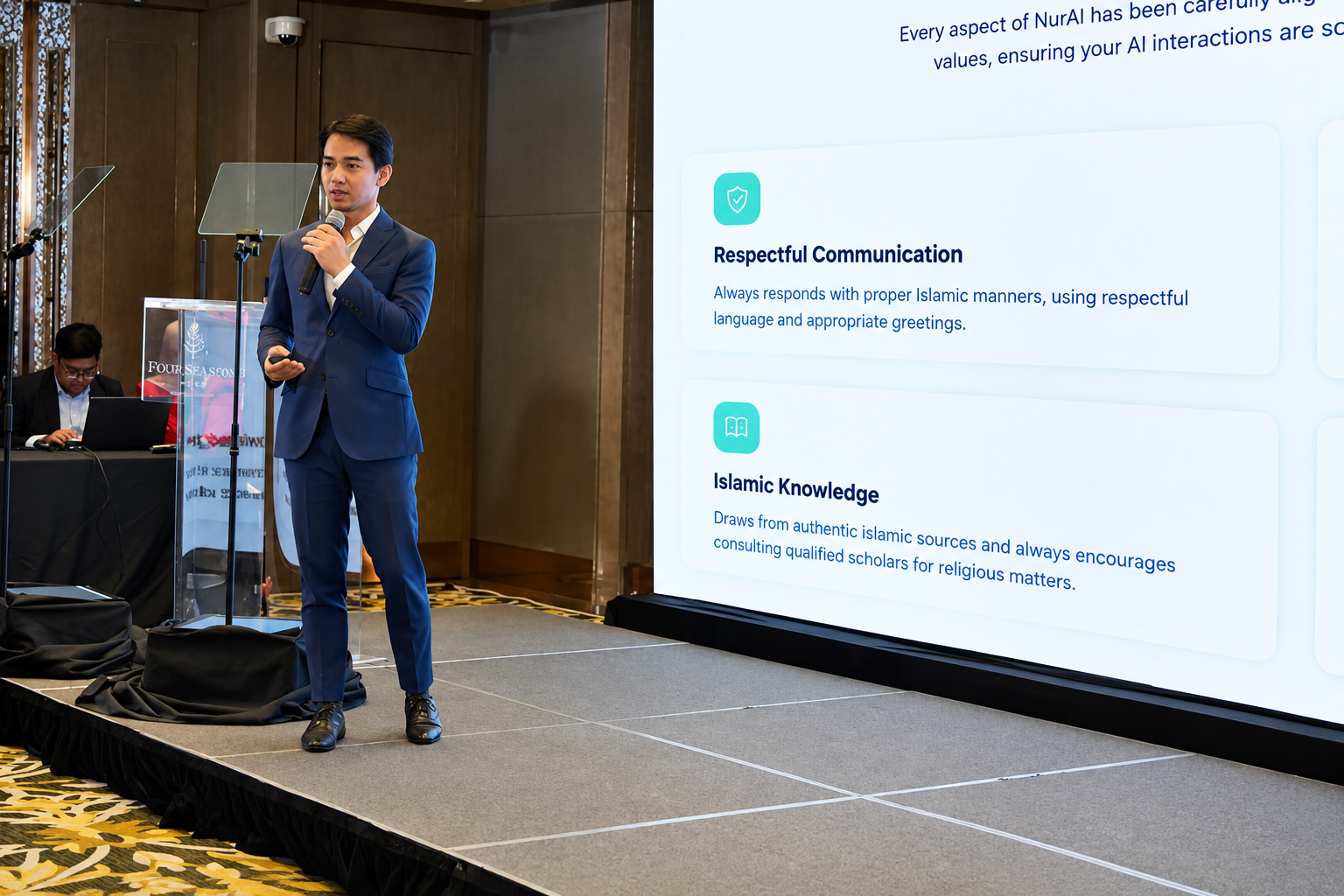
Malaysia’s NurAI, a shariah-aligned AI assistant, illustrates a different form of dependence. Developed by Malaysian company Zetrix AI, the model was built using techniques pioneered in DeepSeek V3, with contributions from about 10 DeepSeek researchers. Here, the reliance is not only on a Chinese model, but on the expertise needed to develop the local system. Taken together, these examples reveal different forms of dependence on foreign AI technologies.
OCBC’s challenge is maintaining access to improvements; SEA-LION illustrates reliance on an external model foundation; and NurAI shows how foreign expertise can shape domestic AI development. These examples show why adopting a model or developing a local version of it does not automatically guarantee technological independence. The crucial test is whether a country can maintain, improve or replace the technology it relies on if an external supplier stops providing updates, expertise or access.
Open weights are no exit strategy
One possible way to reduce dependence on foreign AI providers is to use open-weight models. These models can be downloaded and run on local computers or servers, giving organisations greater control over how they operate the technology and where they process their data. However, downloading a model provides access only to that particular version. Its developer decides whether to release future versions and improvements. A country may therefore operate a model independently today while remaining dependent on its original developer for tomorrow’s capabilities.
Developing and improving models also requires computing power and specialised expertise that many countries lack. For example, SEA-LION’s latest model was derived from a larger Qwen model. Building a local version does not necessarily eliminate reliance on the larger model on which it is based.
Besides, there are practical costs too. Developers build software tools, testing procedures and specialised knowledge around particular model families. Moving to a different model may require them to adapt their systems and repeat much of their testing. As organisations become more deeply invested in one model, switching to another becomes increasingly expensive and difficult.
Another risk of foreign dependency is that access to future models could be restricted. According to a July 7 Reuters report, China’s Commerce Ministry had been exploring restrictions on overseas access to some of its most advanced AI models, including both open-weight and closed models, as well as unreleased models. No decision had been reached on restricting access to already-released models. Their existing weights cannot simply be withdrawn from circulation. But future versions could be withheld, making continued access uncertain. Governments and organisations assessing AI procurement should therefore account for the possibility that an equally accessible successor may not follow a model they use today.
Washington offers a different default option
The US is also trying to shape how other countries adopt its AI. The US government’s American AI Exports Program attracted 78 applications from companies offering comprehensive AI packages, including hardware, data resources, AI models, cybersecurity and software. Packages designated by the Commerce Department are to receive priority access to federal financing.
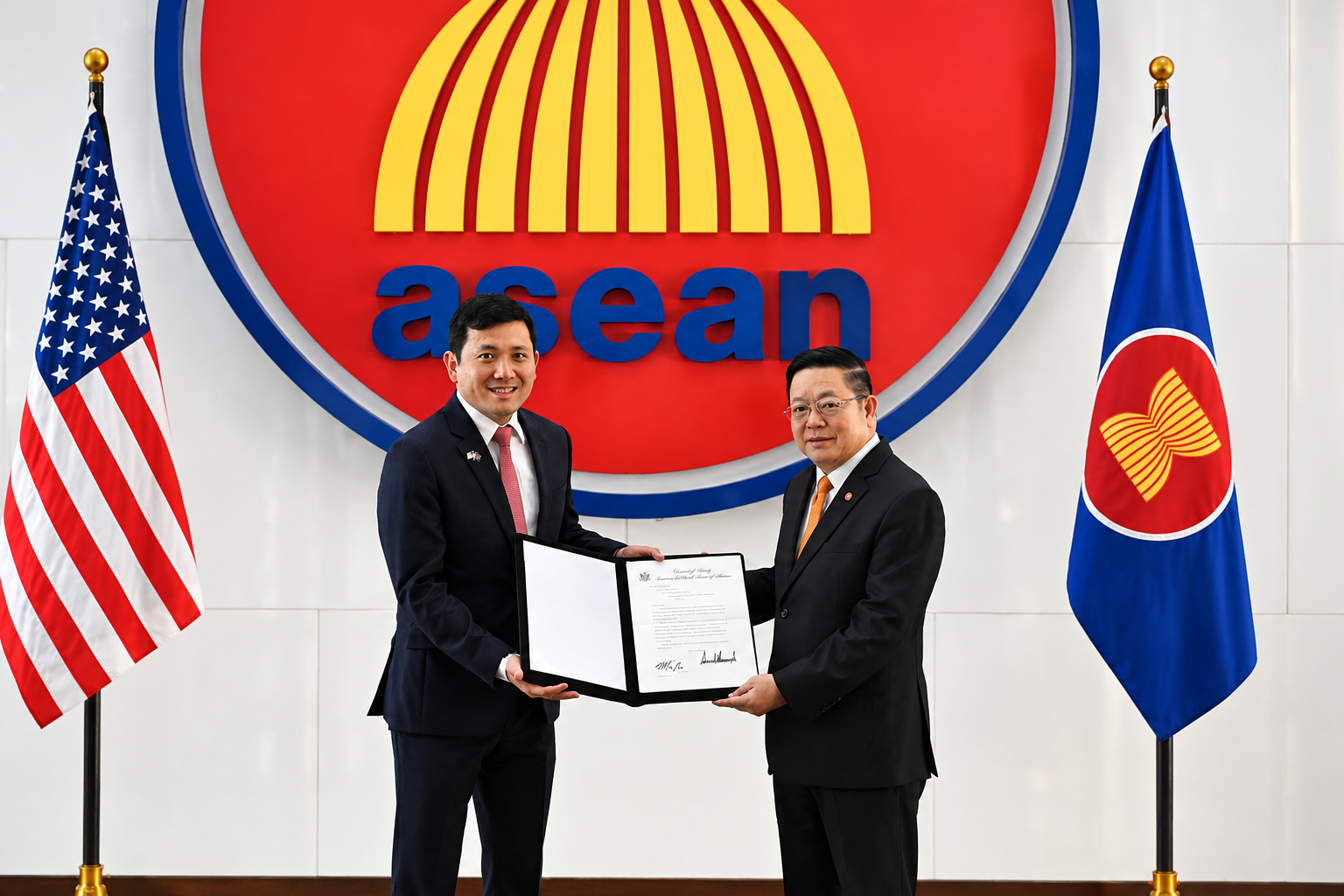
In July, Washington also launched US-ASEAN AI Spark, an initiative intended to encourage Southeast Asian governments to adopt American AI technologies for public-sector use. These programmes address genuine needs, including access to advanced technology and financing. However, they also risk concentrating several layers of AI provision in companies headquartered in a single country.
The dominant American AI models are generally closed source, with their underlying weights not publicly released. This limits outside developers' ability to inspect and independently modify them. US export controls can also affect access to American-made chips, while the CLOUD Act can create legal obligations concerning data held by US providers.
The forms of dependence differ, however. Reliance on American AI can involve contractual restrictions, legal jurisdiction and export controls. Reliance on Chinese AI can depend on model families, their continued releases, and developers’ technical expertise. Neither arrangement necessarily gives a country a reliable way to walk away. Choosing between American and Chinese AI may therefore mean choosing between different terms of dependence, rather than achieving technological independence.
Regulation doesn't mean capacity
If neither data localisation nor regulation alone can guarantee AI sovereignty, how can countries assess their vulnerability? To address this problem, I developed the Inference Dependence Score (IDS) to assess national dependency. The IDS assesses five dimensions, each rated from 0 (the least risk) to 3 (the greatest risk). They are:
- Reliance on a single supplier.
- Costs and difficulty of switching suppliers.
- Gap between existing capabilities and the alternatives needed if a supplier becomes unavailable.
- Extent to which a country can influence providers through its regulations.
- Gap between existing resilience plans and the ability to maintain essential services during a disruption.
The assessment draws on publicly available information, including market-share data, laws governing AI providers and their enforcement, the availability of domestic models, continuity policies and preparations for disruptions. The dimensions are weighted equally to produce an aggregate score ranging from 0 to 100. A score above 66 indicates high dependence. The score shows that, despite strong regulations, Vietnam, Singapore, and Indonesia do not necessarily enjoy greater technological independence.
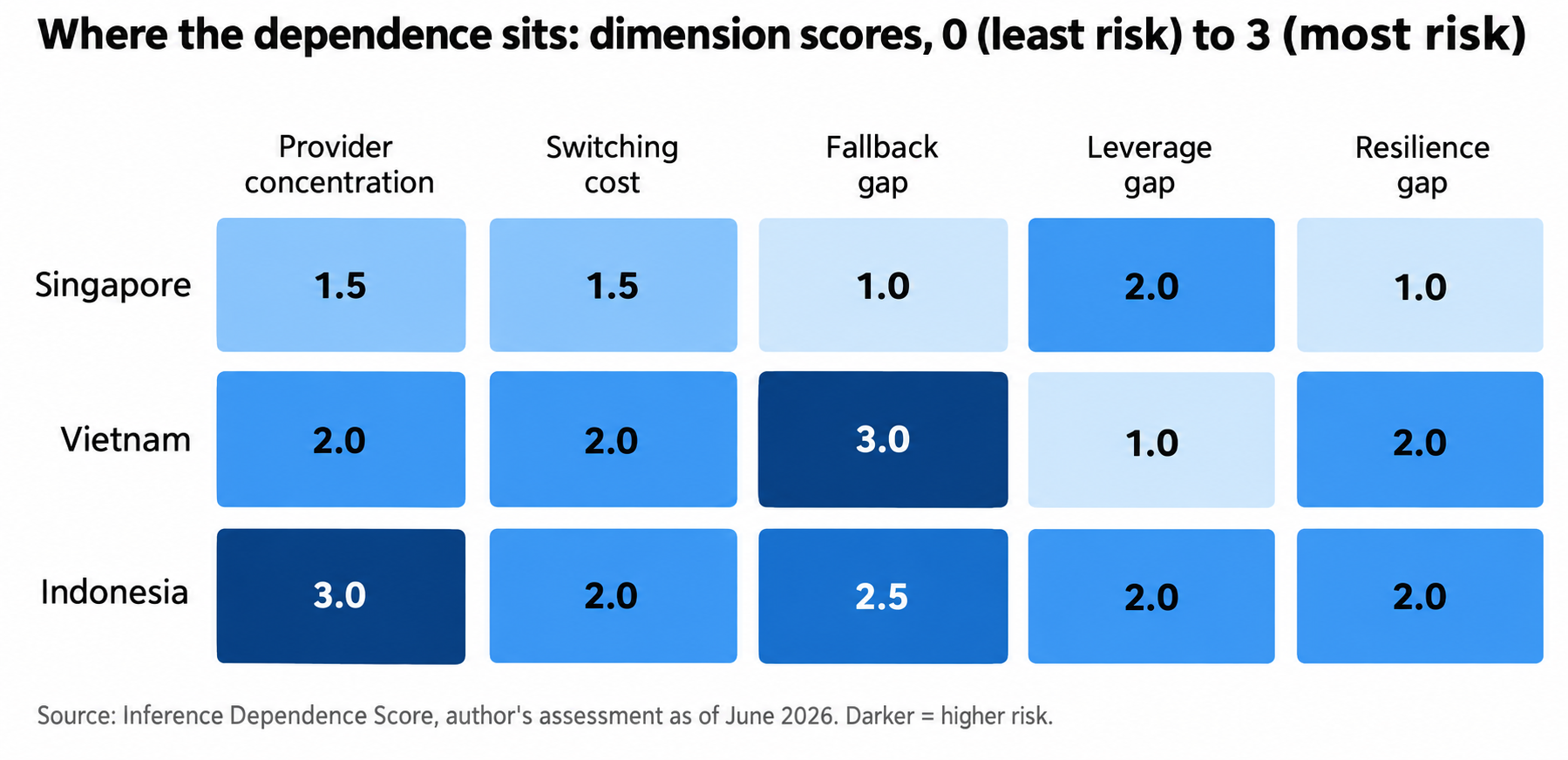
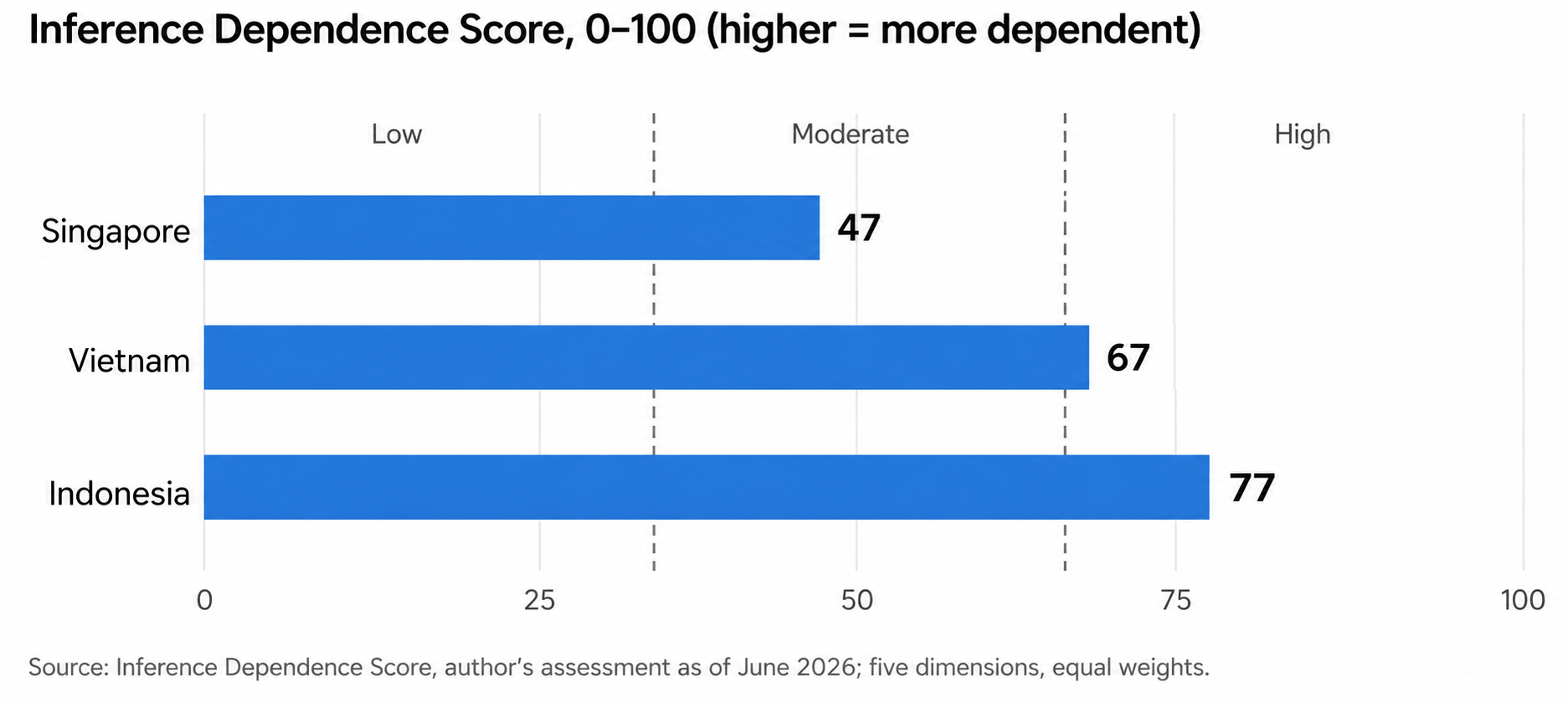
Vietnam has enacted the most extensive AI legislation among the three. Its AI law came into effect on March 1, 2026. The law applies to foreign providers and introduces requirements for risk assessments, incident reporting and labelling AI-generated content. These measures give Vietnam greater regulatory leverage than the other countries assessed. Yet the country has the widest gap in fallback capabilities: it lacks a comparable domestic model at the frontier of AI development, leaving it with limited capacity to replace existing alternatives. Much of its regulatory framework remains unimplemented. When the decree took effect, decisions on high-risk classifications had not yet been made, and the national AI portal had not been established.
Singapore presents a different picture. It relies largely on voluntary AI governance frameworks and guidance for emerging AI systems, giving it relatively limited regulatory leverage under this assessment. However, the Monetary Authority of Singapore has guidelines requiring financial institutions to manage AI risks and be prepared to replace third-party AI services. Its ability to retrain models and move between model families, as the SEA-LION programme has demonstrated, also reduces its fallback and resilience gaps.
Indonesia, by contrast, scores 77 on the IDS, indicating high dependence. Although the country requires certain banking data centres to be located domestically, it has not yet introduced binding AI-specific regulations. This leaves general-purpose AI relatively unregulated in an area where dependence on concentrated providers is particularly significant.
The IDS calculations also suggest that practical capabilities can matter as much as legislation. According to the IDS calculator, additional computing capacity lowers Vietnam’s score from 67 to 63. Establishing a national AI gateway, a system that helps users and organisations connect to and switch between AI providers, reduces switching costs and strengthens fallback options and resilience planning, bringing the score down to 50. The lesson is that laws can establish a country’s authority over AI providers. Still, they cannot, by themselves, create the technology, expertise, and alternative suppliers needed to exercise that authority.
Ability to leave
Most Southeast Asian countries are unlikely to have the computing resources and technical capabilities to train AI models that rival the world’s most advanced systems. Rather than trying to build their own frontier-level models, they can pursue a more practical goal: ensuring they can switch from one AI provider to another without disrupting essential services. This means designing systems so critical data and workloads can be transferred between providers; maintaining tested, ready-to-use alternative open-weight models; securing continuity commitments from providers serving critical sectors; and working collectively through ASEAN to negotiate better terms with technology companies.
The objective is not to eliminate every form of foreign dependence. It is to ensure that dependence does not become so deep that a country has no realistic alternative when access is withdrawn, prices rise, or conditions change. The contest over semiconductor chips will continue to dominate headlines. But Southeast Asia’s AI future will also be shaped by less visible decisions: which models governments and businesses adopt, how deeply they build their systems around them and whether they retain the capacity to switch.