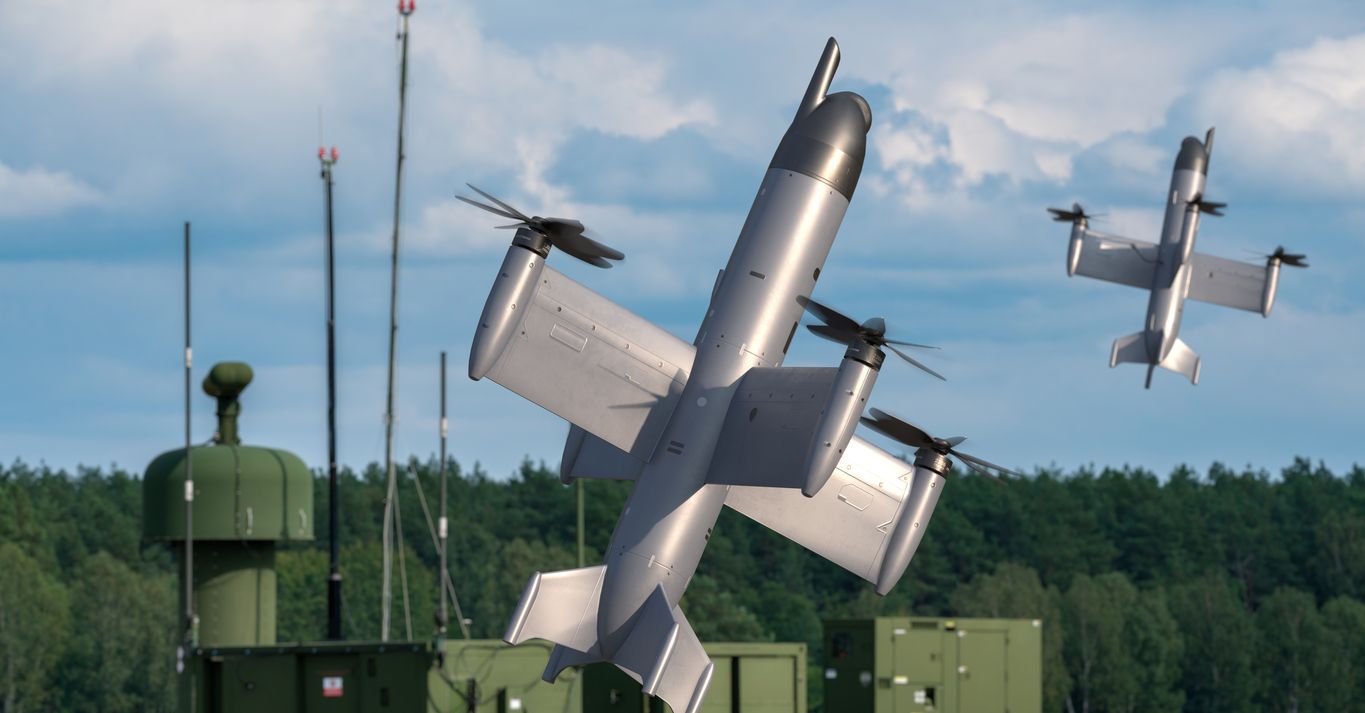
Chinese manufacturers are racing to turn a wartime problem into a lucrative export business, churning out cheap, 3D-printed drone interceptor rockets. The cheap interceptors are being snapped up by Russia, Ukraine and the Middle Eastern countries in thousands every month. Dozens of firms showcased new interceptor rockets at China’s largest drone fair in Shenzhen this year, the Financial Times reported.
Most companies have interestingly entered the sector only a few months ago, showcasing the Chinese advanced and dynamic manufacturing capabilities. The devices on display were mostly small, four-winged rockets built with 3D printers and electric motors, cameras and guidance modules fitted into their noses, priced between roughly $1,500 and $2,900 a piece. Unguided versions would cost considerably less.
The business is modelled around cheap, single-use kamikaze drones – the kind Russia and Iran have deployed extensively in their respective conflicts – that can force defenders to burn through far costlier munitions to stop them. China’s manufacturers are betting on flipping that cost equation. They are arming buyers with interceptors nearly as cheap as the threats they are meant to destroy, and these missies could become one of the country’s next big export categories.
Shenzhen Weichuang Model Equipment Company is emblematic of how fast the pivot has happened. Its founder, Wen Ting, said the company only began developing interceptors in October and is now selling several thousand units a month, including to buyers in Russia and West Asia such as the United Arab Emirates. However, NWS could not independently verify the trade data.
Unlike traditional counter-drone systems, which typically rely on jamming or radio interference, the new interceptors are designed to physically strike incoming drones out of the sky. Manufacturers say advances in artificial intelligence (AI) have sharply improved the accuracy of the systems over the past year, with some now capable of speeds exceeding 300 km per hour.
The speed of the buildout reflects broader strengths in China’s manufacturing base. Many of the core components used in interceptors overlap with those in ordinary civilian drones, letting companies move into the new category with little retooling. At a related industry expo earlier this year, foreign buyers, including Ukrainians seeking components for their own drone program, described China as dominating the entire supply chain for certain hard-to-source parts, such as specialised magnets.
Industry figures caution that manufacturing a single interceptor is the easy part. A representative of Fujian Lingxin Information Technology, one of the firms exhibiting in Shenzhen, said the harder engineering task lies in integrating the rockets with other defense systems such as radar – the difference between a standalone product and a genuine battlefield capability.
The interceptor push adds to a string of Chinese advances in drone-adjacent military technology. Chinese state media reported in November that a domestically developed 3D-printed turbojet engine had completed its first flight test, with experts noting the approach could sharply cut costs for mass-producing drones and loitering munitions.
Analysts say the interceptor boom marks a shift in China’s position in the global drone economy. The country is not only dominating the market for civilian and commercial drones, but it has also become a supplier of exportable, battlefield-ready counter-drone systems, a segment now being reshaped by the wars in Ukraine and Iran. Full commercial terms of China’s interceptor exports, including buyer identities and total shipment volumes, remain undisclosed.