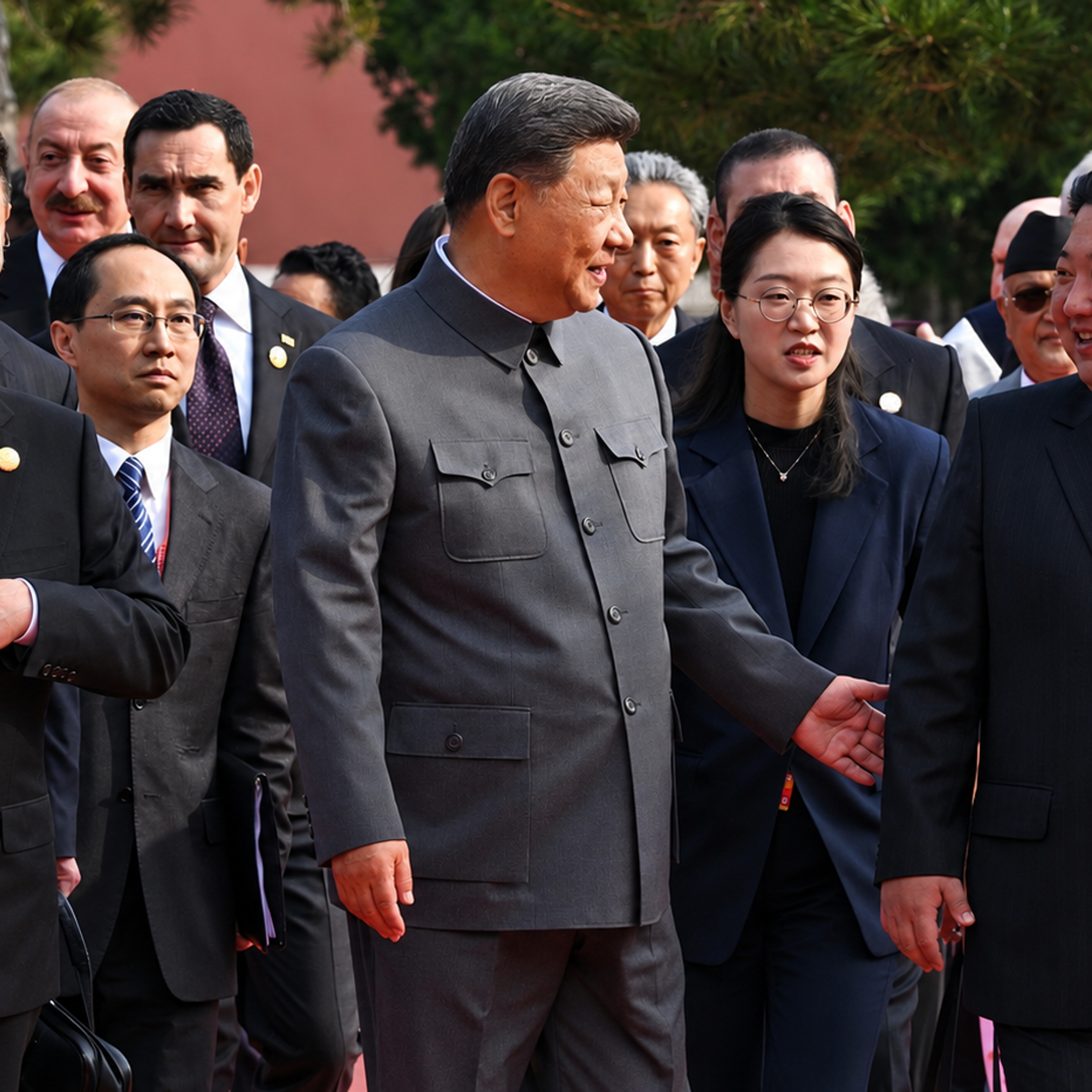
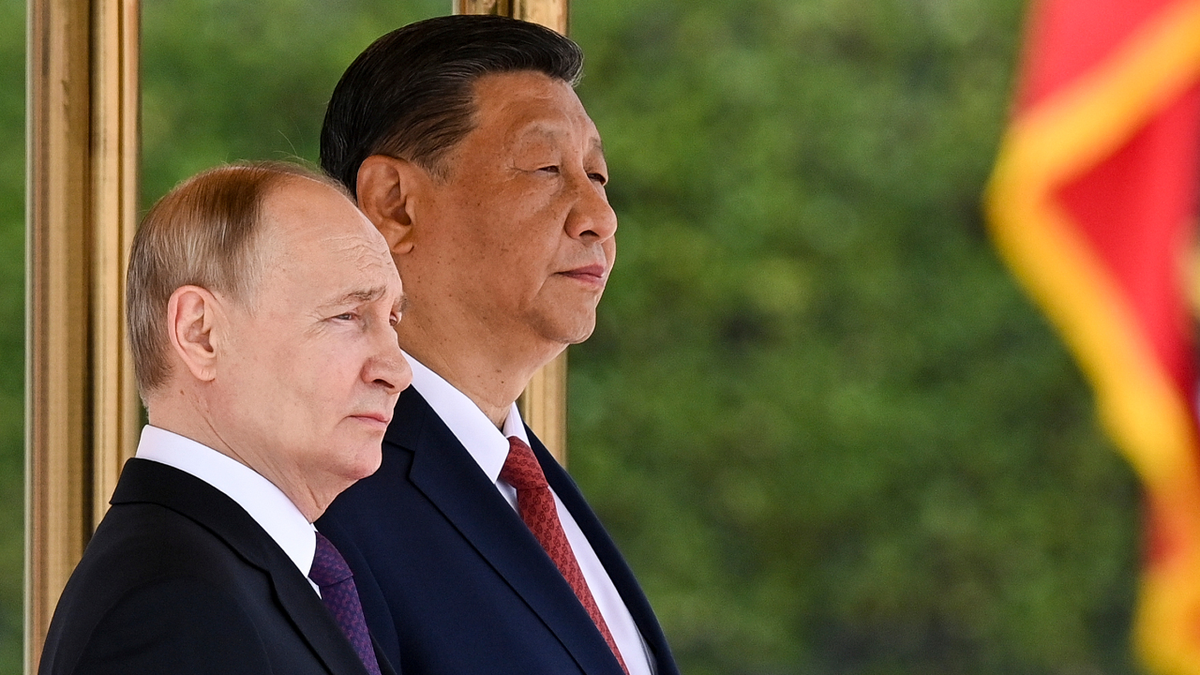
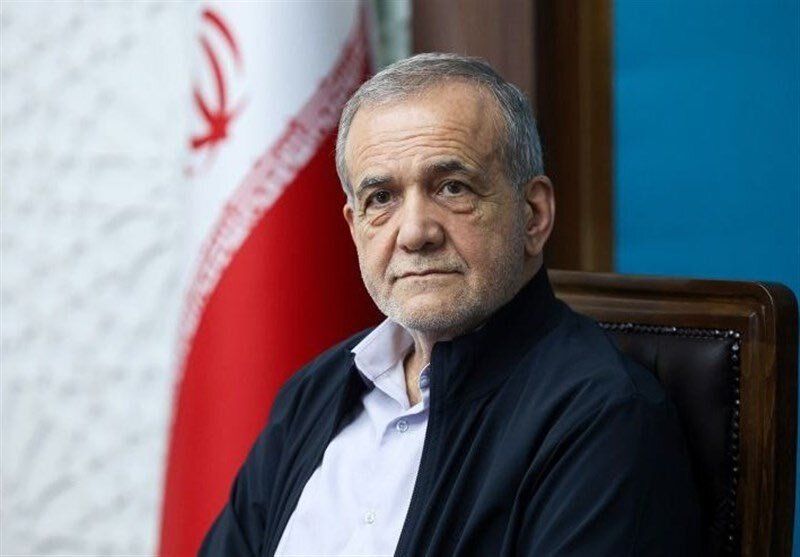
Vladimir Putin and Xi Jinping are expected in the Kyrgyz capital for a two-day summit of the Shanghai Cooperation Organisation (SCO) running from August 31 to September 1, an event its hosts hope will mark twenty-five years of a bloc that increasingly styles itself as the institutional home of a multipolar world. Iran’s president, Masoud Pezeshkian, India’s Narendra Modi and Pakistan’s Shehbaz Sharif are all due to take part in a plenary session chaired by Kyrgyz President Sadyr Japarov, alongside roughly a dozen other heads of state and government converging on Bishkek.
Putin, Xi and Pezeshkian are due to sit together for the plenary before peeling off for separate bilaterals. Putin is expected to hold one-on-one talks with both Xi and Pezeshkian, Kremlin spokesman Yuri Ushakov has said, producing a tableau of three leaders each locked in confrontation with Washington: one waging a full-scale war in Ukraine, one absorbing US strikes and the threat of tightened secondary sanctions, and one steering an economy still under sweeping tariffs. That the image will be broadcast from Bishkek even as some SCO members remain mid-war or mid-trade-war only sharpens the message the three capitals appear keen to send: that isolation by the West has produced not diplomatic solitude but a shared table.
Similarly, Modi and Sharif will sit in the same room barely a year after their nuclear-armed countries fought a brief conflict, with tensions still simmering over Kashmir. Xi’s stop in Bishkek is itself part of a formal state visit to Kyrgyzstan, after which he travels on to Egypt – a reminder of how far Beijing’s diplomatic circuit now extends beyond its immediate neighbourhood.
The summit’s timing is pointed in the sense that it falls four and a half years into Russia’s invasion of Ukraine and six months into the war between Washington and Tehran, and it comes only days after the CIA director, John Ratcliffe, made a rare visit to Moscow that US media speculated touched on both conflicts. Putin is due to meet Pezeshkian on the summit’s margins, a session that will be watched closely given Washington’s threats to widen secondary sanctions on Tehran’s trading partners.
A bloc built on ambiguity
The SCO traces its lineage to the “Shanghai Five”, a 1996 grouping of China, Russia, Kazakhstan, Kyrgyzstan and Tajikistan formed to defuse border tensions after the Soviet collapse. Uzbekistan’s accession in 2001 formally created the SCO, and the organisation has since grown to ten full members – Russia, China, India, Pakistan, Iran, Kazakhstan, Kyrgyzstan, Tajikistan, Uzbekistan and Belarus – together accounting for roughly a quarter of global GDP and some 3.4 billion people. Fifteen further states, including Turkey, Saudi Arabia and Qatar, now hold dialogue-partner status.
Last year’s summit, held in China’s Tianjin at the close of August 2025, was, by most measures, the organisation’s largest yet. It drew leaders and ministers from more than twenty countries and produced both a fresh Tianjin Declaration and a ten-year development strategy for the bloc – documents that foreign ministers had already signed off on at a preparatory meeting chaired by China’s Foreign Minister Wang Yi. Putin used that stage to accuse Western governments of provoking the war in Ukraine, while Xi denounced what he called Western “acts of intimidation” – rhetoric that sits awkwardly beside the SCO’s founding charter, which insists the grouping is “not an alliance directed against other states”.
This ambiguity, analysts at the Centre for Peace Studies note, is precisely what allows India to sit at the same table as China and Pakistan even as it deepens ties with Western-aligned groupings such as the Quad and I2U2. New Delhi treats the SCO chiefly as a vehicle for counterterrorism cooperation and connectivity – including a Caspian corridor linking Kazakhstan, Uzbekistan and Russian ports that Bishkek and Moscow began coordinating earlier this year – rather than as an anti-Western project. A ministerial statement issued in July, ahead of this week’s gathering, condemned military strikes on Iran and called for a political settlement, though commentators caution that shared wording papers over sharply divergent national interests among the ten members.
However, not everyone is convinced New Delhi gets much from the bargain. Writing in Foreign Policy this week, the columnist C. Raja Mohan, a former member of India’s National Security Advisory Board, argued that India’s viral three-way handshake with Xi and Putin at last year’s Tianjin summit made for striking imagery but little else, and that New Delhi’s most realistic move now is to accept that “China increasingly owns the SCO table” and engage the forum with correspondingly modest expectations.
BRICS widens the tent
The SCO is no longer the only forum through which non-Western powers are attempting to reshape global governance. BRICS, which began in 2009 as a grouping of four emerging economies, now counts eleven full members following Indonesia’s accession in January 2025 and Saudi Arabia’s gradual, still somewhat unevenly reported move into full membership, plus ten partner states admitted under a tier the bloc introduced at its 2024 Kazan summit. At last July’s Rio de Janeiro gathering, members committed to AI governance frameworks, climate-finance cooperation and expanded local-currency trade, while the bloc’s New Development Bank reported having approved nearly $43 billion across 139 projects by this spring. One African media outlet has put the number of countries that have formally applied to join at twenty-three, though that figure is not corroborated elsewhere and should be read with some caution. What is better documented is a split within the bloc: Brazil and India are pushing for careful, consensus-based candidate evaluation, wary of a faster pace of expansion favoured by Beijing and Moscow leaving BRICS looking China-centric. India assumes the BRICS chair this year and will host the next summit in September in New Delhi.
The Mecca Pact and a fracturing Gulf order
Perhaps the most striking new alignment has emerged not in Asia but in the Gulf. On August 7, Saudi Arabia, Turkey and Pakistan signed the Mecca Joint Defence Agreement, a mutual-defence pact under which an attack on any one signatory is treated as an attack on all three – language that echoes NATO’s own Article 5. The deal, struck after Iranian drones struck Saudi territory earlier this year, combines NATO’s second-largest army, the Muslim world’s only declared nuclear arsenal and a leading oil exporter, with the three states’ combined defence budgets totalling around $124 billion a year.
Analysts frame the pact less as a rupture with Washington than as a hedge, arriving nine months after Riyadh and Washington themselves signed a Strategic Defense Agreement that granted Saudi Arabia Major Non-NATO Ally status but stopped short of the explicit security guarantee extended to Qatar. Beijing, for its part, has reacted to Mecca with calculated ambivalence – content to see US-dependent Gulf security arrangements exposed as fragile, while wary that a Turkish defence industry now co-producing drones with Riyadh directly rivals China's own arms exports to the region.
Cracks in the Atlantic alliance
These realignments are unfolding as NATO’s own cohesion comes under unusually public strain. Transatlantic relations deteriorated sharply in January when Washington threatened tariffs of up to 25 per cent on eight allies over their opposition to US ambitions in Greenland, prompting Denmark, Germany, France and others to warn publicly that the move risked “a dangerous downward spiral” in the alliance. Canada’s prime minister, Mark Carney, went further, declaring that “a rupture in the world order” had occurred and that “the middle powers must act together”.
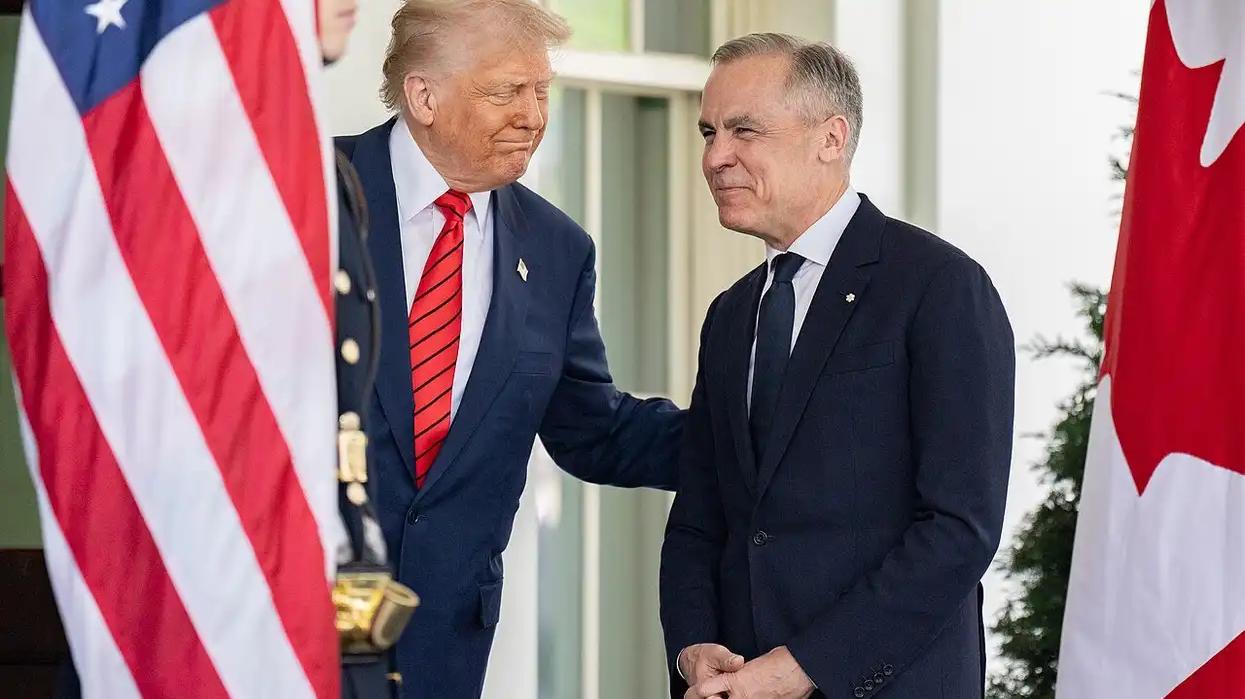
By July, as leaders gathered in Ankara for this year’s NATO summit, Chatham House researchers observed that disagreements over the Iran war and defence procurement threatened to overshadow the alliance’s core purpose of deterring Russia, while reports of reduced US troop deployments in Europe have further unsettled allies who once took Washington’s commitment for granted.
Former Estonian prime minister Kaja Kallas remarked in January that Beijing and Moscow “are probably celebrating right now” as they watch the visible fissures within the Western alliance, a comment that captures the broader dynamic now on display from Bishkek to Mecca. As Washington’s traditional partners hedge against an unpredictable ally, and as Gulf monarchies once wholly reliant on American security guarantees strike defence pacts of their own, forums such as the SCO and BRICS are positioning themselves to absorb the resulting diplomatic traffic.
Whether that amounts to a coherent rival order or merely a looser patchwork of overlapping, often contradictory partnerships – India inside both the SCO and the Quad; Saudi Arabia bound to Washington and now to Ankara and Islamabad; Turkey a NATO member courting Riyadh’s defence-industrial base – is likely to be the defining question of the summit season now under way.