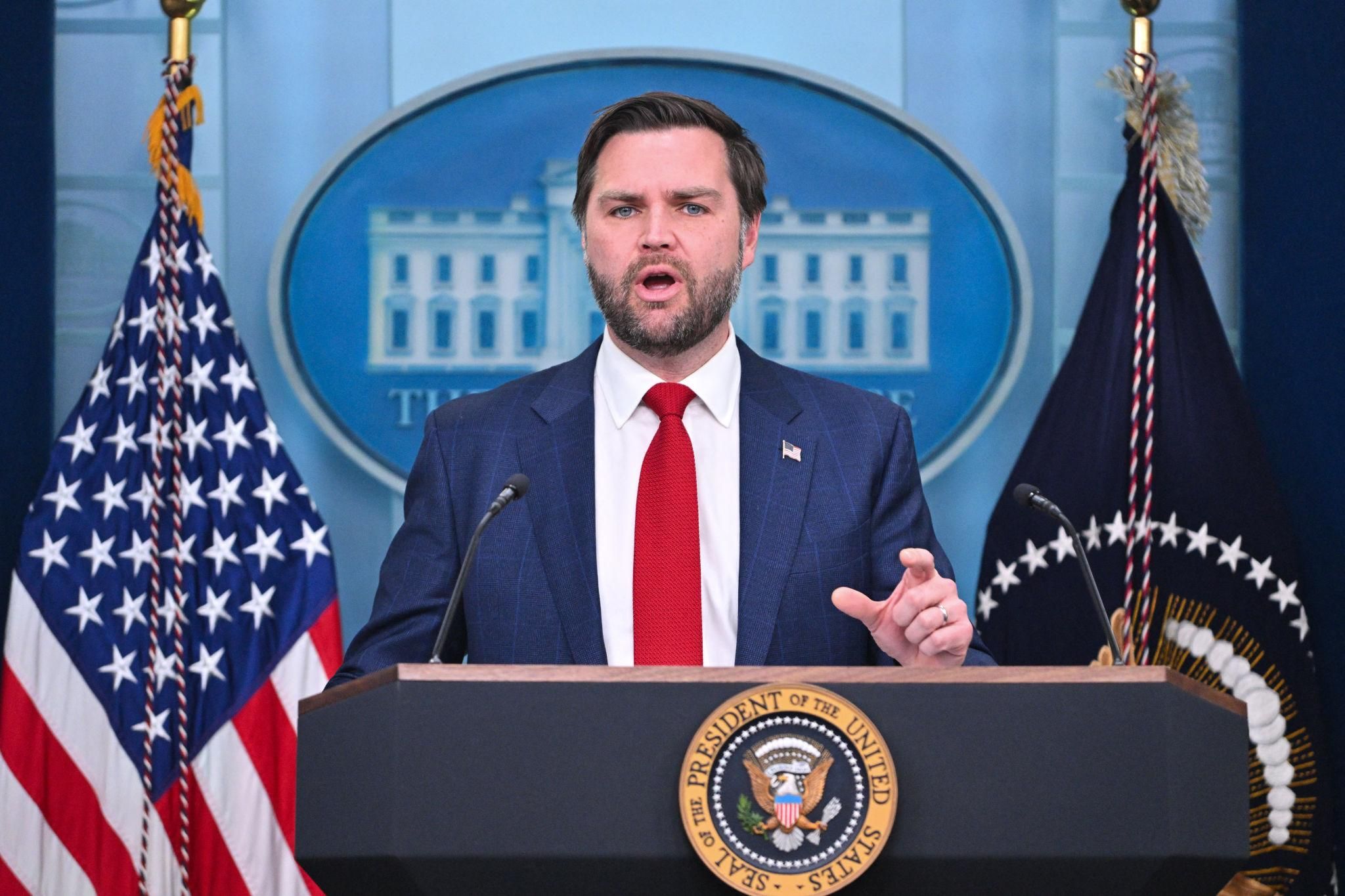
The Trump administration has indefinitely suspended Microsoft, Adobe and six other Indian IT outsourcing firms from the first step of the employer-sponsored green card process, tightening a campaign that has already turned US net migration negative, shut the door on asylum and now targets legal routes for skilled workers. The other firms are Cognizant, Infosys, Tata Consultancy Services (TCS), Wipro, HCL Technologies and Capgemini. US Vice President JD Vance and Labour Secretary Keith Sonderling announced the suspensions from the Permanent Labour Certification Program (PERM) in Washington on October 8.
Sonderling on Thursday (October 8) said the Labour Department would not accept new PERM applications from the companies or process their pending ones. The suspensions will remain in effect until the administration considers its concerns addressed. Existing approved H-1B visas and green cards are not cancelled. Sonderling cited multiple federal investigations as the reason for suspending Microsoft and Adobe.
“I am hereby suspending from the Permanent Labour Certification Programme by some of the largest IT outsourcing firms in the world: Cognizant, Infosys, Tata, Wipro, HCL, and Capgemini,” Sonderling said.
He said the US government would not accept or process any new or pending permanent labour certification applications involving these companies.
“Since 2009, just these companies alone have requested almost three million foreign workers. They've received over 230,000 H-1B visa approvals and over 100,000 permanent labour certifications,” Sonderling added, as US Anti-Fraud Task Force and Vice President JD Vance stood beside him.
PERM requires an employer to test the US labour market before sponsoring a foreign worker for permanent residency, showing through recruitment that no qualified, available US workers can fill the position. Without PERM clearance, a green card application cannot proceed.
Vance cited figures for the named outsourcing firms, saying they had sought nearly three million foreign workers since 2009, secured more than 230,000 H-1B visa approvals and obtained over 100,000 permanent labour certifications. He also accused Microsoft of laying off American workers while continuing to rely on visa programmes.
“Microsoft laid off 6,000 American workers in 2025 after certifying that it could not find qualified American employees - yet the company was approved for more than 6,000 H-1Bs and filed 3,682 PERM applications, including nearly 1,000 applications for the same positions as the laid-off American workers,” the vice president said.
A wider push
The suspensions fit a broader tightening of legal and illegal immigration. Brookings estimates 2025 was the first net-negative year for US migration in at least half a century. Border Patrol apprehensions have fallen to near 60-year lows amid a shutdown of the right to asylum. On the legal side, the administration has proposed $100,000 filing fees for most H-1B candidates and tilted the lottery toward the highest salaries. US consulates issued 26 per cent fewer nonimmigrant visas in February 2026 than a year earlier.
The latest action follows a move against Cognizant’s PERM filings in September. That month, Trump also signed an executive order directing agencies to closely examine H-1B petitions from companies that had recently laid off American workers.
The administration has also moved against the student route into US jobs. The Department of Homeland Security has proposed charging schools $70,000 for each international student on Optional Practical Training, plus an additional $30,000 for STEM OPT, with the stated goal of curbing fraud.
Indian firms’ fallout limited
Indian IT services companies, however, have downplayed the impact. TCS, the only named Indian company to respond so far, says it does not expect the decision to affect its operations. It said it would comply with any directive from the Labour Department and that its US workforce strategy rests on local hiring and campus recruitment. The company pointed to 31 US offices and delivery centres and an earlier pledge to hire 15,000 more people in the US over five years. Its PERM applications were “in single digits in the last two years,” it said, so it expects no effect on its workforce strategy or customer engagements.
TCS, Infosys, Wipro and HCL have been reducing their reliance on the US skilled-worker system for some time, Bloomberg reported, following political backlash and the push to raise H-1B fees to $100,000. Reports say Infosys cut its H-1B registrations from 8,886 to 759 and TCS from 5,955 to 284, with HCL America, Tech Mahindra and Wipro also down sharply.
Nasscom, the lobby group for Indian IT services firms, said many members have sharply reduced their dependence on H-1B visas, which has meant fewer green card requests. It said the decision affects one specific immigration pathway and argued that immigration and skilled talent mobility are separate issues.
Markets shrug it off
Shares of the affected firms largely recovered from early losses in New York trading on Thursday. Cognizant reversed its initial declines to trade up more than five per cent, and Infosys’s American depositary receipts turned positive after sharp early falls, rising more than one per cent. Wipro was down less than 1 per cent. Microsoft, the administration’s most prominent target, fell more than 1.3 per cent. The muted reaction suggests investors see limited financial exposure for the outsourcers.
Uncertainty for Indian professionals
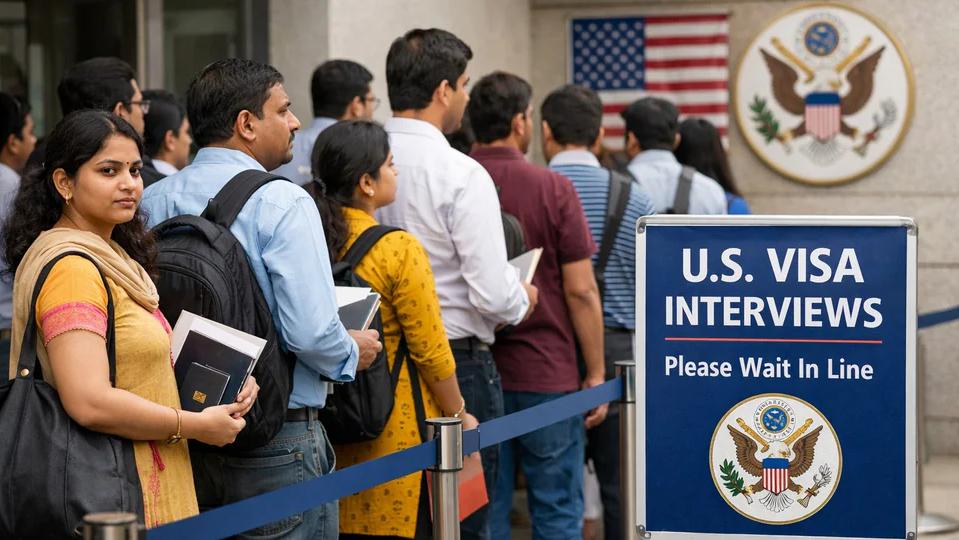
The stakes for India are significant because Indians dominate the H-1B system. The United States Citizenship and Immigration Services (USCIS) approved 406,348 H-1B petitions in FY2025, of which 283,772, nearly 70 per cent, were for Indians. Nearly 72 per cent of approvals were extensions or restamps for people already working in the US. These figures count approvals, not individual workers, and exclude other routes such as intra-company L-1 transfers and student work permits. New entry is shrinking too: initial H-1B approvals for Indians fell from 77,673 in 2022 to 57,747 in 2025.
Immigration attorney Steven Brown has said Indian applicants tend to remain on H-1B visas longer than others because of green card backlogs and country-wise caps, with waits stretching for decades. A freeze at the PERM stage could lengthen those delays. India ranked fourth among countries of origin for new green cards in FY2025, with about 62,700.
“The present decision could be the beginning of the end of Indian IT dreams in the US,” said a young software engineer at TCS’s New Jersey office who did not want to be named. “The US government is increasingly targeting legal immigration paths through H1-B, Green Card and university entries. Indians would be particularly hit with these decisions, and I don’t think we can think of the US as a career destination anymore,” he told NWS.
For professionals at the suspended firms awaiting the next step towards permanent residency, the immediate concern is an open-ended delay, as pending applications will not be processed. The suspension’s duration, legal basis and the evidence behind the allegations against the Indian firms have not been disclosed. Infosys, Wipro, HCL, Cognizant and Capgemini had not publicly commented in the coverage reviewed.