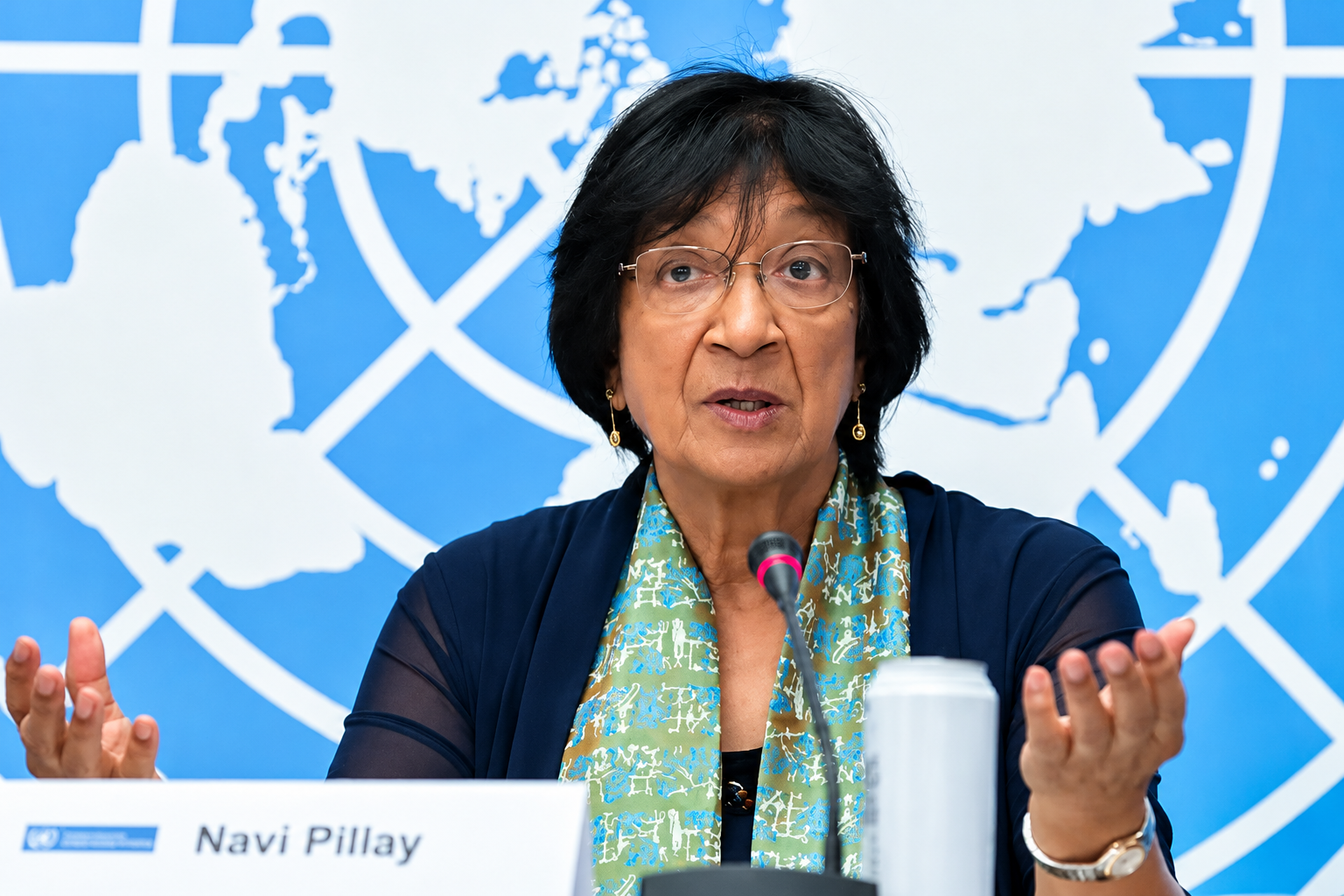
South African jurist Navanethem “Navi” Pillay, a former UN High Commissioner for Human Rights and international judge, has won the 2026 Nobel Peace Prize for her efforts to promote peace and international law. The Norwegian Nobel Committee honoured her for helping ensure that war crimes, crimes against humanity and genocide are prosecuted. It said her career demonstrated a firm moral compass and that the award sent a message to those seeking to undermine international justice institutions.
Pillay’s career has taken her from defending political prisoners under apartheid in South Africa to judging genocide cases in Rwanda and holding the world’s most powerful governments accountable for human rights violations. Her work has consistently challenged the idea that state power places governments beyond the reach of the law. She famously questioned: “Why would need courage to speak the truth?” while finding Israel guilty of genocide in Palestine.
“I still want to verify this”
Pillay was at the Nuremberg court, where Nazi leaders were tried after the Second World War, when she learnt of the award. Her initial reaction was disbelief. “Being a lawyer and a judge, I still want to verify this,” she said. Nobel Committee chair Jørgen Watne Frydnes said the committee couldn't reach her immediately and asked her to answer if a Norwegian number called.
Amnesty International secretary-general Agnès Callamard filmed Pillay receiving a standing ovation in Nuremberg. Callamard said she could not think of a stronger symbol for the award. Pillay, known for her dry humour, joked that the applause might persuade her to share the prize with US President Donald Trump, who has openly coveted the Nobel Peace Prize.
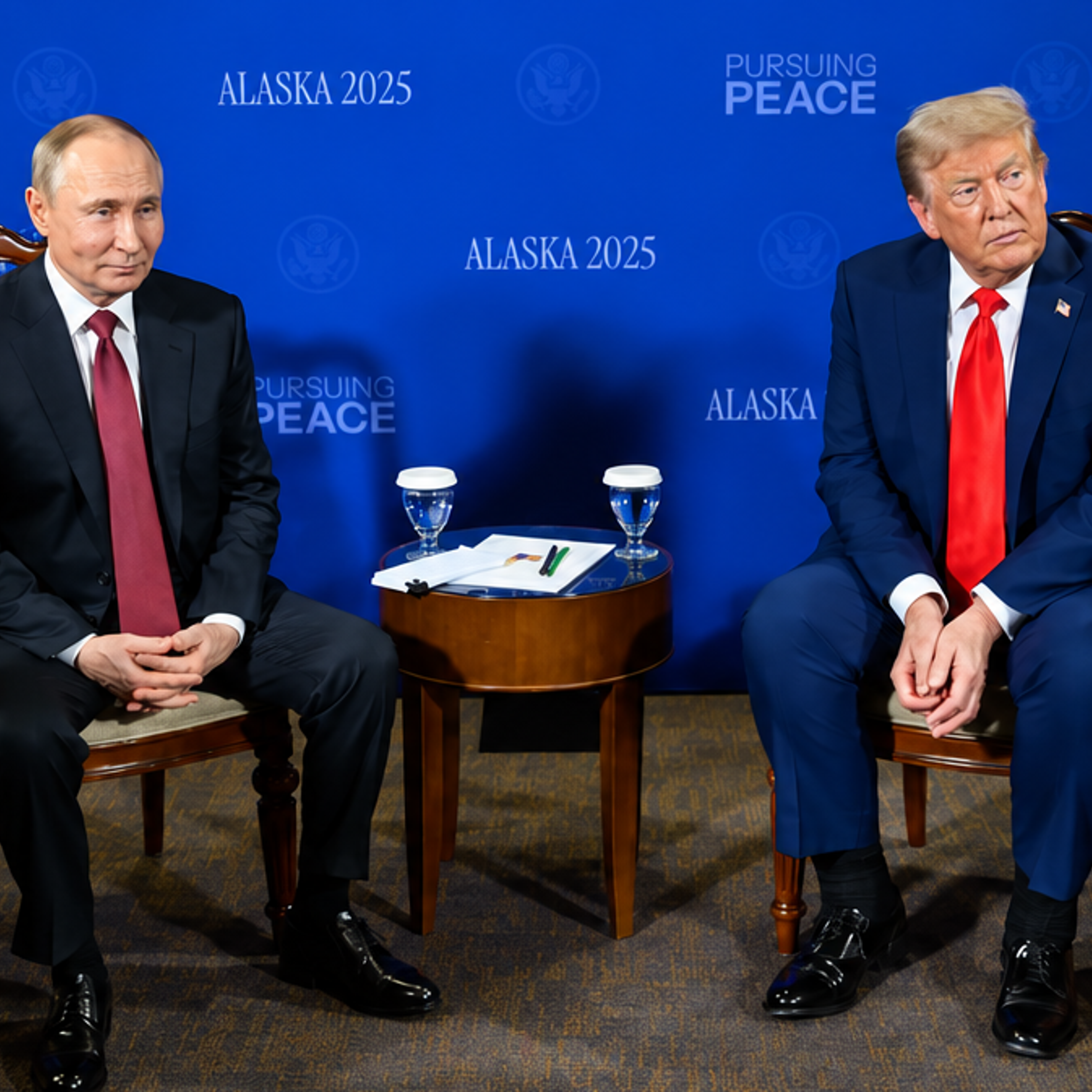
Denied of Nobel peace, the US President Donald Trump took a dig at Navy Pillay. He reposted a post on Truth Social that said the Nobel Committee had “shamed itself beyond repair” by awarding the 2026 prize to Navi Pillay. Calling her an “unabashed hater of America and Israel”, the post accused her of having “celebrated terrorists and rewarded Hamas” and conducting a “phony investigation” into allegations of genocide by Israel.
Call from Mandela
The story of Pillay’s rise begins on Robben Island, where she challenged apartheid-era prison authorities to recognise the rights of political detainees. In 1973, she won a legal application against the officer commanding Robben Island Prison, establishing rights and privileges for political prisoners, including access to lawyers. The victory benefited Nelson Mandela and other inmates, among them African National Congress leader Harry Gwala.
Pillay did not represent Mandela at his trial, but her work helped improve conditions for prisoners held on the island. She recalled that she was the only woman lawyer to enter the prison and that every visit was frightening. In 1995, shortly after Mandela became South Africa’s first democratically elected president, Pillay received an unexpected telephone call. The caller told her to hold on because the president wanted to speak to her. She initially thought it was a joke.
But it was Mandela on the other end. The call marked a turning point in a career shaped by the struggle against apartheid. A year after Mandela took office, Pillay became the first woman of colour to serve on South Africa’s High Court. He subsequently recommended her for the international tribunal investigating the Rwandan genocide. She used the law to challenge entrenched power.
From Clairwood to courtroom
Born on September 23, 1941, in Clairwood, Durban, Pillay is the daughter of a bus driver. Of Tamil descent, she grew up in a poor neighbourhood and pursued a legal career despite the racial and gender barriers imposed by apartheid. She graduated from the University of Natal with a BA in 1963 and a law degree in 1965. White law firms were reluctant to employ her, with some objecting to white secretaries taking instructions from a non-white lawyer. Others assumed she would leave the profession after marriage.
In 1967, she became the first Black woman to establish her own law practice in Natal. Her clients included political detainees, activists accused of terrorism and people held without trial under apartheid’s security laws. During a 1971–72 Terrorism Act trial, she was part of the defence team that exposed torture and unlawful interrogation methods. She later defended detained Black Consciousness Movement figures Saths Cooper and Strini Moodley. When her husband, lawyer Gaby Pillay, was detained under the Terrorism Act, she secured his release through a successful habeas corpus application, a legal procedure used to challenge unlawful detention.
The apartheid government and its security forces resented her work. They denied her a passport for many years. Yet her practice extended beyond political cases to women's rights and protection against domestic violence. In one of her final criminal cases before becoming a judge, she relied on family violence syndrome as a defence. Pillay later pursued postgraduate studies at Harvard University, earning a master's degree and a doctorate examining the political role of South Africa’s judiciary.
From Rwanda to UN
In 1995, the UN General Assembly elected Pillay as a judge of the International Criminal Tribunal for Rwanda, established to prosecute those responsible for the 1994 genocide. She served for eight years, including four as its president from 1999 to 2003. She recalled arriving in Rwanda when bodies were still lying in churches. The tribunal offered survivors a route to justice, although proceedings took longer than many victims had hoped.
In February 2003, she was elected to the first panel of judges of the International Criminal Court (ICC), where she served in its Appeals Division. Five years later, UN Secretary-General Ban Ki-moon nominated her to succeed Louise Arbour as High Commissioner for Human Rights. The General Assembly approved the appointment, and Pillay held the post from 2008 to 2014.
She used the position to speak out against abuses by powerful states. In 2010, she urged China to release Nobel laureate Liu Xiaobo, who was jailed. That year, she also opposed efforts to pressure banks, credit-card companies, and internet providers to cut off WikiLeaks, the whistleblowing platform founded by Julian Assange. Pillay warned that such measures could amount to censorship and violate freedom of expression. If laws had been broken, she argued, the appropriate response was prosecution rather than pressure on third-party companies. She also called for an end to retaliatory cyberattacks.
Gaza, Myanmar and ICJ
Pillay’s work on international accountability has continued to draw attention amid conflicts in which allegations of grave violations of international law have become central. She headed the UN Independent International Commission of Inquiry on the Occupied Palestinian Territory, including East Jerusalem, and Israel. The commission concluded in September 2025 that Israel had committed genocide against Palestinians in the Gaza Strip.
Its findings examined killings, serious bodily and mental harm and the imposition of conditions of life that the commission said were calculated to bring about the physical destruction of Palestinians in Gaza, in whole or in part. It called on Israel and the international community to fulfil their obligations under the Genocide Convention and hold those responsible accountable.
The commission’s conclusion was that of an independent, UN-mandated inquiry, rather than a binding judicial verdict or an official position adopted by the UN as a whole. Pillay has also been associated with international efforts to establish accountability for alleged atrocities against the Rohingya, a predominantly Muslim minority in Myanmar.
The Gambia brought a genocide case against Myanmar before the International Court of Justice (ICJ), alleging violations of the Genocide Convention over the treatment of the Rohingya, particularly during the military crackdown that began in 2017. The proceedings seek to determine Myanmar’s responsibility under international law. They illustrate the broader role of international courts in addressing genocide allegations through legal processes rather than political condemnation alone.
Why the prize matters
Pillay receives the Nobel Peace Prize as international justice institutions face mounting political pressure. The Trump administration has sanctioned the ICC, where she once served as a judge, and repeatedly challenged international accountability mechanisms. The award will therefore resonate beyond her personal achievements. It recognises a career spent defending the principle that neither governments nor powerful individuals should be immune from scrutiny under international law.
Pillay’s earlier honours include the inaugural Gruber Prize for Women’s Rights in 2003, Harvard Kennedy School’s Neustadt Award in 2016 and the Sydney Peace Prize in 2025. She also shared this year’s Olof Palme Prize with South African international lawyer John Dugard. The citation praised her work in documenting atrocities and helping identify those responsible.
The Nobel Peace Prize will be presented in Oslo on December 10.