Lubumbashi, Democratic Republic of Congo: For former Chemaf worker Kadima Kasongo, the troubles began with an envelope handed to him during the Covid-19 pandemic. Inside was a document concerning a three-month furlough. He signed it without reading it, he says. Nearly six years later, he believes that signature effectively became his redundancy notice.
“I never read the document; we were never allowed to,” says Kasongo, 57, who had worked at Chemaf’s Musoke plant since 2006.
He is among hundreds of former Chemaf workers still seeking compensation, unpaid wages or reinstatement, as the company’s new owners, US-based Virtus Minerals and India’s Lloyds Metals and Energy, work to revive a copper and cobalt business left weakened by years of financial difficulties. Their acquisition has raised hopes of a restart, but it has also left them facing a legacy of labour disputes and what workers describe as unresolved liabilities.
The contrast is striking. In August, shares of Lloyds Metals surged to an all-time high of about $22.2, giving the Indian company a market capitalisation of more than $10.5 billion. At Chemaf’s operations in the DRC, however, workers are still asking who will settle the company’s old obligations, and whether the new owners will address grievances that predate the takeover.
“The new buyer must also take Chemaf’s liabilities into account, and we are part of that,” says Gaspard Ilunga, 46, who worked for Chemaf between 2006 and 2020 and earned $900 a month.
The complaints extend beyond former employees. Workers who remained with the company say they face uncertainty over wages, benefits and the terms of a new collective agreement. Union representatives say some benefits suspended during Chemaf’s financial crisis have resumed, but acknowledge that concerns over working conditions and social benefits remain.
The new owners have pledged to retain Chemaf’s workforce as they rehabilitate its assets. But the company’s troubled past continues to shape the experience of those working there, and of those who lost their jobs during its financial crisis.
The workers left behind
Kasongo’s story is echoed by other former employees.
In 2020, more than 395 Chemaf workers were dismissed, according to Congolese human-rights organisation Justicia. Many had initially been placed on what was described as technical leave, with promises of compensation or eventual reintegration.
“The workers never read the memorandum of understanding that they made us sign before we left,” a member of their delegation told NWS in Lubumbashi.
Documents reviewed by NWS show that employees who signed the agreement accepted a “mutually agreed termination of the employment contract”. The backdrop was economic difficulty that made it hard for Chemaf to obtain the reagents and other materials needed to process mined ore.
Several former employees received settlements running into thousands of dollars. Minutes of proceedings and other documents reviewed by NWS show individual payments of $7,592, $7,131, $6,058 and $6,225.
The workers subsequently took their claims to the Lubumbashi High Court, the Criminal Court and local authorities, including the Provincial Assembly of Haut-Katanga. Two of the sources who took part in the litigation were Musoke plant workers.
Following negotiations, the High Court case was withdrawn, according to the former employees. Nearly 50 workers were subsequently rehired through a subcontractor, Triple Seven, but many say those jobs lasted only months.
“Some of us, including myself, were sacked after two months; others after nine months; and after a year, we were all out,” says the leader of the former employees.
Some workers say they are now owed nearly 30 months of wages.
For many, the loss of a Chemaf salary meant the loss of their main source of income. Several of those we spoke to said they have since turned to artisanal mining and other informal work to get by. NWS met former employees outside their homes and could not independently assess how far their living conditions have changed since they were dismissed.
The grievances have not been limited to Chemaf’s directly employed workforce. In April, local reporting said former employees of TP Phoenix, a Chemaf subcontractor, were seeking nine months of unpaid wages and final employment settlements following a dispute that dates back to 2021.
For the former workers, the change in ownership does not settle the question of who is responsible for those liabilities.
To avoid trouble, two of our sources agreed to meet on neutral ground, at the Institut français in Lubumbashi. The first, 56, comes from Ruashi, a working-class commune shaped by Chemaf’s mining operations without having drawn any development from them. The second, 47, comes from a Kenya commune. Ilunga, who has a greying beard and an energetic voice despite his age, wore blue jeans and a striped t-shirt. He was recovering from a long journey he had cut short to meet us. “I will let you see all the evidence,” he said in a trembling voice. His health has grown fragile for want of care in recent years, but he was determined to give his account of what happened. “I became hypertensive in the course of this struggle. I fell ill because of that work,” he said.
“Several of us have died during this struggle. Recently, we buried a former colleague who died of a stroke. Chemaf did not intervene and we buried our friend in appalling conditions,” Ilunga said.
Those who stayed
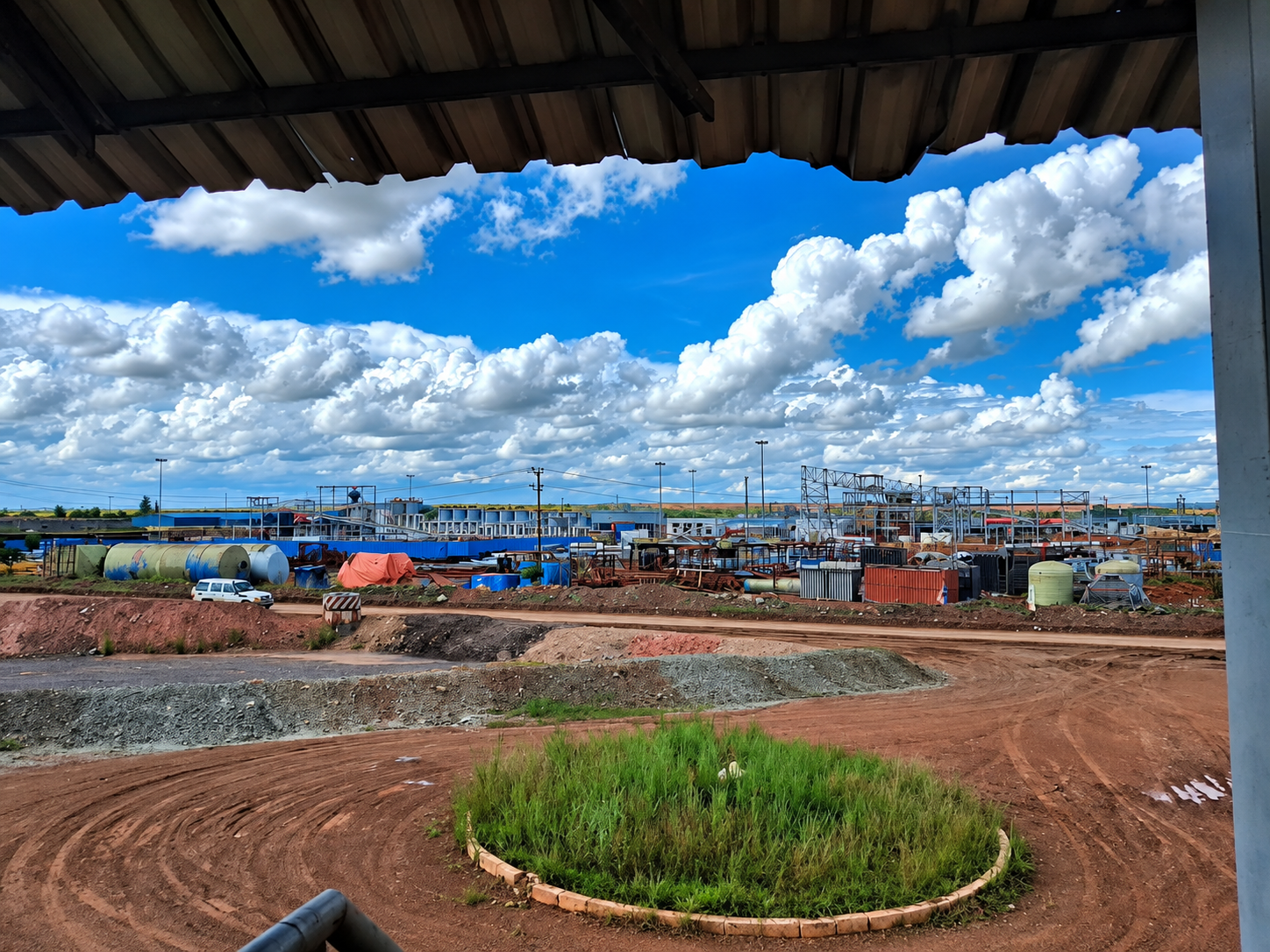
From the first hours of the morning, a large red bus marked with the Chemaf name makes its rounds collecting workers. Pressed against one another in the cold of the May-to-July months, most of them wear their reflective gear. Those coming off the night shift are heading home. After some twenty minutes of silent travel, through three neighbourhoods and the city centre, the bus turns onto a dusty, rutted track. The Chemaf mine is recognisable by the enormous wall of tailings that rings it, which artisanal diggers come to scrape at nightfall. At the entrance to the concession stand two rusted metal gates, painted yellow, bearing the word “Chemaf.” After the customary greetings and checks, the guards wave the bus through. Following a dirt road, it reaches the changing room where the day shift will put on their gear and collect their equipment before heading to their posts.
For these workers, who kept their jobs, the picture is different from that of the men and women left outside the gates.
Two sources told NWS that negotiations are under way between the workers’ union, Virtus Minerals and Lloyds Metals over wages and employment benefits. A senior local source, already cited in this story, said all parties were still in the negotiating process. NWS could not confirm whether workers have received written confirmation of their jobs under the new ownership.
“We experienced minor payment delays of less than ten days during the negotiations for the takeover of Chemaf,” says a Level 4 management employee at Mutoshi who previously worked at the Etoile site in Lubumbashi. Sources inside the company said salaries are now arriving on time.
Workers say they are seeking benefits covering education, job categorisation, assistance following the death of a parent and medical expenses.
“They’re not telling us anything about what will be included in the collective agreement. I don’t feel properly represented,” said one manager.
Another worker said: “Virtus Minerals and Lloyds Metals may not implement these benefits, even if they are ratified, until operations resume.”
Among those who kept their jobs, the mood is one of wait-and-see. Those NWS spoke with said they had narrowly avoided unemployment and were not yet voicing fears of redundancies when production restarts. Their impression is that the new owners are under no immediate pressure and are taking time to put new plans in place.
Union representatives paint a more mixed picture. Juresse Lokosha, a Chemaf union representative, said workers had largely retained their employment during the production stoppage and that salaries continued to be paid. Some social benefits suspended during the crisis, including education-related support, had also resumed, he said.
“That said, it would be inaccurate to suggest that all worker concerns have been resolved. There are still expectations regarding improvements in working conditions and social benefits, and workers continue to raise these issues through their representatives,” Lokosha said.
The situation has also been shaped by the company’s prolonged financial crisis. Chemaf accumulated about $804 million in debt, according to documents reviewed by Semafor, including a substantial financing package arranged by commodities trader Trafigura. The new owners have since reached agreements with creditors that are expected to cut the debt by more than half.
Inside Etoile
A visit by a NWS to the Etoile site suggested that the plant’s best days are behind it, though it has not gone quiet. Operations continue at a reduced level, in what looks like a maintenance mode.
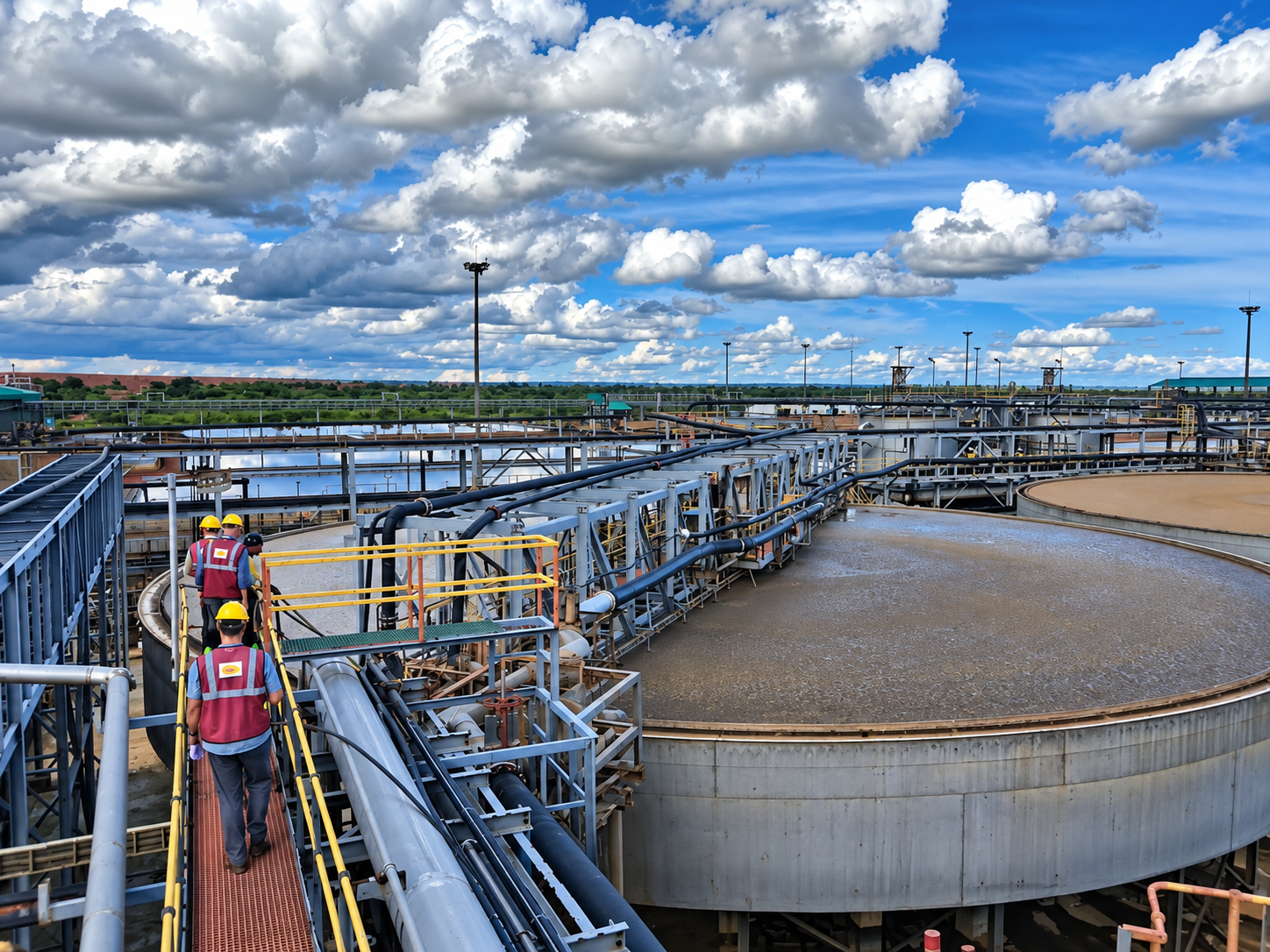
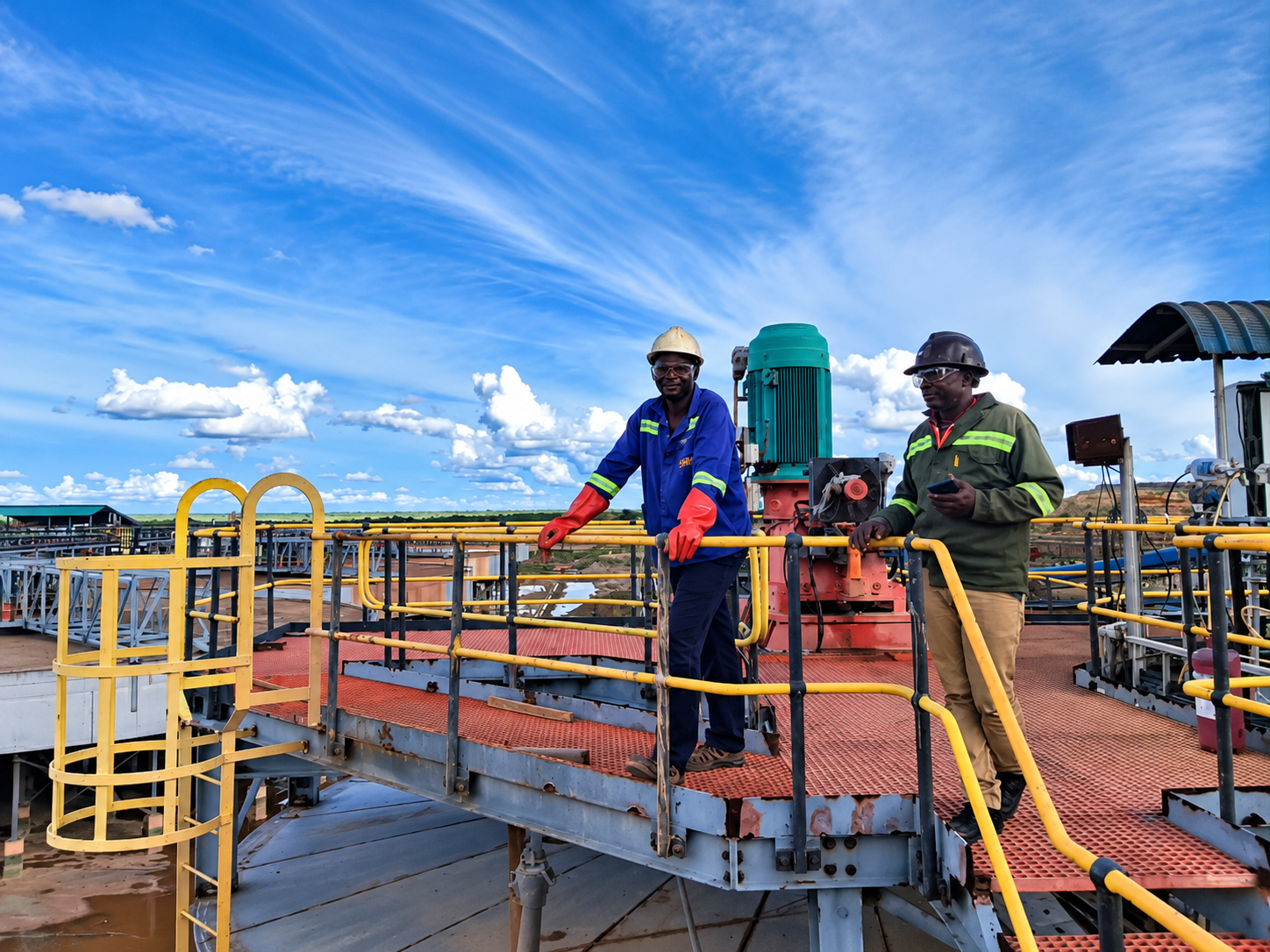
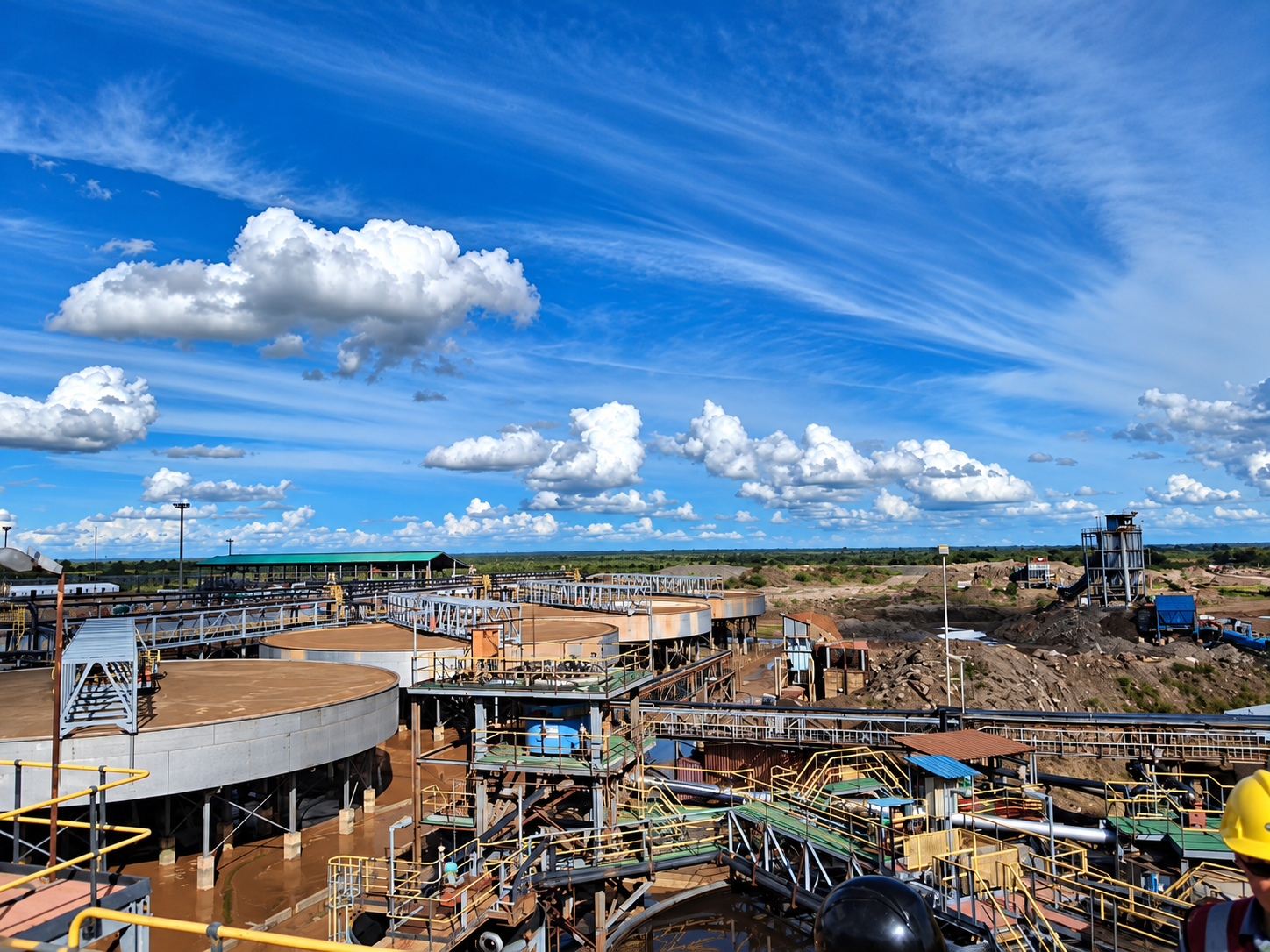
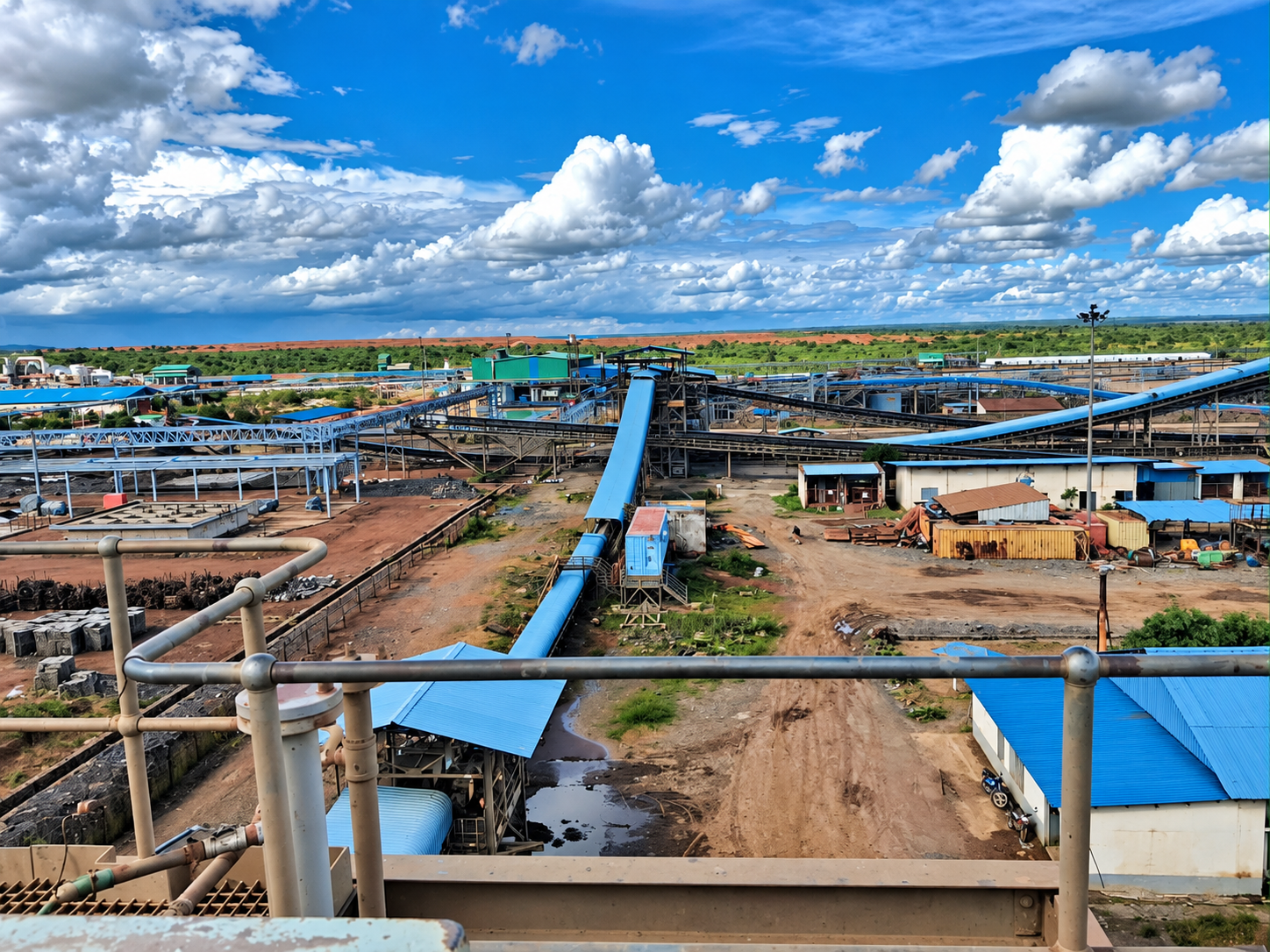
The complex is vast: a sprawling industrial site on broad, flat terrain, with interconnected processing structures, elevated platforms, storage and settling tanks, pipework, conveyors and metal walkways. Around it lie exposed earth, excavated ground, spoil heaps and patches of low vegetation. Much of the equipment shows its age, with stained and rusting metal and worn structural elements. Yet the plant is still being maintained. Pipework has been painted, safety railings are in place, and the personnel the reporter met wore protective equipment.
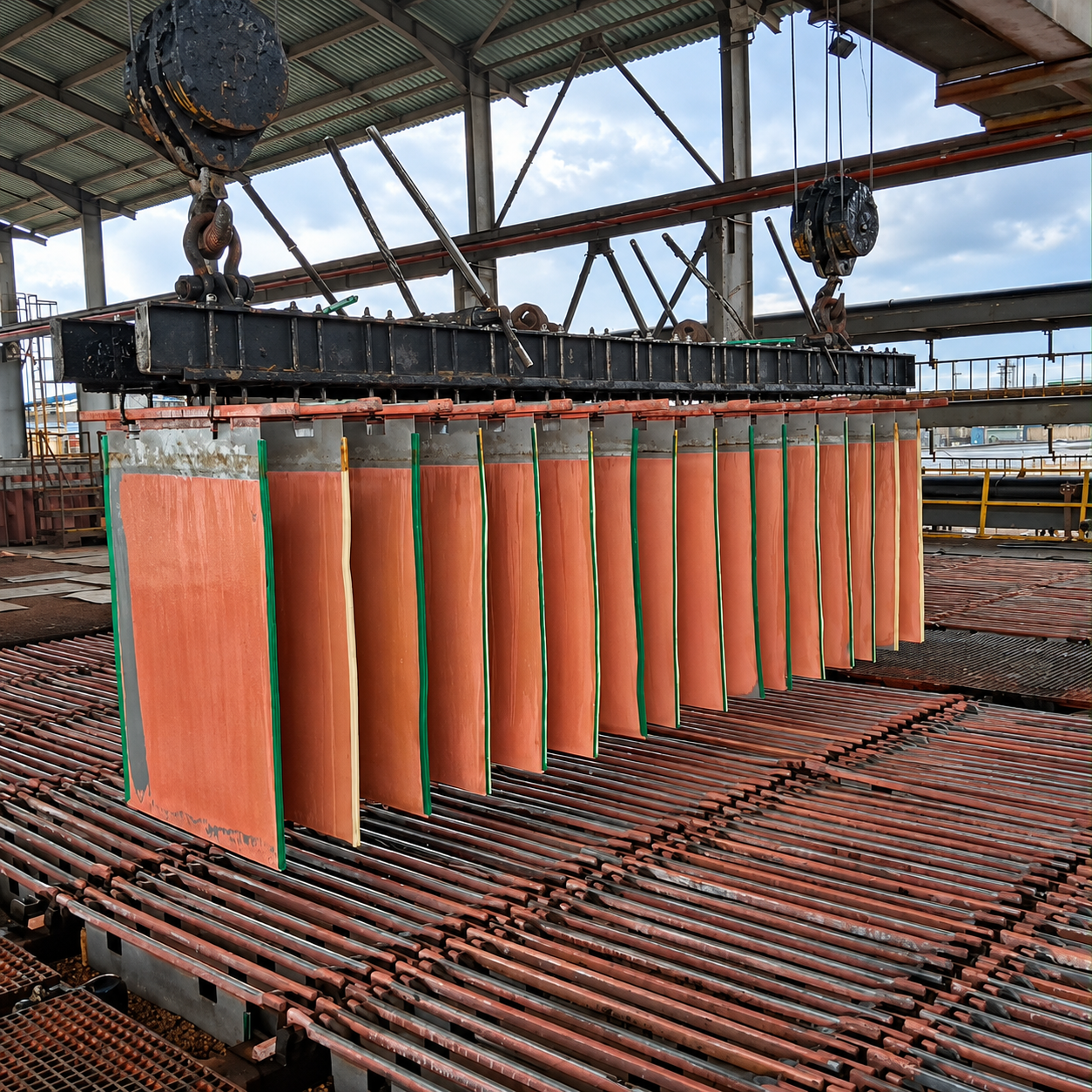
Some of the processing tanks were in operation, and the cathode side of the plant was running. Shifts were working with reduced teams. At least half a dozen local contractors’ employees were on site, among them workers from Groupe Kahilu Multiservice (GKM), who were handling the pressing stage of cathode production, the last step before the metal is ready for shipment. Trucks were moving around the site.
The new owners’ ambitions are large, but on the ground little had visibly changed. The factory, machinery and main materials are those of the Chemaf era. The only new work this reporter saw was a new dam space being dug.
A new owner, an old problem
The labour disputes now sit alongside one of the most consequential mining transactions in the DRC this year.
In March, Virtus Lloyds Minerals Holding, a joint venture in which Lloyds holds 49 per cent and Virtus 51 per cent, completed the acquisition of Chemaf. The transaction was valued at up to $30 million, while the new owners took on the challenge of restructuring the company’s much larger debt burden.
The deal gives Lloyds access to Chemaf’s copper and cobalt assets in the country’s mineral-rich Copperbelt, including the Etoile mine and plant near Lubumbashi and the stalled Mutoshi project near Kolwezi.
Lloyds says Etoile has an existing capacity of 20,000 tonnes of copper and 4,000 tonnes of cobalt a year, while the Mutoshi project is expected to add 50,000 tonnes of copper and 16,000 tonnes of cobalt once completed.
The stakes are much larger than Chemaf itself. The DRC is the world’s dominant source of cobalt and one of its largest copper producers. Both minerals are critical to batteries, electric vehicles, power infrastructure and the wider energy transition.
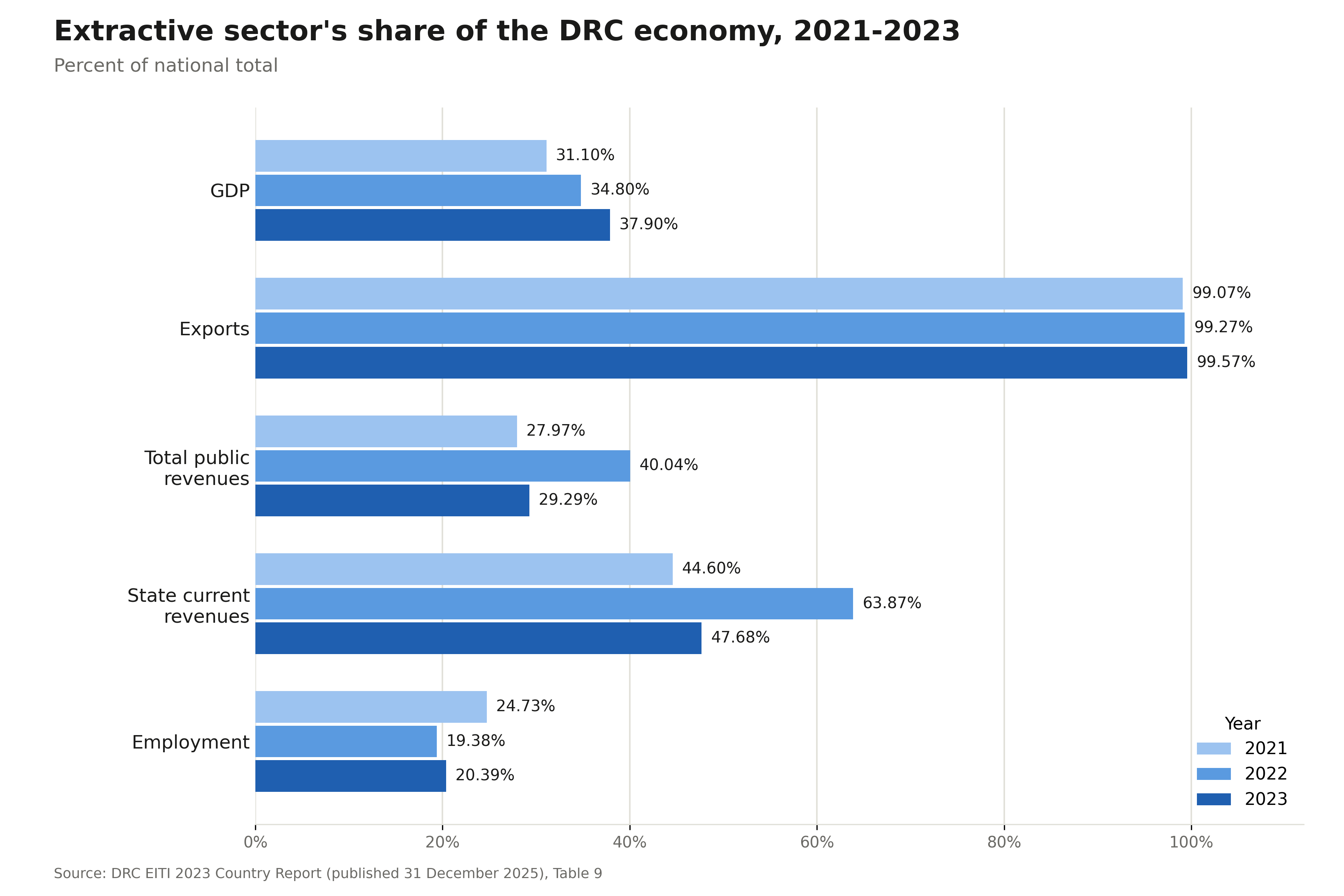
Nor is mining just another industry in the country. The Katanga region, which includes Kolwezi and Lubumbashi, is the economic heart of the DRC. The US Geological Survey estimates that mining and mineral processing accounted for about 40 per cent of GDP in 2024, contributed 71.1 per cent of GDP growth and made up about 95 per cent of the value of exported goods and services. The country’s Extractive Industries Transparency Initiative (EITI) report for 2023, published on December 31, 2025, found that extractive activities generated 99.57 per cent of national exports that year. They also supplied 29.29 per cent of total public revenues and 47.68 per cent of the state’s current revenues, and accounted for 20.39 per cent of recorded employment.
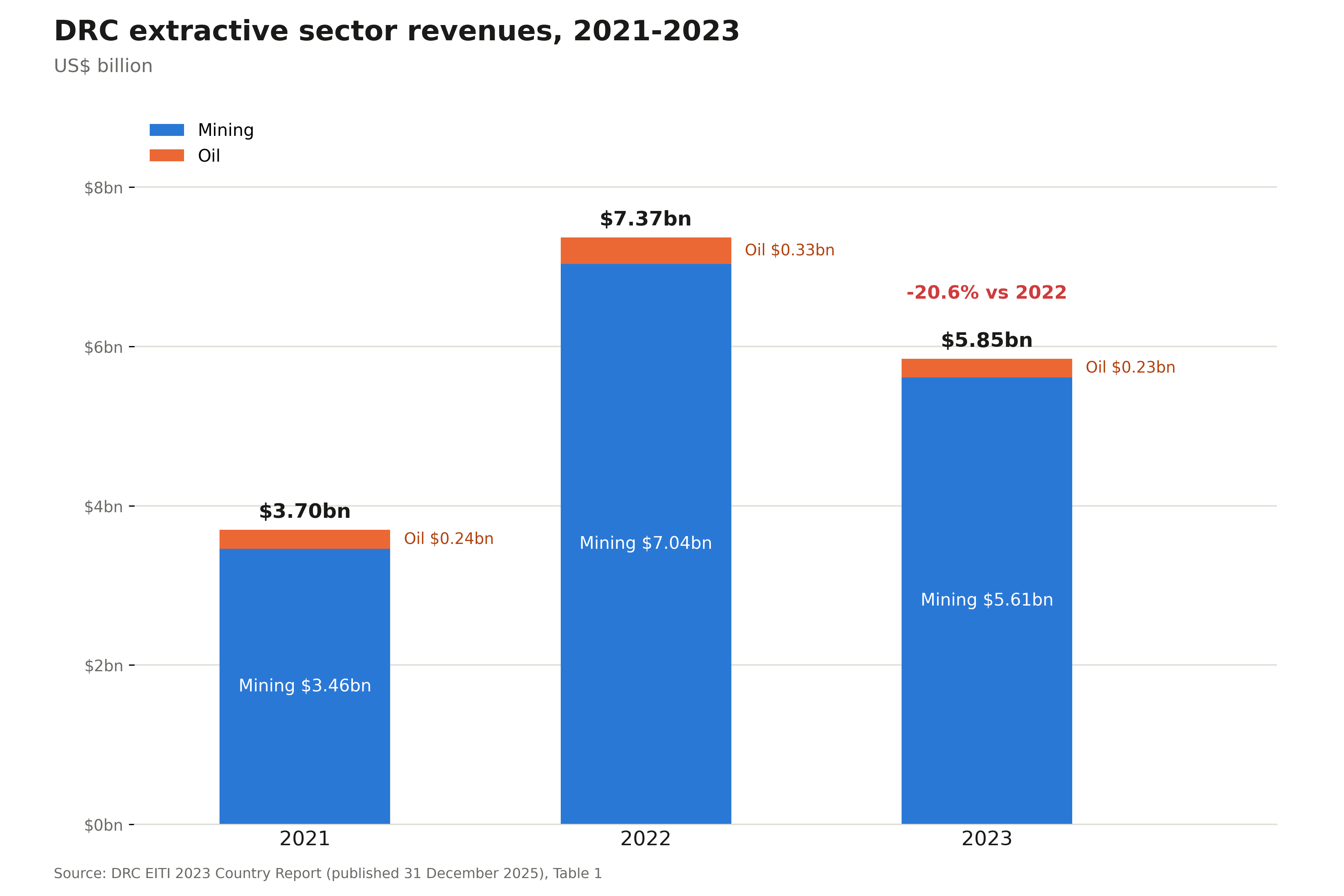
Chemaf’s acquisition has also taken on geopolitical significance. It is the first major transaction under a new US-DRC critical-minerals partnership aimed at increasing Western access to Congolese resources in a sector where Chinese companies dominate.
But before the new owners can realise that potential, they have to restart mines and processing plants held back by years of financial and operational problems. The Etoile operation near Lubumbashi has been described as temporarily shut for rehabilitation, although, as the visit showed, parts of it are still running. Work continues on Mutoshi. Lloyds now expects commercial-scale production in July 2027, according to Semafor.
For the former employees, however, production is only part of the story.
“The new buyer must also take Chemaf’s liabilities into account, and we are part of that,” Ilunga says.
For Lloyds and Virtus, reviving Chemaf means rebuilding a mining business. For the workers who have spent years waiting for wages, compensation and clarity over their jobs, it also means confronting the unresolved legacy of the company they have inherited.