
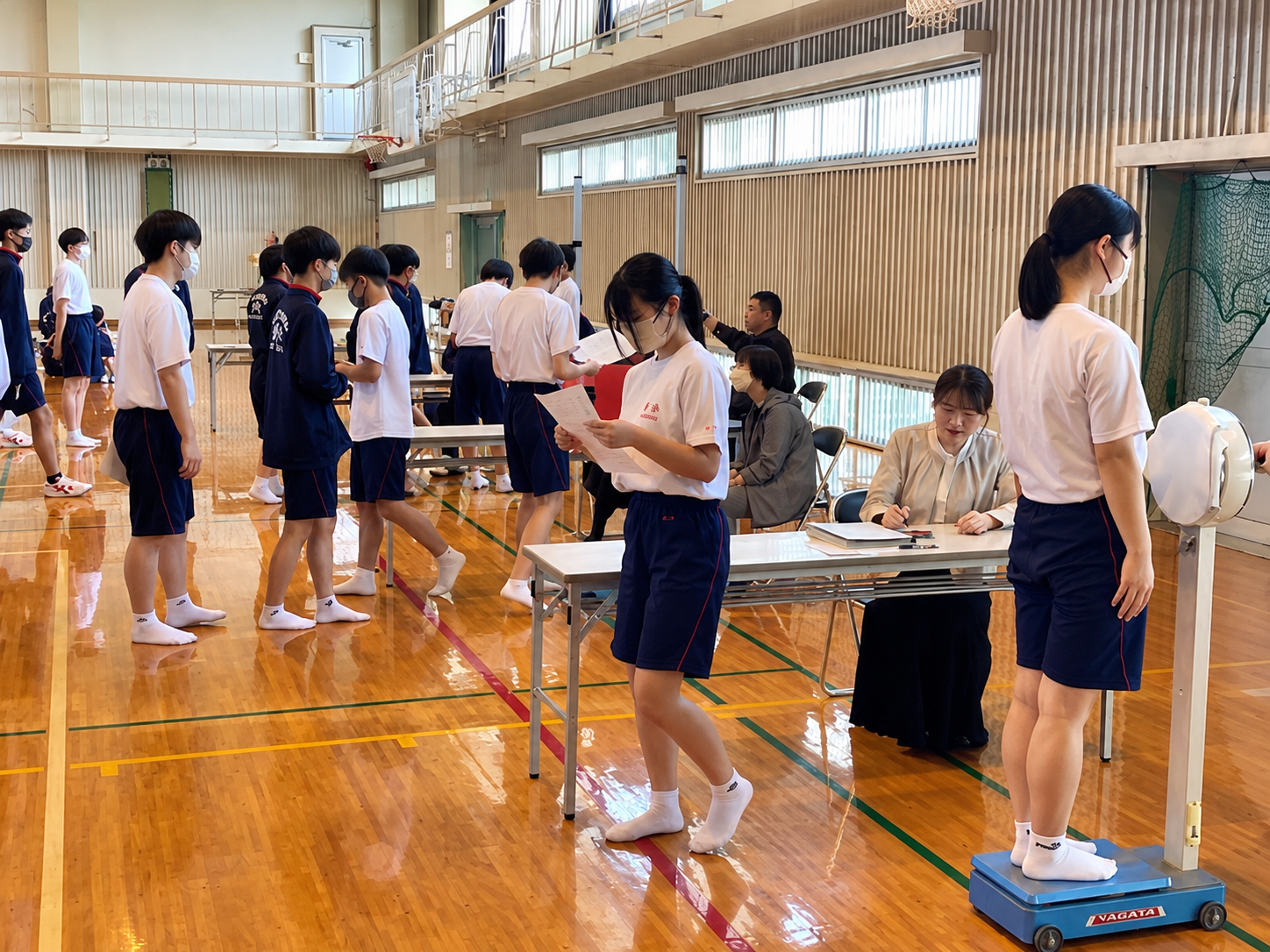
Japan was once East Asia's economic giant, and its youth grew taller than their Chinese and Korean counterparts. However, the Land of the Rising Sun lost its height advantage. While Chinese and South Korean youngsters grew noticeably taller in the past few decades, Japan’s next generation barely gained an inch. The change has been gradual, spanning three decades, but the numbers tell a striking story.
A 2020 study published in The Lancet by the NCD Risk Factor Collaboration tracked height trends among children and adolescents worldwide. Between 1985 and 2019, China and South Korea recorded some of the fastest increases in average height among five- to 19-year-olds. Japan, meanwhile, had largely stopped gaining ground.
In 1985, Japanese men aged 19 averaged 170.4 centimetres. Their South Korean counterparts averaged 168.7 centimetres, and Chinese men 167.6 centimetres. Japan was ahead of both. By 2019, the rankings had flipped. The average 19-year-old Japanese man measured 172.1 centimetres, compared with 175.5 centimetres in South Korea and 175.7 centimetres in China. Japanese women also trailed their neighbours: the average height of 19-year-old women was 158.5 centimetres in Japan, compared with 163.2 centimetres in South Korea and 163.5 centimetres in China.
The difference is not simply that Japan’s neighbours grew taller. It is how little Japan changed while they did. Over the 35 years, average height among 19-year-old men rose by eight centimetres in China and 6.8 centimetres in South Korea. In Japan, the increase was just 1.6 centimetres. The plateau is visible even in more recent figures. Japan’s Ministry of Education recorded an average height of 170.7 centimetres among 17-year-old boys in 2000. By 2024, it had edged up to just 170.8 centimetres.
So why did Japan’s growth stall while its neighbours surged ahead? There is no single, proven answer. But the explanations point towards three major factors: what mothers eat during pregnancy, what children eat as they grow and how much sleep they get.
Missing centimetres on dinner plate
One possible clue lies in the changing Japanese diet. For much of the post-war period, improving living standards and nutrition helped Japanese generations grow taller. But that upward trajectory did not continue indefinitely. Data from Japan's National Institutes of Biomedical Innovation, Health and Nutrition show that daily calorie intake per person began declining gradually after 1995 before eventually levelling off.
The contrast with China and South Korea is considerable. Data from the UN Food and Agriculture Organisation indicate that daily per-capita energy supplies in the two countries are 760 to 800 kilocalories higher than in Japan. Calories alone, however, do not tell the whole story.
Diet quality matters, too. Lower vegetable consumption and possible shortfalls in calcium and vitamins among young people have also been raised as concerns. A peer-reviewed study on nutrient intake among Japanese children and adolescents provides further context for examining dietary adequacy.
Height is influenced by genetics, nutrition, health, and living conditions. A child who does not consistently receive sufficient energy or essential nutrients may not reach their full growth potential. But the available figures do not conclusively establish that dietary changes alone explain Japan’s stagnation.
Story may begin before birth
The search for answers has also taken researchers into the womb. Japan has long had pregnancy guidance intended to limit excessive maternal weight gain, partly to reduce the risk of complications such as hypertensive disorders. But the question now being raised is whether restrictive approaches to weight gain, combined with dieting among women before and during pregnancy, may have contributed to the cessation of growth among Japanese youth.
The concern is significant because birth weight can offer an early indication of a child’s growth environment. Babies born weighing less than 2.5 kg are classified as having low birth weight, a condition associated with a range of health risks. OECD figures for 2021 put the proportion of low-birth-weight babies at 10.2 per cent in Japan, compared with 7.2 per cent in South Korea. The difference has prompted questions about maternal nutrition and pregnancy practices. The Nikkei, which reported on the height gap, noted that some Japanese women's efforts to keep their weight down could help explain it.
That remains a hypothesis, not a verdict on Japan’s pregnancy guidelines. Low birth weight has multiple causes, and the figures alone cannot establish how much it contributes to the height gap between countries. Still, they suggest that adult height may begin much earlier than childhood.
A few hours of sleep
Then there is sleep, another part of childhood that may matter more than it appears. A 2010 study of infant and toddler sleep patterns, involving researchers at the Children's Hospital of Philadelphia and collaborators, found that Japanese children from birth to age three slept an average of 11.62 hours a day. Children in China averaged 12.49 hours, while those in South Korea slept 11.9 hours.
The difference between Japan and China was nearly 53 minutes a day. Sleep is closely linked to physical development. Growth hormone is released in pulses, with a major pulse typically occurring during deep sleep. That makes sleep duration a plausible factor for researchers to investigate, particularly in early life. But the evidence does not show that shorter sleep caused Japan's height plateau. The study measured sleep patterns, not the extent to which those patterns determined adult height. Nor can a single study establish whether the same differences persisted across generations.
Akifumi Kishi, an associate professor at the University of Tokyo, cautioned against drawing firm conclusions. “We cannot draw a firm conclusion because there are no direct data, but shorter sleep duration among Japanese children may be one of several factors affecting later growth,” he told The Nikkei. His caution reflects the larger challenge facing researchers: height is the outcome of many influences acting together over years, and it is difficult to isolate the contribution of any one factor.
More than a question of height
The figures have sparked discussion in Japan, including on X (formerly Twitter). Some users have offered their own theories, including speculation that Japanese men’s preference for petite women might somehow have influenced the trend. The report cites no research to substantiate that claim.
More serious questions concern public health: whether nutritional changes, maternal health practices, and children's daily routines have affected physical development, and whether any of these factors can be addressed.
The comparisons with China and South Korea are revealing, but they are not controlled experiments. The three countries differ in diet, healthcare, socioeconomic conditions and other aspects of life. The height data establish that their trajectories diverged; they do not, by themselves, explain why. For Japan, the puzzle is not that its young people have suddenly become shorter. They have not. The steady gains seen in earlier generations have largely stopped, while comparable gains continued elsewhere in East Asia.
The missing centimetres may not have a single explanation. Instead, they may reflect a collection of small differences that accumulate from pregnancy through infancy and adolescence. Until researchers can link those differences directly to growth outcomes, Japan’s height plateau will remain an intriguing public-health mystery, measured not in dramatic declines, but in the centimetres that never arrived.