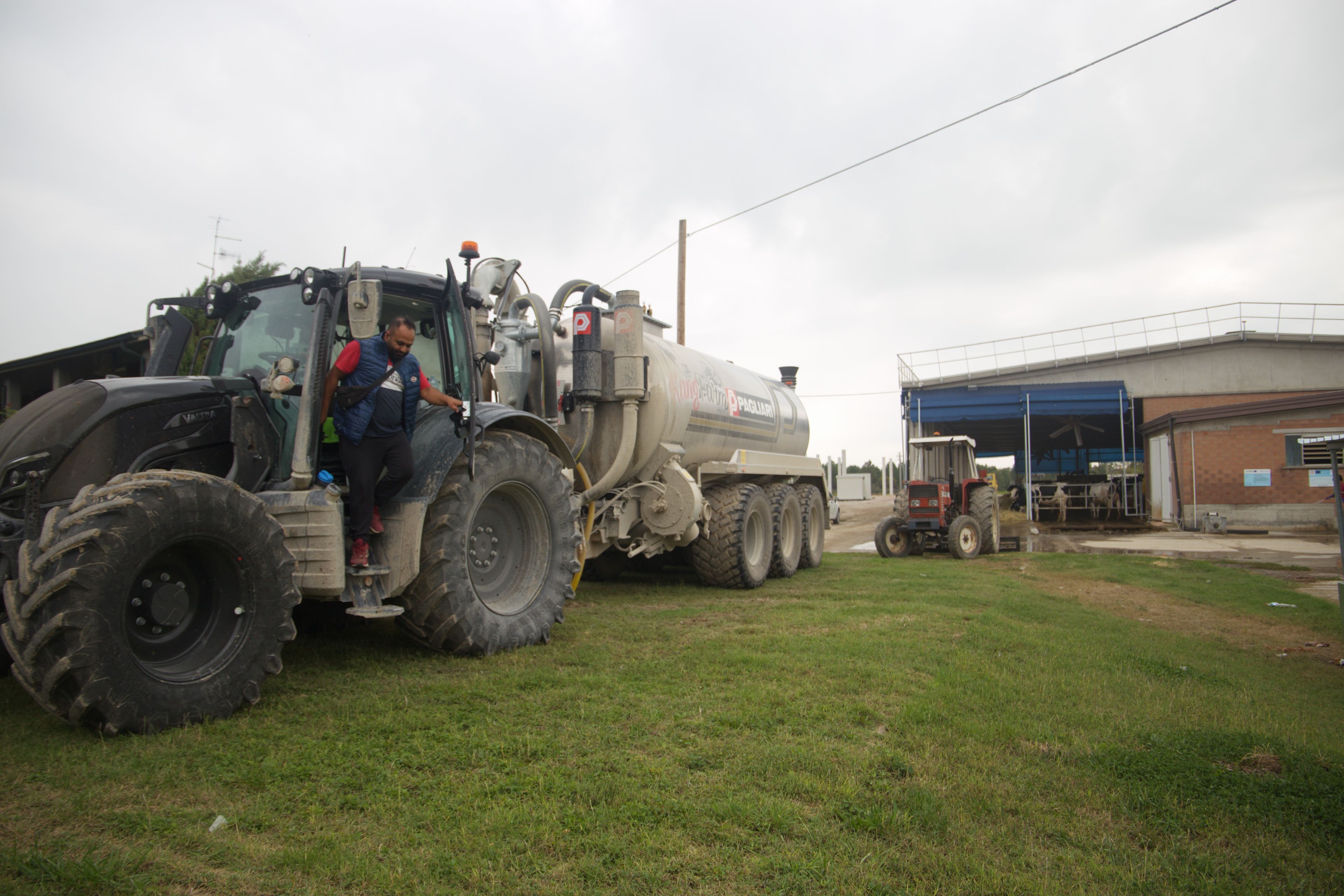
Campegine, Reggio Emilia: By mid-afternoon, the day was already well advanced at Kang Farm, but there was little sign of any let up. Harpreet Kang, still in his work clothes, had been on the go since 4 a.m. Fresh from the fields where he grows alfalfa, he drove his brand-new mega tractor into the patio beside the cow stable. It was a brief pause in a working day that would stretch well into the evening.
“This tractor is in our family’s blood,” he explains. “It’s also a passion for my seven-year-old son, who has always loved tractors and wants to ride on it with me.”
Kang is one of the Sikh producers of Parmigiano cheese in Campegine, in Emilia-Romagna, a region in the heart of Italy. Behind one of Italy’s best-known food products lies the work of the Sikh community, which emigrated from India’s Punjab province. Sikhism is one of the many religions practised in India, along with Hinduism. Sikhs are often recognised by their distinctive attire, particularly turbans and kirpans – ceremonial swords that symbolise their martial tradition.
In Emilia-Romagna, more than 3,500 Indian workers are employed across approximately 4,000 dairy farms producing Parmigiano Reggiano; around 70 per cent are believed to be Sikh. Across northern Italy, the agricultural and dairy sector is estimated to employ as many as 16,000 Indian and Sikh workers.
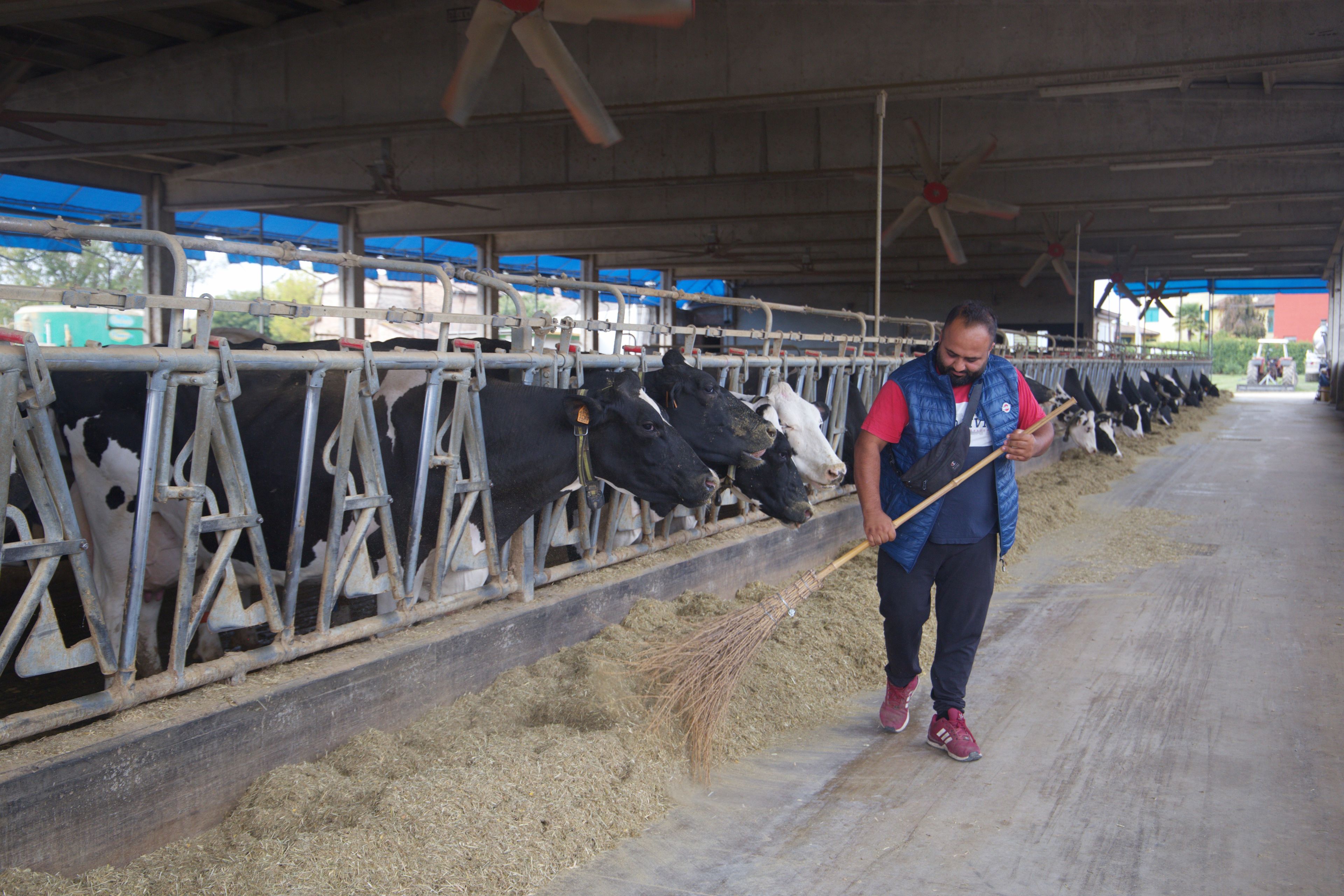
A few have become owners, among them Harpreet and his brother Gurinder, who run the Kang Farm, one of the first family enterprises owned by Indian Sikhs. The brothers initially financed the business with their father’s money. They produce milk, which is delivered to a dairy belonging to the Parmigiano Reggiano consortium and turned into cheese. Kang Farm is one of the dairy’s 25 members, and the only Sikh-owned one. Its barns, housing 200 Friesian cows, stand beside the garden of the family home, where the brothers live with their wives, children and their 68-year-old father, Bhupinder.
Harpreet, known as “Happy”, is 36 and a father of three. He has lived in Italy since he was seven, arriving in 1998 with his mother and brother to reunite the family. His father had come in 1991 to work in agriculture in Potenza, in the south, before moving to Campegine with the help of Sikh friends already working in Parmigiano production.
Happy speaks with a strong local Reggiano accent and is active in local politics. He is the first Indian member of Campegine’s city council, where he is tasked with maintaining relations with the local Sikh community. According to the mayor, the Indian community accounts for about 500 of the town’s 5,000 residents.
How Sikhs arrived in Reggio Emilia
The Kang brothers are among the first Sikh entrepreneurs in the Parmigiano production area. Other Indian-owned businesses have also emerged, most run by young people who arrived from India as children or were born in Italy. The Kangs employ five Sikh workers to care for the cows and cultivate 200 hectares of land, where they grow wheat and alfalfa to feed the animals.
Experts say the presence of Sikh workers should be understood in the context of the bergamino, a traditional figure in the Parmigiano production chain. A dairy farmer from the Lombardy lowlands, traditionally from the valleys of Bergamo, the bergamino moved seasonally with his herd between the mountains and the lower Po Valley. He works with dairy cows but does not own the farm, and ensures the quality standards required for Parmigiano.
Sikhs began arriving in the Reggio Emilia and Cremona areas in the 1990s, usually drawn by friends or family already there. As with Bhupinder, the man of the family typically arrived first, followed by the rest. Many initially worked in agriculture in the south before moving to Reggio Emilia for better opportunities.
When Sikh workers were first hired in stables, employers wrongly assumed they were Hindu and regarded cows as sacred. The workers proved tireless and soon became highly sought after. Their presence has grown in recent decades as fewer Italians have chosen livestock farming, with shifts starting at dawn, long days with few breaks and physically demanding tasks. Many men and families, mainly from Punjab, found opportunities in the sector and became an essential part of its workforce.
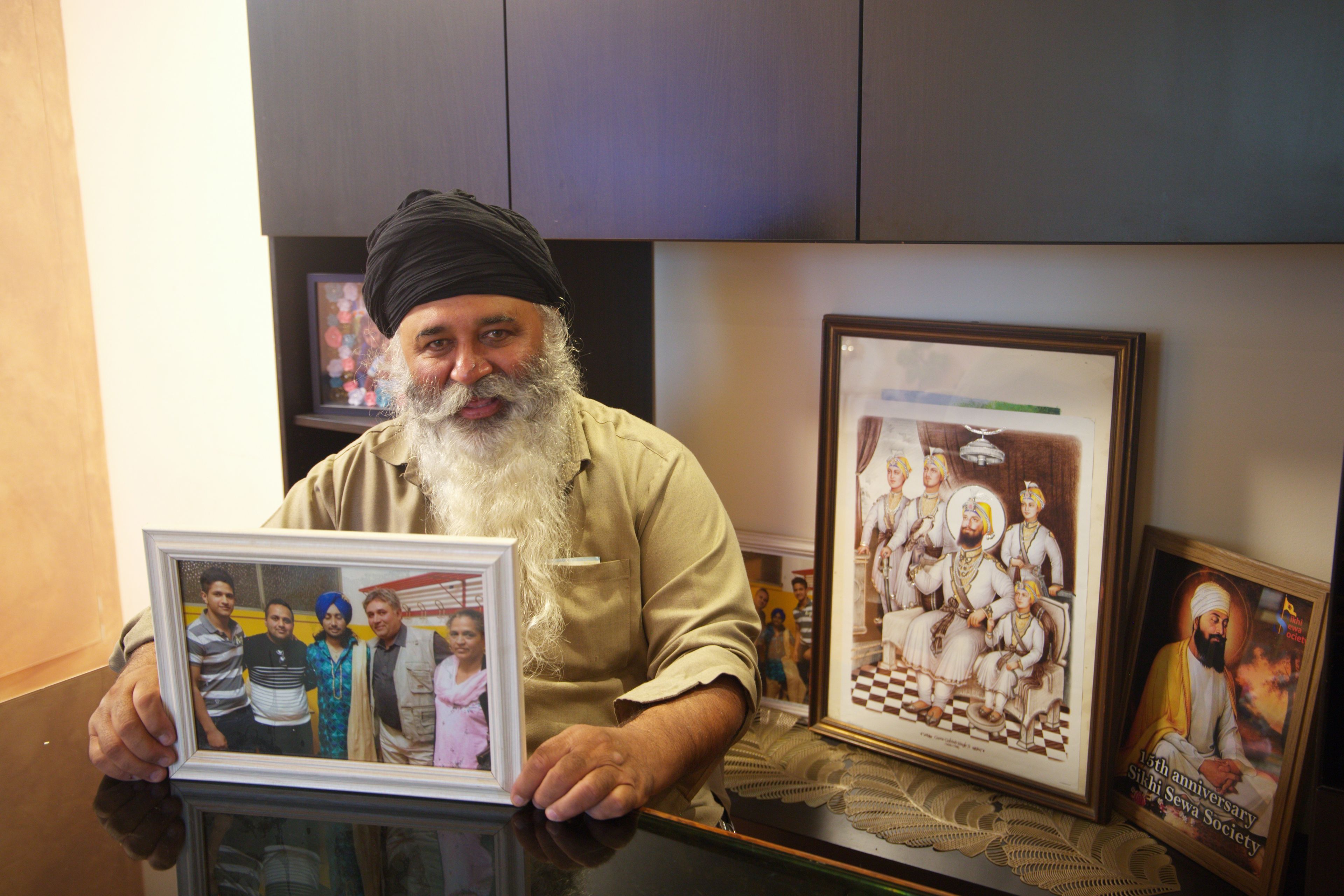
“In the past, religious identity of the Sikhs was sometimes confused with Hinduism. This fuelled the prejudice that they were particularly suited to caring for cows because these animals are considered sacred. In reality, this is not a defining feature of Sikhism, and employers’ decision to recruit these workers must also be understood in light of cultural and social factors,” explains Marco Omizzolo, a sociologist at Sapienza University of Rome who has studied the Sikh community for more than twenty years, to NWS. He is the author of “My name is Balbir”, a book about Indian workers’ struggle for labour rights.
“In Sikhism, work holds significant value as a practical expression of religious principles,” Omizzolo continues. “Professional commitment makes it possible to support family, contribute to the well-being of the community through remittances, and support religious temples. Economic success can thus become part of a spiritual journey, in a dynamic that has been described, in interpretative terms, as a kind of ‘Indian Calvinism’.”
“This strong work ethic has produced different outcomes depending on the context. In northern Italy, it has been put to use in the specialised role of the cowherd, central to the production chain. In the south, where Sikh workers have been employed primarily as agricultural labourers, the same willingness to work intensively has sometimes translated into exploitative conditions, particularly in the absence of adequate protections,” he adds.
The contrast also reflects the law. Italy’s legislation 199 of 2016, which combats labour exploitation, has been successfully implemented in the north; Omizzolo helped draft it.
The Sikh community has particularly strong roots in the provinces of Reggio Emilia and Cremona. Work has gone hand in hand with new opportunities, family life and community spaces, including the Sikh Gurdwara in Parma, whose president is Happy’s father.
A community finding its place in Italian society
Intergenerational exchange is central to that growth. “Our business is based on my father’s experience in cattle raising combined with my knowledge of Italian language and economy,” Happy explains, climbing onto the big tractor he and his youngest son are passionate about as his brother Gurinder cleans the patio with a watering can. “Family knowledge is a strength for me and for other young Sikhs who want to be entrepreneurs and write to me asking for help before launching their business.”
As Harpreet’s father sips an evening chai, freshly prepared by one of his granddaughters, Alessandro Spanò, mayor of Campegine, stops by Kang Farm to greet the family on his way to a birthday party.
Spanò explains why Harpreet was elected to the council: “We were looking for someone who could help us mediate, as the Sikh community is widespread with a significant impact on the demand for social and health services,” Spanò says. “Happy grew up here, and from the very beginning, he was very clear-headed and attentive. This collaboration, which is taking shape in the community, has led to the involvement of the Sikh community in cultural and social activities.”
“They have a great need to grow economically and on a family level. However, they placed a strong emphasis on their identity and traditions. They could have a higher level of integration: our administration aims to achieve it also by trying to facilitate religious parties organised with them, such as Diwali,” he adds. “Here, Sikh communities are a huge part of the labour force in Parmigiano, but Happy is a unique case, something of a trailblazer; several young Sikhs may eventually buy businesses from their owners. They have a very strong spirit of sacrifice and aren’t afraid to take the reins of companies: they’re eager to grow and establish themselves.”
The Sikh community organises Diwali in Campegine, the mayor says. He adds that several hundred Sikhs have recently started working for logistics companies.
“For us, integration also means allowing the Sikh community to voice its needs and have representation in local politics. What we ask in return is that their community show the same willingness to understand the history of this region and to cultivate its most significant traditions,” the mayor concludes. “We are promoting a constructive dialogue to build strong communities that share the same fundamental principles, and the Sikh community are showing a wonderful spirit of collaboration.”
From dairy worker to successful entrepreneur
Thirty kilometres from Campegine, deeper in the Po Valley, another second-generation entrepreneur has taken the reins.
Amandeep Chatha, 36, arrived in Italy in 2004 to join his father, who had moved there in the late 1980s. He began working in cattle sheds at just 14.
“Since arriving in Italy, I can’t remember a single day when I stopped working,” he says. “To save money, I sometimes worked up to 20 hours a day. I always had the idea of starting my own business, and through hard work, I managed to make it happen.”
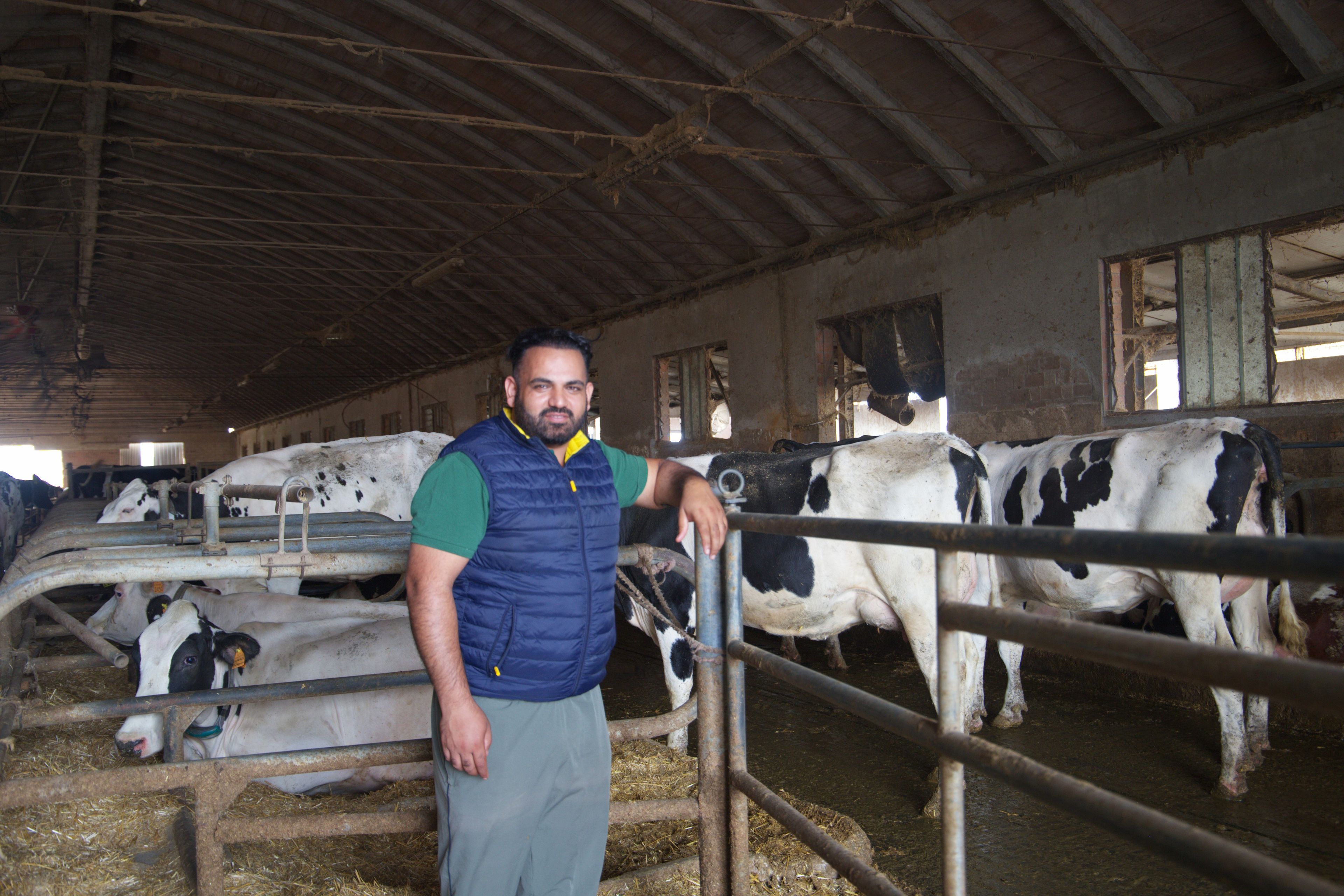
He financed the business with money earned as an employee at dairy enterprises, where he worked from 2004 to 2020. His salary rose from €1,200 to €5,000 as a stable manager.
Today, he owns three farms with a total of 629 head of cattle. At Chatha Farm’s headquarters in Reggio Emilia, the cows produce 90 quintals of milk a day, all for Parmigiano Reggiano. The three businesses generate a combined annual turnover of €7 million, and Amandeep has ambitious plans.
“According to my economic forecasts,” he adds, “next year I should be close to reaching €11 million in turnover. I’ll soon be opening a new cattle shed where everything will be automated. I’ve made a substantial investment, and there are very few people in the area who have done the same.”
Amandeep is married and has just welcomed his third child. His working day begins at dawn and ends in the late afternoon.
“The work is certainly exhausting. You have to be prepared, mentally as well. I can see that many young Indians today want to start their own businesses. I’ve helped four of them. I believe there has been a significant change in mindset compared with our fathers’ generation.”
He employs five people, all from the Sikh community. They include his 31-year-old brother-in-law, Karam Vir, who returned to Italy after studying economics in Australia to help run the businesses. “I do whatever needs to be done, both in the fields and in the cattle sheds. It’s work I enjoy, and it gives me a great deal of satisfaction.”
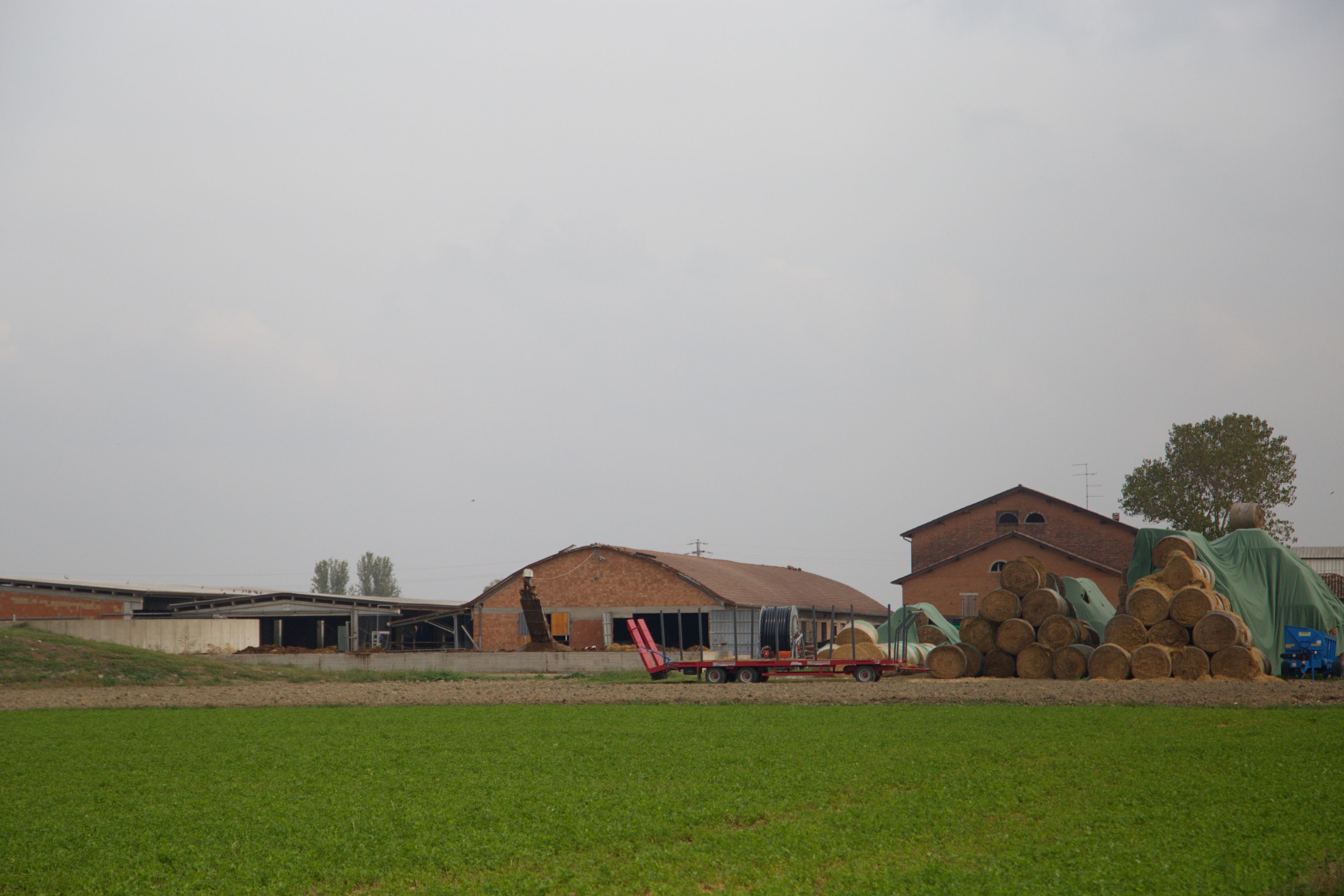
Amandeep’s story reflects the crucial role Sikh workers play in keeping farms running. Italy faces a labour shortage in agriculture, where the workforce is largely migrant, and the government has done little to address it. As Omizzolo points out, this dependence on migrant labour also exposes a broader structural vulnerability in the sector.
“The livestock and agricultural sectors rely heavily on migrant labour: without their contribution, many activities would face a crisis. However, this does not mean that the departure of a single nationality would necessarily bring the sector to an end. Rather, the production system demonstrates an ability to adapt by gradually replacing one group of workers with another. This adaptability, however, often relies on the availability of more vulnerable labour, exposed to the risk of exploitation,” he explains. “In the Reggio Emilia area, dedication to work is also part of a very strong, identity-defining, and religious family tradition in Sikh families.”