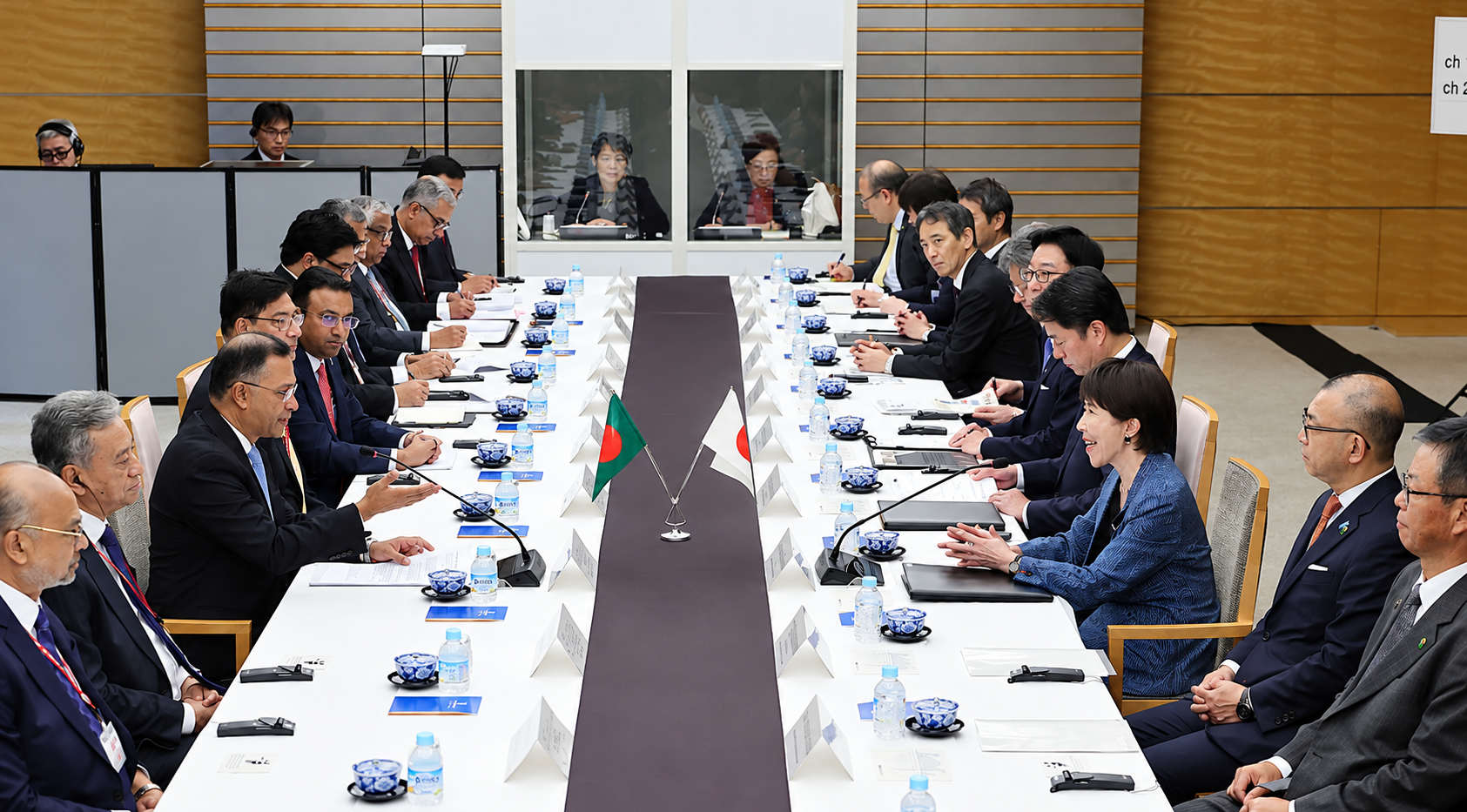
Bangladesh is poised for a significant economic transformation after Japan set a target of up to one trillion yen ($6.34 billion) in investment during Bangladeshi Prime Minister Tarique Rahman’s official visit to Tokyo this week. The centrepiece is a major expansion of the Matarbari deep-sea port, on Bangladesh’s south-east coast, aimed at connecting South Asia’s struggling economies to the wider Indo-Pacific marketplace.
The announcement is one of the most consequential diplomatic and economic developments for Bangladesh in recent years. It comes as the country’s economy is under considerable strain. Rahman’s government, which has sought to diversify Dhaka’s economic partnerships since taking office, secured the commitment as Tokyo signalled its intent to deepen industrial and trade cooperation with Bangladesh.
What was announced
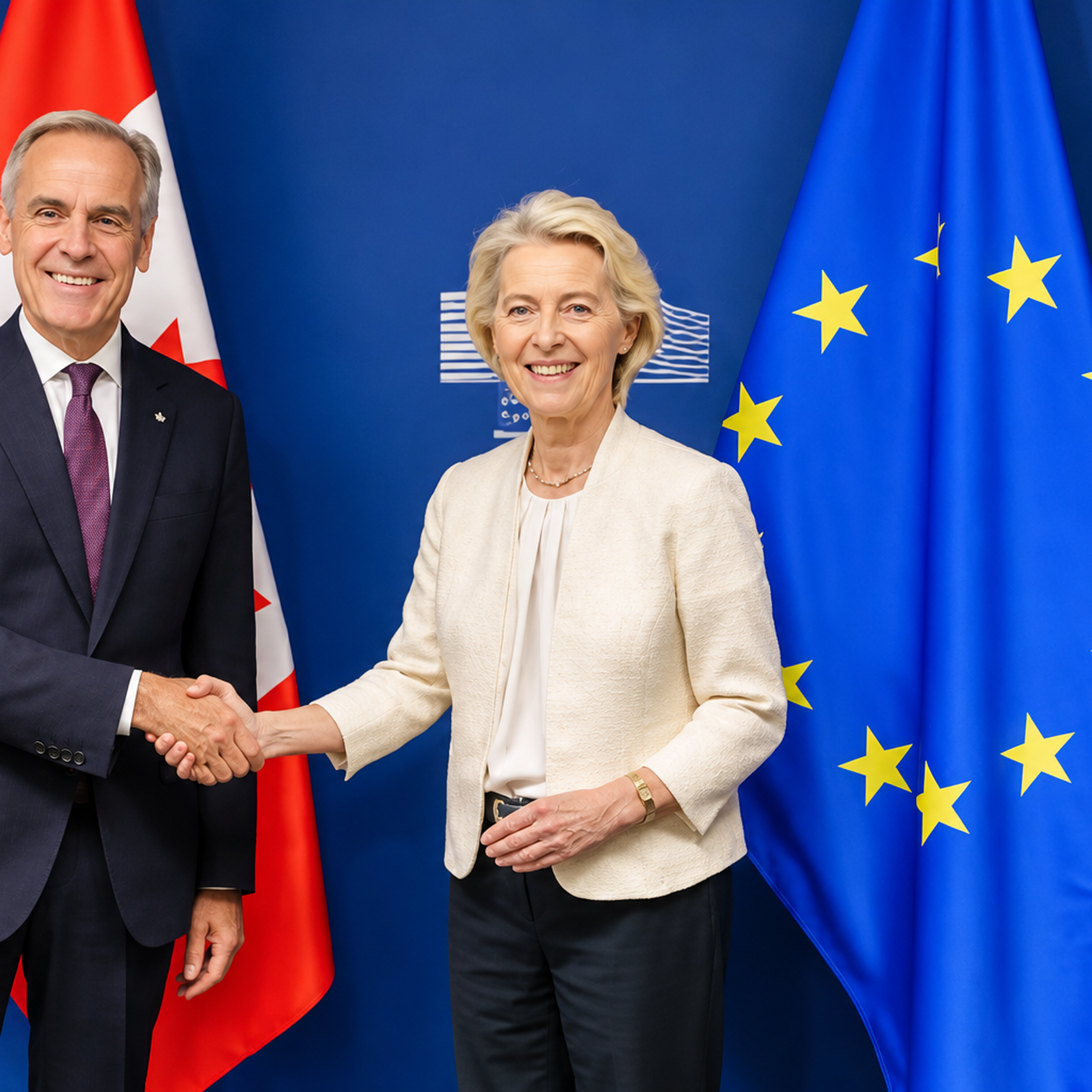
Japanese Prime Minister Sanae Takaichi and Rahman announced the figure after a summit at the Japanese Prime Minister’s Office in Tokyo on Tuesday (October 27), during Rahman’s four-day visit. Rahman, who leads the Bangladesh Nationalist Party (BNP), won a landslide in the February general election. This is his first official visit to Japan.
The money is a projection of Japanese private-sector investment, not a government grant. Takaichi told Rahman that Japanese companies’ investment is expected to reach one trillion yen over the next five years, and the two governments say that it could create 200,000 jobs. Takaichi also said Japan would provide a patrol vessel to strengthen Bangladesh’s coast guard, and the joint statement included plans for yen loans to improve the investment climate.
The leaders agreed to upgrade their 2014 joint development initiative, the Bay of Bengal Industrial Growth Belt (BIG-B), into “BIG-B for Shared Prosperity”. The framework centres on the Matarbari port and aims to safeguard both countries’ economic autonomy and address geopolitical risks. They also agreed to develop the Matarbari-Maheshkhali area into a major hub for logistics, energy and industry.
Rahman said that the figure includes between $1.5 billion and $2 billion that Japanese power and energy company JERA has shown interest in investing in a land-based liquefied natural gas (LNG) terminal at Matarbari. Officials said the project could draw a further $500 million over the coming years.
“Our ambition is clear: to turn this friendship between our two nations into a powerful engine of economic growth, opportunity and shared prosperity,” Rahman declared at a joint news conference on Tuesday.
A transformation in Bangladesh’s economic geography
Analysts believe the port plan could be transformative for Bangladesh’s economic geography, positioning it as a transit and logistics hub linking Southeast Asia and the broader Indo-Pacific region. That would be a decisive shift from Bangladesh’s long-standing identity as a garment-manufacturing economy dependent on a narrow set of trade relationships.
The port investment forms the strategic core of the broader commitment. It is understood to be aimed at upgrading Bangladesh’s capacity to handle significantly higher volumes of freight and at attracting industrial activity that needs reliable, modern port infrastructure. Analysts say that without competitive port facilities, Bangladesh has struggled to move beyond its current economic model. They add that the Japanese investment could unlock trade corridors that were previously inaccessible.
“Japan’s push to expand industrial and port cooperation with Bangladesh could transform the South Asian country into a regional trade gateway,” the South China Morning Post reported in its analysis, “connecting markets in Southeast Asia and the wider Indo-Pacific while diversifying Dhaka's economic ties.”
Why it matters for Dhaka
For the Rahman administration, the deal carries significance well beyond its financial dimensions. Japan-Bangladesh relations have taken on a noticeably different character since Rahman came to power, with Dhaka actively seeking to broaden its diplomatic and economic footprint beyond its traditional partners. The Tokyo visit is the clearest signal yet that the new government intends to pursue a more outward-looking foreign economic policy, with Japan emerging as a pivotal partner.
The visit is also a deliberate shift from aid to investment. Japan has long been one of Bangladesh's largest aid donors, giving about $18 billion over five decades, according to a 2022 research brief from the Institute of South Asian Studies at the National University of Singapore. The same brief said Japan approved a loan of about $1.2 billion to build the Matarbari port.
“Japan holds a special place in the hearts of the people of Bangladesh,” Rahman said at the joint press announcement. Takaichi, for her part, described Bangladesh as a friend that shares Japan’s values of democracy and the rule of law. Rahman also urged Fast Retailing, the parent company of clothing chain Uniqlo, to expand in Bangladesh’s garment sector.
Japan’s strategic interests
Japan has longstanding strategic and commercial interests in the Indo-Pacific, and analysts note that backing Bangladesh’s port ambitions aligns with Tokyo’s aim of reinforcing open and stable trade routes across the region. A more capable and better-connected Bangladesh, positioned between South and Southeast Asia, would serve those interests and reduce regional dependence on any single dominant logistics corridor.
Ajay Srivastava, founder of the Delhi-based think tank the Global Trade Research Initiative, told the South China Morning Post that New Delhi might welcome projects that improve its access to India’s north-east, while Beijing could take a more cautious view of Tokyo’s growing influence amid strained Sino-Japanese ties. He said both Bangladesh and Japan would have to balance things carefully.
“Japan’s investment could reduce Bangladesh's reliance on any single partner and strengthen its bargaining power. But China will remain an important supplier of machinery and goods, while India’s geography makes it central to regional trade and transportation,” Srivastava said.
The economic backdrop
Bangladesh’s economy has endured a difficult period, and the investment, spread over five years, is expected to provide both immediate stimulus and longer-term structural benefit. The World Bank projected in April that growth would slow to 3.9 per cent this year, with inflation at 8.5 per cent. Bangladesh is also due to leave the United Nations’ least developed country category on November 24, which will end preferential market access that covers about 73 per cent of its exports.
Bangladesh is struggling to regain its pre-pandemic growth momentum, with an energy crisis triggered by disruptions to supplies from West Asia adding to pressure on its industrial sector. The International Monetary Fund has lowered its GDP growth forecast for the 2026-27 financial year to 3.2 per cent, from 4.3 per cent projected in April.
Against such a backdrop, Rahman welcomed the announcement warmly during the visit, marking it as a vote of confidence in Bangladesh’s potential and in his government’s economic stewardship.
What remains to be seen
How swiftly the investment can be mobilised is still an open question. So is whether the port expansion will be matched by the complementary infrastructure, including road, rail and regulatory frameworks, needed to make Bangladesh a genuinely competitive regional hub. Analysts caution that large-scale port projects of this nature require sustained political commitment and careful implementation to deliver on their promise.
Bangladesh’s efforts to diversify its bilateral ties with economic powers beyond India are also being closely watched. Diplomatic relations between Dhaka and New Delhi have been strained in recent months over India providing refuge to Bangladesh’s ousted former prime minister, Sheikh Hasina.
Sreeradha Datta, a professor of international affairs at O.P. Jindal Global University in India, said that Bangladesh’s friendship with Japan should not worry India. “India believes Japan will not do anything in the region that is not in India's interest. Rahman's visit to Japan is probably a bigger message to China than India,” Datta said, adding that New Delhi is unlikely to view Dhaka’s push for strategic autonomy as a threat.
Nevertheless, the mood surrounding the Rahman government’s Tokyo visit has been notably optimistic. The Japan-Bangladesh partnership, recalibrated and energised under the new administration, appears to have entered a substantively new phase. In it, Dhaka is no longer merely a recipient of development assistance but an active participant in shaping its own strategic and economic future across the Indo-Pacific.